Connect with us

உலகம்

Iran’s Infowar: Lego, AI and ever tightening control

Published

on

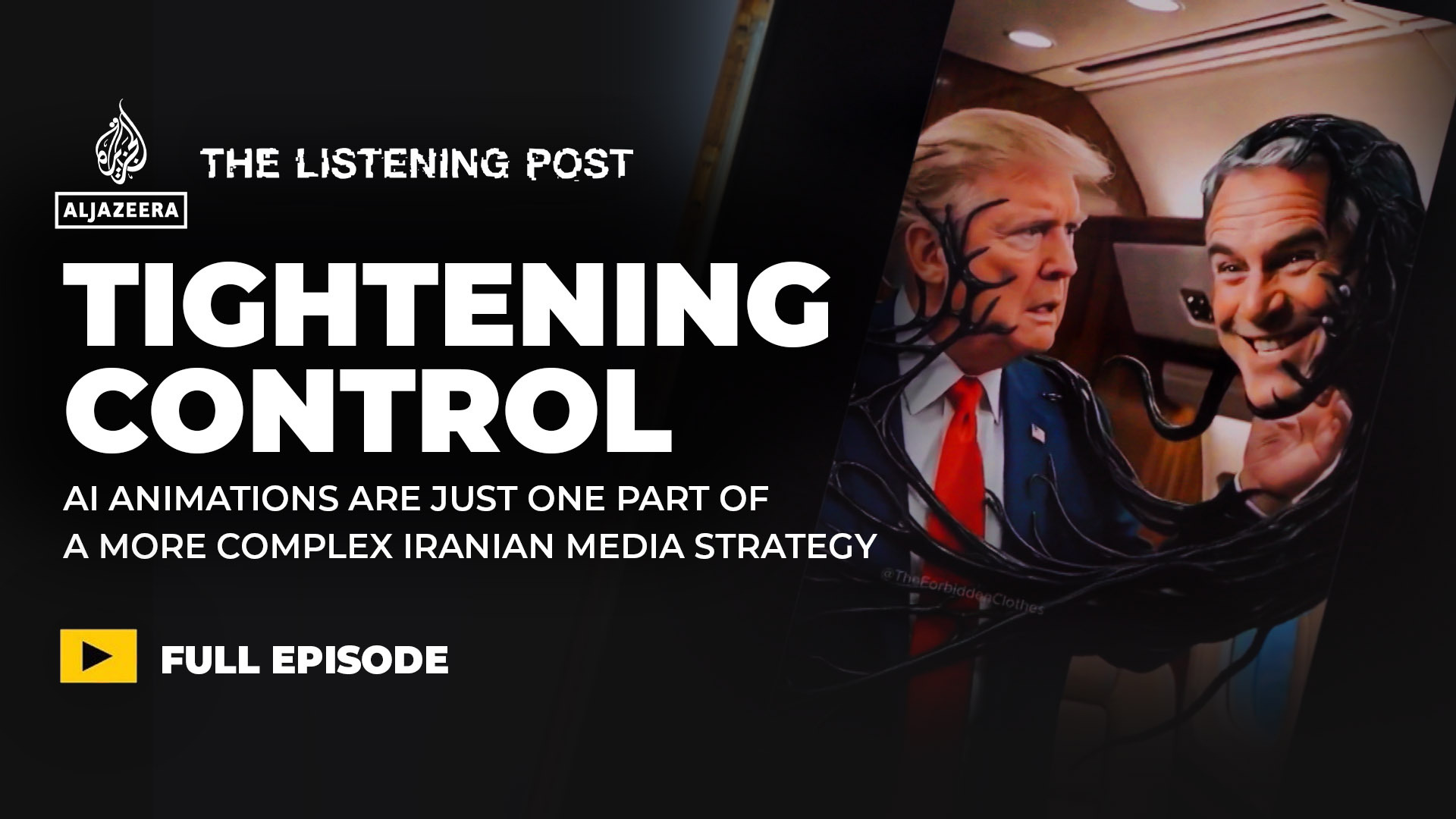
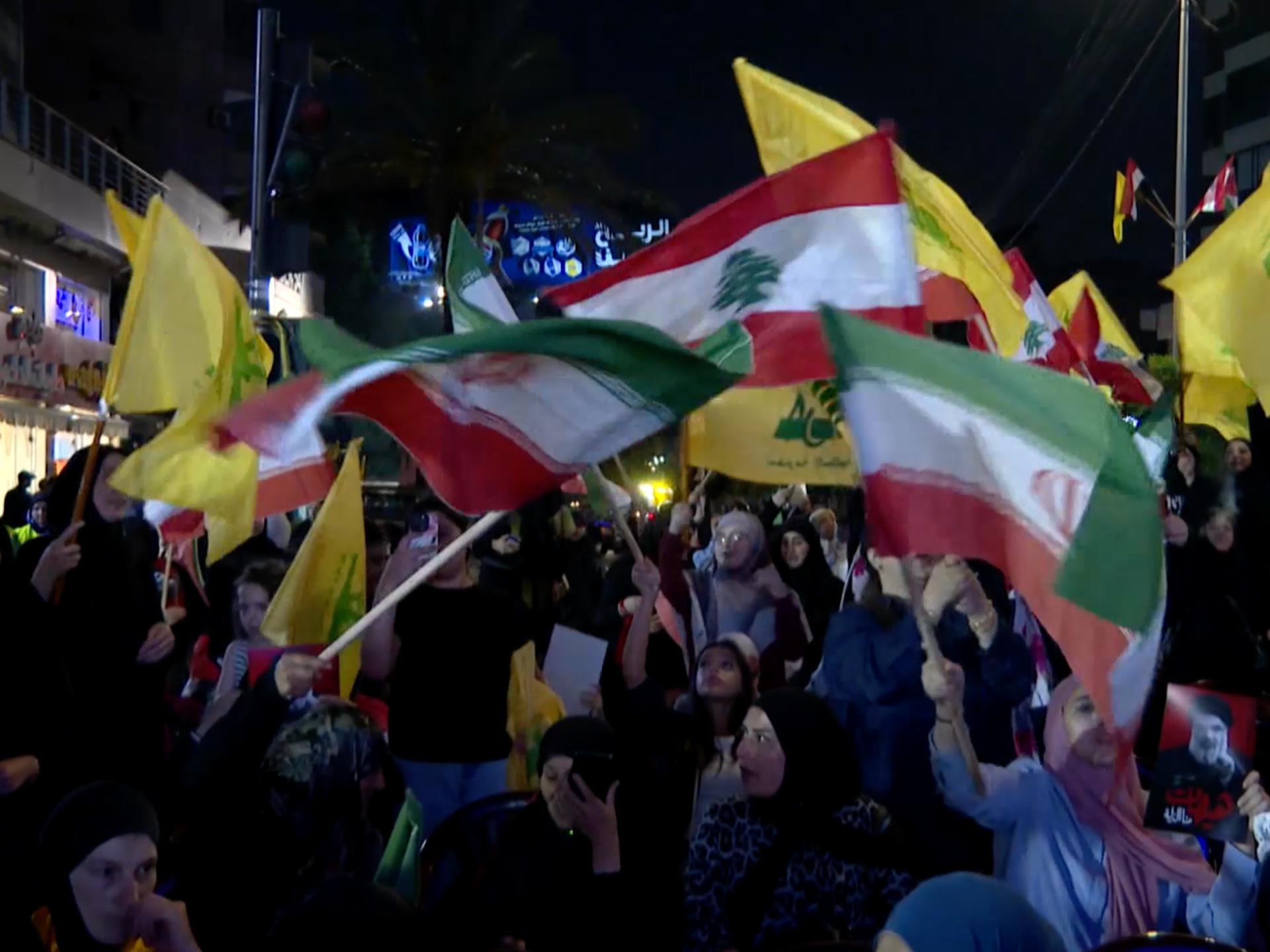
The information front has been central to the Iranian government’s war effort.

For an external audience, there is an innovative online strategy that has consisted of AI Lego, memes and hip hop diss tracks directed at Donald Trump and the MAGA base. But this coexists with more brutal domestic tactics: crackdowns, arrests and internet blackouts.

The result has been the Iranian authorities making use of the internet for PR internationally, while simultaneously preventing the Iranian people from openly accessing the net themselves.

Ali Hashem – Correspondent, Al Jazeera English

Mehran Kamrava – Professor of Government, Georgetown University in Qatar

Tara Kangarlou – Journalist & Author, The Heartbeat of Iran

Maral Karimi – Lecturer, Toronto Metropolitan University

The killing of Lebanese journalist Amal Khalil unfolded in the manner that so many Israeli assassinations of journalists in Gaza have – minute by minute, hour by hour, in a pattern that has become shockingly familiar. There’s the surveillance, the strike, the obstruction of rescue and then, the denial – Israel’s insistence that it does not target journalists, medics or rescue workers.

Pakistan has found itself at the centre of one of the world’s most consequential stories  – by hosting talks between the United States and Iran, brokering ceasefires, earning the very public praise of Donald Trump and making headlines around the world.

But this PR moment is obscuring a great deal, including an undercover war with Afghanistan and a crushing cost-of-living crisis at home. We speak to Amber Rahim Shamsi about the domestic politics behind Pakistan’s diplomatic moment in the sun.

Amber Rahim Shamsi – Pakistan Editor, Nukta

📰 மூல செய்தி (Source): https://www.aljazeera.com/video/the-listening-post/2026/4/25/irans-infowar-lego-ai-and-ever-tightening-control?traffic_source=rss

Continue Reading
Click to comment

Leave a Reply

Your email address will not be published. Required fields are marked *

உலகம்

US sanctions China’s ‘teapot’ refinery for buying Iranian oil

Published

on

The Hengli refinery, China’s second-largest, has generated hundreds of millions of dollars for Iran’s military, the US Treasury says.

The United States has sanctioned a Chinese oil refinery for buying hundreds of millions of dollars worth of Iranian oil.

Ahead of potential new talks on ending the US-Israeli war on Iran, the US Treasury Department on Friday said that it was targeting Hengli Petrochemical (Dalian) Refinery, China’s second-largest “teapot” or independent refinery.

Hengli is “one of Tehran’s most valued customers” and has generated hundreds of millions of dollars in revenue for the Iranian military through crude oil purchases, the Treasury added.

It also imposed new sanctions on about 40 shipping firms and vessels alleged to be operating as part of Iran’s shadow fleet.

The Chinese embassy in Washington, DC pushed back against the move.

“We call ‌on the US to stop politicising trade and sci-tech issues and using them as a weapon and a tool and stop abusing various kinds of sanction to hit Chinese companies,” a spokesperson said.

China gets more than half of its oil from the Middle East, and last year purchased more than 80 percent of Iran’s shipped oil, according to analytics firm Kpler.

The US Navy has blockaded Iranian ports since April 13, in what President Donald Trump claims is a bid to further choke Iran’s proceeds from oil and gas exports.

China’s “teapot” refineries are small, privately owned refineries, mostly based in Shandong province and nicknamed for their teapot-like shape.

They play a key role in beefing up China’s oil supplies by importing and stockpiling discounted Iranian and Russian oil – while allowing state-owned enterprises to remain more insulated from politically risky oil trading.

US Treasury Secretary Scott Bessent pledged Friday to continue targeting the “network of vessels, intermediaries, and buyers Iran relies on to move its oil to global markets”.

“Any person or vessel facilitating these flows – through covert trade and finance – risks exposure to US sanctions,” he said.

Aside from the prospect of sanctions, the US-Israel war on Iran has increased financial pressures for teapot refineries, which are facing “high replacement prices in a market already strained by global tensions”, Brussels-based economic think tank Bruegel reported last month.

Even before the war began, the Trump administration was targeting China’s independent refineries.

Last year, the Treasury sanctioned Hebei Xinhai Chemical Group, Shandong Shouguang Luqing Petrochemical and Shandong Shengxing Chemical.

📰 மூல செய்தி (Source): https://www.aljazeera.com/news/2026/4/25/us-sanctions-chinas-teapot-refinery-for-buying-iranian-oil?traffic_source=rss

Continue Reading

உலகம்

West Bank scepticism as Palestinians doubt local elections will change much

Published

on

Frustration with the Palestinian Authority and Israeli occupation fuel voter apathy in local West Bank elections.

Ramallah, occupied West Bank – Hani Odeh has spent four and a half difficult years as mayor of Qusra, southeast of Nablus.

Surrounded by illegal Israeli settlements and outposts, the small Palestinian town of approximately 6,000 in the northern West Bank faces relentless settler attacks that left two residents killed last month.

Many are unable to access their agricultural fields as settlers repeatedly damage the village’s water pipes. But when his Palestinian neighbours go to the polls for municipal elections on Saturday, he will not be on the ballot.

“The resources are limited, the demands are many, there’s the settlers, the army – the problems don’t stop,” he says. “You can’t do anything for them. I’m exhausted. I just want to rest, honestly.”

Only three months ago, the Palestinian Authority (PA) announced that there would be local elections on April 25 for municipalities and village councils, the first such elections in nearly five years. There have been no national elections since 2006, keeping the Fatah-ruled PA in power in the West Bank more than 17 years after its initial mandate expired.

Odeh, who will be stepping down, doesn’t believe there is much point to the vote. “It won’t change the reality,” he says, pointing out that the gate to enter Qusra has been shut by the Israeli military for two years.

Meanwhile, the PA civil servants that Odeh relies on to run Qusra receive salaries of just 2,000 shekels ($670), a fraction of what they are owed, as Israel continues to withhold tax revenues earmarked for the Palestinians.

According to the Palestine Elections Commission, 5,131 candidates are competing across 90 municipal councils and 93 village councils on April 25, with nearly a third of the electorate between the ages of 18 and 30.

Across the West Bank, many agree with Odeh, and express doubts that these elections can move the needle on anything that actually matters.

In the days leading up to the vote in Ramallah, there have been no campaign posters hanging along the streets. That is because Ramallah – the city where the PA is headquartered – is not holding competitive elections this Saturday. Neither is Nablus, another major city in the West Bank.

Instead, both cities are being decided through a process known as acclamation, in which a single list of candidates is elected without a formal vote. Across the West Bank, 42 municipal councils and 155 village councils will be filled this way – a majority of local administrative authorities.

Historically used in small villages where extended families agreed on candidates, the process is now being applied in major cities that are PA strongholds – such as Ramallah and Nablus – where Fatah mobilisation has discouraged challengers.

“There is definitely a sense of futility in certain places,” says Zayne Abudaka, cofounder of the Institute for Social and Economic Progress (ISEP), which regularly surveys Palestinian sentiments and views, “and I think that makes it easier for places to just not have an election.”

Fatima*, a businesswoman who runs an education centre in el-Bireh, says she hasn’t voted in an election since the last Palestinian national election 20 years ago – and she doesn’t plan to this time, either. “They will choose a new group of decisionmakers, and I believe they will do the same according to the old decisionmakers,” says Fatima. “We don’t see any difference between them. It is not fair.”

Sara Nasser, 26, a pharmacist who commutes to Ramallah for work from the village of Deir Qaddis, west of the city, says she has simply grown accustomed to elections not happening and will not vote. “It’s been since before I was aware that there were significant elections,” she says. “We’ve always lived like this.”

Not everyone is so pessimistic. Iyad Hani, 20, works at a children’s store and is enthusiastic to vote for the first time in his life in el-Bireh. “Hopefully, the one coming is better than the one who left,” he says. “There should be construction in the town and fixing the streets – that’s the most important thing.”

Muhammad Bassem, who is a restaurant manager in Ramallah, is also showing up to the polls, optimistic for what change may bring. “It is the new faces that bring about change for the better – always for the better,” he says. “We want our country to be beautiful, clean and to offer plenty of comfortable employment opportunities, tourism and development.”

Others are not so sure. Amani, who is from Tulkarem but works in Ramallah as a receptionist, watches the campaigns play out on her phone, though she does not plan to vote. “Right now, they keep saying, ‘we’re going to do this, we’re going to do that,'” she says. “But I don’t know if any of it will actually yield results.”

The Tulkarem issues she is thinking of, such as inadequate waste management, no parks for children and roads in disrepair, fall squarely into the kinds of changes that local elections might have an impact on, she suggests. “I just hope that something genuinely new and positive comes out of this.”

Underlining the question of these specific elections is a broad disillusionment with the PA that colours nearly every conversation about Palestinian political life.

Fatima says she and her whole family are politically aligned with Fatah, the effective governing party of the PA. “We don’t hate Fatah,” she says. “We hate the decisions they are taking right now.” While she says her business has contracted 85 percent in recent years, the PA still charges her 16 percent VAT.

That same disillusionment extends even to the elections in small localities like Qusra, which Mayor Odeh calls “a family affair, not a political affair”.

“People have lost faith in the parties, lost faith in the [Palestinian] Authority, lost faith in the whole world,” he says, expecting low turnout on Saturday. While most candidates in Qusra are politically aligned with Fatah, Odeh says no candidates in Qusra’s election this Saturday are doing so officially. “If they run under political affiliations, no one will support them.”

According to the Palestine Elections Commission, 88 percent of those on the ballots this year are doing so as independent candidates.

While polling suggests roughly 70-80 percent of Palestinians distrust the PA as an institution, Obada Shtaya resists framing this simply as a PA problem, considering the PA’s hobbled finances and its shrinking autonomy in Areas A and B under Israeli occupation. Israel continues to expand settlements and military raids in the West Bank, and the PA has no power to respond, with the prospect of a Palestinian state increasingly distant.

“Pessimism, lack of hope, helplessness – it is beyond the classical distrust in the PA,” he says. “It is looking at the PA and potentially understanding that these people also don’t have much that they can do to help themselves.”

A new amendment to the local elections law, requiring all candidates to affirm their commitment to agreements signed by the PLO – widely understood as a measure to exclude Hamas and other opposition factions – now threatens to taint how people perceive these elections. “If you want to run, you need to pre-agree to things at the national level,” says Shtaya. “But this is about local service delivery. Why am I having to sign things that deal with agreements between the PA and Israel?”

Despite the many naysayers in this election, “Palestinians are thirsty for democracy,” says the pollster, including those in Gaza. What is missing is not the will, he says, but the proper architecture for it: elections announced years in advance, a functioning legislature, and accountability that extends beyond voting day.

“There isn’t a credible setup that shows people their vote makes a difference,” says Shtaya. Without that, sporadic elections take place at what he calls the surface level: real enough that some people show u

📰 மூல செய்தி (Source): https://www.aljazeera.com/features/2026/4/25/west-bank-scepticism-as-palestinians-doubt-local-elections-will-change-much?traffic_source=rss

Continue Reading

உலகம்

Ireland to demand Israel pay for settler demolition of Palestinian school

Published

on

Ireland to demand Israel pay for settler demolition of Palestinian school

Ireland will demand that Israeli authorities repay the cost of a school that was demolished by settlers in the occupied West Bank. The Irish Aid-backed facility, which served around 60 children, was among structures destroyed in a Bedouin community.

📰 மூல செய்தி (Source): https://www.aljazeera.com/video/newsfeed/2026/4/25/ireland-to-demand-israel-pay-for-settler-demolition-of-palestinian-school?traffic_source=rss

Continue Reading

Trending

Copyright © 2024 by 7Tamil Media, All rights reserved.