Connect with us

உலகம்

Iran’s enriched uranium stockpile: Can it be safely transferred?

Published

on

Reports say Khamenei issued a directive that Iran’s enriched uranium should not be sent abroad.

Rising tensions between Washington and Tehran as the US proposes a plan to seize Iranian uranium

United States President Donald Trump reiterated on Thursday that the US will not permit Iran to keep its stockpile of highly enriched uranium.

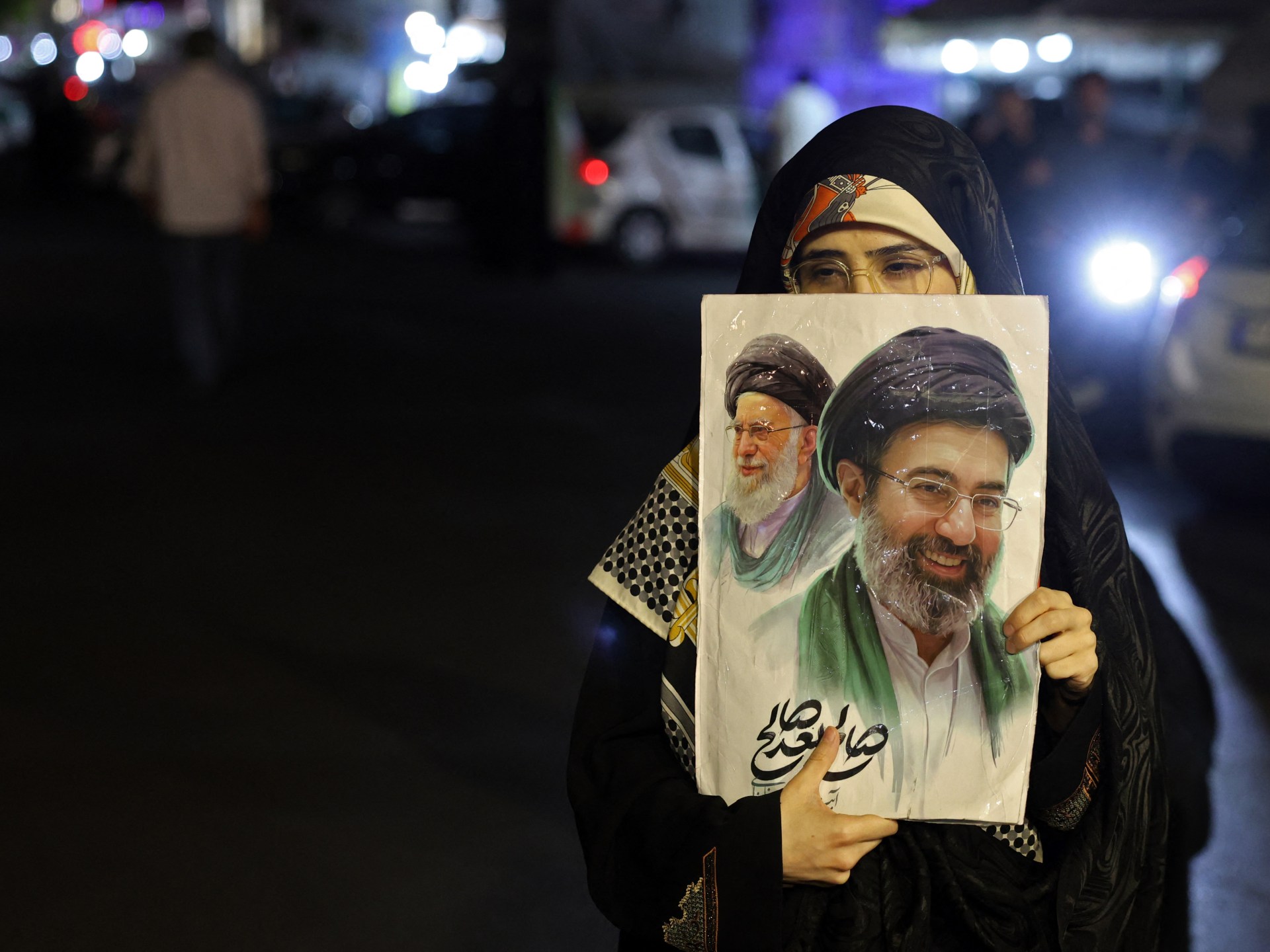
However, Iran’s supreme leader, Ayatollah Mojtaba Khamenei, has issued a directive that Iran’s enriched uranium should not be sent abroad, the Reuters news agency reported on Thursday, citing two unnamed senior Iranian sources.

The future of the estimated 440kg (970lb) of uranium enriched to 60 percent that Iran is believed to be holding remains a chief sticking point in peace negotiations between the US and Iran.

While uranium enriched to 60 percent is still far short of the 90 percent required for weapons-grade material, it is the point at which it becomes much quicker to reach 90 percent, nuclear experts say.

But even if Iran were to agree to transferring it, can highly enriched uranium be moved between countries safely?

“We will get it. We don’t need it, we don’t want it. We’ll probably destroy it after we get it, but we’re not going to let them have it,” Trump said about Iran’s enriched uranium stockpile when he spoke to reporters at the White House on Thursday.

However, the same day, Reuters reported that Iran’s supreme leader had issued a directive prohibiting the removal of the uranium.

Reuters additionally reported, citing unnamed Israeli officials, that Trump had assured Israel that Iran’s enriched uranium stockpile will be sent out of Iran and that any peace deal will include a clause on this.

“The Supreme Leader’s directive, and the consensus within the establishment, is that the stockpile of enriched uranium should not leave the country,” Reuters reported, quoting one of the two Iranian sources, who spoke on condition of anonymity because of the sensitivity of the matter.

Tehran has said for years that its nuclear programme is for civilian purposes only and that it does not intend to build nuclear weapons. It signed a deal with the US in 2015 to limit its nuclear programme in exchange for sanctions relief. But Trump withdrew from the landmark deal in 2018 and slapped sanctions back on Iran, despite international inspectors stating that Iran had stuck to its side of the deal.

As a result of the US withdrawal from that agreement – known as the Joint Comprehensive Plan of Action (JCPOA) – and the bombing of Iran’s Natanz nuclear facility in 2021, which Iran blamed on Israel, it decided to enrich uranium from the 3.67 percent allowed under the 2015 deal for nuclear power development purposes, to almost 60 percent.

Iran is now believed to be holding about 440kg (970lb) of uranium enriched to 60 percent. A 90 percent threshold of enriched uranium is needed to produce a nuclear weapon.

In theory, this amount of enriched uranium – should it be enriched to 90 percent – is enough to produce more than 10 nuclear warheads, International Atomic Energy Agency (IAEA) chief Rafael Grossi told Al Jazeera in early March.

Almost all of Iran’s stockpile is thought to be in the form of hexafluoride gas, which can be stored in small canisters, each about the size of a scuba tank. This is spun in centrifuges to increase the proportion of uranium-235, the isotope that can support nuclear fission chain reactions.

Most of Iran’s enriched uranium is believed to be lying underground, beneath the rubble of Iran’s nuclear facilities that were bombed by the US and Israel last year during the 12-day Iran-Israel war. In June 2025, Trump said the US attacks had “obliterated” three Iranian nuclear enrichment facilities at Fordow, Natanz and Isfahan.

But Israel, the US and other Western countries now allege that Iran is seeking, or at least preparing the capacity, to build nuclear weapons. They argue that the 60 percent enrichment level achieved so far is well above what is needed for a civilian nuclear energy programme.

Israeli Prime Minister Benjamin Netanyahu has said the war will not be considered over until Iran’s enriched uranium is removed, Tehran halts support for its proxy armed groups in the region, and its ballistic missile capabilities are dismantled.

The US wants this stock to be handed over to it, but Iran was reportedly willing to consider handing it only to a third party. Now, Supreme Leader Khamenei is understood to have issued an order prohibiting its removal at all.

Iran’s top diplomat, Abbas Araghchi, told reporters on the sidelines of a meeting of foreign ministers from BRICS nations in New Delhi earlier this month that Iran and the US had reached a “deadlock” on the question of Iran’s “enriched material”.

As a result, he said, the topic is being “postponed” until later stages in the talks. “For the time being, it is not under discussion, it’s not under negotiation, but we will come to that subject in later stages.”

Meanwhile, news reports have suggested that on February 26 this year, during informal negotiations with the US in Geneva two days before the US and Israel launched attacks on Tehran, Iran offered to “downblend” the stockpile from 60 percent to 3.67 percent, in an irreversible process.

Uranium hexafluoride gas is extremely dangerous: If released, it can form highly toxic and corrosive fluoride compounds that are deadly when inhaled and can burn the skin.

The IAEA has specific protocols in place to safely transport enriched uranium. According to the agency’s website, enriched uranium hexafluoride can be transported in type 30B containers, which are heavily fortified, standardised steel cylinders. These are specially designed to withstand high pressure and heat.

The IAEA also states that these cylinders are deliberately built in a small size to “avoid criticality risks”. In this context, “criticality” means an uncontrolled nuclear chain reaction which releases energy and radiation very quickly.

The US exported highly enriched uranium to Canada for medical‑isotope production from the mid‑1980s, but progressively phased out those shipments as producers converted to low‑enriched uranium. By the mid‑2010s, Washington had authorised what it described as the final exports and, in 2021, the US Department of Energy announced it would no longer supply enriched uranium for medical‑isotope production, saying global markets had successfully shifted to low‑enriched uranium.

After the Cold War, US forces flew about 600kg (1,323lb) of weapons-grade uranium out of Kazakhstan to the US in 1994, in a covert operation dubbed Project Sapphire to remove nuclear material left over from the Soviet Union.

The teams involved in this transport worked 12-hour shifts, six days a week, for four weeks just to move the material safely from a metallurgical plant to a local airport, according to the Center for Arms Control and Non-Proliferation.

📰 மூல செய்தி (Source): https://www.aljazeera.com/news/2026/5/22/irans-enriched-uranium-stockpile-can-it-be-safely-transferred?traffic_source=rss

உலகம்

Hundreds protest Ireland’s ‘George Floyd moment’

Published

on

Hundreds protest Ireland’s ‘George Floyd moment’ after death of Congolese man

Hundreds have protested outside the store where a Congolese man in Dublin died after he was restrained by security guards, with video showing one guard kneeling on his neck or head. Protesters say this is Ireland’s ‘George Floyd moment’.

📰 மூல செய்தி (Source): https://www.aljazeera.com/video/newsfeed/2026/5/22/hundreds-protest-irelands-george-floyd?traffic_source=rss

Continue Reading

உலகம்

Man Utd appoint Michael Carrick as permanent manager

Published

on

Carrick steps up from role as interim coach to replace Ruben Amorim on a permanent basis as Manchester United manager.

Michael Carrick never chased the ⁠spotlight as a player, and he has ⁠not suddenly sought it out as a manager.

In a season when Manchester United needed clarity, calm and conviction, it is Carrick – understated, deeply respected and quietly authoritative – who has come to embody all three.

What has followed since his January appointment as interim manager has been more than a managerial bounce, it has ⁠been a transformation. United’s hierarchy took note, awarding him the permanent manager job on Friday.

When Carrick stepped into the role after Ruben Amorim’s sacking, United were drifting, their campaign defined as much by uncertainty as by underachievement.

Within months, they were reborn, climbing to the brink of a third-place Premier League finish and sealing a return to the Champions League with games to spare.

Results ⁠alone tell only part of the story, though they are striking enough. Carrick has won 11 of his 16 league matches in charge, losing only twice, and his team accumulated more league points than any other side during that spell.

United beat Manchester City, Arsenal, Liverpool and Chelsea, rediscovering a competitive edge that had been sorely absent.

“We had two tough fixtures when Michael came in [against Arsenal and City] and I think everyone was probably looking at them thinking ‘Oh no’,” said United centre back Harry Maguire.

“We managed to get six points and from then on everyone has believed in it and ‌we’ve got confidence.”

For a side who finished 15th the season before, the turnaround has felt dramatic rather than incremental.

Yet those inside Old Trafford point to something deeper. Carrick has not only improved performances, he has reset the environment.

Dressing-room morale stabilised and a sense of purpose returned to a squad that had begun to look fractured.

Kobbie Mainoo, a finalist for the Premier League’s Young Player of the Season award, praised Carrick for “all the confidence he gives all the players. You want to follow him and fight for him and die for him on the pitch.”

Amorim had a blind spot where the young midfielder was concerned, but Mainoo’s performances these past few months have been one of the clearest signs of United’s revival under Carrick.

He restored Mainoo to a central role and instilled in him the trust to play with freedom and authority, a shift reflected in his poise and creativity in big moments, including key contributions in wins that secured Champions League qualification.

Mainoo was named to Thomas Tuchel’s England World Cup squad on Friday.

Players have ⁠spoken of clarity, communication, and of a manager who connects rather than commands.

Maguire, a central figure in the revival, summed up Carrick’s demeanour simply.

“He has been excellent with players, communicates really well,” he said.

Bruno Fernandes, who won the FWA Men’s Footballer of the Year award, has also praised Carrick.

“I’ve always said that Carrick could be a great manager,” Fernandes said recently. “When, as a player, you can see and think about the game like him, you can ⁠also do it from the bench.

“Of course, it’s different, but when you have that calmness, that intelligence, you tell yourself there’s potential. He’s done a fantastic job since he arrived.”

That ability to connect is rooted in Carrick’s personality. He is not a grand or demonstrative figure, but rather ⁠one who influences through calmness, intelligence and empathy.

As a player, he was the midfield metronome, dictating tempo without drama. As ⁠a coach, those traits now define his touchline presence.

And his authority comes from within. Few understand United’s identity better. A five-time Premier League champion during his playing career at Old Trafford, the 44-year-old knows both the expectations and the pressures of the role.

That knowledge has informed his decisions. He reverted to a traditional back four after Amorim preferred three at the back, and was harshly criticised for his refusal to be flexible.

He has also restored key players such ‌as Fernandes to their more natural positions. Amorim played the Portugal international in a deeper role as one of two central midfielders, while Carrick has pushed him into an advanced position.

Fernandes has flourished again at the heart of the side in a season where he tied the league’s record for assists in a season with one game remaining.

The noise that once surrounded the club ‌has ‌also quietened, replaced by a sense of excellence rarely experienced in recent years.

That is perhaps Carrick’s most significant achievement. He has not promised revolution, but he has delivered stability – and in doing so laid the foundation for something more sustainable.

For Carrick, the journey carries a certain symmetry.

A player who spent more than a decade orchestrating United’s midfield has been handed the baton to guide their future.

📰 மூல செய்தி (Source): https://www.aljazeera.com/sports/2026/5/22/man-utd-appoint-michael-carrick-as-permanent-manager?traffic_source=rss

Continue Reading

உலகம்

Gang violence kills at least 25 in Honduras

Published

on

The attacks by gunmen come as the government continues a drive to crack down on organised crime.

Gunmen have killed at least 25 people, including six police officers, in attacks across Honduras.

The attacks marked Thursday as one of the most violent days the country has seen in recent years. They came despite ongoing efforts by the government to rein in organised crime and violence.

Nineteen people were killed as gunmen raided a palm plantation in the municipality of Trujillo in the north of the country.

A leader of one rural group told the AFP news agency that those killed were employees of an armed group controlling a plantation.

However, local media indicated that armed suspects had fired indiscriminately on labourers. They reported that the oldest victim was 61.

Photos showed bodies, some wearing thick rubber boots for work, strewn on the ground outside.

Meanwhile, in the west near the Guatemalan border, six police officers were killed in another shooting in the municipality of Omoa.

Police report that the officers had travelled to the area as part of an operation to quash gang activity. However, they were ambushed.

After the two attacks, the National Police issued a statement, saying it “will proceed immediately with a direct intervention in the affected areas”.

“The state will act firmly to capture those responsible, protect vulnerable communities and guarantee comprehensive justice for all affected victims,” it added.

Honduras is struggling to crack down on gang violence. Until January, many parts of the country were under a state of emergency launched in 2022.

That emergency decree ended, however, with the inauguration of right-wing President Nasry “Tito” Asfura, a close ally of United States President Donald Trump, who has prioritised a hardline approach to security in Latin America.

The attacks will, therefore, raise concerns over security, but also civil liberties.

Laws passed earlier this week will allow authorities to designate gangs and drug cartels as terrorist groups. A new anti-organised crime unit has also been created.

The Trujillo shooting occurred near the Aguan River Valley, where armed groups, involved in narcotrafficking and palm oil extraction, have been fighting over land for decades.

Trujillo police chief Carlos Rojas told local media that the groups occupy and illegally exploit several large African palm plantations, using money from the crops to obtain weapons.

Local farmer groups, however, accuse transnational agribusiness corporations of sponsoring the criminal groups to carry out land occupations and prevent residents from reclaiming disputed lands.

According to Reuters, more than 150 people in the area have been killed or disappeared, with environmental and land rights activists a particular target.

Honduras is one of the most dangerous countries in the world for such activists. Earlier this month, police arrested several individuals, including a mayor, for plotting the assassination of a prominent environmental campaigner in 2024.

📰 மூல செய்தி (Source): https://www.aljazeera.com/news/2026/5/22/gang-violence-kills-at-least-25-in-honduras?traffic_source=rss

Continue Reading

Trending

Copyright © 2024 by 7Tamil Media, All rights reserved.