Connect with us

உலகம்

In rare push, US lawmakers demand transparency on Israel nuclear capability

Published

on

Lawmakers say US policy of ambiguity on Israel’s nuclear capabilities heightens risks amid US-Israel war on Iran.

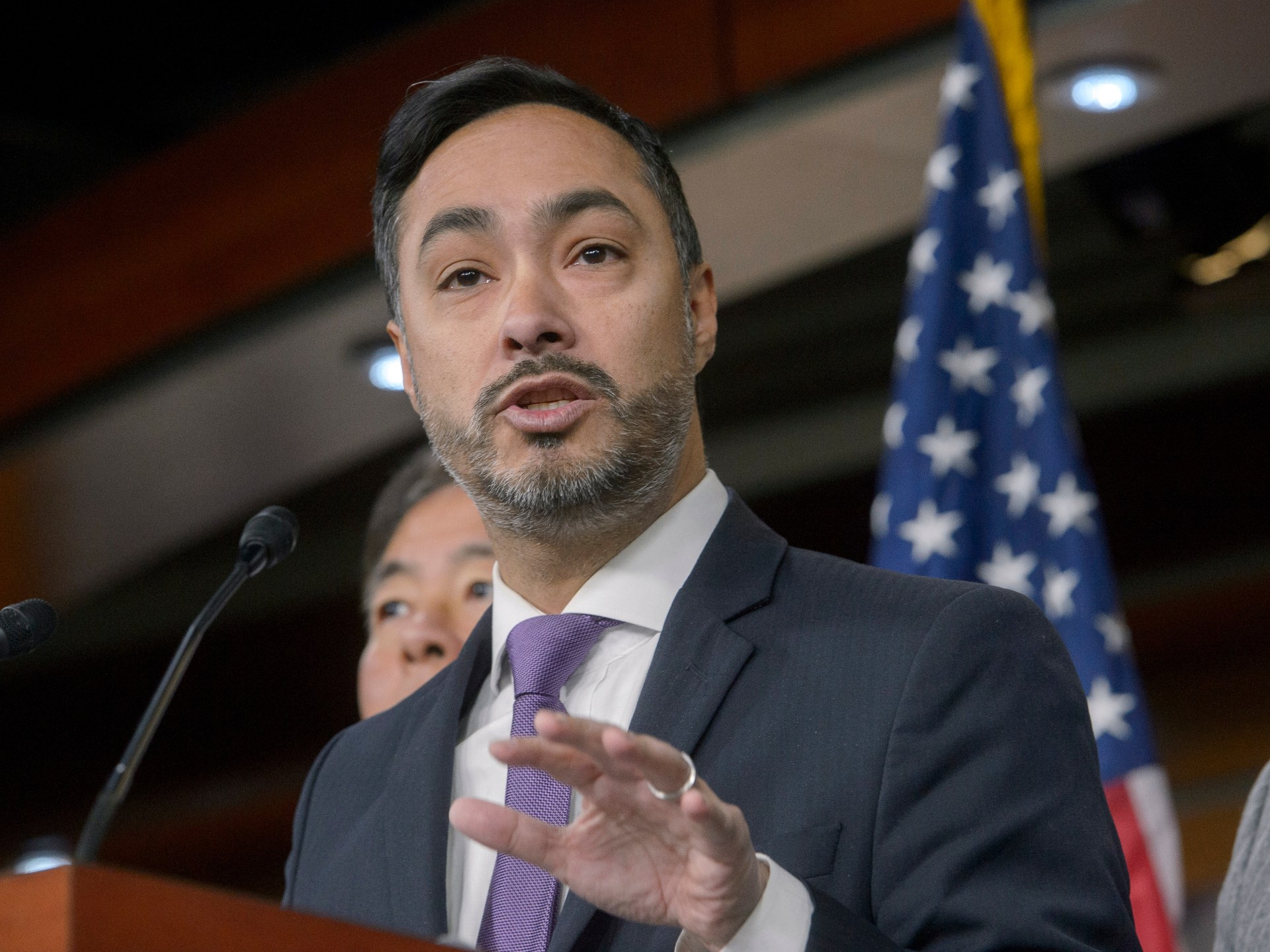
Washington, DC – A group of Democrats in the United States Congress have called on the State Department to break the US government’s longstanding silence on Israel’s nuclear capabilities.

In a letter sent to Secretary of State Marco Rubio, the Democrats pointed to the US-Israel war on Iran as the reason more clarity is urgently needed.

While Israel is believed to have possessed nuclear weapons since the 1960s, it maintains “a policy of nuclear opacity, never officially confirming the existence of its nuclear weapons program and arsenal”, according to the Washington, DC-based Nuclear Threat Initiative.

The White House has also long maintained ambiguity on the issue, despite a handful of glancing admissions. In turn, lawmakers in Congress have launched several coordinated public efforts for greater transparency amid decades of bipartisan support for Israel.

“Congress has a constitutional responsibility to be fully informed about the nuclear balance in the Middle East, the risk of escalation by any party to this conflict, and the administration’s planning and contingencies for such scenarios,” the letter, signed by 30 members of Congress, said. “We do not believe we have received that information.”

“A policy of official ambiguity about the nuclear capabilities of one party to this conflict makes coherent nonproliferation policy in the Middle East impossible,” the letter said, “for Iran, for Saudi Arabia, and for every other state in the region making decisions based on their perceptions of the capabilities of their neighbours.”

In the letter, dated May 4, the lawmakers plainly ask Rubio what nuclear weapon capabilities Israel has, as well as clear information on its warheads and launchers.

They particularly focused on the Negev Nuclear Research Center in Dimona, long believed to be the core of Israel’s nuclear programme.

“Does Israel currently possess enrichment capabilities, and at what level?” they asked, appealing for details on both fissile material and plutonium production.

The letter further asked whether Israel, which is not a signatory to the Treaty on the Non-Proliferation of Nuclear Weapons (NPT), has articulated to the US any “nuclear doctrine, red lines, or thresholds for nuclear use in the context of the current conflict with Iran?”

“Has the administration received any assurances from Israel that nuclear weapons will not be used?

“Have there been any indications of Israel planning to use or deploy nuclear weapons during the recent Iran conflict or during other conflicts?”

Several former US officials, Israeli whistleblowers, and unclassified US intelligence documents have for decades shed light on Israel’s alleged nuclear programme.

Documents show that in 1968, the CIA told then-US President Lyndon B Johnson that Israel had developed or was capable of developing a nuclear weapon. President Richard Nixon then reportedly struck an agreement with Israeli Prime Minister Golda Meir in which Israel agreed not to acknowledge or test its nuclear arsenal in exchange for Washington ending oversight pressures.

Israeli nuclear technician-turned-whistleblower Mordechai Vanunu leaked evidence of the Negev Nuclear Research Centre to the United Kingdom’s Sunday Times in a landmark 1968 report.

In its letter to Rubio, US lawmakers noted that the “public record strongly and consistently supports the conclusion that Israel possesses nuclear weapons”. It pointed to a 1974 US Special National Intelligence Estimate and several statements by US and Israeli officials.

US officials included former defence secretary nominee Robert Gates, who, during testimony to the Senate Armed Services Committee in 2006, listed Israel as one of the world’s “powers with nuclear weapons”.

The Nuclear Threat Initiative estimates that Israel has 90 nuclear warheads, a plutonium stockpile of 750 to 1,110kg (1,700 to 2,400lbs), six submarines capable of launching nuclear weapons, and intermediate-range ballistic missiles capable of reaching 4,800 to 6,500km (3,000 to 4,000 miles).

Individual lawmakers have previously called for more transparency on Israel’s nuclear weapons. For example, Representative James McGovern referenced Israel as a nuclear-armed nation in a resolution in 2019.

Still, concerted congressional pressure on US presidential administrations has been exceedingly rare.

The letter comes as lawmakers from both parties have increasingly questioned Washington’s close ties to Israel amid the genocide in Gaza and the US-Israel war on Iran.

In April, 40 Democratic senators voted in support of a bill to block the sale of military bulldozers to Israel. While the measure failed, advocates hailed the increased pressure among Democrats as “historic”.

The Trump administration, meanwhile, has said that preventing Iran from developing a nuclear weapon is a key objective in its war. Tehran has for years denied seeking such a weapon.

In a statement to Al Jazeera, Josh Reubner, the policy director for the Institute for Middle East Understanding Policy Project, hailed lawmakers for their calls for clarity on Israel’s nuclear weapons programme.

“This initiative is taking place against the backdrop of the US-Israeli war of aggression against Iran. One of Trump’s goals for ending this war involves negotiations to lift sanctions against Iran in exchange for an Iranian commitment not to develop nuclear weapons,” Reubner said.

“Members of Congress are right to question why Israel’s development of nuclear weapons gets a free pass while we’re trying to prevent Iran from acquiring them,” he said.

📰 மூல செய்தி (Source): https://www.aljazeera.com/news/2026/5/6/in-rare-push-us-lawmakers-demand-transparency-on-israel-nuclear-capability?traffic_source=rss

உலகம்

Holders PSG beat Bayern Munich to reach Champions League final with Arsenal

Published

on

Paris Saint-Germain draw the second leg of their semifinal with Bayern Munich 1-1 in Germany to take the tie 6-4.

Holders Paris Saint-Germain set up a Champions League final against Arsenal after a 1-1 second-leg draw at Bayern Munich secured a 6-5 aggregate victory.

PSG exploded on the counter less than three minutes in on Wednesday and Ballon d’Or winner Ousmane Dembele put Luis Enrique’s visitors ahead on the night and two goals up in the tie.

PSG largely succeeded in subduing Bayern’s attacking threat, despite Harry Kane’s stoppage-time goal.

“It was an exceptional match, another magical night in Munich against a great team,” PSG forward Desire Doue told Canal Plus.

“These are the kinds of matches we’ve dreamt of playing since we were little. Now, we’re going to enjoy this as a team.”

On their return to Munich’s Allianz Arena, the scene of their greatest triumph against Inter Milan in last year’s final, PSG once again emphasised their excellence in a competition they coveted without success for so long.

The French giants will be favourites to lift the trophy for a second successive season when they face Premier League leaders Arsenal on May 30 in Budapest.

They are hoping to become only the second back-to-back winners since 1990, after Real Madrid.

Bayern were angered by some first-half refereeing decisions but lacked the potency they showed in their 5-4 first-leg loss in Paris.

The six-time European champions have still not reached the final since beating PSG in the 2020 showpiece in Lisbon.

“I don’t have the ability to be disappointed for long,” said Bayern coach Vincent Kompany. “Of course, in the end we lost two very, very tight games against a very good opponent.”

Both sides were playing their 52nd match of the season in all competitions – not even counting last summer’s Club World Cup – but only the hosts looked weary.

So dangerous in the first leg, Bayern were surprisingly stodgy, with Michael Olise in particular having an off night.

In the midst of a record-breaking season, Bayern’s fourth defeat in all competitions will sting for a club set to wonder what might have been.

With Bayern already Bundesliga champions and PSG also on track for the Ligue 1 title, both sides heavily rotated their lineups in the weekend’s league fixtures.

But both teams only made one change to their starting XIs compared with last week’s spectacle in Paris. Only PSG’s was forced, with Fabian Ruiz in for the injured Achraf Hakimi.

The high-octane first leg was widely lauded as among the best matches in the competition’s history and Wednesday’s game offered more of the same early on.

Ruiz, starting his first European match since January, set Khvicha Kvaratskhelia down the left flank with an excellent through ball.

The Georgian latched onto the pass, blazed past his marker before cutting back for the perfectly placed Dembele to slam home.

Bayern conceded after just 36 seconds against Real Madrid in the quarterfinals and fought back to win but seemed stunned by the early goal this time around.

Olise, Kane and Joshua Kimmich all mislaid passes in the opening half-hour, ending promising attacks.

Bayern surrounded referee Joao Pinheiro, claiming a penalty on the half-hour mark when Vitinha’s clearance hit Joao Neves’s outstretched arm in the box, but their appeals were waved away.

The home players had already been left incensed when PSG full-back Nuno Mendes was not shown a second yellow card for handball.

PSG went inches from scoring a second, but Manuel Neuer tipped a close-range Neves header just wide of the post.

The home team rediscovered their rhythm just before the break, with Jamal Musiala forcing an excellent low save from PSG goalkeeper Matvey Safonov and blasting over the bar.

PSG showed a more measured side to their game in the second half, sitting back to absorb Bayern pressure while never losing their own threat on the counter.

Neuer made fine saves from Kvaratskhelia and Doue to keep Bayern in the tie.

The Bavarians dominated possession and territory but could not break through until Kane scored for a seventh straight Champions League match in stoppage time.

There was time for the restart, but it was too little, too late for the hosts.

📰 மூல செய்தி (Source): https://www.aljazeera.com/sports/2026/5/6/holders-psg-beat-bayern-munich-to-reach-champions-league-final-with-arsenal?traffic_source=rss

Continue Reading

உலகம்

Trump says had ‘very good talks’ with Iran as Tehran reviews US proposal

Published

on

Momentum could be building for Washington and Tehran to strike a deal that could ultimately end the war.

United States President Donald Trump says he has had “very good talks” with Iran over the past 24 hours and it is “very possible that we will make a deal”, as Tehran reviews a US peace proposal that sources said would formally end the war.

Signalling progress in the ongoing talks between the two sides, Trump on Wednesday also said Iran should suspend its nuclear programme and reopen the Strait of Hormuz, threatening to resume bombardment if negotiations fall apart.

“Look, this is very simple. Iran cannot have a nuclear weapon because as tough as they are, we want to keep them alive. We want to keep all of you alive,” he told reporters at the White House.

In an interview with US media outlet PBS, Trump also said he was optimistic about reaching an agreement with Iran before his scheduled trip to China next week.

“I think it’s got a very good chance of ending, and if it doesn’t end, we have to go back to bombing the hell out of them,” he said.

Meanwhile, Iran’s Foreign Ministry spokesman Esmaeil Baghaei played down reports suggesting an agreement with the US was close, calling them exaggerated.

He said Tehran had not yet issued a formal response to the latest US proposal, but is continuing to exchange diplomatic messages via mediator Pakistan.

Trump has repeatedly played up the prospect of an agreement that would end the US-Israel war on Iran that started on February 28, so far without success. The two sides remain at odds over a variety of difficult issues, such as Iran’s nuclear ambitions and its control of the Strait of Hormuz, which before the war handled one-fifth ‌of the world’s oil and gas supply.

A Pakistani source and another source briefed on the mediation told the Reuters news agency that an agreement was close on a one-page memorandum that would formally end the conflict. That would kick off discussions to unblock shipping through the strait, lift US sanctions on Iran, and set curbs on Iran’s nuclear programme, the sources told the agency.

It was unclear how the memorandum differs from a 14-point plan proposed by Iran last week.

Iran’s semiofficial Tasnim news agency, citing an unnamed source, said the US proposal contained some unacceptable provisions, without specifying which ones.

Lawmaker Ebrahim Rezaei, a spokesperson for the Iranian Parliament’s Foreign Policy and National Security Committee, described the text as “more of an American wish list than a reality”.

“The Americans will not gain anything in a war they are losing that ⁠they have not gained in face-to-face negotiations,” he wrote on social media.

US State Department spokesman Tommy Pigott told Al Jazeera that Trump remained “clear-eyed” about the temporary short-term disruptions caused by Iran’s effective closure of the Strait of Hormuz, but that Washington can’t “normalise a country being able to determine who is allowed to use an international waterway”.

“I am certainly not going to preview or predict the actions of what the president may decide in the future, but the president has been clear from the very beginning that he prefers a diplomatic solution… But make no mistake that President Trump means what he says when he says the Iranian regime can never be allowed to obtain a nuclear weapon,” he said.

Israeli Prime Minister Benjamin Netanyahu said he would speak with Trump later on Wednesday about the ongoing negotiations with Iran, adding that they had both agreed that all enriched uranium must be removed from Iran to prevent it from developing a nuclear bomb.

Iran has steadfastly refused to give up its enriched uranium, which it insists is not for making a nuclear weapon.

Meanwhile, US military forces operating in the Gulf of Oman said they had disabled an Iranian-flagged oil tanker after it allegedly failed to comply with warnings, US Central Command (CENTCOM) announced.

CENTCOM said in a statement that the vessel – identified as the M/T Hasna – was observed transiting international waters en route to an Iranian port on the Gulf of Oman at approximately 14:00 GMT on Wednesday.

US forces issued “multiple warnings” to the tanker, informing its crew that the vessel was in violation of the blockade, the command said. The US blockade against ships attempting to enter or depart Iranian ports remains “in full effect”, it reiterated.

Trump late on Tuesday announced a pause in “Project Freedom”, a US military operation to guide stranded commercial ships through the Strait of Hormuz – after only a day – citing a chance to seal a deal to end the war.

Trump wrote on social media that the surprise decision to halt the mission came after requests from “mediator Pakistan and other countries”, saying “Great Progress has been made toward a Complete and Final Agreement” with Tehran.

📰 மூல செய்தி (Source): https://www.aljazeera.com/news/2026/5/6/trump-says-had-very-good-talks-with-iran-as-tehran-reviews-us-proposal?traffic_source=rss

Continue Reading

உலகம்

SpaceX backs Anthropic with data centre deal amidst Musk’s OpenAI lawsuit

Published

on

SpaceX pens a new deal with Anthropic as Elon Musk sues competitor OpenAI for allegedly backtracking on its mission.

Anthropic has reached a deal to tap the computing resources of Elon Musk’s SpaceX, marking a detente with its one-time critic and a boost for both companies in the high-stakes artificial intelligence race.

Under the agreement announced on Wednesday, Anthropic will use the full computing power of SpaceX’s Colossus 1 facility in Memphis, Tennessee, which houses more than 220,000 Nvidia processors and will give the Claude chatbot maker 300 megawatts of new capacity within a month. That’s enough electricity to power more than 300,000 homes – as the Dario Amodei-led company seeks to boost the capacity of its Claude Pro and Claude Max AI assistants for subscribers.

The announcement comes as Anthropic held its developer day and unveiled a new feature for its Claude AI system called “dreaming”. The tool allows AI systems to review work between sessions, spot patterns, and update files that store user preferences and other context.

Available as a research preview, “dreaming” comes with software for managing agents, or AI programmes that perform tasks with little human involvement. Amodei has previously warned that AI could wipe out 50 percent of entry-level jobs in the next one to five years.

Buoyed by the extra capacity from the SpaceX deal and other similar recent agreements, Anthropic said it was doubling Claude Code’s rate limits for its paid plans, removing peak-hour usage caps for Pro and Max accounts, and sharply increasing the volume of requests developers can make to its Claude Opus models.

The company said it is also interested in working with SpaceX to develop multiple gigawatts of space-based orbital data centres – one of Musk’s key goals and a major driver behind SpaceX’s initial public offering – as the endeavour is expected to be highly capital-intensive and technically challenging.

In a statement on X, Musk said he made the decision to lease computing power to Anthropic after spending time with its leaders last week. Their work to ensure Anthropic’s Claude AI is “good for humanity” impressed him, he said.

“No one set off my evil detector,” wrote Musk, who is battling OpenAI and its CEO Sam Altman in court for allegedly breaching its mission to develop AI for the good of humanity and remain a nonprofit organisation.

Last week Musk alleged in court that by late 2022, Altman was trying to “steal the charity” and claimed that “it turned out to be true”.

Musk, who cofounded OpenAI, also claimed that OpenAI wouldn’t have existed without him. The world’s richest man said that he founded OpenAI following a conversation with Google cofounder Larry Page, which he felt lacked concern about AI safety.

“I said, ‘What if AI wipes out all humans?’ He said that would be fine so long as artificial intelligence survives. I said that was insane, that’s just crazy. And then he called me a ‘speciesist’ because I care about humans more than AI. … The reason OpenAI exists is because Larry Page called me a ‘speciesist.’ … What would be the opposite of Google? An open-source nonprofit.”

OpenAI’s lawyers claimed that Musk’s lawsuit was an attempt to undermine the Altman-led company in favour of his own xAI, now part of SpaceX.

Musk’s deal comes as the administration of United States President Donald Trump pens new agreements with other AI giants, excluding Anthropic.

On Tuesday, tech giants Microsoft, Google and Elon Musk’s xAI agreed to allow the federal government access to test their new artificial intelligence tools amid hacking concerns surrounding Anthropic’s technology.

Last week, the Department of Defense also announced a deal with 10 different AI giants to use their tech on classified networks. Anthropic was not part of that deal.

📰 மூல செய்தி (Source): https://www.aljazeera.com/economy/2026/5/6/spacex-backs-anthropic-with-data-centre-deal-amidst-musks-openai-lawsuit?traffic_source=rss

Continue Reading

Trending

Copyright © 2024 by 7Tamil Media, All rights reserved.