Connect with us

முக்கியச் செய்திகள்

I survived a missile strike in the Strait of Hormuz, but my friend has not been found

Published

on

"I felt the whole ship shake. I thought there'd been some fault with the engine. But as soon as I stepped outside of my room, there was another explosion."

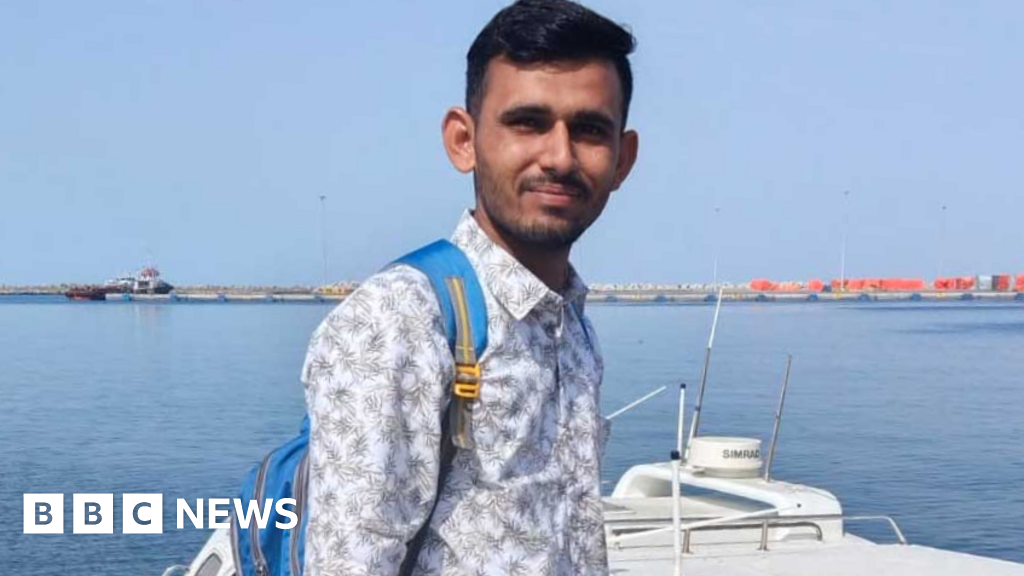
Sunil Puniya, 26, was on his first job at sea when a missile struck the oil tanker Skylight in the early hours of 1 March.

The US-sanctioned vessel had travelled from Dubai and was nearing the Strait of Hormuz – one of the world's busiest shipping routes. Skylight was the first commercial vessel to be struck after the US-Israel war with Iran erupted in the region.

At the time of the attack, Sunil was asleep in his cabin on the third floor. He woke to find the ship engulfed in chaos. The missile had struck the engine room, sparking a fire that rapidly spread through the vessel.

"There was a complete blackout, and smoke had spread everywhere," he said. "Everyone was having trouble breathing."

"There were some sailors from South India who were crying and making panicked calls home. I told them to stop calling and helped bring them up on to the deck."

But by the time they reached the deck the fire was already spreading.

"There was oil everywhere," Sunil said. "The flames were coming towards us so we jumped into the sea."

The Oman Navy launched a rescue operation within an hour of the attack and pulled survivors from the water. But not everyone could be accounted for.

"As soon as I realised Dalip wasn't there, that's when it hit me," Sunil said. "I started panicking. I kept thinking: how will I answer to his family?"

Dalip Rathore, 25, had joined Skylight the day after Sunil. India is one of the biggest suppliers of seafarers to the global shipping industry but Dalip and Sunil discovered they were from neighbouring villages in Rajasthan and soon became close friends.

"There were network issues on the ship, so we couldn't call home very often," Sunil said. "In those moments, Dalip was there for me. He became like a brother."

Hours before the strike, Dalip had taken over Sunil's watch in the engine room – the area hit by the missile.

Dalip and the ship's captain, Ashish Kumar, were both killed in the attack. While some of the captain's remains were recovered, Dalip's body has never been found.

Their story is part of a wider crisis that has been unfolding in the Strait of Hormuz. At the beginning of the war, Tehran swiftly responded to strikes by blocking the Strait and with it a crucial route for 20% of the world's oil and liquified natural gas.

Maritime intelligence firm Kpler told BBC Verify 38 commercial vessels have been hit in and around the Strait since the start of the conflict. Their data shows 24 ships were hit by Iran and four by the US, with the rest unconfirmed.

The war has left many hundreds of ships unable to get through the strait. More than 20,000 seafarers are currently stuck in the Gulf, according to the International Maritime Organization.

Under maritime law, shipowners are responsible for the welfare and repatriation of their crews. If shipowners fail to act, responsibility can then fall to the vessel's flag state and, ultimately, port authorities.

Many ship owners have been organising supplies for their crews who are stranded in the strait, using small boats to deliver food and essentials to vessels at anchorage. Others, however, have been left with very little.

Since the conflict escalated, the the International Transport Workers' Federation (ITF), a union that supports seafarers in distress, says it has received more than 2,000 calls for help from people on a variety of commercial ships that have been trapped in and near the Strait.

The problems include unpaid wages, contract disputes, difficulties getting home, and shortages of basic supplies such as food and water.

Mohamed Arrachedi, the ITF's network coordinator for the Arab world and Iran, says some crews are effectively stranded at sea.

He shared voice notes with the BBC from three seafarers currently anchored on a small boat off the coast of Oman.

In the recordings, the men plead for help, saying they are running low on provisions and have not heard from the shipowner for months.

"Unfortunately, the industry as a whole has not succeeded in eradicating this cancer that is the abandonment of seafarers," said Arrachedi.

The ITF defines abandonment as cases where shipowners walk away from crews, leaving them unpaid, stranded, and without essentials such as food, water or medical care.

A total of 6,223 seafarers were abandoned across 409 ships last year. It's a small proportion of the 100,000-strong fleet of merchant vessels' operating around the world, but the union says it's a worrying trend.

David Loosley from Bimco, one of the world's largest international shipping associations, said that while the industry operates under international regulations, there are "isolated instances where standards are not fully upheld, with serious consequences for seafarer welfare".

"Geopolitical conflicts significantly heighten the risks faced by those at sea," he added.

While many seafarers stuck in the region have not been abandoned, the conflict has made an already precarious situation even more dangerous for those who are.

Rex Pereira, 28, from Mumbai, was not on Skylight but was recruited by the same agents as Sunil.

He said he had endured appalling conditions at sea for more than four months before the war broke out. He said their drinking water was contaminated with diesel, that much of the food they had to eat was expired, and shared pictures of dirty brown water that he said the crew were told to wash with.

Despite his request to leave the vessel within days of boarding, he received no response to his calls for help.

Instead, he was kept at sea for months. When the war started he was stationed off the coast of Iraq and witnessed missiles being fired close by.

"We could see Iran from where we were," he said, adding that missiles "were flying all over us".

"There was a huge explosion and smoke and the entire ship was vibrating," he said. "We were very scared, we were shivering and we were contacting anyone possible, anyone possible."

Rex never found out who the owner of his ship was but eventually managed to return to India after getting help from a shipping union and the Indian embassy, but his family had to pay thousands of pounds in travel costs to help get him home.

In the case of Skylight, identifying who was responsible for the vessel is difficult.

Maritime tracking platform MarineTraffic lists the shipowner as Red Sea Ship Management, a company based in Dubai.

When the BBC attempted to contact the company, calls to a number linked to the firm went unanswered, while an email address provided for the company bounced back.

The company also appears to have no working website.

Neither Sunil nor Dalip's family say they have heard from the shipowner since the attack.

Maritime analysts say sanctions have changed the way some vessels operate, with ships increasingly relying on opaque ownership structures, changing flags and insurers, and complex management networks in order to continue trading.

Experts say these practices can make it far more difficult to identify who is ultimately responsible for a vessel when something goes wrong.

Skylight was sanctioned by the US in December last year for transporting Iranian oil. Following this it lost its insurance and was no longer registered to a country – known as a flag state – which is responsible for enforcing safety and legal standards on a commercial ship.

It had previously been insured by Hydor, but a spokesperson for the company told the BBC their cover ended when the US imposed sanctions on the ship. The ITF confirmed there was no subsequent insurer registered for the ship.

We have also seen correspondence from Palau – the flag state previously linked to the vessel – stating that following US sanctions, Skylight was deregistered and no longer flagged to the country.

By the time it was struck, Skylight was both uninsured and effectively statele

📰 மூல செய்தி (Source): https://www.bbc.com/news/articles/ce8pn63q771o?at_medium=RSS&at_campaign=rss

Continue Reading
Click to comment

Leave a Reply

Your email address will not be published. Required fields are marked *

முக்கியச் செய்திகள்

Seven flotilla activists detained in Israel arrive back in UK

Published

on

Seven activists whose Gaza-bound aid flotilla was intercepted in international waters by Israeli forces have returned to the UK after being deported.

They were among more than 422 people involved in the Global Sumud Flotilla (GSF), which aimed to break the maritime blockade of Gaza and deliver food and medical aid.

The group, who arrived at at London Stansted on Saturday via Turkey, told the BBC they witnessed people being "systematically tortured and abused over two days" on Israeli vessels and in prison.

The Israeli military previously rejected similar allegations, telling the BBC that its orders "require respectful and appropriate treatment of flotilla participants".

More than 50 boats taking part in the GSF set sail from Turkey last Thursday carrying a token amount of aid.

Israel's government dismissed the action as a "PR stunt" serving the Palestinian armed group Hamas, and ordered commandos to board the boats west of Cyprus on Monday and Tuesday.

The detained activists were transferred to Israeli vessels and taken to an Israeli prison after arriving at the port of Ashdod.

The flotilla's organisers alleged there were "at least 15 cases of sexual assaults", while other people who were detained said they were beaten and mistreated.

The BBC has not been able to independently verify the allegations. Israel's prison service has dismissed them as false, saying all detainees were "held in accordance with the law".

Katy Davidson, 49, from Cornwall arrived in London in a grey tracksuit which she said she was made to wear after their belongings were thrown away.

She said: "These marks are from the handcuffs. When I asked them to loosen them they said they didn't care. They didn't care about human rights, or whether I lost my hand.

"When I actually got my hands through to have them adjusted they actually tightened them and laughed."

Hannah Schafer, a 62-year-old sailing instructor, said the aim was to open the humanitarian corridor to Gaza.

She said participants in the flotilla were taken onto "two prison ships".

Schafer alleges flotilla members were "systematically tortured and abused over two days".

Israeli authorities have said there was little humanitarian aid onboard the flotilla and it was a PR stunt.

Documentary film maker Dáša Raimanová, 44, said there were moments she thought she'd never see her daughter again but that what they faced was "nothing compared to the people of Palestine".

"It's not a PR stunt it's raising awareness and mobilising together that as civil society we have power to do something when governments are ignoring genocide," she said.

Elliott Roberts, 34, who lives in both Lincoln and Torquay, claimed the vessel he was on was fired at.

"I was taken into a small tent straight off the boat, two soldiers were crouched down ready for me to enter, they lifted me up turned me over and smashed me into the ground and now I think I've got a broken spine," he said.

He claimed he was denied medical treatment.

Israeli authorities have denied forces sexually assaulted and seriously abused people from the flotilla.

In an earlier statement, the Israel Defense Forces (IDF) said: "IDF orders require respectful and appropriate treatment of flotilla participants on the intercepted vessels, and there are clear and established procedures in this regard.

"No specific incidents of deviation from these binding procedures are known within the IDF. Any concrete complaints submitted to the IDF on the matter will be examined thoroughly."

📰 மூல செய்தி (Source): https://www.bbc.com/news/articles/c78krdgxl91o?at_medium=RSS&at_campaign=rss
Continue Reading

முக்கியச் செய்திகள்

BBC at the site of China's worst mining disaster in more than a decade

Published

on

At least 82 people have been killed and two are missing after a coal mine blast in northern China, officials have said.

The gas explosion at the Liushenyu Coal Mine is the worst mining disaster in China since 2009, and Chinese President Xi Jinping said no effort must be spared in the search and rescue operation.

Early on Sunday morning, rescuers deployed mine inspection robots underground, equipped with gas sensors and infrared cameras, state media reported.

The BBC's China correspondent Stephen McDonell is at the scene of the blast in Shanxi province.

A North Korean women's football team played in South Korea marking the first time athletes from the North have crossed the border in nearly 8 years.

Pakistan says it hit 'military and terrorist infrastructure' – but the UN and victims' families reject this claim.

Officials said the group had been hiking up the active volcano despite a climbing ban.

A glamping facility was destroyed by the raging torrent in Bogor, West Java on 4 May.

Thousands of people have been displaced after a fire destroyed around 1,000 homes in Malaysia's Sabah state.

The escape of Neukgu, a two-year-old wolf, from a zoo in the city of Daejon captured national attention.

The Philippine President challenged anyone questioning his fitness to join him in the gym.

K-pop stars BTS kicked off their marathon world tour in South Korea, with a heavy nod to their new album Arirang.

The megastars kick off their grandest tour, the largest in K-pop history, in Seoul on Thursday after a nearly four-year hiatus.

Drivers are queuing for hours at petrol stations in Myanmar as the Iran war continues to send shockwaves across the globe.

BBC News Asia Business Correspondent Suranajana Tewari spoke to people taking to the streets of Manila.

Some 260,000 fans are expected to watch BTS perform together on Saturday for the first time since 2022.

Eleven people were killed and dozens injured when a huge blaze engulfed a car parts factory in the central city of Daejeon.

Senior Kashmir leader Farooq Abdullah escaped unhurt after the incident and the suspect is in custody.

A young Japanese macaque at the Ichikawa City Zoo in Japan went viral, after videos showed him playing with a soft toy that zookeepers gave him for comfort.

Wanted for multiple counts of theft, the suspect was caught outside a temple on the outskirts of Bangkok.

A court is due to deliver its verdict in the insurrection trial of Yoon Suk Yeol.

The BBC's Arunoday Mukharji explains why India needs to capitalise on the momentum.

A Lakshmi goddess shrine at Bangkok shopping mall has become a place where young people come to pray for love.

BBC South Asia correspondent Azadeh Moshiri visited Sheikh Hasina's former residence which is now a memorial for the student protesters killed in the 2024 uprising.

📰 மூல செய்தி (Source): https://www.bbc.com/news/videos/c809m33yjz7o?at_medium=RSS&at_campaign=rss

Continue Reading

முக்கியச் செய்திகள்

Emotional Kostyuk dedicates win to Ukraine

Published

on

Marta Kostyuk's best French Open result was reaching the fourth round in 2021

Ukraine's Marta Kostyuk won "one of the most difficult matches" of her career as she reached the French Open second round on the same morning that a Russian missile struck close to her parents' home.

Russia launched a large-scale wave of overnight strikes against Ukraine, firing hundreds of drones and dozens of missiles.

Four people were killed in the capital Kyiv – where Kostyuk was born – and at least 83 people were injured across the country.

Kostyuk became tearful during her on-court speech following her 6-2 6-3 victory over Russian-born Oksana Selekhmeteva.

To loud cheers of support, the world number 15 said: "This morning, 100 metres away from my parents' house, a missile destroyed the building.

"It was a very difficult morning for me, I didn't know how this match would turn out for me or how I would handle it.

"I have been crying this morning. I don't want to talk about myself today.

"All my heart and all my thoughts go to the people of Ukraine today."

A one-horse French Open or will somebody stop Sinner?

Selekhmeteva was playing her first match under the Spanish flag, having switched allegiance earlier this week.

Kostyuk did not shake hands with her opponent, as Ukrainian players have a long-standing policy of not shaking hands with Russian or Belarusian players.

The 23-year-old has been an outspoken critic of Russia and its ally Belarus since it began its invasion on Ukraine in 2022.

"My biggest example is the Ukrainian people," Kostyuk said.

"I woke up this morning and looked at all these people who woke up and kept living their lives, kept helping people who are in need.

"I knew a lot of Ukrainian people would come out and support today. My friends from Ukraine came to support and I'm very happy to have them here.

"I'm incredibly proud of myself. I think it was one of the most difficult matches of my career."

Only Mirra Andreeva (15) has claimed more wins on clay on the WTA Tour this season than the in-form Kostyuk (12), who remains unbeaten on the surface in 2026.

She will face Katie Volynets next after the American beat France's Clara Burel 6-3 6-1.

Live text commentaries of key matches on the BBC Sport website and app, along with daily commentary live from Court Philippe-Chatrier across 5 Live Sport, BBC Sounds and the BBC Sport website and app

📰 மூல செய்தி (Source): https://www.bbc.com/sport/tennis/articles/cx214p4gvr0o?at_medium=RSS&at_campaign=rss
Continue Reading

Trending

Copyright © 2024 by 7Tamil Media, All rights reserved.