Connect with us

உலகம்

How Nigeria’s ‘algorithmic apothecary’ fuels a surge in risky herbal cures

Published

on

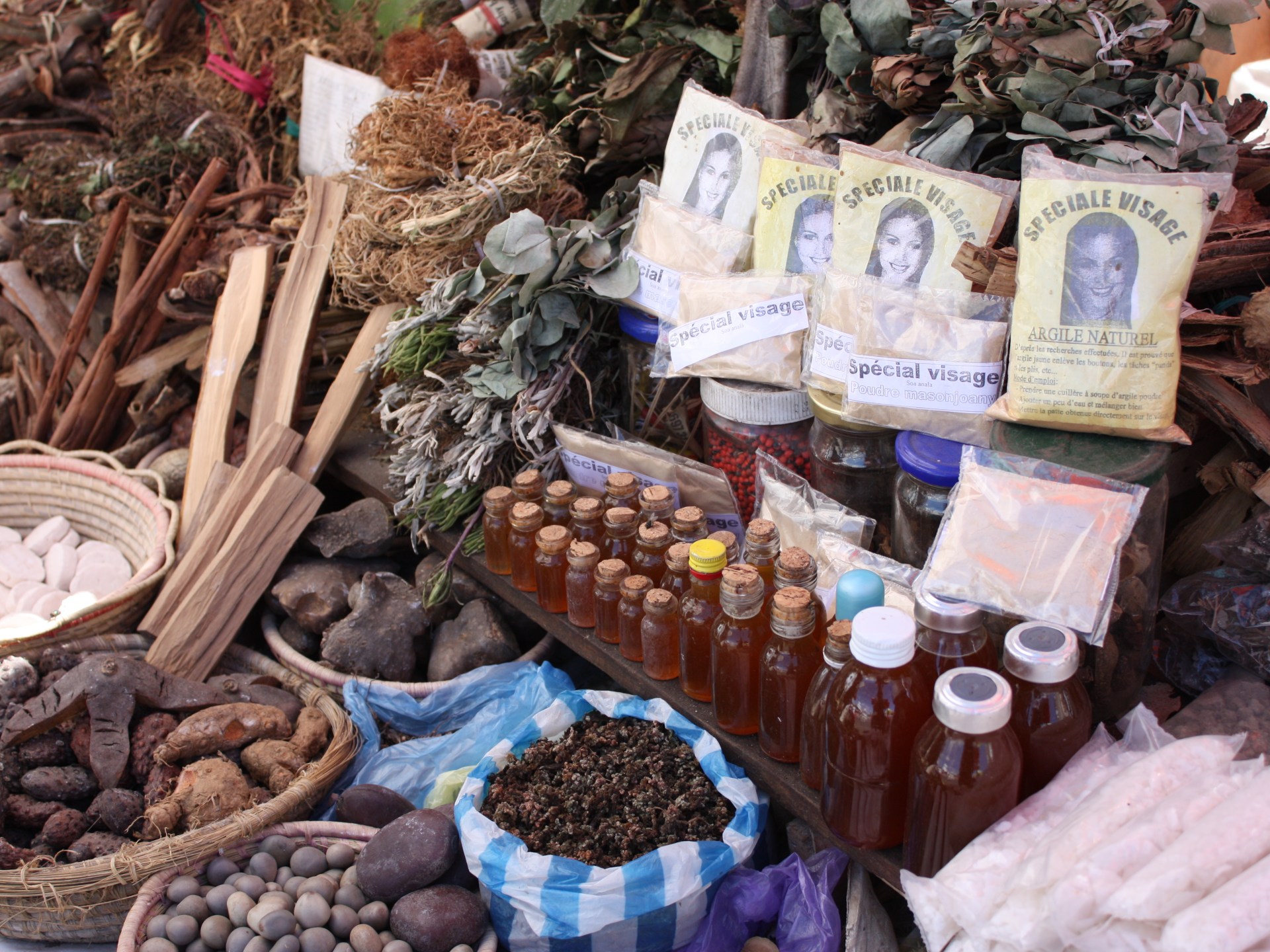
Unverified herbal remedies promoted on social media are driving rising health risks and delayed treatment in Nigeria.

Abuja, Nigeria – Oke Bola thought a fertility supplement she found online might help her conceive. Instead, within days of taking it, she struggled to breathe. Her experience reflects a growing online trade in unverified herbal remedies promoted across social media.

Bola (not her real name), who is in her early 40s and has never had children, said she bought the supplement earlier this year and increased the recommended dosage, hoping for quicker results after hearing about it from friends and family.

“I recognised the symptoms of asthma; the wheezing sound at night was familiar,” she told Al Jazeera. “When I checked online, I realised it could be from the herbal medication.”

Bola said her symptoms eased after she stopped taking the product. Without consulting a doctor, she assumed the reaction was linked to incorrect dosage and resumed use as instructed.

The product, Jinja Herbal Mixture, is marketed for its antioxidant, anti-inflammatory and antimicrobial properties.

A 2025 Nigeria-based study, titled The Toxicological Evaluation of Jinja: A Local Herbal Mixture (LHM), found it appeared safe for short-term use within tested dosage ranges, offering some support for its traditional use. But researchers also recorded biochemical changes at higher doses, including altered creatinine and sodium levels in test subjects, signs of possible kidney and liver stress.

The study called for further research into long-term effects and interactions with conventional medicines.

Another user, 47-year-old Temi Ahondiwura, a master’s graduate from the University of Ibadan, said a herbal eye treatment bought through Facebook worsened her vision problems. It was her first time trying such a remedy.

Marketed by social media influencers, the product claimed to treat multiple eye conditions.

“At first, I felt itching, but I thought that was part of the process,” she told Al Jazeera. “When it continued, I stopped and went back to my prescribed optical lenses.”

Stories like these are becoming increasingly common, according to pharmacist Akinade Akinlolu and Dr Egemba Chinonso Fidelis.

On a smartphone screen, relief is just a click away: fertility tonics, eye drops promising restored vision, syrups claiming to “flush out” disease. The advertisements are polished, persuasive and constant, woven into TikTok, Facebook, Instagram and X feeds.

Across Nigeria, doctors and pharmacists say a surge in social media-driven self-medication, particularly involving unverified herbal products, is worsening health outcomes, delaying treatment and adding pressure to an already strained system. High costs of care, shortages of medical equipment and the migration of health workers abroad have further weakened a system serving about 230 million people.

Nigeria’s young, hyperconnected population increasingly uses digital platforms for health information and advice. But that access has also created what Dr Isaac Kolawole and Dr Fidelis describe as an “algorithmic apothecary”, an unregulated online marketplace where influencers and anonymous sellers promote remedies directly to consumers with little or no scientific backing.

A report by Surjen Healthcare, a health-tech platform providing home-based care services, links rising self-medication in Nigeria to easy access to health information online. Many people, driven by high costs and mistrust in formal healthcare, now turn to social media for advice, sometimes with harmful consequences.

The report associates this trend with rising drug resistance, late hospital admissions and increased exposure to unsafe or counterfeit products. At the same time, Nigeria’s herbal medicine market continues to grow, but weak enforcement online has allowed unverified products to spread widely.

A 2025 study shows many Nigerians are open to traditional medicine delivered through digital platforms, often shaped by influencer content. It found that 68 percent of patients surveyed were willing to consult traditional practitioners online, while 42 percent of practitioners were aware of such platforms, but only 19 percent were using them. About 60 percent said they were open to adopting them.

“The platforms themselves amplify this effect,” said Fidelis. “Their algorithms reward engaging content and push it to wider audiences,” he told Al Jazeera.

Even users who try to avoid such content often encounter it repeatedly, shaped by emotional storytelling, music and urgency-driven messaging.

Within this ecosystem, herbal remedies, long part of Nigeria’s medical and cultural landscape, are increasingly repackaged as miracle cures, sometimes with dangerous consequences.

Doctors say more patients are arriving at hospitals only when their conditions have significantly worsened, often after prolonged use of unverified treatments.

A consultant nephrologist at the University College Hospital in Ibadan, Dr Yemi Raji, said herbal medicine continues to play a role in kidney disease cases in Nigeria.

While some plant-based treatments may have benefits, he said, many contain compounds that can become harmful in high doses or with prolonged use.

“When you take herbal medication, you are taking both the good and the bad,” he said, noting that 5-7 percent of his patients fall into this category. “Patients often arrive late, when treatment is more difficult and expensive,” he told Al Jazeera.

Dialysis alone, he said, can cost between 50,000 and 100,000 naira ($36-72) per session, several times a week.

“I advise staying away from medications that have not been verified by NAFDAC,” he said. “If you are ill, go to the hospital.”

Raji and Fidelis, the doctors, said herbal medicine remains widely used because it is affordable and culturally familiar, especially in areas with limited access to formal healthcare. But they stressed that the combination of weak regulation and online amplification is driving new risks.

Akinlolu, a pharmacist in Ibadan, a major city in southwestern Nigeria, said many online sellers rely on aggressive marketing to gain trust. He noted that while conditions like diabetes and hypertension can be managed, online claims often suggest cures.

Economic pressure, he added, is also pushing people towards cheaper or “miracle” alternatives.

Fidelis, a public health advocate known online as Aproko Doctor, said the herbal cure trend reflects “confident health lies” presented with certainty but lacking evidence.

“Real medicine does not promise to cure everything, and it does not rely on countdowns,” he said. “Scammers do.”

“These problems are not new,” he added. “What is new is the marketing channel.”

He pointed to studies linking herbal use to kidney and liver disease cases across Africa, including findings that about 46 percent of liver disease admissions in one Nigerian hospital involved herbs or roots.

A 2022 study found that 76.65 percent of participants had used herbal medicine. Most said they used it because they believed it was effective. More than a third combined herbal and conventional treatments, while 82.44 percent did not inform their doctors.

Fidelis said the problem has grown more visible online, noting that scammers have even used AI-generated versions of his image to promote fake products.

“If there are no consequences for lying about healthcare online, people will keep doing it,” he said.

The National Agency for Food and Drug Administration and Control (NAFDAC) says it is working to track unregistered manufacturers, but enforcement remains difficult, especially online.

The southwest zonal director of NAFDAC, Isaac Kolawole, said many sellers use fake or incomplete addresses, making them difficult to trace.

“With the sheer volume of products online, enforcement has limited reach,” he told Al Jazeera.

NAFDAC requires strict registration, testing and approval before herbal products can be sold or advertised, but say

📰 மூல செய்தி (Source): https://www.aljazeera.com/news/2026/5/31/how-nigerias-algorithmic-apothecary-fuels-a-surge-in-risky-herbal-cures?traffic_source=rss

உலகம்

Police in Belfast use water cannon as anti-immigrant unrest continues

Published

on

Clashes come as family of knife attack victim calls for calm and condemns violence targeting immigrants.

Unrest in Northern Ireland: Second day of anti-immigration protests in Belfast

Police in the United Kingdom city of Belfast have used water cannon to disperse dozens of far-right protesters during a second night of unrest triggered by a knife attack involving a Sudanese refugee.

The clashes on Wednesday came as the family of the stabbing victim appealed for calm and condemned the wave of anti-immigrant violence in the city in Northern Ireland.

Police said the protesters threw “missiles” such as rocks and bottles at officers, while images from the scene showed several fires burning on the streets.

Police said officers deployed “water cannon in an attempt to maintain public order”.

But the unrest was markedly less severe than on Tuesday evening, when hundreds of masked men burned families out of their homes and set vehicles alight.

“We want to make it absolutely clear that overnight unrest is not welcome, and peaceful protest is the only way forward,” the family of the victim, Stephen Ogilvie, said in a statement.

“We have many migrants who make a deeply valuable contribution to our country… We do not want this terrible tragedy to be used to divide people or fuel hostility,” it said.

The family added that Ogilvie, who lost an eye and suffered serious wounds to his neck and face, was in a stable condition.

Their appeal came as the suspect in the attack, a 30-year-old ‌Sudanese national named Hadi Alodid, appeared in court on charges including attempted murder.

He was remanded in custody, and the case was adjourned to July 8.

Videos of the stabbing attack circulated online all day on Tuesday, sparking calls on social media for violent protest. Police had to help one family escape from a burning house, according to the Reuters news agency, while several cars and a bus were set on fire and reduced to shells.

Local politicians and a pastor said many of those targeted were Black.

UK minister Ruth Anderson said at least 27 people were made homeless in Belfast “because people went door-to-door to try and target foreign nationals”.

Resident Jamie Corry, 33, said he could only watch on as his house went up in flames.

“I was actually standing right there watching my whole house just go up, slowly but surely,” he told Reuters. “I told them and all, when they were lighting a car up on fire, ‘that’s my property, that’s my property’… and they still didn’t care.”

The attack comes at a time of heightened tensions in the UK following the murder of a student in Southampton who was handcuffed by police as he lay dying from stab wounds after his killer, a Sikh man, had falsely alleged a racist attack.

Tech billionaire Elon Musk reposted many messages that blamed migration on violence in the UK, sharing a post that argued that the “very deliberate policy of mass uncontrolled immigration and open borders” is increasing tensions.

Amid calls from Musk, other far-right agitators like Tommy Robinson called for more protests on Wednesday, Northern Ireland’s police chief said ⁠an extra 200 officers were being deployed on the streets.

“These idiots didn’t just target ethnic minority groups… they targeted society,” Chief ⁠Constable Jon Boutcher said of Tuesday night’s rioters.

Officers had to take a family that included a two-month-old baby to safety during Tuesday’s violence, which he branded “a huge act of self-harm by mindless idiots”.

Speaking in London, UK Prime Minister Keir Starmer said the knife attack raised serious questions, but that “driving people out of their homes is not … the right way to respond”.

He condemned the unrest as “shocking and completely unacceptable”.

Anna Turley, the chairwoman of the UK’s governing Labour Party, meanwhile, said that online platforms were “playing a role in driving” the unrest and suggested Musk was one of the “bad faith actors” inflaming tensions.

The United Nations human rights chief Volker Turk condemned what he called “incitement” on social media. “Dehumanisation of whole groups within a society is totally unacceptable and frankly despicable,” he told reporters in Geneva, adding that the violence in both Northern Ireland and Southampton had been “really shocking”.

Social media providers, he insisted, must take seriously their responsibility to prevent hate speech and incitement to violence.

Immigration has historically been low in Northern Ireland, partly due to the three-decade conflict between mainly Catholic Irish nationalists seeking Irish unity and predominantly Protestant pro-British “loyalists” wanting to stay in the UK and the British military.

However, migration has increased in recent years, and there has been an increasing sentiment against it in both Northern Ireland and parts of the Republic of Ireland.

📰 மூல செய்தி (Source): https://www.aljazeera.com/news/2026/6/11/police-in-belfast-use-water-cannon-as-anti-immigrant-unrest-continues?traffic_source=rss

Continue Reading

உலகம்

Dahiyeh crowds rally in favour of Iranian support against Israel

Published

on

Dahiyeh crowds rally in favour of Iranian support against Israel

Defiant crowds of Hezbollah supporters rallied in Beirut’s Dahiyeh neighbourhood to support Iran’s role in standing against Israel, and rejecting efforts to separate Lebanon’s war from Iran’s. Al Jazeera’s Heidi Pett reports.

📰 மூல செய்தி (Source): https://www.aljazeera.com/video/newsfeed/2026/6/11/dahiyeh-crowds-rally-in-favour-of-iranian-support-against-israel?traffic_source=rss

Continue Reading

உலகம்

OpenAI says China-based actors stoking opposition to AI data centres

Published

on

AI company says ChatGPT accounts sought to ‘exploit and amplify existing public concerns’ about energy prices.

China-based actors are likely behind the use of ChatGPT for “covert influence operations” aimed at stoking opposition to data centres in the United States, OpenAI has said.

In a research report released on Wednesday, the company behind the world’s most popular AI chatbot said it had banned a cluster of accounts likely based in China for attempting to “manipulate a legitimate debate about American AI”.

OpenAI, whose release of ChatGPT in 2022 kicked off a global frenzy around AI, said the accounts were used to generate social media comments and images that blamed data centres for rising electricity prices in communities across the US.

Among other content, the accounts generated a comic strip showing a cigar-chomping businessman holding bags marked with dollar signs as a family reacted in shock to their electricity bill, according to the San Francisco-based company.

OpenAI said a second cluster of accounts had generated content casting US tariffs as an effort to “dominate technological competition” with China, and specified that the material should not mention Chinese leader Xi Jinping.

While the campaign sought to “exploit and amplify existing public concerns” about energy prices, OpenAI found no evidence that it had a “meaningful” influence, the company said.

“Foreign influence operations have long sought to latch onto existing local issues and sincerely held beliefs, using them to build credibility, amplify divisions or exacerbate public distrust,” the ChatGPT creator said.

“In this case, the operators attempted to covertly insert themselves into an ongoing American debate about the future of the country’s AI capabilities while hiding who they were and what motivated them.”

China’s embassy in Washington, DC, said it was not familiar with the report but that it opposed “any groundless attacks or smears against China”.

“AI is profoundly changing the way people work and live. It is a new frontier for all humanity,” an embassy spokesperson said in a statement provided to Al Jazeera.

“China believes in a people-centered approach to AI and advocates openness and inclusiveness to ensure AI is a force for good and for all.”

OpenAI is the latest prominent voice to suggest foreign influence could be behind opposition to AI in the US.

In May, Secretary of the Interior Doug Burgum told a policy event hosted by Breitbart News that the public’s increasingly negative sentiment towards the construction of data centres was not “organic” and could, in some cases, be linked to “foreign-sourced dark money”.

Darren Linvill, a professor at Clemson University in Clemson, South Carolina, who studies foreign influence campaigns, expressed doubt that the campaign identified by OpenAI or any other coordinated effort would have much impact on the “volume or tone” of the public debate.

“My team is very familiar with the work of various Chinese influence actors, and the AI work China has done to date has been interesting but not effective,” Linvill told Al Jazeera.

“It’s getting better with each passing month, and I’m concerned what they may be capable of in the future, but they aren’t there yet.”

“If China were really serious about meaningfully influencing the discourse around data centres using AI chat bots, I question if they would use OpenAI to do it,” Linvill added.

Opposition to the construction of data centres has been on the rise in the US, with at least 36 projects blocked or delayed between May 2024 and June 2025, according to Data Center Watch, a research project by AI security company 10a Labs.

In March, Senator Bernie Sanders and House Representative Alexandria Ocasio-Cortez announced legislation that would impose a moratorium on new data centres until the introduction of national safeguards to mitigate the risks of AI.

The legislation has little chance of becoming law in the near future due to US President Donald Trump’s laissez-faire approach to AI regulation and Republicans’ control of both chambers of Congress.

Opposition to data centres has been driven in part by the huge amounts of energy they consume supporting the computing power needed to train and run AI models such as ChatGPT.

The facilities accounted for 1.5 percent of global electricity use in 2024, with consumption growing 12 percent annually over the last five years, according to the International Energy Agency.

📰 மூல செய்தி (Source): https://www.aljazeera.com/economy/2026/6/11/openai-says-china-based-actors-stoking-opposition-to-ai-data-centres?traffic_source=rss

Continue Reading

Trending

Copyright © 2024 by 7Tamil Media, All rights reserved.