Connect with us

உலகம்

How Israel is destroying Lebanon’s water infrastructure

Published

on

Israel is ‘deliberately’ attacking Lebanon’s water, experts say, aiming to displace or kill southern Lebanon’s population.

Beirut, Lebanon – Israel is attacking Lebanon’s water infrastructure, using similar tactics to its genocidal war on Gaza, uprooting local populations.

Experts say that Israel’s strikes on crucial water infrastructure and near sites being repaired after prior damage have effectively turned access to water into a weapon – and that has become a pattern.

“The impunity Israel enjoyed in Gaza as it committed water war crimes is again on full display,” Bachir Ayoub, Oxfam’s Lebanon country director, said in a report published by the charity in late March. “The world has shown Israel can do what it wants, whenever it wants, without repercussion and again it is civilians who are paying the ultimate price for this inaction.”

Israel intensified its war on Lebanon for the second time in less than two years on March 2. Hours earlier, Hezbollah had fired rockets at Israel, breaking a 15-month period of not responding to Israeli attacks and the more than 10,000 ceasefire violations.

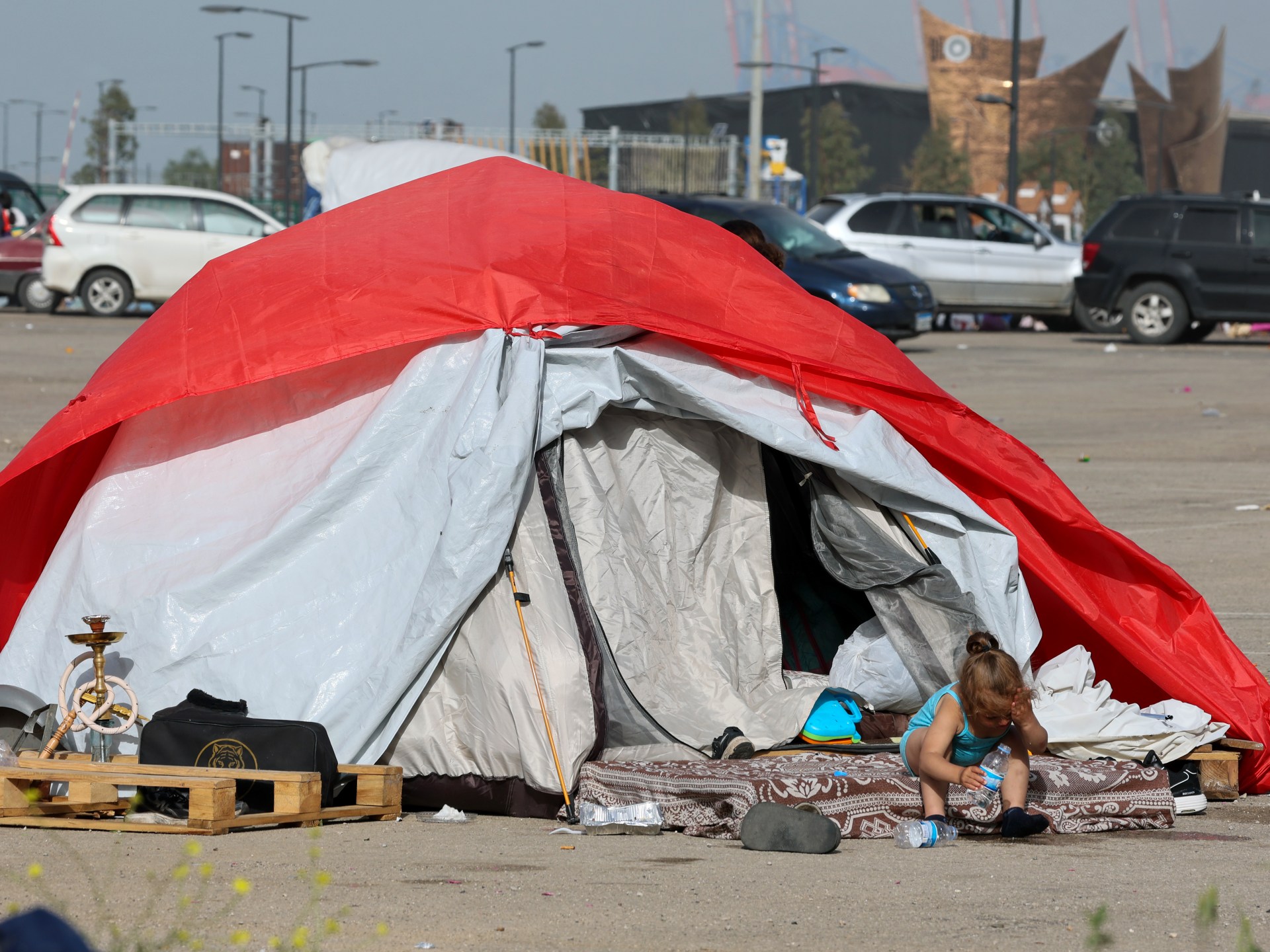
Hezbollah’s attack was also in retaliation for the killing of Iran’s Supreme Leader Ayatollah Ali Khamenei two days later. Over the next few days, Israel would displace more than 1.2 million people in Lebanon in a bombing campaign across the country.

Israel has killed journalists, medical workers, and devastated southern Lebanon’s medical infrastructure. Experts told Al Jazeera that those acts, along with the destruction of Lebanon’s water infrastructure, are part of a concerted effort to create an uninhabitable buffer zone in southern Lebanon.

Israel is currently occupying dozens of villages in southern Lebanon and preventing thousands from returning home. Prime Minister Benjamin Netanyahu said earlier in April that Israeli forces “are remaining in Lebanon in a reinforced security buffer zone”.

“This is a security strip 10 kilometres [6.2 miles] deep, which is much stronger, more intense, more continuous and more solid than what we had previously,” Netanyahu said. “That is where we are, and we are not leaving.”

One way to prevent Lebanese from returning is by striking Lebanon’s water infrastructure.

“Israel has declared its intent on raising [towns and villages] to the ground and preventing people from going back there,” Rami Zurayk, professor and chairperson of the Department of Landscape Design and Ecosystem Management at the Faculty of Agricultural and Food Sciences, American University of Beirut, told Al Jazeera. “Every drop of water that Israel steals is a drop of the water that is taken from the local population … Israel uses water in order to displace people, and it displaces people in order to steal the water.”

Israel damaged six water facilities in southern Lebanon during previous attacks on Lebanon since 2023, and in the first four days of the renewed conflict this year, “damaged at least seven critical water sources including reservoirs, pipe networks and pumping stations that supplied water to almost 7,000 people in the Bekaa area alone”, according to Oxfam International. Key infrastructure has been damaged in areas like Britel and Nabi Chit in the Bekaa Valley, and in Marjayoun, in southern Lebanon.

Lebanon’s water infrastructure is being “directly and indirectly attacked and on purpose”, asserted Nadim Farajalla, an environmental engineer and chief sustainability officer at the Lebanese American University in Beirut. “We saw it in 2024 and now in 2026.”

The indirect attacks hit things such as the electricity infrastructure, so that pumping stations cannot work to move water or sewage. The direct attacks have hit the pumping stations, as well as municipal workers operating water wells.

The aim behind these attacks is “to force people to leave”, Farajalla said. “Without electricity, you can stay in the dark and cook with gas, but without water, how will you live?”

Israel has denied that its attacks are a deliberate attempt to weaponise access to water, instead framing its operations as necessary for national security.

Even before the war, the Lebanese state had failed to deliver a number of basic services, including the supply of water, to its population for decades.

“The water supply situation in Lebanon must be understood against a backdrop of pre-existing vulnerabilities that have been exacerbated by recent hostilities and the ongoing economic crisis,” Imad Chiri, International Committee of the Red Cross’s (ICRC) water and habitat coordinator, told Al Jazeera.

Southern Lebanon, like many of the country’s peripheries, has been particularly neglected by the state. In October 2025, the ICRC conducted a water insecurity study in southern Lebanon’s Bint Jbeil and Marjayoun districts. Chiri explained that 91 percent of households were found to be experiencing moderate-to-high water insecurity – insufficient to meet daily needs. For 57 percent of households, the situation was bad enough for them to be classified as highly water insecure.

During times of conflict, water infrastructure comes under even more pressure, particularly for areas hosting displaced people. And even basic damage to water infrastructure can lead to compounding difficulties.

“There are two issues at hand that you have to be aware of,” Farajalla said. “There are attacks on infrastructure, and there is the burden on infrastructure due to displacement.”

“Water sources and networks are often located in frontline or high-risk zones, yet they continue to supply populations who have chosen to remain,” Chiri said. “Identifying contractors willing to operate under such conditions is already challenging. Even when they agree, operations require meticulous planning, limited time on site, and continuous adaptation to a highly volatile security environment.”

International Humanitarian Law (IHL) “obliges parties to a conflict to take constant care to spare water resources and water infrastructure,” Tadesse Kebebew, a legal researcher and project manager at the Geneva Water Hub, wrote for the ICRC in 2025.

Israel ratified the Geneva Convention – the basis for IHL – in 1951. But Zurayk said that “Israel has never paid attention to any of those conventions.”

In Gaza, for example, Israel controls Palestinians’ access to water. Israel has impeded Palestinians’ access to water in the West Bank, too.

“The use of water as a weapon has also been going on in Lebanon for a long time,” Zurayk said, citing Lebanon’s accusation that Israel had obstructed access to water from the Wazzani River, which crosses the Blue Line that separates Lebanese and Israeli territory, including the bombing of pumping stations.

And destroying Lebanon’s already insufficient water infrastructure directly contributes to illness and death.

“Not only is this about destroying access to water, it’s actually inducing waterborne diseases, the highest cause of infant mortality in developing countries, and inducing this in the population,” Zurayk said. “So it’s an indirect biological weapon. It is a chemical weapon because instead of dousing, which Israel has done, the region with the harmful chemicals, what you do is you withdraw an essential chemical.”

Still, Israel has never been held accountable.

“The international community stood by in Gaza and watched Israel’s weaponisation of water and its catastrophic consequences to men, women and children there,” Ayoub said in the Oxfam report from March. “The same devastation must not be allowed to play out again in Lebanon. Israel must be held to account for its violations and must not be allowed to occupy more land, deny more civilians of their basic rights, and continue to abuse international law without consequence.”

📰 மூல செய்தி (Source): https://www.aljazeera.com/features/2026/4/22/how-israel-is-destroying-lebanons-water-infrastructure?traffic_source=rss

உலகம்

US Jewish leader, Israel advocate Abe Foxman dies at 86

Published

on

Israeli officials hail Foxman, who led the ADL advocacy group for nearly three decades, as warm and passionate.

Prominent Jewish American leader and Israel defender Abraham “Abe” Foxman has died at age 86.

The Anti-Defamation League, the advocacy group he led for 28 years, confirmed his death on Sunday, calling him an “outspoken, passionate, and tireless advocate for the Jewish people and Israel“.

A Holocaust survivor, Foxman helped shape the conversation around Israel and anti-Semitism in the US for decades.

ADL Board Chair Nicole Munchnik said Foxman helped build the “modern liberal era of America”, describing him as a “longtime adviser” to US presidents and world leaders.

“To those of us who knew him, Abe was a warm friend, adviser, spirited antagonist and hugger – all over lunch,” Munchnik said.

Foxman joined the ADL in 1965 and served as the group’s national director from 1987 to 2015.

Under his leadership, the group – which presents itself as an anti-hate watchdog – became one of the most influential advocacy organisations in the country.

Palestinian rights advocates have long condemned the ADL, accusing it of demonising pro-Palestine activists and conflating criticism of Israel with anti-Semitism.

Since the start of the genocidal war on Gaza, the ADL – under Foxman’s successor Jonathan Greenblatt – has intensified its campaign against Israel’s critics.

Greenblatt, who has supported laws to penalise boycotts of Israel, compared the Palestinian keffiyeh to the Nazi swastika last year.

Foxman also remained a staunch supporter of Israel and defended its conduct during the genocidal war on Gaza.

“What is happening in Gaza is tragic. But it is not Genocide. And it is not illegal,” he wrote on X in July 2025 as Israel imposed a hunger crisis on the territory.

“War is hell and inhumane, destructive and ugly. And nations must take all possible care to avoid civilian harm. And Israel has and is doing that. Having said this, Israel still needs to act with all deliberate speed and skill to provide maximum humanitarian aid to lessen the loss of innocent civilian lives.”

Weeks before his death, Foxman backed the US-Israel war on Iran, voicing gratitude to US President Donald Trump and Israeli Prime Minister Benjamin Netanyahu for attacking the country.

“Thank you President Trump and Prime Minister Netanyahu for standing up to evil and jihadist extremism. The world hopefully will be a better and safer place in the future,” he said in a social media post on February 28 after the war broke out.

In March, Foxman warned about what he described as the rise of anti-Semitism on the right and left of the political spectrum in the US, hitting out at liberal politicians publicly distancing themselves from the American Israel Public Affairs Committee (AIPAC).

“If a politician doesn’t want to take money from AIPAC, don’t take money from AIPAC, but don’t make taking money from AIPAC a morality test – because that continues to build the conspiracy theory that there is a Jewish lobby that controls America,” he told the Jewish Standard.

AIPAC, which backs the war on Iran, has been spending millions of dollars on ad campaigns to defeat Israel’s critics in US elections.

Last year, Foxman sounded the alarm about the dwindling support for Israel in the US, underscoring the importance of the alliance between the two countries for Israel.

“We’re in a propaganda war, and to an extent, we’re losing the propaganda war, and I worry about losing America,” Foxman told Times of Israel.

“It’s scary, looking at the polls, the Sunday television shows, the major newspapers – there is so much out there that is anti-Israel.”

Despite his assertion, rights advocates often decry the absence of Palestinian perspectives on TV shows in the US media.

In 2021, Foxman announced that he was cancelling his New York Times subscription after the newspaper published a front page featuring the photos of dozens of Palestinian children killed by Israel in Gaza.

“Today’s blood libel of Israel and the Jewish people on the front page is enough,” he said at that time.

Tributes in Israel and the US poured in for Foxman on Sunday.

Israeli Foreign Minister Gideon Saar said he was “deeply saddened” by the death of Foxman.

“A towering voice against antisemitism, Abe devoted his life to defending the Jewish people and strengthening the bond between Israel and Jewish communities worldwide,” Saar said on X.

Israel’s President Isaac Herzog also called Foxman a “legendary leader of the Jewish people”.

“He was a passionate Zionist, a humanist, and an outspoken, wise friend,” Herzog said.

📰 மூல செய்தி (Source): https://www.aljazeera.com/news/2026/5/10/us-jewish-leader-israel-advocate-abe-foxman-dies-at-86?traffic_source=rss

Continue Reading

உலகம்

Israeli weapon fires tiny metal cubes into people in Lebanon, like Gaza

Published

on

Israeli weapon fires tiny metal cubes into people in Lebanon, like Gaza

The same tiny tungsten cubes that spray out of Israeli bombs, causing devastating internal injuries to people in Gaza are being found in wounded civilians in Lebanon, war surgeon Dr Tahir Mohammed says. He draws parallels between what Israel is doing in both places and describes the weapons as “indiscriminate”.

📰 மூல செய்தி (Source): https://www.aljazeera.com/video/newsfeed/2026/5/10/israeli-weapon-fires-tiny-metal-cubes-into-people-in-lebanon-like-gaza?traffic_source=rss

Continue Reading

உலகம்

Trump to discuss Iran with Xi Jinping during China visit: Officials

Published

on

Official says US president will likely ‘apply pressure’ on China over Beijing’s purchase of Iranian oil amid war.

Donald Trump is set to arrive in Beijing on Wednesday evening to discuss the Iran war and other issues with his Chinese counterpart President Xi Jinping.

White House Principal Deputy Press Secretary Anna Kelly said an opening ceremony and meeting will be on Thursday morning, and the trip will conclude on Friday. The US plans to host the Chinese leader during a reciprocal visit later this year.

Kelly said that this week’s trip would be of “tremendous symbolic significance” and focus on “rebalancing the relationship with China and prioritising reciprocity and fairness to restore American economic independence”.

Trump’s visit, initially scheduled for earlier this year but postponed in March due to the US-Israel war on Iran, comes as the US president struggles to contain the fallout from the war, both at home and abroad.

A senior administration official told news outlets in an anonymous briefing on Sunday that Trump could “apply pressure” to China on Iran in areas such as oil sales and Tehran’s purchase of potential dual-role military-civilian goods.

US Treasury Secretary Scott Bessent last week accused China of “funding” Iran.

“Iran is the largest state sponsor of terrorism, and China has been buying 90 percent of their energy, so they are funding the largest state sponsor of terrorism,” Bessent told Fox News.

Iran closed the Strait of Hormuz in response to US-Israeli attacks, restricting passage through a key artery of global energy transport.

China has said that it wants to see the war end and hosted Iranian Foreign Minister Abbas Arraghchi last week. At the same time, Beijing has refused to recognise Washington’s “unilateral” sanctions on Iran’s oil sector.

Disruptions stemming from the war have disrupted the global economy, with Asian states that depend on imports from the Middle East especially hard hit.

Trump could also bring up China’s support for Russia during the talks, along with trade and rare earth minerals, a vital resource for the US tech sector. Business executives from aerospace manufacturer Boeing and a handful of agricultural companies are set to travel with the US delegation.

The anonymous administration official said that no change was expected regarding the US stance on Taiwan, a main sticking point in relations between Washington and Beijing. China considers the self-ruling island a part of its territory, but the US has deep security and economic commitments to Taiwan.

📰 மூல செய்தி (Source): https://www.aljazeera.com/news/2026/5/10/trump-to-discuss-iran-with-xi-jinping-during-china-visit-officials?traffic_source=rss

Continue Reading

Trending

Copyright © 2024 by 7Tamil Media, All rights reserved.