Connect with us

உலகம்

‘Homeland or death’: How Cuba would defend itself against a US attack

Published

on

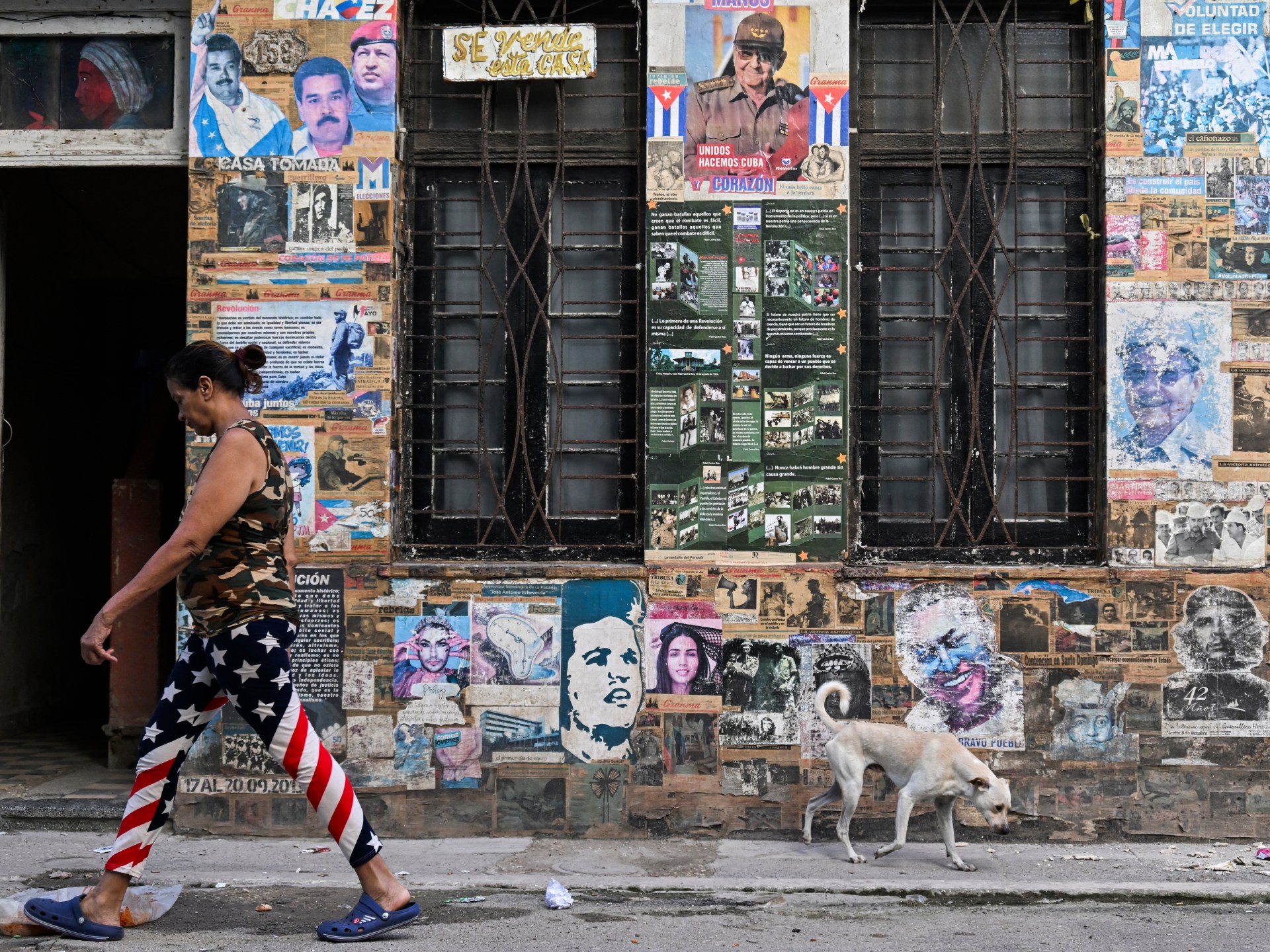
With Castro indicted, a US military operation in Cuba could be imminent, but Havana is not entirely defenceless, some analysts argue.

Helen Yaffe, in her frequent, regular trips to Cuba for the last 30 years, remembers once when a Category Four hurricane barrelled its way to the island.

The academic and podcaster was then living in a house with 13 other people, and when the storm hit, there was no panic – everyone already knew their role.

Some escorted elderly and vulnerable neighbours to shelters. Others prepared to clear debris once the winds subsided.

Cuba’s system of national defence against such meteorological disasters has been lauded by the United Nations and the World Health Organization for minimising casualties despite frequent extreme weather.

Now, Havana is seeking to apply a similar model to a different threat: a possible United States military confrontation, as President Donald Trump’s rhetoric towards Cuba intensified on Wednesday, with US federal prosecutors indicting former Cuban President Raul Castro in the sharpest escalation between the two countries in years.

The indictment dates back to a 1996 incident in which four American men died when Cuban jets allegedly shot down aircraft operated by Cuban exiles. It charges Castro with conspiracy to kill US nationals, four counts of murder and two counts of aircraft destruction.

Amid the tensions, on Saturday, Cuba’s Civil Defence released a multi-page guide titled The Family Guide for Protection Against Military Aggression, listing the responsibilities of families in the case of a US attack, as well as numerous safety protocols.

The guide builds from Cuba’s defence doctrine, named War of All People, which it adopted after the fall of the Soviet Union, and envisions resisting foreign invasion by mobilising the entire civilian population through guerrilla warfare, local militias and civil defence networks, said Yaffe.

“Everyone in Cuba is trained militarily and … incorporated into this system of national defence,” Yaffe, a professor of Latin American political economy at the University of Glasgow, and host of the podcast titled Cuba Analysis, told Al Jazeera.

Castro’s indictment marks the latest escalation in a mounting pressure campaign that has included a surge in US surveillance flights off Cuba’s coast in recent months, a narrowly defeated US Senate move to block efforts to limit Trump’s authority to use military force against the island, and executive orders declaring Cuba a “significant threat” to US national security.

And Trump has stated, plainly, that “Cuba is next”. A US military operation, therefore, could be imminent, analysts have said.

While opinions diverge, some analysts said Cuba is not entirely defenceless despite being in the grips of blackouts, fuel shortages caused by a US oil blockade, and the loss of Venezuelan energy supplies following Nicolas Maduro’s abduction and ouster from Caracas.

When US forces abducted Maduro on January 3, the operation’s speed stunned the world. But 32 of those killed in the fighting were Cuban – troops who put up “a really fierce resistance”, said Yaffe.

Trump himself even acknowledged it, she said.

For his part, Cuban President Miguel Diaz-Canel said on Monday that any US military action against Cuba would lead to a “bloodbath” and that the island does not represent a threat.

“They talk about the Venezuelan model, and the question was, would they go for the Venezuelan model in Cuba? It won’t work in Cuba,” said Yaffe.

“The narrative from the Cuban leaders, and actually the Cuban people, has been: ‘They think that was a fierce resistance? That was 32 Cubans. Imagine if they come here, [there] will be 10 million.’”

Carlos Malamud, an Argentinian Latin America analyst at the Elcano Royal Institute in Madrid, Spain, agrees that Cuba presents a fundamentally different challenge than Venezuela.

The Cuban military, he said, is better trained and better equipped than its Venezuelan counterpart.

Sebastian Arcos, the Cuban-American director at Florida International University’s Institute for Cuban Studies, however, had a sharply different take on Havana’s armed forces.

“Cuba’s military is obsolete. They have little chance of resisting the US,” he told Al Jazeera.

“Cuba is a harder target [than Venezuela], not so much militarily, but because they have had time to prepare for a similar operation.”

But another key variable is geography, the analysts agreed.

The proximity of Cuba to the US means that Cuba’s “capacity of response”, including its air force, is far greater than anything the US faced in Caracas or in Iran — where the US and Israel have waged a war against Tehran since February 28, though a fragile ceasefire is in place — said Malamud.

Any attack on Cuba, he said, carries with it the very real possibility of Cuban retaliation reaching American cities.

“The capacity to provoke losses in the civilian population, and in the American cities, like Miami, for example, is higher,” he said.

Arcos said Cuba could attack US civilian centres to try to turn US public opinion against the Trump administration.

On Sunday, US outlet Axios published a report – citing unverified US intelligence – that Cuba had acquired 300 military drones, with plans to strike Guantanamo Bay, US naval vessels, and the US island city of Key West.

But Yaffe and Malamud were sceptical of the intelligence, remarking that Cuba is not seeking a military confrontation. Arcos, however, said the Axios report “makes sense”, as Cuba has always maintained close ties to Russia and China, prioritising security even amid scarce resources.

Cuba, meanwhile, had slammed the report as aimed at building justification for a US attack, and also stated that it has a right to self-defence against any US aggression.

Beyond the military calculus, analysts point to a set of political constraints that make a US invasion of Cuba far more complicated than the Venezuela operation, and potentially fatal to Trump’s domestic standing.

A migration surge to the US as a fallout of any attack on the island is chief among them, said Yaffe.

“Any attack on Cuba would spark an immediate, uncontrollable mass migration, mainly through the sea,” Yaffe said.

For a president whose political identity is built on anti-immigration, she argued, that consequence alone should give Washington pause, especially with midterm elections approaching in November.

Meanwhile, Cuban Americans – many who are against the Cuban government and its system of socialism – have considerably more representation in American politics when compared with the Venezuelan diaspora, said Malamud.

There is “no comparison”, in fact, he said.

Venezuelan exiles – many who were opposed to Maduro’s government and his socialist predecessor Hugo Chavez – have largely only been in the US for the last decade, Malamud noted.

Cuban Americans have been a political constituency for decades, with significant representation in Congress, and in the Trump administration itself, including with Marco Rubio as the current secretary of state.

That community, he argued, would never accept a Venezuela-style resolution – one that preserved the existing power structure under new management, as former Venezuelan Vice President Delcy Rodriguez’s assumption of power in Caracas did.

For Cuban exiles, anything short of regime change away from the Castro-era system is “inadmissible”, said Malamud.

Yaffe noted that there appears to be a difference of opinion even between Rubio and Trump.

While Rubio has “monopolised Trump’s ear on Cuba”, Trump is more deal-oriented – and has a long personal history of interest in Cuban business opportunities, she said.

Additionally, Trump has said that “they can’t move on to Cuba” until they’ve finished dealing with the Iran war, a prospect that continues to slip away, said Yaffe.

A Maduro-style abduction of Castro following his indictment, therefore, would satisfy neither the Cuban-American base nor achiev

📰 மூல செய்தி (Source): https://www.aljazeera.com/features/2026/5/21/homeland-or-death-how-cuba-would-defend-itself-against-a-us-attack?traffic_source=rss

உலகம்

Ebola outbreak: When will a vaccine be developed for the new strain?

Published

on

The Bundibugyo strain of Ebola has a fatality rate of up to 50 percent and no approved vaccine as yet.

The World Health Organization (WHO) has declared that the latest outbreak of a rare strain of the Ebola virus in Democratic Republic of the Congo (DRC) and Uganda is a “public health emergency of international concern”.

No vaccine or treatment exists for the new Bundibugyo strain of Ebola, a disease whose strains have killed more than 15,000 people in Africa in the past half-century. The previous Ebola outbreak in West Africa, which lasted between 2013 and 2016, killed at least 11,000 people, according to the National Library of Medicine.

So, how quickly can a vaccine be developed to contain the latest strain?

The epicentre of the latest outbreak is in DRC’s northeastern province of Ituri, close to the borders with Uganda and South Sudan, whose status as a gold-mining hub leads to people regularly crossing it.

The virus has also spread into neighbouring provinces of DRC, as far as 200km (125 miles) away from what has been identified as the epidemic’s “ground zero” as well as beyond the DRC’s borders.

The toll from the latest strain of the Ebola outbreak has risen to an estimated 131 deaths from 513 suspected cases, Health Minister Samuel Roger Kamba told the media on Tuesday. Over the past 24 hours, 26 more cases have been suspected.

In Uganda, according to the WHO, at least one person has died and two more people have been infected with the latest strain of the virus. Uganda government spokesperson Alan Kasujja told Al Jazeera’s Catherine Soi that more than 120 people are being quarantined and added that he is confident Uganda can control the spread of the virus.

Fear has, however, gripped both countries.

In the DRC, from Bukavu to Kinshasa, concern is spreading among residents and street vendors as Ebola cases rise. In cities hundreds of miles apart, people are wearing face masks and calling for stronger protections from the latest outbreak.

“I am afraid of bringing the disease home to my family because I spend the whole day transporting people. I am afraid of dying, that is what scares me so much,” a motorbike driver in the country told Al Jazeera.

“Last time [between 2013 and 2016], it killed a lot of people and we heard that it has reappeared, which makes us very afraid. Especially those of us who sell things in the street. We are in contact with people we do not know and that really frightens us,” Marie Evuto, a street vendor, said.

The WHO chief, Tedros Adhanom Ghebreyesus, said on Tuesday that he is “deeply concerned about the scale and speed of the epidemic”.

“Early on Sunday, I declared a public health emergency of international concern over an epidemic of Ebola disease in the Democratic Republic of the Congo and Uganda,” Tedros told the World Health Assembly in Geneva.

The Bundibugyo strain of Ebola is a distinct species within the Ebola virus family. It differs from the Zaire Ebola virus strain, which caused the large 2014-2016 West Africa outbreak, Krutika Kuppalli, associate professor at the Infectious Diseases and School of Public Health at UT Southwestern Medical Center in Dallas, Texas, told Al Jazeera.

“While Bundibugyo has caused fewer outbreaks historically, it is still a very serious pathogen. Prior outbreaks have had case fatality rates ranging from approximately 30-50 percent, and the current outbreak is particularly concerning because there are currently no licensed vaccines or specific therapeutics for Bundibugyo virus disease,” she said.

Kuppalli added that ongoing conflicts in the region, which have been accompanied by vast population displacement, weak surveillance systems and delayed detection, will make the latest outbreak more challenging to contain.

“Early cases may have been missed in part because many front-line diagnostic platforms were optimised for Zaire Ebola virus and do not reliably detect Bundibugyo virus,” she said.

“We are now seeing this strain of the virus spread into urban and cross-border settings, which raises concern about amplification if containment measures are not rapidly strengthened,” she warned.

There is currently no approved vaccine for this strain of the Ebola virus.

A vaccine named Ervebo, ⁠manufactured by Merck, which was used against the Zaire strain of Ebola, has been shown to provide some protection against ⁠Bundibugyo in animal studies.

Kuppalli from the UT Southwestern Medical Center explained that vaccine development timelines are difficult to predict.

“The scientific community is not starting from zero as there is already extensive knowledge from prior Ebola vaccine work, including viral vector and mRNA platforms that could potentially be adapted for Bundibugyo virus,” she said.

“However, moving from candidate design to clinical trials, manufacturing, regulatory review, and deployment still takes time, particularly during an active outbreak in resource-limited settings,” she added.

She noted that organisations such as CEPI (the Coalition for Epidemic Preparedness Innovations) have already recognised the need for broader “multivalent” filovirus vaccines that could protect against multiple Ebola species, including viruses that have not yet emerged widely in humans.

“CEPI has recently funded research specifically focused on broadly protective filovirus vaccines and rapid-response vaccine platforms. Their work reflects a growing recognition that relying on species-specific vaccines leaves the world vulnerable when a different Ebola species emerges,” she said.

Until a vaccine to prevent the latest strain is developed, a WHO official said on Tuesday that medical supplies, including personal protective equipment (PPE) ⁠to prevent Ebola, were due to arrive in ⁠the DRC.

“We have sent 12 tonnes of supply. An additional six are arriving today. These include personal protective equipment for ⁠front-line health workers [and] samples,” Anne Ancia, WHO representative in the Democratic Republic of ⁠the Congo’s Ituri province, told media.

Jean-Jacques Muyembe, a virus expert at the DRC’s National Institute of Biomedical Research, told reporters the country was also expecting shipments of an experimental vaccine for different types of Ebola from the United States and the United Kingdom.

Many countries have raised concerns about the latest Ebola virus outbreak and some, including Bahrain, have suspended the entry of foreign travellers arriving from South Sudan, the DRC and Uganda, for 30 days due to the outbreak.

Rwanda has also closed its borders with the DRC.

The US has implemented a 30-day temporary entry restriction for non-US citizens and non-permanent residents who have travelled to the DRC, Uganda or South Sudan within the prior 21 days.

Meanwhile, governments across Asia have begun introducing border screening and bolstering quarantine preparedness.

There is not the same urgency about developing a vaccine for Ebola as there was during the COVID-19 pandemic, Kuppalli said.

“COVID-19 vaccine development moved at unprecedented speed because the outbreak affected wealthy countries and rapidly disrupted the global economy,” she explained.

“African outbreaks have historically not generated the same urgency, financing, manufacturing investment or political attention despite causing devastating local consequences,” she said.

Kuppalli noted that Ebola vaccine development following the 2014 outbreak accelerated only after thousands of people had already died in West Africa.

“I do think there has been progress since 2014. Global partnerships involving WHO, CEPI, GAVI [the vaccine alliance], African scientists, regulators and research institutions are much stronger than they once were,” she said.

“The challenge now is ensuring sustained investment before crises become global threats, rather than only responding once outbreaks reach high-income countries. This outbreak underscores why equitable investment in epidemic preparedness and vaccine research matters not just

📰 மூல செய்தி (Source): https://www.aljazeera.com/news/2026/5/21/ebola-outbreak-when-will-a-vaccine-be-developed-for-the-new-strain?traffic_source=rss

Continue Reading

உலகம்

Flooding in southern China washes away cars and destroys bridge

Published

on

Flooding in southern China washes away cars and destroys bridge

Heavy flooding has swept away cars, destroyed a bridge, and inundated streets in southern China. The torrential rain has killed at least 25 people, forcing evacuations across multiple regions.

📰 மூல செய்தி (Source): https://www.aljazeera.com/video/newsfeed/2026/5/21/flooding-in-southern-china-washes-away-cars-and-destroys-bridge?traffic_source=rss

Continue Reading

உலகம்

Kite carrying Palestinian children’s messages reaches Mount Everest summit

Published

on

Mountaineers carry a kite bearing messages and signatures from children in Gaza to the top of the world.

The hopes and dreams of Palestinian children from Gaza have reached the top of the world as a kite bearing their handwritten messages was carried to the summit of Mount Everest by a team of mountaineers.

The group summited the world’s highest peak at 10:48am local time (05:03 GMT) on Thursday, Jordanian Palestinian mountaineer Mostafa Salameh, who was spearheading the expedition but did not summit, confirmed in a social media post.

A team of Nepali Sherpas – led by Italian filmmaker and explorer Leonardo Avezzano – carried the kite to ensure that the dreams of children in the besieged Strip could make it “to the top of the world”, Salameh told Al Jazeera from the Everest base camp last week.

Salameh, who has previously summited Everest, stayed at the first base camp due to frostbite and a blood clot in his left hand.

The 56-year-old climber launched this expedition to raise $10m towards medical aid for children in the Strip and draw global attention towards the difficulties they have faced during the Israeli genocide in Gaza.

“After months of preparation, sacrifice, training, fear, hope, prayers, and carrying the weight of a message much bigger than themselves… the kite carrying the dreams of the children of Gaza is now flying above the highest point on Earth,” Salameh said in a video posted to Instagram.

“From the rubble and pain of Gaza … to the roof of the world. A dream refused to die,” he wrote in the caption.

Avezzano, who has documented the journey to the summit, and his team were hailed by Salameh.

“Tonight, at 8,848 metres (29,029 feet) in the death zone where every step feels like a battle between life and exhaustion, Leonardo carried that kite with courage, heart, and purpose.

“I am so proud of my brother Leonardo for believing in this mission and for carrying the voices, names, hopes, and dreams of children who deserve to be seen by the world,” Salameh added.

He emphasised that the summit was not only about climbing a mountain but about humanity, hope, and proving that “even from darkness, something beautiful can still rise into the sky.”

“Massive respect and gratitude to the incredible Sherpa team – the real heroes of the Himalayas. Without their strength, wisdom, and hearts, none of this would be possible. Thank you for protecting the team and helping carry this mission to the summit safely,” Salameh wrote.

Everest is one of the riskiest summits, as oxygen levels drop dangerously near the peak.

Salameh said the “mission [was] not accomplished yet” since summiting Everest was only the halfway point; returning to base camp safely was the next goal for Leonardo and his team, who would assess whether to sleep at camp four or continue down to camp two based on weather conditions.

“Tonight, the kite flies above Everest; tonight, the dreams of Gaza touched the sky,” Salameh said, ending the video with a chant of “Free, Free Palestine”.

Salameh is one of 20 people to have completed the Explorer’s Slam – the accomplishment of reaching the North and South poles and climbing the highest peaks on all seven continents. He has summited Everest four times, the first being in 2008, the year he was honoured with knighthood by King Abdullah II of Jordan.

“What I do best is climb mountains,” he told Al Jazeera in an interview last week from the base camp.

“I did promise lots of people in my life not to go back to Everest, but this is worth it. As a mountaineer, what I can do is bring the story and suffering of every Palestinian child all the way to the top of the world.”

Salameh acknowledged the immense risks – including death – that come with scaling Mount Everest at 8,000 metres with only 15 percent oxygen, but insisted it was “absolutely nothing” compared with what the Palestinians in Gaza have endured.

“This time is very personal for me,” Salameh said in another video.

“This one hits home for the child in me, because I know what it feels like to be a child at a refugee camp, and I feel for the children of Gaza and what they go through.

“What makes it more personal is that I visited these kids; I couldn’t visit Gaza but I was on the other side in Egypt and I saw them and sat down with them and it broke my heart.”

He said the people of Palestine give him inspiration to continue his work even in the toughest of circumstances.

“It doesn’t matter what happens; these people’s houses are being demolished and they put up a tent right there to stay on their land.

”I’ve learned massive lessons from them. I’ve learned dignity, I’ve learned freedom. I’ve learned to become a man, to be true to myself rather than be strong.”

📰 மூல செய்தி (Source): https://www.aljazeera.com/sports/2026/5/21/kite-carrying-palestinian-childrens-messages-reaches-mount-everest-summit?traffic_source=rss

Continue Reading

Trending

Copyright © 2024 by 7Tamil Media, All rights reserved.