Connect with us

உலகம்

Have US-Iran talks failed? Why no deal yet doesn’t mean diplomacy is dead

Published

on

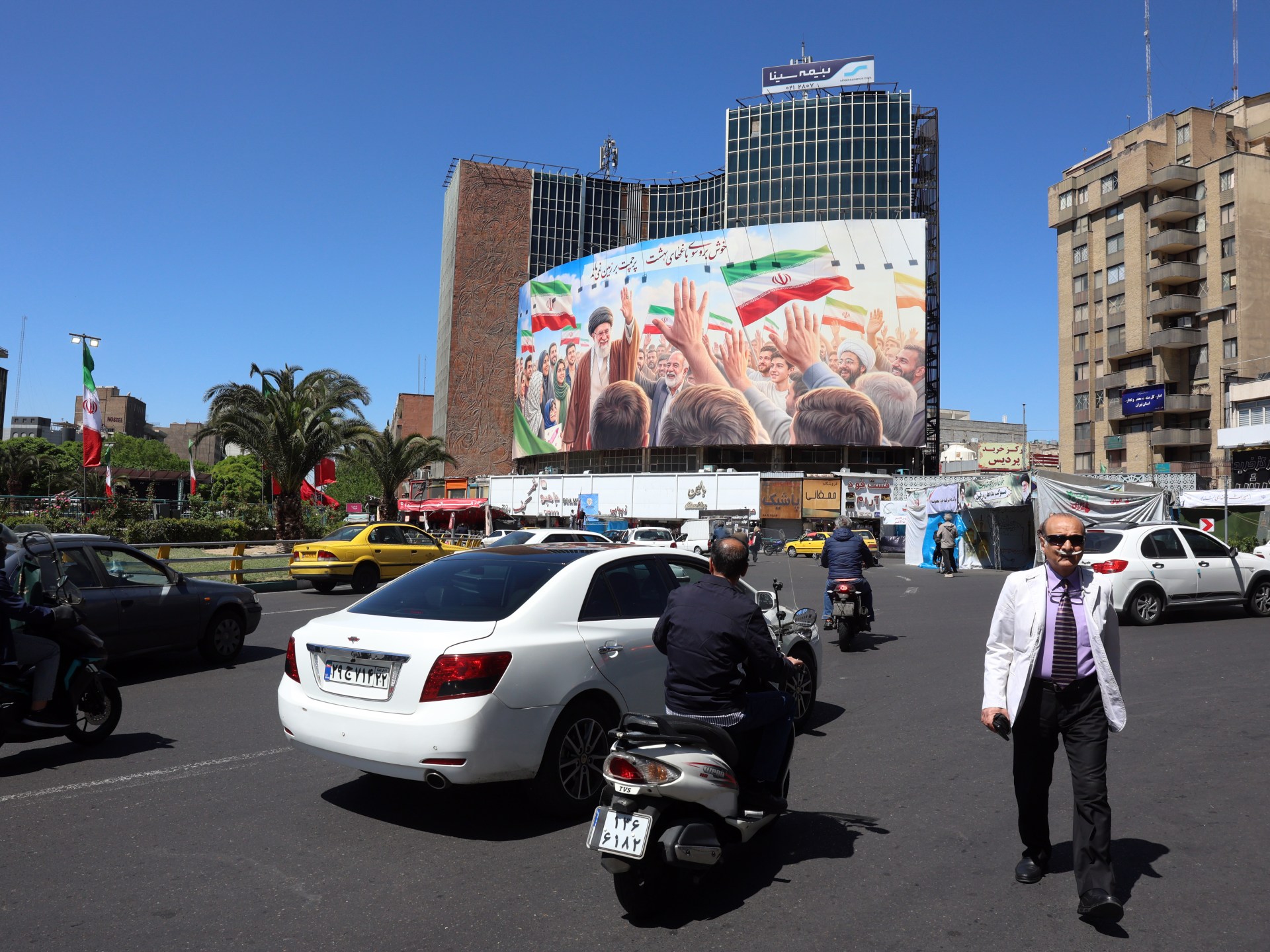
US-Iran diplomacy in a deadlock, but analysts say both sides are unlikely to return to fighting.

Tensions between the United States and Iran have reached another critical juncture. While a fragile ceasefire is holding, efforts to translate the nearly three-week truce into a permanent agreement appear to have stalled.

Hopes of talks in the Pakistani capital, Islamabad, over the weekend dissipated after US President Donald Trump cancelled a visit by his envoys as both Iran and the US remain steadfast in their respective demands, especially over Tehran’s nuclear programme and control of the Strait of Hormuz.

Iranian Foreign Minister Abbas Araghchi on Monday blamed the US for the failure of the talks. “US approaches caused the previous round of negotiations, despite progress, to fail to reach its goals because of the excessive demands,” he said during a visit to Russia.

Yet experts said the impasse reflects a slowdown in negotiations rather than a collapse, citing plenty of examples in history that illustrate how diplomacy is rarely linear but is often marked by deadlocks, setbacks and backdoor engagement.

So where do the talks stand now, and what could come next?

Trump on Saturday told reporters in Florida that he scrapped a visit by his top diplomatic envoy, Steve Witkoff, and son-in-law Jared Kushner to Pakistan because the talks involved too much travel and expense to consider an inadequate offer from the Iranians.

The following day, Trump said Iran could telephone if it wanted to negotiate an end to the war that began on February 28 with the US-Israeli bombardment of Iran.

“If they want to talk, they can come to us, or they can call us. You know, there is a telephone. We have nice, secure lines,” Trump told the US TV news channel Fox News.

“They know what has to be in the agreement. It’s very simple: They cannot have a nuclear weapon. Otherwise, there’s no reason to meet.”

Iran had already signalled its hesitation about participating in talks with the US. Officials in Tehran have said direct talks are pointless at the moment, citing US actions, such as its naval blockade of the Strait of Hormuz, as violations of the ceasefire and obstacles to meaningful dialogue.

Iranian President Masoud Pezeshkian, in a conversation with Pakistani Prime Minister Shehbaz Sharif by phone on Saturday, said his country would not enter “imposed negotiations” under threats or blockade.

Since early March, Iran essentially has shut down the Strait of Hormuz, through which a fifth of the world’s oil and natural gas supplies had passed before the war. Meanwhile, Washington imposed a naval blockade on Iranian ports and ships days after the ceasefire began on April 8.

This has disrupted global oil supplies and contributed to rising prices. Countries around the world have been forced to seek alternative supplies and implement austerity measures to keep their economies afloat.

Despite the breakdown in direct engagement, diplomacy continues via indirect channels. Iran has sent “written messages” to the US through Pakistani mediators outlining its red lines, including positions on nuclear issues and the Strait of Hormuz, Iran’s Fars News Agency said.

At the same time, Araghchi has been engaged in an intense round of regional diplomacy, visiting Pakistan, Oman and Russia over the past three days.

“It is a good opportunity for us to consult with our Russian friends about the developments that have occurred in relation to the war during this period and what is happening now,” Araghchi said in a video interview posted by Iran’s IRNA news agency from St Petersburg.

While the gulf between Tehran’s and Washington’s positions remains wide – Iran refuses to give up its nuclear programme, including uranium enrichment, which it insists is for peaceful purposes only – the ceasefire between the longtime foes is still largely holding, indicating that neither side is eager to return to a full-blown war.

Emma Shortis, director of the Australia Institute’s International and Security Affairs Program, said despite the deadlock, there was “room for progress”. Meaningful diplomatic endeavours, she said, “take years to build”.

“There has certainly been signalling that there might be room to move, particularly on the issue of uranium enrichment,” she told Al Jazeera. However, she warned that this was all subject to “volatile leaders” who are liable to “change their minds at the very last minute”.

Trump also indicated over the weekend that cancelling talks does not necessarily mean a return to active fighting.

On Sunday, he referenced a new Iranian proposal that he described as “a much better plan”, and there has been signalling that some flexibility may exist.

Shortis said Trump was particularly under “enormous pressure” domestically because the war is “hugely” unpopular among Americans. “As the Strait of Hormuz remains effectively closed and affects gas prices in the US, the pressure will continue to build,” she said.

Echoing Shortis, academic Rob Geist Pinfold said diplomacy has not failed but for the time being is coming up against “intractable divides” between the two sides.

“The irony here is that neither side wants a return to war. No one wants another round of conflict,” Geist Pinfold, a lecturer at King’s College London, added.

On Iran’s side, he said, the calculation is shaped by the damage it has already sustained. “Iran has had many of its assets degraded. Its military feels the need to recover. It wants some breathing space.”

The US, meanwhile, is wary of being dragged back into a costly confrontation in the Gulf – in part because of Iran’s ability to exact a price on the region and the global economy.

“Iran’s deterrent strategy worked. Iran managed to cause enough chaos to affect the global economy and global finances by hitting the Gulf states,” he said. “The US was disincentivised from carrying on the war.”

The academic predicted that the current situation may solidify into a semipermanent ceasefire, one that is fragile but increasingly normalised.

“Neither side feels like the other one has the upper hand, but they both feel like, ironically, they have the upper hand, so the result is this standoff of neither peace nor war.”

That situation he said could endure for a long time. “This is a dynamic that can go on more or less indefinitely until one side manages to coerce the other into making a compromise,” he added.

The 2015 Iran nuclear deal, formally known as the Joint Comprehensive Plan of Action (JCPOA), took roughly two years to negotiate successfully, including secret backchannel talks facilitated by Oman. Its eventual success came only after prolonged periods of deadlock and incremental progress. Trump abandoned the deal unilaterally in 2018 during his first term.

“All major negotiations to end wars have their own peculiarities,” Chris Doyle, director of the London-based Council for Arab-British Understanding, told Al Jazeera, citing the example of the 1973 Paris Peace Accords between the US and Vietnam.

“Here you see sides that were inimical to each other, trying to get a deal where the hostilities didn’t really end. There were huge differences as well,” he said. Negotiations leading to the accords began in 1968.

Nevertheless, while the US in effect was out of the war, there were immediate violations of the accords. Ultimately, South Vietnam fell to communist forces in 1975. “Plenty of antagonistic parties in a conflict have made deals, but it’s another thing to ensure that it lasts,” Doyle warned.

Other conflicts, including very recent and ongoing ones, have shown the same stop-start nature of diplomacy.

Early negotiations between Russia and Ukraine in 2022 initially raised hopes for a settlement but ultimately collapsed. However, diplomatic engagement did not end entirely. There were smaller agreements, including the exchange of prisoners, repatriation of children and allowing Ukrainian grain exports across the Black Sea.

📰 மூல செய்தி (Source): https://www.aljazeera.com/news/2026/4/27/have-us-iran-talks-failed-why-no-deal-yet-doesnt-mean-diplomacy-is-dead?traffic_source=rss

உலகம்

Dynamic pricing adding to ‘dystopian’ 2026 World Cup, ex-Liverpool CEO says

Published

on

Peter Moore accuses FIFA of undermining the spirit of the World Cup through extortionate ticket prices and greed.

If the 23rd edition of the FIFA World Cup has become prohibitively expensive – with tickets fetching prices at more than $2m for the final – blame dynamic pricing, along with greed, says longtime gaming and sports executive Peter Moore.

“Dynamic pricing doesn’t belong in the World Cup and football,” Moore told Al Jazeera in a recent interview from his home in Santa Barbara, California.

“It works with music, but for the World Cup, there are hundreds of thousands of people booking trips in advance. They’re asking themselves, ‘Do we want to visit and pay $2,000 for a third-tier game, Saudi Arabia versus whomever?’ And FIFA taking a 30 percent cut of dynamic pricing is outrageous”.

The 71-year-old former chief executive of Liverpool FC from 2017-20 is calling out FIFA President, Gianni Infantino, in interviews and on social media.

“Gianni Infantino misread the situation and thought he could get away with it,” Moore said.

“Now, tickets are in the hands of bots and speculators, who don’t intend to go to games. They are harvesting tickets and hoping they can sell them in the next six to eight weeks, and I don’t see that happening.”

He added: “I just hope enough people are there to add to the atmosphere of the game”.

Certainly, there’s a gloomy feeling hanging over this World Cup – at some US venues, anyway; from high prices for tickets and transportation, to the luck of the draw on getting a visa (hopefully you haven’t visited Cuba lately).

When you arrive, there’s the spectre of Immigration and Customs Enforcement (ICE) agents targeting fans. Finally, you get through the turnstiles and you could be greeted by lots of empty seats.

How FIFA is rolling things out also raises questions about who the World Cup is for.

The demographic could be more corporate, less diverse socio-economically, with fewer authentic fans attending than in previous tournaments.

Under travel bans imposed by Trump in an executive order, fans from four participating countries – Ivory Coast, Haiti, Iran and Senegal – cannot enter the country unless they already have valid visas.

“It’s the world’s game, but who is this World Cup for if the world can’t get in?” Moore said.

“FIFA is taking advantage of the unique commercial opportunities in the US, dynamic pricing and the secondary market being legal here, to make money – Infantino has said [he expects FIFA revenues from the World Cup to exceed] $11bn. Why not make it more reasonable and accessible and make, maybe, $8bn?

“FIFA is a nonprofit, built to serve players and fans of the world. That’s its remit, not to be like a commercial organisation and maximise the opportunity to make as much money as possible.”

FIFA expects to gross $3bn on ticketing and hospitality sales alone.

Infantino has defended high ‌‌ticket prices, saying ⁠⁠that ⁠⁠the tournament held every four years is FIFA’s only source of income and that it reinvests the revenue to develop football in all 211 member nations.

MLS commissioner Don Garber recently called FIFA’s dynamic pricing policy “a good idea”, adding that Infantino compared the World Cup to “dozens and dozens” of NFL Super Bowls, which feature some dynamic ticketing. And, Garber added, US fans are accustomed to paying high prices for “premium” events.

But the Super Bowl’s appeal is based on the contest being held once a year, not dozens of times. One way to devalue the Super Bowl would be to schedule several of them a year.

As for supporters from the other 47 countries taking part? They thought they were going to a World Cup, not a Super Bowl. And they are probably not used to dynamic pricing or legal profiting from ticket resales.

In the US, though, above-value ticket resale is legal, and FIFA being involved in reselling “changes everything,” Moore noted. “It means: tickets are no longer just for fans. They’re tradable assets.” Which brings in speculators, who conduct business “like traders, not supporters”.

Maybe it was inevitable that the spirit of the World Cup would be hijacked by savage capitalism. But it doesn’t seem everyone is ready for that, just yet. The World Cup is not only a sporting competition, but a universal gathering. Or so we thought. Perhaps it is just another “premium event”, like so many Taylor Swift concerts – but with worse dance moves.

Welcome then to the first soulless World Cup?

“It’s dystopian, and it’s an existential threat to the game,” Moore said, referring to both the ticketing situation and broader problems of the World Cup.

“Ultimately, is this going to be the first of every World Cup where FIFA maximises profit, rather than allow as many as possible to come and support their country?”

Moore said he is reluctant to attend the World Cup, though he could zip down the Pacific Coast Highway to SoFi Stadium in Inglewood.

“For me, I look every day, on StubHub, SeatGeek, TicketMaster,” Moore said. “I’m used to it with live music. We can stand outside Allegiant [Stadium, in Las Vegas] and watch our phones for when ticket prices go down, when touts need to unload tickets for the Rolling Stones, Paul McCartney, Shakira. But the international fan can’t do that for the World Cup, fly to America and book hotels, and hope prices will go down”.

If you are planning on being there, Moore advises checking the resale market close to game times.

“I’d just watch, and as the weeks go on, if tickets aren’t moving, the secondary market will come down,” Moore said.

“But to a reasonable price? I don’t know. It’s the regular fans that create the excitement at the World Cup, from Brazil, Colombia, Africa. How are they going to afford to travel and come to games when it’s $1,000, $2,000, $3,000 [per ticket]. Who’s got that kind of money?”

For the fans who do get through the turnstiles, maybe the power of football will overcome everything and they’ll experience what we think of as the eternal World Cup vibe. But a part of them might also feel like they just got fleeced by FIFA.

📰 மூல செய்தி (Source): https://www.aljazeera.com/sports/2026/4/27/fifa-world-cup-2026-dynamic-pricing-match-tickets-peter-moore?traffic_source=rss

Continue Reading

உலகம்

World Cup 2026 prize money, fees to be increased for all teams: FIFA

Published

on

Football’s global governing body promises to increase the funding for the tournament to help cover participation costs.

FIFA says it is ‌‌in discussions with national football associations to increase prize money for all ⁠⁠48 teams participating ⁠⁠in the World Cup.

In response to requests by ‌‌European teams to increase prize money and to assist with costs ⁠⁠associated with ⁠⁠their participation this summer in the World Cup, the world governing body is set to fulfil ⁠ ⁠those wishes, it said on Sunday.

The proposal must be approved at Tuesday’s FIFA Council meeting, being held before the 76th FIFA Congress in Vancouver, Canada.

FIFA announced in December a record World Cup prize fund of $727m, with the winning team taking home $50m and each team receiving ⁠⁠at least $10.5m. Since that December announcement, FIFA ⁠⁠and national associations have engaged in talks and aim to resolve the issue.

UEFA, European football’s governing body, contacted FIFA after ‌‌hearing from several of its member associations regarding the costs of participating in the World Cup, including travel, operations and taxes, particularly in the United States. Canada and Mexico are the other host countries.

FIFA said the prize money on offer is set to increase, with the world governing body projected to surpass $11bn in revenue in the current ‌‌four-year cycle of 2023 to 2026.

“FIFA can confirm it is in discussions with associations around the world to increase available revenues,” a FIFA spokesperson told the Reuters news agency.

“This includes a proposed increase of financial contributions to all qualified teams for the FIFA World Cup 2026 and of development funding available to all 211 member associations.

“The FIFA World Cup 2026 will be groundbreaking in terms of its ⁠⁠financial contribution to the global football community, and FIFA ⁠⁠is proud to be in its strongest ever financial position to benefit the global game through its FIFA Forward programme.”

The biggest slice of FIFA’s initial funding package for the North American showpiece – $655m – ⁠⁠was to be performance-based payments to the 48 participating nations.

Additionally, each qualified nation would be entitled to $1.5m to cover preparation costs.

FIFA’s 2025 annual report said ‌‌93 percent of its total budgeted revenue had already been contracted by the end of 2025, thanks to the success of the inaugural 32-team Club World Cup held ‌‌in ‌‌the US last year.

The World Cup will run from June 11 to July 19.

📰 மூல செய்தி (Source): https://www.aljazeera.com/sports/2026/4/27/world-cup-2026-prize-money-fees-to-be-increased-for-all-teams-fifa?traffic_source=rss

Continue Reading

உலகம்

Somalia hunger crisis worsens as drought displaces more than 500,000 people

Published

on

In Somalia, displaced communities face starvation as humanitarian funds decrease, leaving them without assistance or hope.

Across Somalia, communities are suffering through a deepening hunger crisis, driven from their homes by drought and left waiting for critical humanitarian assistance that has not arrived.

September’s failed Deyr rains mark the latest blow in a relentless climate crisis, destroying livelihoods, killing livestock, and forcing another year of harvest failure.

More than 500,000 people have been displaced so far this year – more than 90 percent of them by drought – in addition to the 3.3 million Somalis already uprooted.

Displaced families now face the highest risk of starvation, according to the UN OCHA’s Somalia Humanitarian Needs and Response Plan 2026.

Fatima, 40, has fled five times – three times because of conflict, twice because of drought. Each time she has left behind land, livestock, and the small possessions her family has managed to save.

“This is the fifth time I have fled,” she says. “I am still facing the drought and I have nothing to feed my family.”

Families have walked for days, eating wild plants along the road and have arrived in displacement camps in Baidoa and Dollow with nothing.

Many reach the sites malnourished and exhausted, carrying children too weak to walk. What they find there is not relief, but abandonment.

Aid funding in Somalia has declined sharply. This year, only 14 percent of the funds requested for humanitarian response have been received, according to OCHA’s Financial Tracking Service.

Somalia was intentionally left out of the $2bn global humanitarian aid pledge announced by the United States for this year due to allegations of aid diversion, corruption and the destruction of a US-funded World Food Programme (WFP) warehouse in the country, according to officials.

“Humanitarian services are one of the only things we can rely on, but it is completely gone,” says a man displaced from Bakool who walked more than 100km to reach Baidoa. The April–June rainy season, known as Gu, has begun, but it offers limited relief.

For families who have lost their herds and farms after years of successive droughts, rain alone cannot rebuild what has been destroyed. People need immediate assistance.

This photo essay is provided by the Norwegian Refugee Council.

📰 மூல செய்தி (Source): https://www.aljazeera.com/gallery/2026/4/27/somalia-hunger-crisis-worsens-as-drought-displaces-over-500000-people?traffic_source=rss

Continue Reading

Trending

Copyright © 2024 by 7Tamil Media, All rights reserved.