Connect with us

முக்கியச் செய்திகள்

Government spends 25 times more on benefits than jobs for young people, says adviser

Published

on

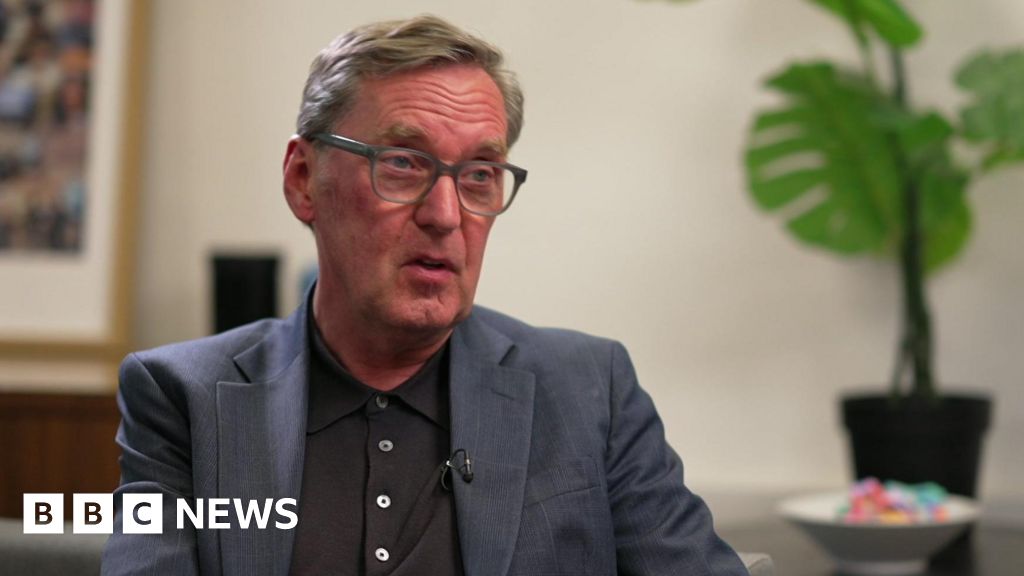
The government spends 25 times as much on benefits for young people than it does on supporting them into work, the author of a major review into youth inactivity has said.

Former minister Alan Milburn told the BBC that this was "shameful" and with nearly a million young people not in work or education (Neets), a complete "system reset" was needed.

In an exclusive interview with Sunday with Laura Kuenssberg, Milburn said it was absolutely essential Labour reformed the welfare system, even though the government had shelved some planned benefit reforms in the face of opposition from their own MPs.

The first part of his government-commissioned report into the issue will be published this week.

Milburn's calculations are based on the amount spent on 16 and 24 year olds taking part in core employment programmes funded by the Department for Work and Pensions and Jobcentre Plus.

Spending on Welfare is based on the amount spent on key benefits like Universal Credit, PLP, Job Seekers' Allowance, PIP and Disability Living Allowance. The full methodology will be published in the report later this week.

The former Labour health secretary under Tony Blair was asked by the government to investigate why so many young people were in the position of not working, studying or taking part in training programmes – the highest level for more than 10 years.

There were 957,000 young people who were Neet in the UK from October to December 2025 – equivalent to 12.8% of people in that age category, according to the latest figures from the Office for National Statistics, released in February.

More than half of those were deemed to be economically inactive as they were not looking for work.

When Milburn's initial report is published this week he said it will conclude that the problem was a result of a widespread failure on behalf the state.

"This is a failure. This is the failure of the welfare system, but it's a failure, I'm sorry, of the school system, the skills system, the health system," he told the programme.

"We're not prioritising getting young people into a situation where they can be learning or earning and instead we're transporting them into the world of benefits with incalculable costs for their life chances."

He highlighted a central finding of the report on the disparity between the amount of money spent on supporting young people on benefits and how much goes into state-funded programmes to help them into work.

"What is shameful […] is that as we've uncovered in the course of this review for every £25 that we spend keeping young people on benefits, we spend only a pound helping them get into work through employment support," he said.

Milburn's main recommendations to tackle the problem will be published later this year, but he said there had to be a system reset, part of which had to be reform of the benefits system.

Directly addressing those in the Labour Party nervous about reforms to welfare he said: "Labour is what it says on the tin.

"It's the party of work. Work gives purpose. Work gives income. Work gives meaning."

He continued: 'Welfare reform is absolutely essential and needs to be done. But as I said, it's got to be within the context of a wider set of reforms to state institutions."

In his report Milburn will also highlight the challenges young people face getting into work, concluding that the increase in mental health problems is real.

However, he will argue such diagnoses should not mean young people are not expected or encouraged into the work place.

He said there were fewer part-time jobs for young people, saying he had been sacked from his first job doing a paper round when he was 13 in Newcastle.

"Like all adolescent boys, guess what? I couldn't get out of bed," he said.

So he said he was sacked for not delivering the papers.

"It's the only time in my life so far, anyway, I've ever been sacked from anything." he said.

However he said he had learned from the experience.

"Effort and reward, there's something going on here and nowadays the number of young people who are actually in employment has been falling and it's been falling probably for about 25 years.

"Entry level jobs are disappearing, so the jobs that you used to be able to get for the first rung on the ladder, they've gone," he said.

📰 மூல செய்தி (Source): https://www.bbc.com/news/articles/crrpx4p1z71o?at_medium=RSS&at_campaign=rss

முக்கியச் செய்திகள்

Charmain 'was on a mission' to find out who her prophet husband was. Then she died

Published

on

To those who loved Charmain Speirs, so much about her death doesn't make any sense.

After a whirlwind romance and quickfire wedding, she was mysteriously found dead in a hotel bathtub in Ghana six months later.

Her Ghanaian husband, Eric Adusah, the head pastor of a Pentecostal church, was charged with her murder before being released due to lack of evidence.

The prophet, as he is known by his followers who believe he shares divine revelation directly from God, has denied any involvement in his wife's death.

Last month, a BBC Disclosure documentary raised serious questions about Adusah's account of the night his Scottish wife was last seen alive.

Friends and family told the BBC they were puzzled about why Charmain had left her seven-year-old son with members of her husband's church while she went to Ghana alone.

In a new podcast series – Charmain and the Prophet – one woman, Elma Adams, says she may have the answer.

She says Charmain was "on a mission" to find out who her husband really was.

Elma, a devout Christian who is now in her 80s, had been Eric Adusah's "Scottish mum" after they met in Edinburgh in 2012.

But she thinks the prophet used her and Charmain for his own gain.

Elma first encountered the prophet in a Christian bookshop in the Scottish capital and recalls that he seemed "very charming and easy to talk to".

The pair exchanged numbers and Elma told him to phone if he ever needed help.

Several weeks later, he called and before long he was staying with Elma and her late husband George whenever he was in Scotland.

The prophet was based in London but his Global Light Revival church already had branches in Manchester and Dublin.

Elma helped him recruit Christians to establish the Edinburgh branch and he would stay at her home about once a month when he came to host services.

Elma was fond of him and he was a source of support when she found she had cancer.

But she was less impressed by what she saw after he got together with Charmain.

"There seemed to be a lot of urgency to get married," she says.

"What struck me was that they didn't impress me as a romantic couple.

"It was more like she was an acquisition rather than a beloved romantic partner, more like a stage prop than anything else."

Charmain, originally from Arbroath, met the prophet through a Christian dating site in spring 2014 and after a whirlwind romance they married in September that year.

She was 40 years old and, after a string of broken relationships, finally thought she had found what was promised for her – a man of God.

Within months, Charmain was the wife of Eric Adusah, referred to as the "first lady" by members of his church.

She was a celebrity in the church, who appeared on publicity posters alongside her husband.

But according to Elma, and others the BBC has spoken to, all was not well behind the scenes.

Charmain lost touch with most of her friends but Elma was able to remain in contact – perhaps because she was close to the prophet.

Elma says: "She, from time to time, would phone me or leave me a text and she would be quite distressed, angry, emotional, resentful.

"She had little or no extra money at all. She was dependent on support from Eric."

Elma says Charmain told her that her husband insulted the way she looked and controlled what she wore.

Other witnesses have told the BBC they saw signs Charmain was being coercively controlled after her marriage and her son claimed she was physically abused.

Another friend who managed to stay in contact with Charmain, Anne-Marie Bond, visited the couple's home in Essex.

She says: "She sat me down and she told me, 'I have got to tell you something. He is not who he says he is'."

Anne-Marie says Charmain told her he had different identities and other women.

The BBC spoke to two women who had been in relationships with Eric Adusah and claimed they had been emotionally abused by him.

We also learned that another woman, who was in a relationship with him, contacted Charmain to try to warn her.

Anne-Marie says Charmain was planning "an exit strategy" but was still trying to believe that her "prophet" was the man that God had chosen for her.

"She still had that little bit of faith in her, that little belief that this was possibly the man that she's supposed to be with – because of God," Anne-Marie says.

Exactly why Charmain went to Ghana when she appeared to be planning to end the marriage has always been unclear.

Elma thinks she was trying to find out more about her husband's past.

"She was adamant, she wanted to find out more about him and she wanted to meet his background," Elma says.

"She was very resentful at the end, and she was angry enough to go on what I say was a bit of a mission to find out what it was really all about."

Elma says that Charmain felt strongly enough to leave her son behind and fly to Ghana to try to "get to the root of things".

Elma and Anne-Marie did not speak to Charmain while she was in Ghana but a friend from the Global Light Revival church, who we are not naming to protect her identity, claims to have been in regular phone contact while she was in the west African country.

In a statement given to British police a month after Charmain was found dead, the witness claims Charmain had discovered her husband went by another name and that he was much older than he had claimed.

According to the witness, Charmain also claimed to have found out that Eric Adusah had another wife in Ghana.

The witness says Charmain told her on 16 March she was going to check into a hotel with the prophet, who was by now also in the country, and confront him about everything.

She says she received a phone call later that evening from Charmain's number and could hear the couple in the background.

She says Eric Adusah was shouting and it sounded like he was banging a table as he spoke.

This was the day before Charmain was last seen alive.

On 20 March 2015, Charmain's body was found in a bathtub in the hotel where she spent time with her husband.

More than a decade on, a BBC Disclosure investigation uncovered omissions from the prophet's account of what happened at the hotel where Charmain died.

He told police he left the hotel after midnight to travel to Accra for a 06:00 meeting with a reverend before a scheduled flight back to the UK.

The BBC found that the man he claimed he was meeting did not corroborate his story.

He also did not mention that three men had visited their hotel room that night, one holding a briefcase, and spent an hour there before they helped the prophet load bags into his car.

Two of the men were later traced and said they were in the room praying.

Eric Adusah, who now lives in the USA and goes by the name Eric Isaiah Kusi Boateng, did not answer the BBC's questions about alleged domestic abuse and coercive and controlling behaviour.

It has been over 10 years since Charmain died.

Her friends, like Elma and Anne-Marie, are still reckoning with what happened, replaying those final moments they spent with Charmain.

"I just wish I did more though," says Anne-Marie.

"Obviously she's a grown woman. I can't tell someone what to do. I wish I did do more."

For Elma, Charmain's death has caused her to examine the power she claims the prophet held over them both.

"We've both been conned, useful idiots, which is not a very nice way to put it, but we've been used," says Elma.

"Charmain was used; she was a commodity."

📰 மூல செய்தி (Source): https://www.bbc.com/news/articles/c1d2xgvgy9yo?at_medium=RSS&at_campaign=rss
Continue Reading

முக்கியச் செய்திகள்

E-scooter and officer collide near Buckingham Palace

Published

on

An e-scooter rider and a police officer were taken to a major trauma centre after a collision outside Buckingham Palace.

The BBC saw medical bags, a discarded police hat and a black e-scooter strewn across the road outside the palace's gates in the aftermath of the crash on Friday.

The incident took place at 16:00 BST at the bottom of Constitution Hill, the length of which was cordoned off by police for hours.

A London Ambulance Service spokesperson said: "We sent an ambulance crew, incident response officer and dispatched London Air Ambulance via car to the scene. We treated two males at the scene and took them to a major trauma centre as a priority."

The Met Police confirmed it was called to "a collision with a police officer who was on foot at the eastern end of Constitution Hill next to Buckingham Palace".

A spokesperson said: "Both the rider of the e-scooter and the police officer were taken to hospital. Their injuries were assessed as non-life threatening and non-life changing.

"The scene of the incident was cordoned off while the level of injuries was confirmed."

Officers were seen patrolling the cordon and shouted at several cyclists who at one point attempted to pass through a cycle lane within the cordon.

"Get out, you're in a crime scene," an officer was heard shouting at the cyclist.

The palace was not flying the Royal Standard, suggesting King Charles was not present at the time of the collision.

Listen to the best of BBC Radio London on Sounds and follow BBC London on Facebook, X and Instagram. Send your story ideas to hello.bbclondon@bbc.co.uk

📰 மூல செய்தி (Source): https://www.bbc.com/news/articles/c62xdrny74lo?at_medium=RSS&at_campaign=rss

Continue Reading

முக்கியச் செய்திகள்

Brewdog founder to give shares in new beer brand to old investors

Published

on

One of the founders of Brewdog has announced plans to launch a new beer brand, promising free shares to people who lost money in his original venture.

James Watt co‑founded the craft beer company with Martin Dickie in 2007. At its peak, Brewdog had four breweries, around 100 pubs worldwide, and a valuation exceeding $1bn.

However, the company collapsed with debts of more than £500m and was taken over by US based Tilray earlier this year.

Watt says he will allocate nearly 20% of shares in his new beer company, called Second Best, to people who lost money after investing in Brewdog's Equity for Punks scheme.

Equity for Punks was an in-house crowdfunding scheme, promising beer enthusiasts a chance to "own a slice of the brewery and share in its success and growth".

In return Brewdog offered perks such as discounts on beer purchases, free birthday beer and invitations to its "Annual General Mayhem" AGM with live music and beer tastings.

The scheme is said to have raised £75m, which allowed Brewdog to expand into the international market.

However, the company went on to source equity from elsewhere and when US equity firm TSG Consumer Partners acquired a 22% stake in Brewdog, they were given "preference shares".

This meant when Brewdog was sold, TSG was first in the queue to get back its investment plus any return owed.

Beverage and medical cannabis company Tilray bought the company's UK brewing operations, brand and 11 pubs in a £33m deal in March.

Administrators said the sale had preserved 733 jobs – but that 484 jobs had been lost and 38 bars had closed after they were not included in the rescue deal.

They also made clear that those who invested in the Equity for Punks scheme would not get any return from the deal.

Investors previously told BBC Scotland that they lost up to £12,000 after the company was sold.

Watt stepped down as chief executive of the company in 2024 and later apologised to staff and investors for the "many mistakes" made, admitting the company tried to diversify too quickly.

Announcing his new venture, Watt said on social media: "Thousands of people trusted me to build a brilliant beer business and create value for them.

"It was an obligation I took very seriously. And I, for one, am not done with that obligation."

He says he plans to allocate up to 19.3% of the company to former investors.

Watt claims they will be able to "claim the exact stake" they once held in Brewdog "for free."

He added: "No catches, no cash required, and your equity in Second Best will always rank alongside my own.

"You'll own it. I'll fund it. And I'll dedicate myself to building it. You're not shareholders this time. You're second founders."

He said the company is still seeking relevant licenses and legal consents, so they do not have a launch date and it "may take some time".

Watt said he hoped to launch an "alcohol adjacent concept" initially.

📰 மூல செய்தி (Source): https://www.bbc.com/news/articles/c74r3pgd3gwo?at_medium=RSS&at_campaign=rss

Continue Reading

Trending

Copyright © 2024 by 7Tamil Media, All rights reserved.