Connect with us

முக்கியச் செய்திகள்

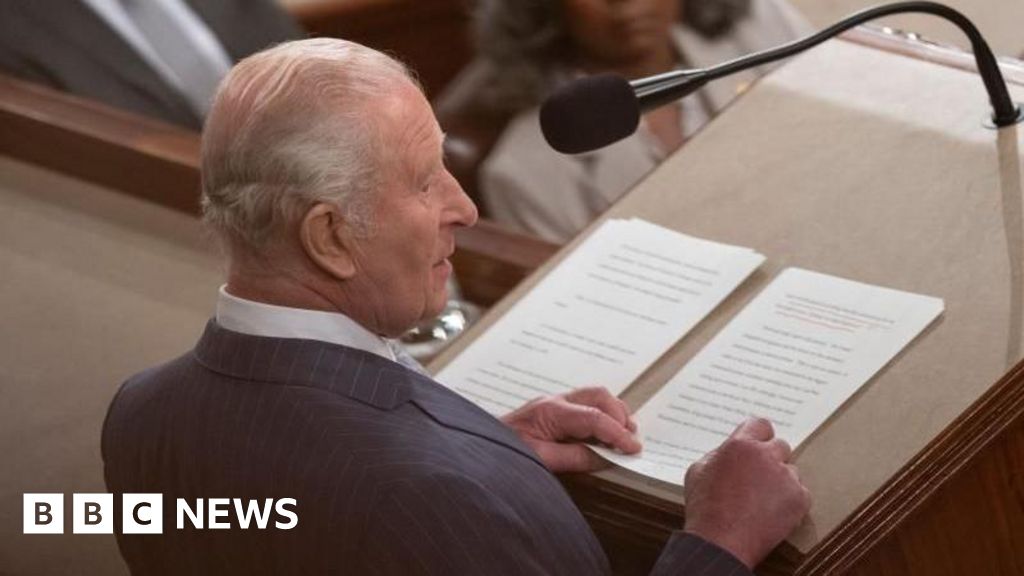
Five takeaways from the King's historic address to Congress

Published

on

King Charles III's visit to the US was meant to be a celebration – of America's 250th anniversary, of enduring Anglo-American ties and of the "special relationship". But it has also been billed as a rescue mission.

The current state of US-UK relations is strained – a reflection of British reluctance to fully back the joint US-Israeli war against Iran. So the King's goal has been to ease those tensions with a royal charm offensive, most notably with his joint address to Congress on Tuesday afternoon.

There is some reason for hope. President Donald Trump has a notably mercurial personality. Warm relations can turn chilly in a flash. But the reverse is also true, and former antagonists can be rehabilitated, welcomed once again into the president's good graces.

A strain is not a rupture. And towards the end of his speech, the King spoke of the "reconciliation and renewal" that he said characterised the centuries of interactions between the two nations.

Whether such words in public and, in all likelihood, behind closed doors will be enough to reinforce the Anglo-American alliance remains to be seen. But, in brief remarks after an afternoon White House meeting, Trump appeared pleased.

"He's a fantastic person," the president said of the King. "They're incredible people and it's a real honour."

But there were also some lines in the King's speech, the first royal address to Congress since Queen Elizabeth II spoke at the Capitol in 1991, that may have buoyed Democrats – and raised eyebrows in the White House.

Admitting you have a problem is the first step of recovery, as the saying goes. And so King Charles started his speech by diving right into the "times of great uncertainty" that confront both the US and the UK.

He ticked through conflicts in the Middle East and Europe – sources of recent contention between the US and the UK – while also noting the threat to democracy presented by the kind of political violence that upended Saturday night's White House Correspondents' Dinner.

From there, the King pivoted to talking about the fact that the US and the UK haven't always seen eye to eye.

"With the spirit of 1776 in our minds," he said, "we can perhaps agree that we do not always agree".

That was all a set-up, however, for his conclusion that the two nations, when in alignment, can do great things "not just for the benefit of our peoples, but of all peoples".

When King Charles noted that executive power "subject to checks and balances" was a British legal tradition, enshrined in the Magna Carta, which became a bedrock principle in the US Constitution, he received another standing ovation – with a twist.

The cheers started on the Democratic side of the chamber, before spreading across the entire room.

Donald Trump's critics on the left have frequently denounced the president for what they see as his abuse of power.

A sense that the president should be subject to rigorous checks and balances was one of the motivating sentiments behind the "no kings" rallies that have drawn hundreds of thousands across the nation over the past year.

Later, as the King closed out his speech, one of his final lines prompted some muttering – of both agreement and concern – from the Democratic side.

"America's words carry weight and meaning, as they have since independence," the King said. "The actions of this great nation matter even more."

Democrats, of course, have frequently been critics of Trump's words, and how he delivers them, as well as his actions.

Whether intended or not, it appears liberals in the audience may have viewed the King as delivering a message of warning to the nation – while offering them a chance, once again, to express their "no kings" sentiment.

Quoting former US Secretary of State Henry Kissinger, the King spoke of an Atlantic partnership and noted – not for the first time among America's European allies – that the only time Nato mobilised in defence of one of its member-states was after the 9/11 terror attacks by al-Qaeda.

Trump has derided the British Navy, long a source of pride for the kingdom. He called their ships "toys" and said their aircraft carriers "didn't work".

King Charles, who served for five years in the Royal Navy, made a specific mention of his time in the service – using it as an entry point to remark on benefits of security and intelligence relations between the two nations – and between America and Europe.

He even found an avenue to mention climate change, an issue that has been a longtime concern of his.

"From the depths of the Atlantic to the disastrously melting ice-caps of the Arctic, the commitment and expertise of the United States Armed Forces and its allies lie at the heart of Nato, pledged to each other's defence, protecting our citizens and interests, keeping North Americans and Europeans safe from our common adversaries," he said.

Issues of international politics aside, one of the biggest questions surrounding King Charles's visit had been whether he would reference Jeffrey Epstein in his remarks or address the late sex offender's victims.

The closest he came, perhaps, was an oblique reference to the need to "support victims of some of the ills that, so tragically, exist in both our societies today".

For those who had called for the King to meet with Epstein survivors while in the US, that comment alone may be viewed – to use an American phrase – as weak tea.

Last year, over the objections of the Trump administration, Congress passed legislation mandating the release of US government-held files related to the Epstein investigation.

Those files led to new revelations about the depth of connections Epstein had to the rich and powerful, including former UK ambassador to the US Peter Mandelson and the King's brother, Andrew Mountbatten-Windsor.

For now, the Epstein saga has had greater repercussions in the UK compared to the US, where few in current positions of political power have faced adverse consequences.

Even if the subject didn't come up during the speech, the issue is not fading from the headlines – and the full story here in the US may be yet to emerge.

Given the seriousness of the King's objectives – with no less than the future of US-UK relations at stake – his speech was, at times, whimsical.

He opened with the oft-quoted – and misquoted – line from Oscar Wilde about the US and England having everything in common "except, of course, a language".

He joked about the member of British parliament who is held "hostage" when the King speaks at Westminster – and wondered whether anyone in Congress had volunteered for such a job today.

He also riffed on how US independence was "just the other day" for a nation as old as Great Britain and that he wasn't coming to the US as a "cunning rearguard action" to reestablish British rule.

There may be tensions between the US and the UK at the moment, but on Tuesday the King appears to have successfully broken the ice.

Follow the twists and turns of Trump's second term with North America correspondent Anthony Zurcher's weekly US Politics Unspun newsletter.

Readers in the UK can sign up here. Those outside the UK can sign up here.

📰 மூல செய்தி (Source): https://www.bbc.com/news/articles/c8jvl3x19v9o?at_medium=RSS&at_campaign=rss

முக்கியச் செய்திகள்

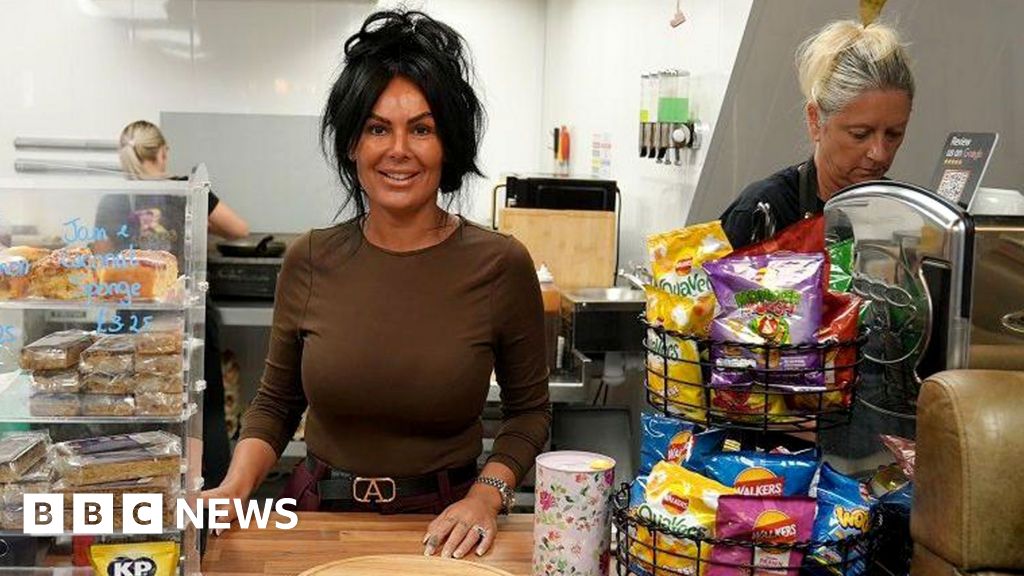
Should I Marry a Murderer? – the love story that uncovered a killer

Published

on

What would you do if the person you love told you they had killed a man?

It's easy to imagine you would act rationally, morally and without hesitation but Should I Marry a Murderer?, Netflix's new true crime documentary, suggests that in real life, love complicates everything.

In 2017, drink-driver Alexander McKellar – known as Sandy – struck and killed charity cyclist Tony Parsons in Argyll and Bute, Scotland. McKellar and his twin brother Robert then buried Parsons' body.

It lay there undiscovered for three years until McKellar's new girlfriend, Dr Caroline Muirhead, found out the truth and led police to the shallow grave.

When director Josh Allott first heard of the story he "couldn't believe it was real".

"I thought it was the plot of a drama and it couldn't happen to anyone in real life."

Series producer Clare Beavis, who was aware of the case as it unfolded because it had "had a big impact in Scotland" says that the "missing part of how the story was reported was Muirhead's testimony and her account of events".

The series opens with Muirhead reeling from a difficult break-up before meeting McKellar on Tinder in the autumn of 2020, sparking a whirlwind romance that within weeks lead to an engagement.

Shortly after their engagement, she asked him if there was anything in his past which may affect their future together.

He told her that a few years before he had hit a cyclist as he drove home from a hotel with his brother, but did not seek medical assistance.

It was later revealed that Parsons' injuries were so extensive that he would only have survived for 20 or 30 minutes without help – but it was unlikely that he had died instantly.

The twins left the area and came back to the site in another car before taking Parsons' body to the nearby Auch Estate, where they buried him.

The revelation threw Muirhead into a conflicted position, torn between loyalty and doing the right thing.

For Allott, it was that emotional and moral tension that made the story impossible to ignore.

"The dilemma is impossible not to imagine in your own relationship, it makes you think about what would you do in her position as it's a terrifying, nightmare scenario."

Muirhead reported the crime to the police but what she did next is what makes the story so extraordinary and, arguably, explains why the series exists at all.

Rather than walking away, Muirhead continued the relationship, all while secretly going to the police and cooperating with their investigation, without McKellar knowing she was the one who had reported him.

It would be almost three years after McKellar first confessed to Muirhead that he would be handed a prison sentence.

During that time, Muirhead recorded secret confessions on her phone and went back to the Auch Estate with McKellar where she secretly dropped a Red Bull can as a marker for the spot, before later calling police to tell them where to search for the body on the remote estate.

While some may question such decisions, Allott says Muirhead did the right thing by reporting the crime to the police.

The brothers were arrested in December 2020 and released on bail – they were only charged in December 2021.

"She expected the brothers to be remanded in custody, face trial and be in prison forever and be out of her life but they were thrust back into her life," Allott explains.

He says that she had to navigate this uncertain period alone as she was "left exposed to them for almost a year and that's where the decisions come into it."

It's precisely the complexity of Muirhead's personality that makes her such a compelling figure as, according to Allott, she "was articulate and intelligent, a promising young pathologist with eight years of medical training".

"She had her whole life on track and after meeting Sandy and hearing what he did, everything falls apart."

In the series, Muirhead talks candidly about how she turned to alcohol and drugs in a bid to cope with the situation she found herself in.

Allott and Beavis are clear their intentions are to present a balanced account of the events but want to ultimately highlight "what being on the periphery of crime but not involved can do to someone's life".

There is also a focus on the way the police conducted their relations with Muirhead after she came forward to report a crime.

Allott argues that the police "didn't know how to handle Caroline" and, without giving too much away, says that had she received "consideration and kindness from them she wouldn't have had to make some of the decisions she did."

Beavis agrees and adds that Muirhead's experience "echoes many experiences of people in the criminal justice system".

"The wheels of justice turn so slowly and that affects peoples lives and that's what we wanted to show."

Police Scotland and Victim Support Scotland declined to take part in the series.

Muirhead made multiple complaints against Police Scotland.

After a five-year investigation, the majority were not upheld and the police maintain they offered Muirhead appropriate support.

In a note about the show, Muirhead said she "trusted the system would stand by me and keep me safe when I was at my most vulnerable but that wasn't my experience.

"I hope by speaking out and sharing what happened to me, we can start an honest conversation about greater protection for victims and witnesses and why a far deeper understanding of mental health within the police and court system is so desperately needed.

"All too often the impact of trauma and abuse is overlooked or dismissed entirely and this means people like me are being left high and dry to pick up the pieces alone."

In July 2023, shortly before the brothers' trial was due to begin at the High Court in Glasgow, McKellar admitted the reduced charge of culpable homicide.

His brother had his not guilty plea to murder accepted, but the pair both admitted attempting to defeat the ends of justice by covering up the crime.

Sandy McKellar was sentenced to 12 years in jail, while his brother was jailed for five years and three months.

The case was also previously covered in BBC documentary series Murder Case: The Vanishing Cyclist.

Should I Marry a Murderer? is out now on Netflix.

📰 மூல செய்தி (Source): https://www.bbc.com/news/articles/ce8j8xxzzjko?at_medium=RSS&at_campaign=rss
Continue Reading

முக்கியச் செய்திகள்

A record-breaking semi-final – the antidote to modern football?

Published

on

Every once in a while a match comes along that reminds us all why football is referred to as the beautiful game.

Paris St-Germain's record-breaking 5-4 Champions League semi-final first-leg victory over Bayern Munich was one such occasion.

It was the highest scoring semi-final since Eintracht Frankfurt beat Rangers 6-3 in the 1959-60 European Cup – and will live long in the memory.

Not for its tactical genius or calculated gameplans, but for two sides with remarkable attacking quality and throwing everything at it in the hope of securing a place in next month's final in Budapest.

In a campaign where set-pieces have become king, defensive interventions are celebrated like goals and the long throw-in has made a comeback, this was a refreshing reminder that simply scoring more goals than your opponent can be the key to success.

Bayern twice took the lead in a breathless first half, but defending European champions PSG came back in thrilling style to gain a three-goal advantage at 5-2 and surely put one foot in the showpiece.

But the German champions showed their tenacity and talent to reduce the deficit to one and ensure they remain in the tie for next week's return leg in Munich.

As pundits and fans celebrated an extraordinary advert for the game, PSG boss Luis Enrique enjoyed it too.

"It was amazing. I think it was the best match I have ever managed as a coach," he said.

"It had amazing rhythm, trying to play offensive football, trying to show their quality. I think everybody had fun watching the match. I'm happy because we won."

PSG edge Bayern in record nine-goal semi-final first leg

The tone was set for a dazzling European encounter when both sets of fans unfurled giant tifos before kick-off – PSG's was emblazoned with the words 'the conquest of Europe', while the visitors' banner urged their side to 'give everything'.

In a chaotic opening 45 minutes at the Parc des Princes, both sides did just that.

It was fitting the two top-scoring sides in the Champions League this season put five goals on the scoreboard in a mesmerising, end-to-end opening period.

Harry Kane's penalty was cancelled out by Khvicha Kvaratskhelia's clinical finish, before Joao Neves' glancing header and Michael Olise's moment of individual brilliance left the sides level.

Many will suggest the PSG penalty, awarded after Bayern defender Alphonso Davies was deemed to have handled an Ousmane Dembele cross in the box, was harsh. Dembele calmly converted to give PSG a 3-2 lead at the break.

But the controversial incident was ultimately overshadowed by what pundits called one of the greatest halves of football they had ever witnessed.

Former England captain Alan Shearer said on Amazon Prime: "I can't stop smiling at how open and bonkers this game is.

"It's one of the greatest games I've ever been to. Two teams that believe in their own ability to outscore their opponent."

The chaos continued after the break with PSG building a three-goal cushion, again through Kvaratskhelia and Dembele, leaving some to wonder if the outcome had been settled.

But Bayern were unwilling to let the chance of a first Champions League title since 2020 get away from them as they fought back in fearsome fashion.

Goals from Dayot Upamecano and Diaz were met with stunned silence from the home fans and no further response from the PSG players as the hosts finished with a slim advantage.

"I have been managing for more than 15 years, and I have to say it was the most exciting [match]," added Luis Enrique.

"It is important to show that that is the way to try to play football. OK, we are not happy as a coach when you concede four goals, but I'm happy because we won."

It was the first time in any major European semi-final that both sides had scored at least four goals, and just the second time in a Champions League knockout match after Chelsea and Liverpool drew 4-4 in the 2008-09 quarter-final.

With PSG netting 43 goals and Bayern 42, it was also the first time two teams have each scored more than 40 times in a Champions League campaign.

In a match littered with fascinating battles, it was ultimately a showdown between Europe's two most potent attacking line-ups.

For PSG, there was the composure and speed of Vitinha, the incisive passes and clinical finishing of Dembele and the moments of Kvaratskhelia magic.

Bayern had the electrifying ability of Olise, the explosive energy of Diaz and the ruthlessness of Kane. The trio have netted more than 100 goals between them across all competitions this season.

But at times, defences could be called into question.

Bayern's full-throttle approach in the second half left them exposed at the back and PSG duly punished them, while the Ligue 1 side appeared stunned as the visitors pulled back two goals, unable to believe they had not put the tie to bed.

Bayern boss Vincent Kompany admitted: "We suffered but we were dangerous. Five goals away from home in the Champions League normally means you're out but the chances we had, made us believe.

"I've seen a lot of good defending today but the game is such fine margins, you either go full into the battles, or retreat fully. The in-between doesn't work against that level of players."

Kane also praised his side's defence, despite it being the first time Bayern had conceded five goals in the competition since 1994-95.

But former England forward Wayne Rooney disagreed with the sentiment as he added: "I love Harry Kane but there is no way he can be praising his defenders. The defending from both teams was really bad, I think he is being modest there."

While this was the opposite to the style many fans have become weary of this season – defensive set-ups and an over-reliance on set-pieces – it is perhaps unlikely to be replicated in Wednesday's second semi-final between Arsenal and Atletico Madrid.

Two sides who pride themselves on their defensive resilience, and more likely to be found holding out for a late goal than playing heavy metal football, will have watched this match with caution.

Chances from open play have been tough to come by for the Gunners this season and a battle to see who can outscore who may not fall in their favour.

But they know they can rely on their defensive strengths and that may prove crucial to preventing a chaotic final.

"Ask the goalkeepers if they were happy with the scoreline," said former AC Milan and Real Madrid midfielder Clarence Seedorf. "We've seen teams like Arsenal getting so many clean sheets and making a difference.

"If there is a team that could bring it home, it could be them."

Listen to the latest Football Daily podcast

Get football news sent straight to your phone

Watch highlights of every Champions League game from 22:00 on Wednesday on BBC iPlayer and the BBC Sport website and app.

There will also be a Champions League Match of the Day on BBC One on Wednesday, from 22:40 to 00:00.

📰 மூல செய்தி (Source): https://www.bbc.com/sport/football/articles/cp3pd2kgy76o?at_medium=RSS&at_campaign=rss

Continue Reading

முக்கியச் செய்திகள்

Early care scheme could prevent thousands of miscarriages a year

Published

on

After going through two devastating miscarriages, Lisa Varey could not believe what she was thinking.

She knew she would have to miscarry again before she could get the help she needed. Only when you have had three miscarriages do you normally qualify for specialist NHS help in England. One in five pregnancies end in miscarriage, most before 14 weeks.

Lisa, 34, told her husband: "We're not waiting another year. We need to be pregnant and miscarry as soon as we possibly can."

She says they looked at each other, and said: "I can't believe I'm actually saying this out loud."

After her second miscarriage, Lisa was invited on to a pilot project at Birmingham Women and Children's Hospital, which experts believe will prevent thousands of miscarriages every year by offering earlier checks and advice.

Tests showed she would benefit from taking the hormone progesterone to help maintain her pregnancy and a regular aspirin tablet to increase the chances of a healthy birth.

Lisa is now pregnant and in the last weeks of her second trimester. She breaks down in tears as she speaks about how much difference the project's help has made.

"There's so much support for pregnant women, but it didn't always feel like there was any support for women who were no longer pregnant. We're having to go through that journey of just feeling very sad."

Emily, 42, from Birmingham, suffered two miscarriages in one year and it left her feeling like her body had "failed" her.

She had struggled to get pregnant and was undergoing rounds of IVF – so when she got a positive test, she says she felt "this is it". Then a scan showed the baby was not growing as it should, which she says was devastating.

She went on to have a second miscarriage, before she was invited to join the Birmingham project.

She was put on aspirin and a higher dose of folic acid. She says being offered early tests gave her possible reasons for the miscarriage, which took away "the guilt and shame that you feel".

"Knowing there were things that could make a difference. That gives you some hope to hang on to," Emily says.

Tommy's, the pregnancy charity, says NHS care offered to women who have suffered three miscarriages can be "inconsistent and inadequate". Before then, women are often told to simply go home and to try again.

Both Lisa and Emily were part of the Birmingham study, which compared two groups of 203 women who had previously suffered miscarriages. One group was treated under standard NHS care, while the other was treated with a different model of care.

The new model started after just one miscarriage, and gave the women progressively more care after each baby loss. Researchers say it found a small reduction in the miscarriage rate among its test group. Where women did go on to have more miscarriages, researchers say they received better care and support.

One in five women in the study had treatable health issues, such as abnormal thyroid function and anaemia, which could affect their chances of a healthy birth.

And while no formal data is collected on the number of miscarriages that happen every year – with many going unreported – they estimate the pilot project could prevent around 10,000 miscarriages a year, if its findings were implemented across the NHS.

As part of the project, women who had suffered one miscarriage were given a one-to-one consultation with a specialist nurse to discuss lifestyle changes – including reducing alcohol consumption and giving up smoking – and using the hormone progesterone, which can help prevent miscarriage.

After a second miscarriage, women were tested for anaemia and abnormal thyroid function, which can affect pregnancy outcomes. They were also offered early scans to reassure them the pregnancy was advancing normally.

Following a third miscarriage, the pathway joins up with what the NHS currently offers – including a referral to a recurrent miscarriage clinic, further blood tests and a pelvic ultrasound.

Professor Arri Coomarasamy, head of miscarriage research at Tommy's, says the three miscarriage wait is an unacceptable anomaly.

"We don't do that with any other medical condition. If somebody has a heart attack, we don't say have your third heart attack and then we will see if there is anything we can do," he says.

He says the findings of the study, if rolled out across the NHS, could also save the NHS money. The pilot suggests the extra costs of staff and training are outweighed by the money saved having fewer women miscarry.

Sally, who is 33, has had two miscarriages and feels let down by the care she was given. She says she's not ready to try for another baby because of her experience.

Living in Gloucester, she doesn't have access to the pilot project but says if she did, she might change her mind.

"Putting these systems in place show women that they are thought about, that one miscarriage is enough to be thought about and to be supported," she says.

In the Women's Health Strategy announcement last week, the government said it was considering "wider adoption" across the NHS in England.

Baroness Merron, Parliamentary Under-Secretary of State at the Department of Health and Social Care said: "This will be carefully considered as part of our ongoing work to make sure women get the high-quality, compassionate NHS care they deserve."

NHS Scotland is already making improvements in miscarriage care, including not waiting until a third miscarriage and providing separate rooms in maternity units for women who are going through pregnancy loss.

Northern Ireland and Wales currently follow the same guidelines as England. Researchers on the Birmingham team say they are "hopeful" their model will bring about change.

Kath Abrahams, chief executive of Tommy's, says the pilot would give women an understanding of the care they would be offered.

"Knowing what's going to happen next can be incredibly comforting in a moment when you're in crisis," she says.

If you have been affected by any of these issues, go to BBC Action Line for information and support.

📰 மூல செய்தி (Source): https://www.bbc.com/news/articles/c62r8lzgnk2o?at_medium=RSS&at_campaign=rss

Continue Reading

Trending

Copyright © 2024 by 7Tamil Media, All rights reserved.