Connect with us

முக்கியச் செய்திகள்

Five questions awaiting Starmer as he faces Commons over Mandelson scandal

Published

on

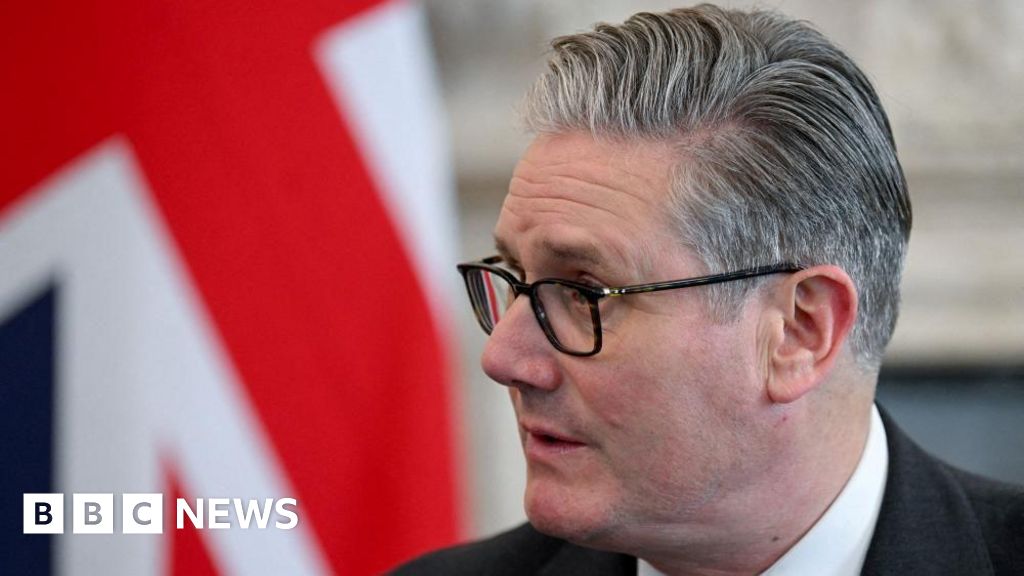
Prime Minister Sir Keir Starmer is set to face a packed Commons later where he will address questions over Lord Mandelson's vetting.

Sir Keir repeatedly told MPs that "full due process" was followed when Lord Mandelson was appointed as US ambassador in December 2024.

The prime minister said he was "staggered" to find out last week that civil servants in the Foreign Office withheld information from him about red flags in the initial vetting process.

Amid calls for him to resign from every opposition leader, Sir Keir pledged "true transparency" as he tried to set out what happened. Here are the main questions he needs to answer.

Sir Keir told reporters that the first he knew about the red flags was on Tuesday last week, despite them being initially raised to the Foreign Office by UK Security and Vetting (UKSV) officials in January last year.

He said the information was passed on to him by Dame Antonia Romeo, the head of the civil service, and Cat Little, the head of the Cabinet Office, who had received it two weeks prior.

The documents had been revealed after the Conservatives tabled a motion which demanded the publication of all paperwork relating to the vetting process.

The prime minister's head of press, Tim Allan, was contacted by the political editor of the Independent in September, with the paper publishing a story about Mandelson failing vetting later that month.

The prime minister has insisted that his former chief of staff, Morgan McSweeney, and staff in Number 10 also did not know about the UKSV warnings.

McSweeney quit his job over the Mandelson scandal in February.

However, opposition MPs say it is not credible that neither Sir Keir, nor anyone on his team, could have remained in the dark for more than a year.

Sir Keir moved to replace the previous US ambassador Karen Pierce, a civil servant, with Lord Mandelson when US President Donald Trump returned to the White House in January last year.

As a political appointee, critics say the risk of Lord Mandelson's appointment was higher than a career civil servant, so Sir Keir and Number 10 should have taken more care to ensure the vetting process was followed correctly.

Lord Mandelson's friendship with convicted paedophile Jeffrey Epstein was public knowledge well before his appointment, as were previous scandals around money and influence that led to him being forced out of Cabinet twice.

Yet it seems the first person to request the UKSV summary form was Dame Antonia, shortly after her appointment in February.

Sir Keir told MPs in September, a day before Lord Mandelson was sacked as US ambassador, that "full due process" had been followed during his appointment.

The Conservatives say Sir Keir misled the Commons and had therefore broken the ministerial code. The prime minister denies this, saying he had only been told about the vetting recommendation last Tuesday.

Under the code, the minister in question should correct the record in Parliament "at the earliest opportunity". Opposition party leaders say Sir Keir should have done this at PMQs last week, the day after he said he found out about the red flags.

Sir Keir told journalists that having found out the information on vetting last Tuesday, he asked his civil servants to provide full details so he could ensure accuracy when he returned to the Commons to answer questions from MPs on Monday.

There are sure to be questions about this six-day delay, although we know the prime minister was in Paris on Thursday for a pre-scheduled meeting of global leaders on the Iran war, and the next parliamentary sitting was Monday.

The remaining documents relating to Lord Mandelson's vetting and appointment are set to be released imminently.

They were initially withheld on the orders of the Metropolitan Police, which is investigating Lord Mandelson for potential criminal activity.

The documents also need to be inspected by the Intelligence and Security Committee of cross-party MPs, which is trying to balance allowing as much information as possible into the public domain without compromising national security.

Conservative leader Kemi Badenoch has demanded the papers be released by the end of the week.

In November, the then head of the civil service, Sir Chris Wormald, said Lord Mandelson was not formally interviewed for the role of US ambassador.

Sir Chris said Lord Mandelson was not directly asked in person about any conflict of interest, but instead needed to fill in a form aimed more at potential financial conflicts. This process has now been changed.

Details of the due diligence checks made before Lord Mandelson's appointment, which were carried out by the Cabinet Office on behalf of Number 10, are still to emerge. The publication of these checks were specifically demanded by the Liberal Democrats on Sunday.

However, Sir Chris told MPs in November that the document did contain an "initial assessment" of mitigations around potential professional or financial relationships and noted the inclusion of "a general reputational risk" linked to Epstein.

This scandal has dragged on for months and has so far cost Sir Keir his US ambassador, his chief of staff, and the head of the Foreign Office, Sir Olly Robbins, who was ousted on Thursday.

Sir Olly will appear before the Foreign Affairs Committee on Tuesday to give evidence on how Lord Mandelson's clearance was handled.

The committee chair, Dame Emily Thornberry, said she felt she had been "misled" by Sir Olly when he first appeared at the committee in November last year.

He will be expected to explain whether red flags about Lord Mandelson's appointment were ignored, and if so who by and why.

He is also expected to be asked whether Foreign Office staff were leaned on in any way by Number 10.

And then there is the question of whether Labour backbenchers, returning from a week on the campaign trail for local elections, will rally behind their leader.

The remaining documents linked to Lord Mandelson's vetting will be released at some point in the next few weeks, and the possibility of a criminal trial remains.

Sign up for our Politics Essential newsletter to read top political analysis, gain insight from across the UK and stay up to speed with the big moments. It'll be delivered straight to your inbox every weekday.

📰 மூல செய்தி (Source): https://www.bbc.com/news/articles/c5yw6egnjg2o?at_medium=RSS&at_campaign=rss

முக்கியச் செய்திகள்

The potential challengers to Keir Starmer

Published

on

The prime minister's political future hangs in the balance, with his home secretary, a handful of ministers and more than 80 MPs calling on him to go, if not immediately then in the near future.

However, there is not a consensus among Labour MPs about who they want to replace Sir Keir Starmer as leader of the Labour party and of the country.

And on Tuesday, the prime minister told the cabinet he would "get on with governing" and that a leadership contest had not been triggered.

So although no one has publicly said they want to take over yet, here are some potential contenders.

Wes Streeting has been health secretary since Labour came to power in 2024 and shadowed the position in opposition for three years before that.

He was first elected to Parliament in 2015 having previously served as president of the National Union of Students and a London councillor.

In his 2023 memoir, he wrote about growing up in a council flat in London's East End, visiting his bank robber grandfather in jail and growing up as a gay Christian.

The health secretary is seen as the cabinet's best communicator and can point to a fall in NHS waiting lists as one of his achievements in government.

He has previously been open about his leadership ambitions and has plenty of support from Labour MPs, particularly those on the centre and the right of the party.

His allies in the cabinet include Business Secretary Peter Kyle and Science Secretary Liz Kendall.

His potential status as the 'right-wing' candidate could make him unpopular with party members, who tend to be to the left of the parliamentary party.

Andy Burnham has strong support from Labour MPs and polls suggest he is the most popular Labour politician with voters.

He can also point to a long track record of governing, having served as Greater Manchester mayor for almost a decade, earning him the nickname "the King of the North".

Burnham has made no secret of his ambition for the top job.

There is one major obstacle blocking his route to No 10 – he is not currently an MP. That is something his allies are hoping can be rectified quickly.

He did apply to be Labour's candidate in the Gorton and Denton by-election earlier this year but was blocked by Sir Keir's allies on the party's ruling body.

If Burnham does return to Parliament, it will be his second stint in Westminster.

Between 2001 and 2017, he was MP for Leigh – and during that time held senior government roles including in the health and culture departments.

The 52-year-old has twice stood to lead his party – in 2010 when he lost to Ed Miliband and in 2015 when he came second to Jeremy Corbyn.

Much of his support in Parliament comes from the left of the party and MPs in the North West.

Deputy Labour leader Lucy Powell and Culture Secretary Lisa Nandy are both allies and would be likely to support Burnham if he were able to enter the race.

Angela Rayner was, until last year, the deputy prime minister and the most powerful woman in British politics.

It has been a remarkable journey for the woman who grew up in poverty and left school at 16 without any qualifications.

Through her job as a care worker she got involved in the trade union Unison, which became her launchpad into a political career.

In 2015, she was elected in the Greater Manchester constituency of Ashton-under-Lyne and rose quickly in Westminster, serving in Jeremy Corbyn's shadow cabinet.

In government, she took on the role of housing secretary and was tasked with rapidly increasing housebuilding and delivering an overhaul of renters' rights.

In 2025 she dramatically resigned, after admitting she had not paid enough tax on the purchase of a new home.

Like the other two main contenders, Rayner has strong support among Labour MPs, although as a Greater Manchester politician on the left, much of her base overlaps with Burnham's.

She is still waiting for the result of an HMRC investigation into her home purchase, which could complicate any immediate leadership campaign.

With question marks and concerns hanging over the three main contenders, it is possible an unexpected candidate emerges.

Some Labour MPs have discussed former leader and current Energy Secretary Ed Miliband making a return.

He dismissed the suggestion in November telling the BBC: "I've got the T-shirt – that chapter's closed."

Home Secretary Shabana Mahmood has also been mentioned as a possible contender. However, her immigration changes have been controversial with Labour MPs and she could struggle to get support from party members.

Under the party rules, there is nothing to stop Sir Keir Starmer standing in a leadership race – and on Monday he told journalists he would do exactly that, if a contest emerged.

Sign up for our Politics Essential newsletter to keep up with the inner workings of Westminster and beyond.

📰 மூல செய்தி (Source): https://www.bbc.com/news/articles/c3e2n7xn14xo?at_medium=RSS&at_campaign=rss

Continue Reading

முக்கியச் செய்திகள்

Collins, first openly gay NBA player, dies aged 47

Published

on

Former pro-basketball player Jason Collins, the first active male athlete on a major American professional team sport to come out as gay, has died aged 47.

Collins died after a "valiant fight with glioblastoma", an aggressive form of brain cancer, his family said in a statement shared by the National Basketball Association (NBA).

He announced last year that he had been diagnosed with the cancer and was undergoing treatment to stop the spread of the inoperable disease.

"Jason Collins' impact and influence extended far beyond basketball as he helped make the NBA, WNBA and larger sports community more inclusive and welcoming for future generations," NBA Commissioner Adam Silver said on Tuesday.

"Jason will be remembered not only for breaking barriers, but also for the kindness and humanity that defined his life and touched so many others," Silver added.

Collins said in December 2025 that the cancer was discovered after he was struggling to focus.

The brain tumour, he said, was like "a monster with tentacles spreading across the underside of my brain the width of a baseball".

Without treatment, he would be dead within three months, doctors told Collins.

When revealing his diagnosis to the world, he said it reminded him of his decision to publicly come out as gay in 2013 in a front-page cover story for Sports Illustrated. The years since were "the best of my life", he said.

"Your life is so much better when you just show up as your true self, unafraid to be your true self, in public or private. This is me. This is what I'm dealing with."

Collins was being treated with a drug called Avastin to slow the tumour's growth, and had been travelling to Singapore for a targeted form of chemotherapy.

The California native started his career in college, playing for Stanford University before going to the NBA. He played for six teams in his 13 seasons in the league, starting with the New Jersey Nets. He had previously been featured on Time Magazine's 100 most influential people list. He retired in 2014.

"Jason changed lives in unexpected ways and was an inspiration to all who knew him and to those who admired him from afar," his family said on Tuesday.

He started his coming out essay for Sports Illustrated in 2013, by writing: "I'm a 34-year-old NBA center. I'm Black and I'm gay."

He was a free agent at the time the essay was published, and so it remained unclear whether coming out would end his NBA career.

While there were significant developments for the gay rights movement by then, gay marriage was not legal across the US until 2015.

Collins went on to rejoin the Nets – where he started his career – after they moved to Brooklyn, and he became the first openly gay athlete to ever play across any of the four major US sports leagues.

The Nets said in a statement that they are "heartbroken" about Collins' death.

"Jason spent eight seasons in a Nets uniform, helping define an era of our franchise and playing a vital role on our back-to-back Eastern Conference championship teams in 2002 and 2003," the team said.

"Those who were around Jason every day knew him not just as a competitor, but as a genuinely kind, thoughtful person who brought people together. His impact extended far beyond the court, and his courage and authenticity helped move the game – and the world – forward."

Former Stanford University basketball coach Mike Montgomery told US media that it was a "sad day" and that Collins was one of the school's "greats".

"The impact he had on Stanford was immense, as he could match up against anyone in the country because he was big, smart, strong and skilled, all while being a very bright and nice person," Montgomery said.

Glioblastoma, or GBM, is an aggressive type of brain cancer that starts in cells called astrocytes, which support nerve cells, according to the Mayo Clinic.

It is a part of a larger group of tumours called gliomas.

Glioblastoma is the most common malignant brain tumour in adults.

It can occur at any age but happens most often in older adults.

Symptoms can vary depending on where the tumour forms in the brain. It can include seizures or changes in thinking, speech, vision, strength, sensation or balance.

While treatments can potentially slow tumour growth, there is no known cure.

📰 மூல செய்தி (Source): https://www.bbc.com/news/articles/clyp8rdldk1o?at_medium=RSS&at_campaign=rss

Continue Reading

முக்கியச் செய்திகள்

Trump's 'Golden Dome' will cost $1.2tn and might not stop all-out missile attack

Published

on

US President Donald Trump's futuristic "Golden Dome" missile defence system will cost about $1.2 ​tn (£882bn) to develop, deploy and operate over two decades, the nonpartisan Congressional Budget Office estimates.

That figure is significantly higher than the initial sum of $175bn (£129bn) that had been earmarked.

And the system designed to shield the US against ballistic and cruise missiles might not even work. The new CBO report warned the Golden Dome could be vulnerable to a full-scale attack by Russia or China.

Acquisition costs alone would be ⁠over $1tn, including for the interceptor layers and a space-based missile warning and tracking system, the fiscal scorekeeper said in a new report.

Just days after returning to the White House in January, Trump unveiled plans for the system, aimed at countering "next-generation" aerial threats.

He said last year that the programme would require an initial investment of $25bn, with a total cost of $175bn over time.

Democratic Senator Jeff Merkley, who requested the estimate in the report, said on Tuesday: "The President's so-called 'Golden Dome' is nothing more than a massive giveaway to ​defense contractors paid for entirely by working Americans."

The BBC contacted the White House and the Pentagon for comment.

There have been doubts about whether the US would be able to deliver a comprehensive defence system for such a huge land mass.

Officials have warned that existing systems have not kept pace with increasingly sophisticated weapons possessed by potential adversaries.

Despite the projected costs of the Golden Dome, "the system could be overwhelmed by a full-scale attack mounted by a peer or near-peer adversary", the CBO said.

An executive order calling for the creation of what was initially termed the "Iron Dome for America" noted that the threat of next-generation weapons has "become more intense and complex" over time, a potentially "catastrophic" scenario for the US.

A week into his second term, Trump ordered the defence department to submit plans for a system that would deter and defend against aerial attacks, which the White House said at the time remain "the most catastrophic threat" facing the US.

Trump said the system would consist of "next-generation" technologies across land, sea and space, including space-based sensors and interceptors.

The system would be "capable even of intercepting missiles launched from the other side of the world, or launched from space", the president said last year.

SpaceX and Lockheed Martin last month won contracts worth up to $3.2bn to develop space-based missile interceptor prototypes for the system.

📰 மூல செய்தி (Source): https://www.bbc.com/news/articles/cqxp27j1xyjo?at_medium=RSS&at_campaign=rss

Continue Reading

Trending

Copyright © 2024 by 7Tamil Media, All rights reserved.