Connect with us

முக்கியச் செய்திகள்

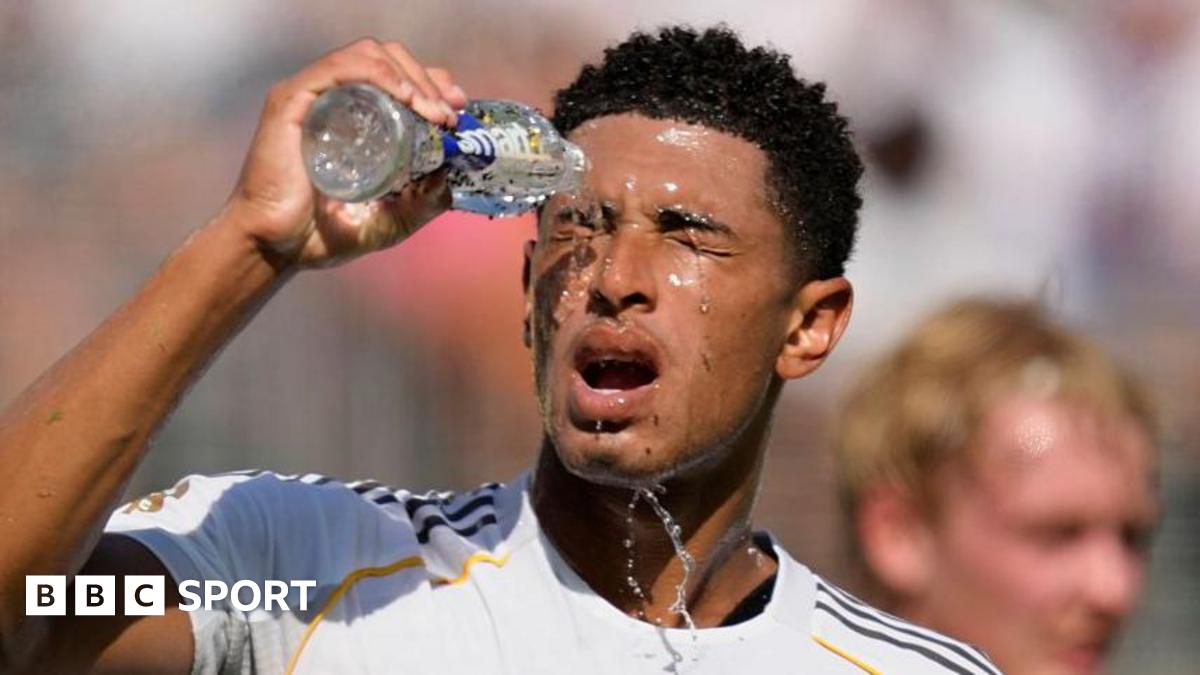
Fifa risking player safety over heat at World Cup – scientists

Published

on

Hot conditions at the 2025 Club World Cup in the United States tested the players

A group of world-leading scientists have warned Fifa its current heat safety measures for the men's 2026 World Cup are "inadequate" and could put players at risk of serious harm.

In an open letter, external, international experts in health, climate and sports performance say the governing body's guidelines are out of step with the current science and "impossible to justify". They call on Fifa to introduce stronger protections, including longer cooling breaks and clearer protocols for delaying or postponing games in extreme conditions.

Heat is expected to be an issue at this summer's tournament in the United States, Canada and Mexico, with researchers warning temperatures at 14 of the 16 stadiums being used could exceed dangerous levels.

In parts of the southern US and northern Mexico, average daytime highs are typically in the low to mid-30Cs and can rise towards 40C during hotter spells.

When temperature, humidity, wind speeds and the strength of the sunshine are factored in, players in these World Cup host cities are at greatest risk of experiencing extreme levels of heat stress on the body.

Fifa says it is "committed to protecting the health and safety of players, referees, fans, volunteers and staff" and that climate-related risks are assessed as part of tournament planning.

How could extreme weather affect World Cup 2026?

As part of it's "commitment to player welfare", Fifa has introduced mandatory three-minute cooling breaks in each half of every match for the tournament, regardless of weather conditions.

There will be climate-controlled benches for technical staff and substitutes at all outdoor matches.

Fifa also uses the gold-standard heat measure for sport, the Wet Bulb Globe Temperature (WBGT), which assesses physical heat stress on the body and combines heat and humidity. A WBGT of around 28C is widely considered a threshold at which heat stress becomes a significant concern for elite athletes.

According to Fifa's emergency care manual, external, if the WBGT reading is near, at or above 32C, match organisers should agree "what precautions need to be taken to prevent any heat-related illness from occurring".

Fifa says it also has measures in place for fans at matches "when forecasts indicate elevated temperatures". Spectators will be allowed to bring in a factory-sealed water bottle, and venues will activate additional cooling, including shaded areas, misting systems, cooling buses and expanded water distribution.

The letter has been signed by 20 world-leading scientists

The 20 experts who have signed the letter include leading academics from the UK, USA, Canada, Australia and Europe.

They want Fifa to urgently overhaul its approach, including:

Delaying or postponing matches above 28C WBGT

Longer cooling breaks of at least six minutes

Regular updates to guidelines based on the latest science

They also urge Fifa to adopt standards proposed by global players' union Fifpro.

Andrew Simms, director of the New Weather Institute, who coordinated the letter, told BBC Sport: "Player safety is an immediate and urgent concern because things can go wrong very quickly when people overheat.

"We're worried that Fifa is playing recklessly with the health and safety of players."

Another signatory, Professor Douglas Casa from the University of Connecticut, said large parts of Fifa's current guidance was far from ideal: "The hydration break in each half absolutely needs to be longer than three minutes – at least five minutes for each break and preferably six.

"We hope this open letter convinces Fifa to update its heat guidelines before the World Cup."

Extreme weather is expected to play a part at the 2026 World Cup. Heat, thunderstorms and even poor air quality from wildfires are all features of summer across the United States, Canada and Mexico, where the tournament will be held.

New analysis from the World Weather Attribution (WWA) reveals players and fans face a much higher risk of gruelling heat and humidity at the tournament compared with the 1994 World Cup on the same continent.

Scientists found around a quarter of matches are likely to be played above 26C WBGT, while about five games could exceed 28C WBGT (equivalent to about 38C in dry heat, or 30C in high humidity), a level that Fifpro considers to be unsafe for play.

The WWA says the risk of more extreme conditions has nearly doubled since 1994 due to climate change.

Fifa declined to comment directly on the letter or the scientists' claims, but said it would use a "tiered heat mitigation model" at the tournament, with measures adapted to real-time conditions.

A spokesperson said there would be dedicated meteorological support throughout the competition, both centrally and across host cities, with WBGT and heat index monitoring informing decision-making.

They added that scheduling had been designed with climate in mind, with kick-off times adjusted, matches during the hottest periods limited where possible, and warmer fixtures prioritised for covered stadiums. The schedule, Fifa said, also aims to minimise travel and maximise rest days based on location-specific heat risk assessments.

Fifa said it would continue to monitor conditions in real time and apply contingency measures where necessary, adding it is working with host authorities and medical experts to ensure a "safe and resilient" tournament.

📰 மூல செய்தி (Source): https://www.bbc.com/sport/football/articles/cy928q8engzo?at_medium=RSS&at_campaign=rss

முக்கியச் செய்திகள்

Cuba has run out of diesel and oil, energy minister says

Published

on

Cuba has completely run out of diesel and fuel oil, the country's Energy Minister Vicente de la O Levy has said.

In an interview with state-run media, de la O Levy said there were limited amounts of gas available, but that Cuba's energy system was in a "critical" state as a US-led blockade of oil to the country squeezed supply.

Scattered protests against power cuts broke out in the capital Havana on Wednesday, the Reuters news agency reported.

The US this week reiterated its offer of sending $100m (£74m) in aid to the country in exchange for "meaningful reforms to Cuba's communist system".

"The sum of the different types of fuel: crude oil, fuel oil, of which we have absolutely none; diesel, of which we have absolutely none – I am being repetitive – the only thing we have is gas from our wells, where production has grown," de la O Levy said.

Under the US blockade, parts of Havana have been plunged into 20 to 22-hour blackout periods, he continued.

He also acknowledged that the situation in the country had been "extremely tense".

Hospitals have been unable to function normally, while schools and government offices have been forced to close. Tourism, an economic engine for Cuba, has also been impacted.

Cuba normally relies on Venezuela and Mexico to supply oil to its refinery system. However, the two countries have largely cut off supplies since US President Donald Trump threatened tariffs on countries that send fuel to Cuba.

Last week, US Secretary of State Marco Rubio said Havana had rejected a US offer of humanitarian aid worth $100m (£74m), a claim Cuba denied.

The US State Department repeated its offer on Wednesday, saying the humanitarian assistance would be distributed in coordination with the Catholic Church and "reliable" humanitarian organisations.

It continued: "The decision rests with the Cuban regime to accept our offer of assistance or deny critical living-saving aid and ultimately be accountable to the Cuban people for standing in the way of critical assistance."

Washington's blockade on the country ramped up in early May when the US targeted senior Cuban officials in a wave of sanctions accusing them of committing "human rights abuses".

Cuban Foreign Minister Bruno Rodriguez called the sanctions "illegal and abusive".

📰 மூல செய்தி (Source): https://www.bbc.com/news/articles/cd7pyrj0vx7o?at_medium=RSS&at_campaign=rss

Continue Reading

முக்கியச் செய்திகள்

A pothole has burst my tyre – what now and how do I claim?

Published

on

So you've hit a pothole and blown a tyre – what now?

This despairing question has been echoed by many a motorist – often accompanied by stories of drivers having as much difficulty navigating claims as they did steering around the crater-filled surfaces in the first place.

Now a BBC investigation has revealed three in four claims for pothole compensation are being turned down.

So how can you claim, and what are the challenges in doing so?

A pothole is a depression in a road surface – often caused by ground water or wear and tear.

When water gets into cracks in the road, it leads to potholes forming, especially when it freezes and expands.

According to the RAC motoring organisation, there are currently more than one million potholes across the UK. However, the number will vary depending on the season.

It estimates that, on average, there are about six potholes per mile on council-controlled roads in England and Wales.

Meanwhile, the Asphalt Industry Alliance (AIA) – the industry body that oversees road surfacing – warned in March that the cost of fixing all the potholes on local roads in England and Wales would be an estimated £18.6bn.

Take a drive into the town of Netherfield in Nottinghamshire, and you'll soon realise why signs like the below exist.

Resident Reg Patterson said the bumpy roads had become "part of the local environment".

"It's not very good," the 68-year-old added. "There have been some humorous signs around the local area, which are quite entertaining I think.

"In the last few weeks there has been a few temporary repairs I'd say. I think, generally, they're not very good at all."

Fellow Netherfield neighbour Georgina Swann described the state of the roads as an "absolute nightmare".

"There's a Facebook group that's dedicated to potholes around the area," the 57-year-old added.

"The council needs to do more. It's affecting people's cars.

"Last time there was a local election, one of the big things was potholes. Nothing's been done. It's just awful."

Swann's frustration has been echoed by other pothole protesters in Nottinghamshire when they gathered outside County Hall earlier this year.

In response, leader of the Reform UK-run council, Mick Barton, said fixing the roads was one of his top priorities when he unveiled two JCB machines for filling in potholes.

Across the county and much further afield, potholes have been causing headaches on and off the road, and also became the subject at the top of many voters' agenda as they headed to the polls earlier this month.

But as the problem of potholes is widening, what can you do to stop a nasty bump in the road becoming a bigger hit to your wallet?

Our BBC investigation found over 146,000 claims were submitted for pothole-inflicted vehicle damage over the past five years.

Figures – obtained through freedom of information requests – show councils across Britain have paid out about £13.5m in response to claims. However, this only covers a fraction of the total number of claims submitted.

Out of 207 local authorities that hold the information, 147 told us of the number of pothole claims received in the last five years and the ones that were successful. On average, these councils paid out 24% of pothole claims.

Back in Netherfield, further along Victoria Road, Mick Hampshire is four decades into his career as a mechanic.

He estimates he sees about five customers coming in every week after hitting a pothole – in his 40 years, he said he had never had to replace so many suspension struts, coil springs and new tyres.

"We have seen vehicles coming back with snapped coil springs again," he said.

He then shows me under a lifted car in his garage.

"When they're going over a pothole… what's that?" he said, while rapping the bottom of the vehicle with his fist.

"That's a fuel tank. Cars bottom in and it's hitting the fuel tank, which is potentially a sitting time bomb.

"I'm potentially seeing it now when lives are being put at risk, and the roads are a seriously dangerous place to be on."

Nadia Kerr, a solicitor at the firm Fletchers, has worked in the field of personal injury and highway claims for many years.

She said most of the claims she used to deal with related to crashes between cyclists and drivers. More recently, the focus has shifted to pothole claims.

"There has been an increase," Kerr added. "The state of the roads, we all know, is dreadful.

"Even though the local authorities are complying with the local policy, the number of incidents that are on the road are increasing and increasing."

However, the route to a successful claim is not always straightforward.

"You really need to know what you're doing and you need to find an expert in the field, because lots of people give up along the process," Kerr said.

"As soon as the local authority denies a claim, they tend to just advise there's nothing else you can do and they will close the file."

The quickest way for a council to dismiss a claim is by saying they did not know it was there to begin with, Kerr said.

"The best you can do as a road user is report the defects you can see," she added.

"As soon as they're reported, the local authority are on notice that they are there and they need some attention; and if they fail to have that attention… and then an accident happens, then they are much less likely to rely on that defence to avoid paying compensation."

To report a pothole in England or Wales, enter the postcode of the road where you found the pothole on the GOV.UK website.

In Northern Ireland, you can report potholes by marking them on a map and in Scotland, you can report potholes by selecting the relevant local council here.

Kerr said third-party apps like FixMyStreet or Fill That Hole were more accessible to road users. But there's a catch.

"The problem is that not all local authorities will accept reports from those apps," she said.

"Sometimes they require to set up an account, a login, a password, by which time in my opinion some people give up the task of reporting a pothole."

According to the solicitor, there are a number of reasons why a claim might be turned down.

"The local authority would often argue that they followed their processes and their policies, that they inspected the stretch of the highway as frequently as they needed to comply with their policy and that they reacted promptly to any problems," Kerr said.

"What we try and find is a number of reports from the members of the public that the council will not have acted on.

"We often see challenges when a defect has been seen but the local authority do not think it's problematic enough that it ought to be repaired, so we challenge that, providing evidence of measurements of the location."

A Nottinghamshire County Council spokesperson said: "Each claim is investigated based on the evidence provided to determine whether the council has adhered to its policy and the requirements of the Highways Act 1980, the legal framework in place to deal with the management and operations of the road network in England and Wales.

"If the council can evidence that it has adhered to its policy, the claim will be repudiated, however if it is found the council has not adhered to its policy and is found to be legally liable for the incident, then the claim will be settled."

Local authorities have also had to deal with a rise in fake or exaggerated pothole damage claims, due to the cost-of-living crisis driving a rise in fraud.

The insurance group Zurich Municipal, for example, has previously said it had detected a rising number of fraudulent claims made against councils worth millions.

A Department for Transport spokesperson added: "We're backing local councils with a record £7.3bn to fix potholes and are already seeing results, with 15% more prevention works carried out in 2025 compared to 2024."

Sarah Gray, from Sherwood in Nottingham, said she would be left hundreds of pounds out of pocket once she got her blue Peugeot 308 repaire

📰 மூல செய்தி (Source): https://www.bbc.com/news/articles/c5yxx7e84kmo?at_medium=RSS&at_campaign=rss

Continue Reading

முக்கியச் செய்திகள்

E-gate access to be expanded at UK airports to include younger children

Published

on

Children aged eight and nine returning to the UK from abroad will be able to use e-gates at airports and other re-entry points from 8 July, the Home Office has announced.

They need to be at least 120cm (3ft 11in) tall so they can be seen by the biometric scanners and must be accompanied by an adult.

By lowering the minimum age from ten, the government believes up to 1.5 million additional children will be able to use e-gates.

More than 290 e-gates in the UK and at juxtaposed ports, where border checks take place on the continent, are involved.

Minister for Migration and Citizenship Mike Tapp said more families would "experience a swifter and smoother journey home… this summer holiday season".

E-gates are designed to speed up passenger border checks through a digital passport scan.

Those in the UK will be available to Britons as well as citizens of EU states, Australia, Canada, Iceland, Japan, Liechtenstein, New Zealand, Norway, Singapore, South Korea, Switzerland and the US, and members of the Registered Traveller Service.

Border Force Director General Phil Douglas said the new measure allowed "highly skilled officers to focus on intercepting those who pose a threat to the UK".

Karen Dee, Chief executive of AirportsUK, the trade body for UK airports, called it a "welcome development".

"It will give more families the ability to take advantage of this technology, speeding up the border process and reducing waiting times for many," she said.

"Airports work very hard with border authorities to ensure the UK's front door is both secure and welcoming, with those coming home and visiting enjoying a smooth experience."

The e-gates are installed across 13 airports in the UK: Birmingham, Bristol, Cardiff, East Midlands, Edinburgh, Gatwick, Glasgow, Heathrow, London City, Luton, Manchester, Newcastle and Stansted.

They are also available in juxtaposed ports in Brussels and Paris.

E-gates are part of the government's Electronic Travel Authorisation (ETA) scheme which rolled out in February, providing digital permission for people to arrive in the UK.

Under the new system, travellers from visa-free countries like Canada and Australia now require an ETA to arrive in Britain at a cost of £20.

Digital passport checks caused long disruptions at some airports in Europe, including Italy and Portugal, in recent months, leading to warnings that new passport scanning systems could cause major delays over the summer.

Get our flagship newsletter with all the headlines you need to start the day. Sign up here.

📰 மூல செய்தி (Source): https://www.bbc.com/news/articles/c89300l2934o?at_medium=RSS&at_campaign=rss

Continue Reading

Trending

Copyright © 2024 by 7Tamil Media, All rights reserved.