Connect with us

முக்கியச் செய்திகள்

DR Congo seek World Cup ticket refunds after Ebola outbreak

Published

on

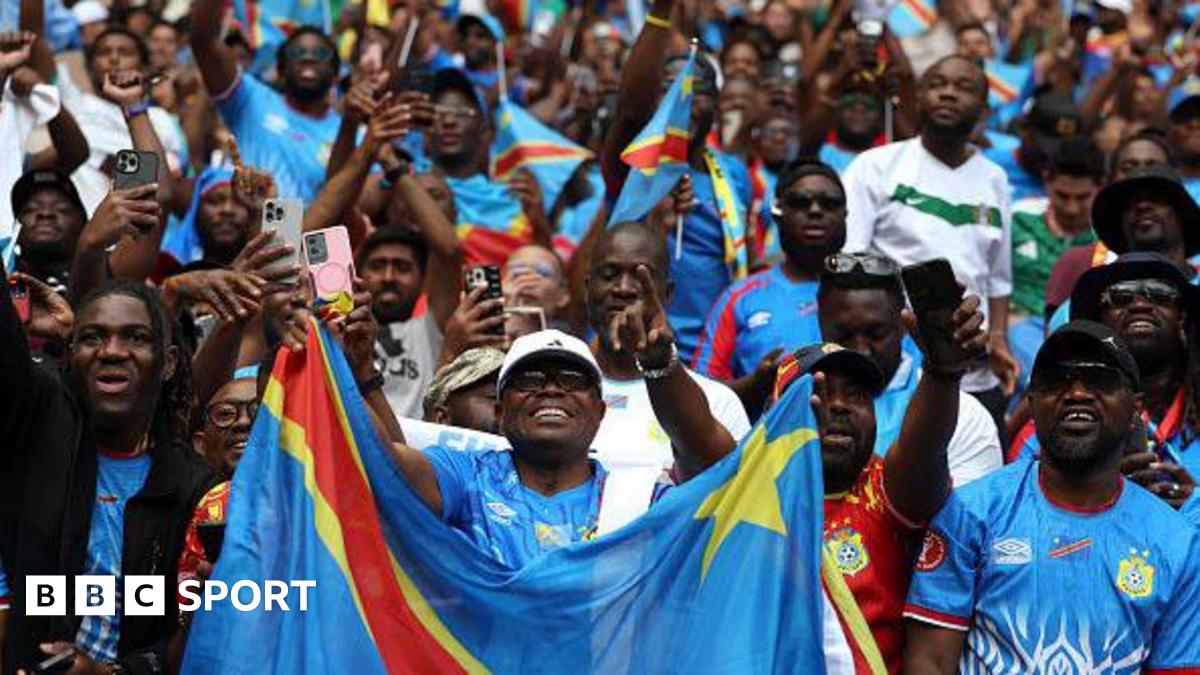
Fans from DR Congo face restrictions on entering the United States for the Fifa World Cup following an outbreak of the Ebola virus

The Democratic Republic of Congo have asked Fifa to refund the cost of 2026 World Cup tickets bought by fans who are now unable to enter the United States because of Ebola-related travel restrictions.

The Leopards are returning to football's biggest stage for the first time since 1974, but the public health emergency declared by the World Health Organization (WHO) on 16 May is threatening to stop supporters from travelling to the US.

Officials say there are more than 900 suspected cases of Ebola in central and East Africa, and 223 suspected deaths, since the outbreak was declared.

The vast majority of those cases and fatalities have been in DR Congo, and the US embassy in the capital Kinshasa has suspended visa services.

While the WHO has not advised on imposing travel restrictions, the US has barred entry from non-Americans who have been in DR Congo, Uganda or South Sudan in the previous 21 days.

"We asked Fifa if this is possible to take this into consideration, because the tickets are little bit expensive," Veron Mosengo-Omba, the president of DR Congo's football federation (Fecofa), told BBC Sport Africa.

"They are punished because they cannot get [in to the US] to see the World Cup to support their team.

"We don't want our supporters who love football, who love the World Cup, to lose everything."

What is Ebola and why is stopping the latest outbreak so difficult?

African fans face World Cup issues despite visa bond U-turn

The US is hosting the World Cup alongside Canada and Mexico, with tickets as much as seven times more expensive than the 2022 tournament in Qatar because of Fifa's dynamic pricing model.

The Leopards face Portugal in their Group K opener on 17 June, meaning any fans travelling from DR Congo to watch the match in Houston must effectively depart the country on Tuesday to satisfy US entry restrictions.

In response to Fecofa's request, Fifa told the BBC it "will look into it in due course".

The world governing body's standard policy dictates tickets are listed for resale or transferred to another individual rather than refunded, reserving the latter option for exceptional circumstances like match cancellations.

DR Congo's second group fixture against Colombia will take place in Guadalajara, and the bulk of Congolese fans are now expected to redirect their travel plans to Mexico.

With their final match against Uzbekistan back in the US in Atlanta, supporters will be hoping the side can finish second in the group to secure a last-32 tie in Toronto, Canada.

Despite the fan lock-out, the team itself remains unaffected by the US' entry restrictions.

All 26 players in Sebastien Desabre's squad, and most of the technical staff, are based outside of the country.

Team officials who are from DR Congo have already left the country to meet the 21-day quarantine requirement.

The Leopards did have to cancel a pre-tournament training camp in Kinshasa and are assembling in Belgium for friendlies before heading to their base in Texas.

Fifa told the BBC it is in "close communication" with Fecofa, World Cup host governments and relevant health agencies to ensure medical and security compliance.

DR Congo will play Portugal and Uzbekistan in the USA and Colombia in Mexico in their Group K outings

DR Congo holds pride of place as the first sub-Saharan country to compete at the World Cup, featuring in 1974 when it was called Zaire.

For Mosengo-Omba, their return after a 52-year absence marks a rebirth.

"This is the resurrection of football in this country," he declared.

"People forget their problems now they are following the Leopards. The team need to go to the second round."

Mosengo-Omba was elected Fecofa president this month after stepping down from his role as the secretary general of the Confederation of African Football (Caf).

He departed in March following the fall-out from the 2025 Africa Cup of Nations (Afcon) final, having previously been criticised for staying in office past Caf's mandatory retirement age of 63.

But Mosengo-Omba, who was previously chief member associations officer at Fifa, is excited by his new role.

"With the new leaders, we bring the football of this country in the very high level," he said.

"We are not saying that we will win the Afcon or World Cup, but we will build a solid foundation for the future."

The World Health Organization has declared May's Ebola outbreak a public health emergency of international concern

The diplomatic hurdle comes amid mounting global panic over yet another Ebola outbreak – with DR Congo at the epicentre of several outbreaks since the deadly virus was discovered in the 1970s.

Mosengo-Omba, however, has warned that perceptions about the disease are causing unnecessary anxiety.

"Some people are thinking Ebola is genetic, it's a contamination," he stated.

"Okay, there's Ebola in DRC, in Ituri, in the rural parts. Because Congo is big, it's not because you are from DRC you get Ebola immediately.

"The country in the world who knows how to fight this disease is DRC because we have faced this many times.

However, this latest outbreak has been caused by the rare Bundibugyo viral strain, which has not been seen for over a decade.

With no vaccine currently available, it is harder to treat.

That, coupled with community distrust and armed conflict which has displaced tens of thousands of people in the Eastern part of DRC, have made it difficult for the outbreak to be contained.

Now it is threatening to overshadow a footballing moment decades in the making.

📰 மூல செய்தி (Source): https://www.bbc.com/sport/football/articles/c0j2220jn9lo?at_medium=RSS&at_campaign=rss

முக்கியச் செய்திகள்

Rights group accuses UAE of being transit point for mercenaries on way to Sudan

Published

on

Colombian mercenaries were recruited by a United Arab Emirates-based company and transited through Emirati military bases to support paramilitary troops who committed atrocities in Sudan, a leading rights organisation alleges.

According to Human Rights Watch (HRW), the findings are further evidence of UAE-backing for the Rapid Support Forces (RSF), which has been accused of war crimes during the Sudanese civil war.

The UAE denies claims it recruited and trained foreign fighters in its territory.

"The UAE does not permit its territory to be used for the recruitment, training, financing or transit of foreign fighters to any conflict, including Sudan," its ministry of foreign affairs said.

The HRW investigation was conducted through interviews with Colombian mercenaries between March and September 2025 as well as an analysis of social media posts identifying key locations and weapons in videos and images.

War broke out in Sudan on 15 April 2023, following growing tension between the paramilitary RSF forces and the Sudanese army.

Since then more 150,000 people are believed to have died from the violence and more than 12.9 million have been displaced.

The HRW report follows last month's research by security analysis organisation, the Conflict Insights Group (CIG), which also highlighted the alleged involvement of Colombian mercenaries in Darfur, Sudan's western region now largely held by the RSF.

Colombian President Gustavo Petro was quoted last year as calling the mercenaries "spectres of death" and describing their recruitment as a "form of human trafficking".

HRW says airports in the UAE, Libya, Chad and Somalia were used as transit points for the mercenaries before travelling to the frontlines in the Darfur region.

"They didn't stamp our passports," a mercenary told the rights group, describing his journey through the UAE capital, Abu Dhabi.

"We went in and went out and there was a bus waiting for us to take us to a military base."

Investigations by the rights organisation point to the involvement of a complex network of Colombian and Emirati companies which advertised "drone pilot work in Africa" targeting former Colombian army men.

HRW alleged that an Abu Dhabi-based company recruited the Colombian contractors who were deployed to Sudan to "provide the RSF with tactical and technical expertise, serving as infantry and artillerymen, drone pilots, vehicle operators, and instructors".

According to HRW, the mercenaries were then trained in UAE military facilities in Ghiyathi and Al Wathba before covert deployment to war zones in Sudan where gross human rights violations such as mass extrajudicial killings, rape and gang rape, sexual slavery, looting and destruction of civilian infrastructure were allegedly committed.

The RSF has faced particular international outrage following its violent capture of the city of el-Fasher last year.

The United Nations Human Rights Office estimates that more than "6,000 were killed within the first three days of the RSF offensive".

"In November and December 2025, six el-Fasher residents told Human Rights Watch they saw people they believed were Colombians in the city in October 2025, when mass killings were taking place," the HRW report states.

A survivor detained by the RSF who is quoted in the report said he saw "foreign fighters" who "looked on silently" as RSF fighters opened fire on crowds. Another reported seeing "white fighters" alongside RSF fighters who killed three.

"They were there when the executions happened, but they didn't execute."

RSF leader Gen Mohamed Hamdan Dagalo last year declared an investigation into what he called violations committed by his soldiers during the capture of el-Fasher.

The HRW report also says munitions belonging to the UAE armed forces were found after the capture of Colombian mercenaries inside Sudan. Some of the munitions were manufactured in Serbia and Bulgaria but purchased by the UAE, according to HRW.

HRW has called for the UN, African Union, and the UK and US governments to speak out about the UAE's alleged involvement in the war in Sudan.

In December 2025, the US imposed sanctions on a network and individuals – primarily of Colombian nationality – it said was recruiting former Colombian soldiers and training them to fight in Sudan.

The UAE told the BBC allegations that Emirati companies were involved in supporting the RSF had been investigated.

"Where allegations have been made about specific entities, the relevant authorities have investigated, including by making inquiries with companies cited in open sources," the foreign ministry said in a statement.

"Any individual or entity – Emirati or foreign – that were to act in a way that could reasonably be interpreted as providing operational support to an armed non-State actor would be doing so without state authorisation, in violation of Emirati law, and would be subject to criminal investigation and prosecution."

The statement added that the country "remains committed" to working with its partners to "alleviate the suffering of the Sudanese people" by securing a lasting ceasefire and help create what it called an "inclusive, Sudanese-owned transition to an independent civilian-led government".

Go to BBCAfrica.com for more news from the African continent.

Follow us on Twitter @BBCAfrica, on Facebook at BBC Africa or on Instagram at bbcafrica

📰 மூல செய்தி (Source): https://www.bbc.com/news/articles/c1422nrgm1jo?at_medium=RSS&at_campaign=rss
Continue Reading

முக்கியச் செய்திகள்

Wales won't ban mobile phones in schools, first minister says

Published

on

There will not be a Wales-wide ban on mobile phones in schools, First Minister Rhun ap Iorwerth has said.

In England, the UK government intends to pass a law so that schools must ensure schools are free of smartphones during the day.

Speaking at the Urdd Eisteddfod on Anglesey, ap Iorwerth said his Plaid Cymru Welsh government will instead "empower schools" to make their own decisions.

Meanwhile he said action "needs to be taken" on under-16s' use of social media.

He spoke as a consultation by the UK government on the impact of social media on children under the age of 16 comes to an end.

Ap Iorwerth said on Tuesday that it was important to "follow the evidence" in the social media consultation to make sure "appropriate steps" were being taken to protect young people.

Plaid's manifesto for the Senedd election said the party would "empower local authorities to promote students' safety, learning and wellbeing through restricting the use of smartphones in schools for under-16s".

It said the party would work with "councils and school leaders to implement this in a practical and proportionate way, with appropriate exemptions where necessary".

Ap Iorwerth told BBC Wales he wanted his government to "facilitate schools to take the decisions that they feel are right to protect children and young people".

But there is no suggestion that the Welsh government will force schools to ban mobile phones.

Ap Iorwerth said: "I don't think of it in terms of a ban, I think about it as action on a number of different fronts.

"We will empower schools and school leaders to make decisions that they feel is right for pupils, many schools and school leaders have already taken those measures".

In Wales, the decision to ban or restrict mobile phones for pupils remains a matter for individual schools and their governing bodies.

In England, the government intends to pass a law so that schools must adhere to the current guidance that all schools should be free of smartphones throughout the day.

Meanwhile, the UK government is also considering a number of options to protect children and young people from the harm of social media, including a social media ban as has happened in Australia.

Technology Secretary Liz Kendall has said that new measures for under-16s in England will be brought in by the end of 2026.

"The evidence is getting stronger and stronger," ap Iorwerth said.

"When you have evidence suggesting to you that the use of social media by children and young people can be as harmful as smoking tobacco, you take that very, very seriously.

"I am clear that action needs to be taken. It's important though that it's evidence based."

📰 மூல செய்தி (Source): https://www.bbc.com/news/articles/c0722y98x57o?at_medium=RSS&at_campaign=rss

Continue Reading

முக்கியச் செய்திகள்

'Bullying' and 'overbearing' behaviour behind abrupt BP chairman removal

Published

on

Oil giant BP has removed its chairman Albert Manifold with immediate effect over concerns including "bullying" and "overbearing" behaviour by him, the BBC understands.

The company said in a statement that his dismissal was a result of "serious concerns" related to "important governance standards, oversight and conduct".

Manifold's departure comes less than a year since he joined the company.

BP declined to comment on whether bullying behaviour was part of the reason for his immediate dismissal. The BBC has attempted to contact Manifold for comment.

One person close to the company said: "This is a big lever to pull, you wouldn't do it unless it was serious".

Senior independent director Amanda Blanc said the board had been "surprised and disappointed to learn of governance oversight and conduct issues it deems unacceptable and has taken decisive action".

BP said the board was unanimous in its decision.

Blanc was the director who led the search for a new chair after Helge Lund stepped down last year after more than seven years as chair.

Shares tumbled by about 5% following the news of his removal.

Senior independent director Ian Tyler has been appointed interim chair with immediate effect.

Manifold was brought in to steer BP away from a focus on renewable energy and back to oil and gas.

He joined the company in September 2025 as a non-executive director and was appointed chair the following month.

At the time of his appointment, BP said Manifold had "a strong track record of strategic leadership and operational delivery".

His removal comes after BP reported a doubling in profit following a surge in oil prices since the beginning of the Iran war.

In its first results since the conflict broke out, the energy giant reported profits of $3.2bn (£2.4bn) between January and March after an "exceptional" performance in its oil trading business.

Manifold's departure comes after last month's annual general meeting (AGM) in which nearly a fifth of BP shareholders voted against his election because of concerns over governance.

The criticism was linked in part to BP's refusal to include a resolution filed by climate activists at its annual general meeting, with Manifold saying the resolution had not been filed correctly.

AJ Bell's investment director Russ Mould said even though there had been pressure on the company to "move on" from Manifold's predecessor, "not all investors were happy… judging by how 18% of shareholders voted against his appointment – and recommendations to do so from governance experts Glass Lewis – at April's AGM".

He added that attempts to move AGMs to an online-only format and change how the company reported on climate issues and its related obligations had not "sat well" either.

The company said it would begin the search for a permanent chair.

Interim chair Tyler said the board had "deep conviction" in the strategic direction the company had laid out.

It had been "very impressed" with chief executive Meg O'Neill since she took over last December, he added.

"She has already taken bold action to simplify and strengthen the organisation such as announcing the move to a clearly defined upstream/downstream model."

O'Neill took over from previous chief executive Murray Auchincloss, who stepped down less than two years after he replaced Bernard Looney.

Looney quit in 2023 after he was found to have committed "serious misconduct" in failing to disclose relationships with colleagues.

Manifold was chairman of the board when O'Neill was hired. There is no suggestion that O'Neill's position is in any doubt or that the company's strategy will change.

Maurizio Carulli, global energy analyst at Quilter Cheviot, said that apart from helping to appoint the new chief executive Manifold's impact was "necessarily limited" because of the short amount of time he spent in the role.

Carulli said the news of Manifold's departure was a "short-term negative", but added BP had made "significant operational improvements and strategic refocusing over the past year, and this is the result of the successful efforts of the entire organisation and its management, not just of one person".

📰 மூல செய்தி (Source): https://www.bbc.com/news/articles/cjrppppwvwlo?at_medium=RSS&at_campaign=rss
Continue Reading

Trending

Copyright © 2024 by 7Tamil Media, All rights reserved.