Connect with us

உலகம்

Cost of living crisis reshapes Eid spending in Nigeria

Published

on

High costs in Nigeria are reshaping Eid preparations as families adjust spending and cut back on celebrations.

Abuja, Nigeria – Seated on a plastic chair inside his modest madrassa in Abuja, Yunus Akanji listened as children recited verses from the holy Quran in soft, rhythmic tones. Some sat on mats, others on long wooden benches.

The Islamic teacher occasionally corrected a pronunciation or repeated a line, but his attention drifted.

For years, Akanji, who teaches at the Nurul Bayan Islamic School, travelled with his wife and children to Saki in Oyo State to reunite with his extended family for Eid al-Adha, often called Sallah in Nigeria.

When he did not make the trip, he would buy a ram for Eid and host a modest celebration with his family and students.

“I have concluded that we will just celebrate with whatever we have,” he told Al Jazeera.

The annual Muslim festival, marked by communal prayers and the ritual sacrifice of animals, is approaching amid deep economic strain in Nigeria.

In Abuja, rising food and transport costs are quietly changing how many families are preparing for Eid.

Akanji said even parents and community members who usually support his madrassa are struggling.

“Most of them have not even paid,” he said, referring to tuition fees that help keep the school and his household running.

The pressure is not confined to the classroom. It shows up in bus stations, in markets, and in the small calculations people make before deciding whether to travel or stay.

Nafisa Ibrahim from Ogun, currently in Abuja doing a mandatory one-year programme for graduates under the National Youth Service Corps, said she has dropped her plan to go home for Eid. Transport costs alone made it impossible.

There is also no guarantee her family will even be able to slaughter an animal this year.

“Transportation is about 35,000 naira [about $26], compared to the 15,000 naira [about $11] I paid when I came to Abuja in February,” she said.

Opeyemi Ibrahim, a fashion designer based in Byazhin district, said customer patronage has dropped sharply despite the approaching festivities.

He said rising fuel costs and erratic electricity supply have pushed up his operating expenses.

“When there is no electricity, we have to run the generator,” he said. “Filling it costs about 10,000 naira [$7].

But without it, the shop becomes too hot, and we still need power to iron customers’ clothes.”

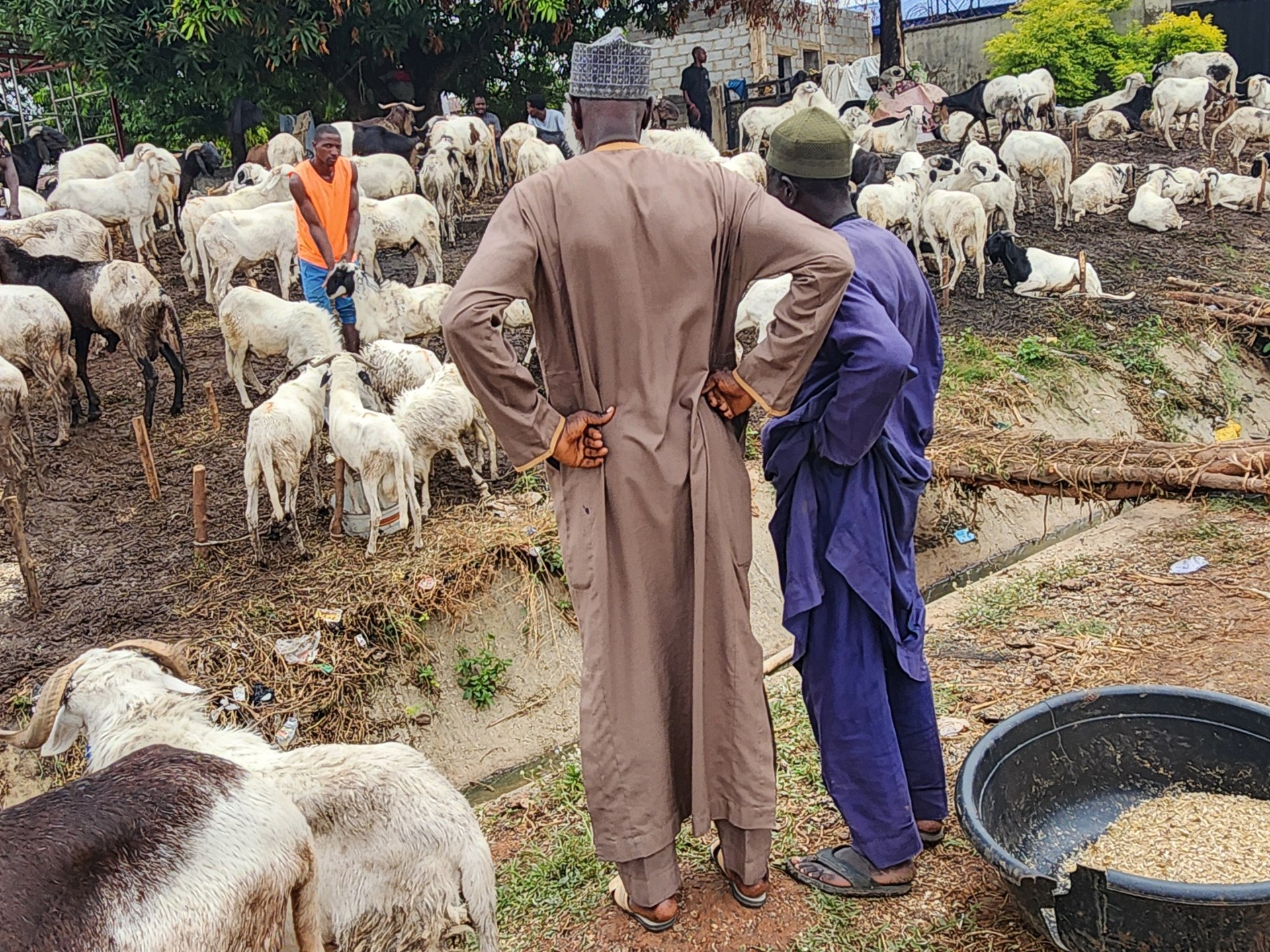
At a livestock market in Kubwa, visited by Al Jazeera ahead of Eid, the strain is obvious before anyone even speaks. Men stand beside rams tied to wooden posts. Buyers move from one animal to another, ask a few questions, then drift away.

Malam Ibrahim, a livestock seller who has been in the trade for years, sat near the feed, watching most of his customers leave empty-handed.

“People come, ask for prices, and walk away,” he said.

He pointed to a ram nearby, with black-and-white markings on its body.

“This ram is selling for 600,000 naira [about $438],” he said. “Last year, the same size was below 350,000 naira  [$255].”

Getting animals down from northern Nigeria, Sokoto, Kaduna and beyond, has become more expensive. Fuel prices, transport fares, everything feeds into the final cost.

“Even the sellers are suffering,” Ibrahim said. If sales stay slow, he worries the animals will remain unsold after Eid, when their value drops further. “We do not pray to take them back home, but with the looks of things, I fear so,” he said.

One woman who had come to buy two rams left with only one.

Inflation has been steady in Nigeria for years now, but what people feel most is the gap between rising prices and stagnant incomes. The naira may look more stable against the United States dollar than last year, traders say, but moving goods across the country still costs more every month.

At Kubwa village market, buyers kept moving, but few stopped to buy.

Vendors selling tomatoes, onions, rice and cooking oil said sales were slower than usual, with many families cutting back even on basic festive food.

“We used to celebrate Eid with joy,” one trader said quietly. “Now we just calculate what we can afford.”

📰 மூல செய்தி (Source): https://www.aljazeera.com/news/2026/5/26/cost-of-living-crisis-reshapes-eid-spending-in-nigeria?traffic_source=rss

உலகம்

Czech police detain Russian priest over ‘white substance’ find

Published

on

Moscow condemned the action of the Czech police, calling the detainment a ‘provocation’.

Czech police have detained a Russian cleric after four containers of a suspicious white substance were discovered in his car.

Orthodox Bishop Hilarion was detained in the town of Karlovy Vary, according to a statement released on his Telegram channel by his defence team on Monday.

The arrest sparked claims of provocation from Moscow against Czechia’s government, despite Prague having reduced its support for Ukraine since it took office six months ago.

Bishop Hilarion, 60, whose secular name is Grigory Alfeyev, heads the Russian Orthodox Church’s congregation in the western town, which hosts a sizeable Russian diaspora.

The cleric denied any involvement in drug possession. “I have no connection and have never had any connection to the illegal trafficking of narcotic substances,” he said in the statement.

Czech police said only that a man was detained on Sunday evening on a highway between Karlovy Vary and Prague, adding that interrogations were under way and no one had been charged, without disclosing the detainee’s identity.

The Czech Drug Enforcement Centre said it had also acted on an anonymous tip-off reporting the transport of narcotic and psychotropic substances.

Hilarion’s defence said police offered no clear reason for stopping the vehicle and that two patrol cars appeared to be waiting for it on the road.

Hilarion was not permitted to observe the search, his lawyer said, adding that the defence was demanding independent forensic analysis of the substance along with fingerprint and DNA checks.

Russian Foreign Ministry spokeswoman Maria Zakharova called the incident an “orchestrated provocation” aimed at discrediting Hilarion, and demanded his immediate release.

“The head of the Czech diplomatic ⁠mission in Moscow will shortly be summoned to ⁠the Russian Foreign Ministry, where a strong protest will be lodged regarding the unacceptable high-handedness of the Czech authorities,” she said.

Russian media reported that the detention followed months of anonymous threats against Hilarion, including threats of physical violence demanding he leave his post in Karlovy Vary.

Hilarion was once considered the right-hand man of Patriarch Kirill – the head of the Russian Orthodox Church and a pillar of support for President Vladimir Putin and his war on Ukraine.

However, the priest reportedly fell out of favour with Moscow’s spiritual authorities and was sent abroad in 2022, shortly after Russia’s invasion.

His assignment to the Czech Republic came after a former aide brought sexual misconduct charges against him, allegations Hilarion denied, claiming the aide had attempted to extort €384,000 from him.

Unlike many senior Russian clergymen who have publicly backed the war in Ukraine, Hilarion has never publicly commented on the conflict.

Separately on Monday, the Czech government, a coalition of populist and far-right parties that took office in December, announced that it had approved a legal amendment ⁠that would ⁠tighten rules for Ukrainian refugees’ stays and financial support. It said it was responding to the abuse of ⁠aid, and the perception that refugees had some advantages over locals.

📰 மூல செய்தி (Source): https://www.aljazeera.com/news/2026/5/25/czech-police-detain-russian-priest-over-white-substance-find?traffic_source=rss

Continue Reading

உலகம்

Trump renews petition for White House ballroom, pointing to nearby shooting

Published

on

The Trump administration has sought nearly $1bn in taxpayer funds to complete the ballroom project, citing security.

The administration of US President Donald Trump has renewed its push to lift a court ruling barring progress on a new White House ballroom, once again citing gun violence as a reason for pursuing the construction.

In a court filing submitted on Sunday, acting Attorney General Todd Blanche argued it was “urgent” that the ballroom be completed.

“This is a terrible, tremendously harmful case to the United States of America, and all it stands for!” Blanche wrote, denouncing the lawsuit that has paused construction.

As justification, Blanche pointed to the events of last Saturday, when a 21-year-old suspect named Nasire Best approached a White House security checkpoint in Washington, DC, pulled out a gun, and started shooting.

One bystander was injured. The suspect was killed after an exchange of gunfire with Secret Service agents. The sound could be heard across the White House lawn, where reporters were seen running for safety.

Blanche argued that the incident represented the second time in the span of a month that Trump’s life had been threatened.

On April 25, 31-year-old Cole Tomas Allen had attempted to breach security at the White House Correspondents’ Dinner, where Trump and his top officials were in attendance. After an exchange of gunfire with security, Allen was taken into custody.

“This second attack on the President this month underscores the critical need for top level, state of the art security at the White House, including the Ballroom,” Blanche wrote in the filing.

He added that the ballroom “is being constructed to ensure that the President can perform his constitutional duties in a safe and heavily secured facility”.

The Department of Justice, under Blanche, advanced a similar argument after the incident at the White House Correspondents’ Dinner.

And Trump himself made a nearly identical statement on Saturday, using his Truth Social platform to link the recent shooting to the ballroom.

“This event is one month removed from the White House Correspondent’Dinner shooting [sic], and goes to show how important it is, for all future Presidents, to get, what will be, the most safe and secure space of its kind ever built in Washington, D.C,” Trump wrote.

“The National Security of our Country demands it!”

But Trump is facing an increasingly uphill battle as he pursues his ballroom project.

On March 31, a federal judge, Richard Leon, issued a temporary injunction against further construction on the ballroom.

While Leon did offer a carve-out for any work “necessary to ensure the safety and security of the White House”, the judge did say that “bald assertions of ‘national security’” would not be accepted as a means of bypassing his decision or the law.

He called on the Trump administration to petition Congress for approval for the project. Until then, Leon ruled, “construction has to stop”.

In recent weeks, Trump has sought additional funding from Congress for the ballroom, though not approval for the construction itself.

But even members of his party have baulked at the price tag. Trump demanded that $1bn for the ballroom project be added to a bill for immigration enforcement funding, but last week, Republicans in the Senate agreed to drop the provision.

Some objected to the expense. Others pointed out that, with the $1bn in unrelated spending, the immigration-related funding bill would no longer qualify for a process called budget reconciliation, which allows bills to pass through the Senate with a simple majority.

Trump had previously maintained that the ballroom would be funded entirely through private donations.

But the associated costs have ballooned. Last year, Trump estimated the construction would cost $200m. Then, in December, he increased the anticipated price to $400m.

Over the last month, however, the total has now leapt to include the $1bn in taxpayer funds, which are reportedly intended for security improvements.

Still, as Trump gave reporters a tour of the construction site on May 19, he insisted that the costs of the ballroom project would come out of private pockets.

“All of this was paid for by myself. We are making a gift of this. This is a gift. This is not going to be paid for by the taxpayers,” Trump said, gesturing to the site.

He has repeatedly claimed the construction project is ahead of schedule and under budget, an assertion Blanche repeated in Sunday’s court filing.

But on May 12, when confronted by reporters about the mushrooming price tag, Trump appeared defensive.

“I doubled the size of it, you dumb person. Doubled the size. You are not a smart person,” he told one journalist.

The project has also been criticised for its lack of transparency and its failure to get outside approvals.

Even this month, new details were still emerging about the structure, which is slated to be about 90,000 square feet (about 8,360 square metres), dwarfing the White House’s executive mansion.

Trump has also recently revealed that the new ballroom complex will include six floors of subterranean facilities, including a military hospital. Its completion is slated for September 2028, shortly before Trump’s term expires in January 2029.

Some of the newly proposed features were detailed in Blanche’s recent court filing.

The ballroom, Blanche wrote, “includes bomb shelters, a state of the art hospital and medical facilities, Top Secret military installations, structures, and equipment, protective partitioning, and other features”.

In addition, the “heavily secured” roof is slated to contain “a major drone port and Government sniper facilities”.

Blanche argued in Sunday’s filing that he was forced to reveal those security features in order to petition for the court injunction to be lifted.

“The longer this frivolous litigation persists, the more our National Security will be jeopardized as the Government continues to be forced to justify — through the divulgence of such security installations, layout, and other specifications of construction — the necessity for a secure addition to the White House,” Blanche wrote.

The plaintiffs have argued that the Trump administration has largely acted without any oversight.

In December, the National Trust for Historic Preservation filed its complaint, alleging that the law mandates approval not only from Congress but also from the National Capital Planning Commission.

In addition, it argued that “no adequate public environmental assessment” had been carried out before the Trump administration abruptly demolished the White House’s East Wing in October to make way for the large-scale construction.

“No president is legally allowed to tear down portions of the White House without any review whatsoever— not President Trump, not President Biden, and not anyone else. And no president is legally allowed to construct a ballroom on public property without giving the public the opportunity to weigh in,” the lawsuit says.

“President Trump’s efforts to do so should be immediately halted.”

📰 மூல செய்தி (Source): https://www.aljazeera.com/news/2026/5/25/trump-renews-petition-for-white-house-ballroom-pointing-to-nearby-shooting?traffic_source=rss

Continue Reading

உலகம்

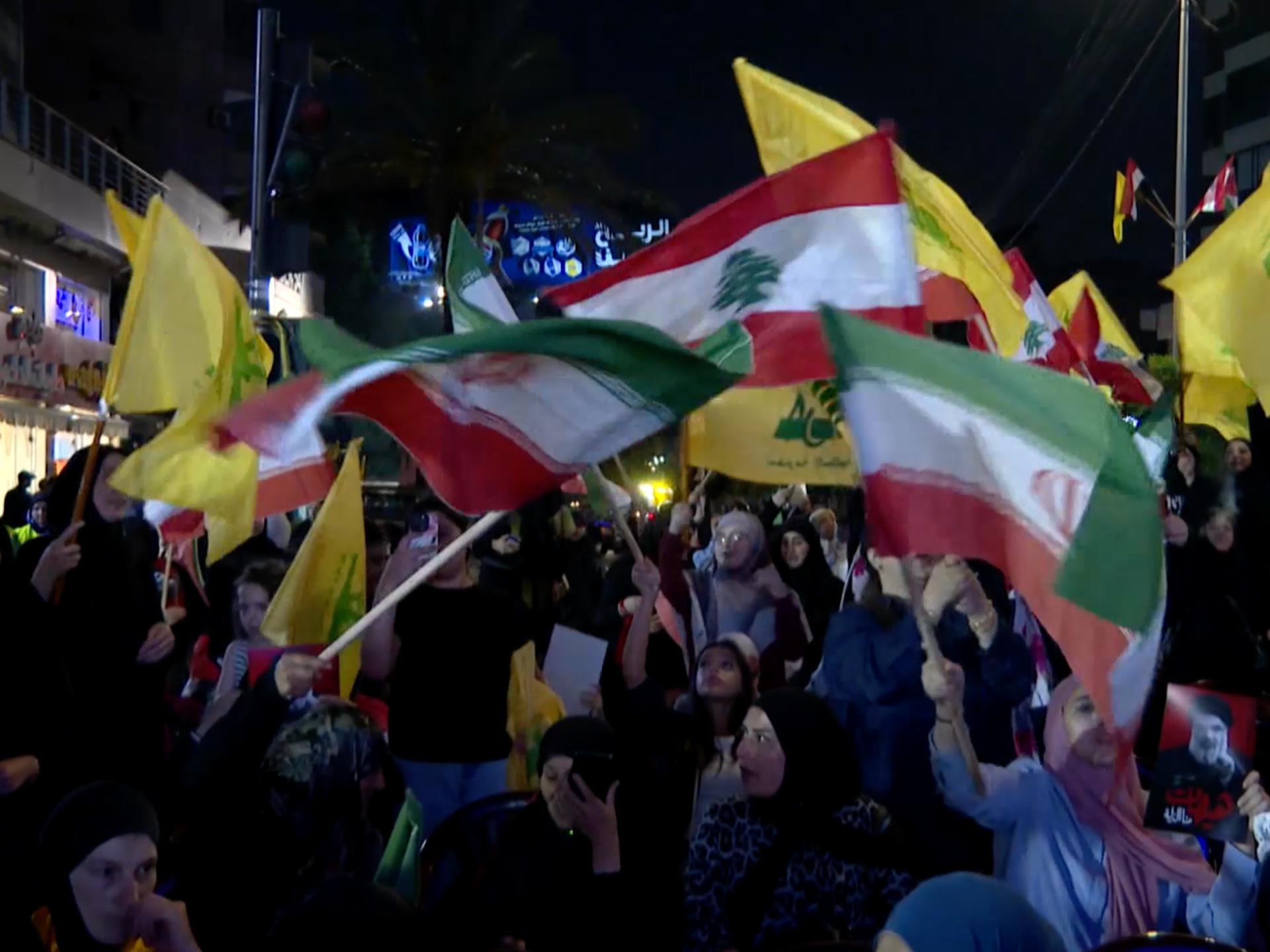
Iran war live: US strikes Iran’s south, Tehran officials in Qatar for talks

Published

on

Iran's President Masoud Pezeshkian has ordered the restoration of internet services after months of blocked access.

📰 மூல செய்தி (Source): https://www.aljazeera.com/news/liveblog/2026/5/26/iran-war-live-israel-pounds-lebanon-iranian-officials-in-qatar-for-talks?traffic_source=rss

Continue Reading

Trending

Copyright © 2024 by 7Tamil Media, All rights reserved.