Connect with us

முக்கியச் செய்திகள்

Claim, counter-claim and tech's seedy side exposed: Five things we learned in the Musk-Altman trial

Published

on

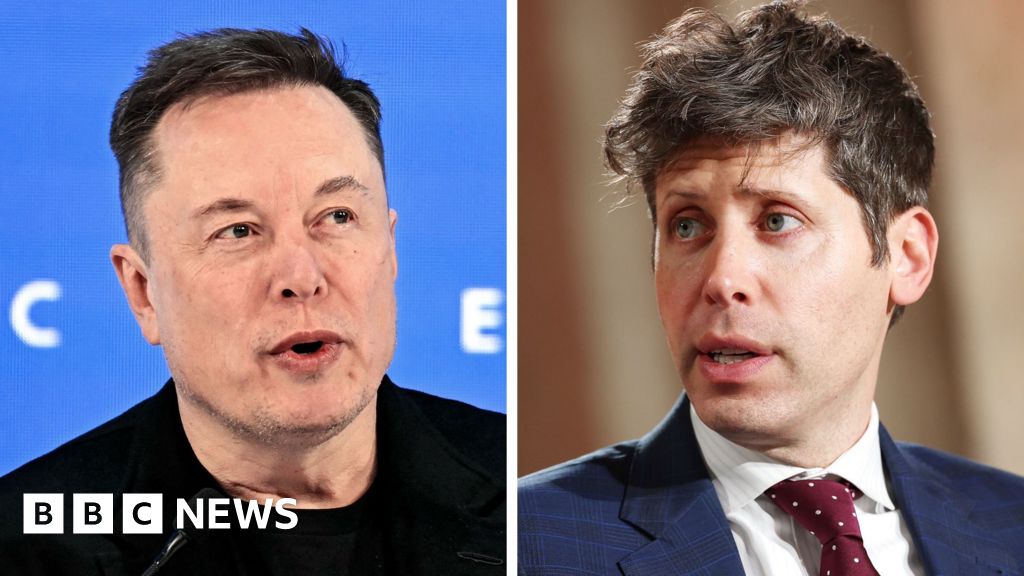
It is the legal showdown that has pitted two of the biggest names in tech, Elon Musk and Sam Altman, against each other.

At stake is the future of one of the world's most valuable start-ups, ChatGPT-maker OpenAI, along with the reputations of Altman – the company's boss – and Musk, the man he founded it with.

The central claim the jury has now retired to consider is Musk's argument his former friend "stole a charity", cheating him out of a fortune (albeit a tiny one, by Musk's standards) along the way – something Altman strongly rejects.

But there's been much more to the trial than that.

Over the past three weeks, other reporters and I have been glued to our seats at the federal court in California as the evidence ranged from explosive text messages to revelations of free Teslas allegedly offered in exchange for power.

It has all been presided over by a no-nonsense judge who will take the jury's decision under advisement, but ultimately decides which side prevails.

For those who have been unable to follow every twist and turn, here are five big things we learned from the court battle.

Elon Musk's central claim in this lawsuit is that Altman lied to him about his commitment to OpenAI's non-profit status.

But this trial has ended up being more than one very famous man's word against another's.

A parade of witnesses – many of them also very high-profile figures in the world of tech – took to the stand during the trial and said they had never heard of or seen evidence of any such commitment from Musk himself.

Witnesses included OpenAI co-founder Ilya Sutskever, former OpenAI board member, Tasha McCauley, and even Microsoft boss Satya Nadella – who insisted his company did extensive due diligence before investing billions into OpenAI.

Of course, Nadella has skin in the game. Microsoft is a co-defendant, accused by Musk of aiding and abetting in Altman's alleged scheme.

Nevertheless, it was striking that this trial has not just been about Musk against Altman – there has been a barrage of voices contradicting the claims of the world's richest man.

Being able to call on some high-powered support from the witness stand hasn't stopped the questions about Altman's trusthworthiness.

In the weeks leading up to the trial, Altman had been the subject of a blistering New Yorker magazine profile by investigative reporter Ronan Farrow.

Zoning in on his career and moments such as his dramatic ousting from OpenAI in 2023, the story portrayed Altman as a pathological liar.

Musk's lawyer Steven Molo made the most of this.

"Are you completely trustworthy?" he asked Altman in his first question of cross examination.

Altman responded with: "I believe so." Molo ran with it.

"You don't know whether you're completely trustworthy?" he queried.

While the OpenAI boss asked to amend his answer to "yes", his character remained under a harsh spotlight throughout the trial.

Jurors heard from former OpenAI board members and executives – some in person, others via videotaped sworn depositions – detailing first-hand experiences of Altman allegedly failing to be forthright.

They also learned of his extensive investments in private start-ups, some of which have brokered deals with OpenAI.

A power purchasing agreement with nuclear energy start-up Helion Energy was flagged as particularly worrisome, given the firm has yet to ever deliver any power.

Altman was, until recently, chairman of Helion's board and holds a stake worth more than $1.5bn.

Musk v Altman wasn't just about the tech bros.

Other colourful characters who got their star turn turning this trial included Judge Gonzalez Rogers, who oversaw it.

She kept jurors, lawyers and media on a strict schedule, with only two twenty-minute breaks per day and no lunch time to ensure maximum alertness.

This judge had complete command of her courtroom and had no qualms about lambasting anyone who ran afoul of the rules.

That applied to observers who deigned to take photographs of the case's famous players in the courthouse and lawyers who pushed their questions into territory the judge had previously made clear were off-limits.

When the court experienced audio issues early in the trial, she addressed it and then deadpanned: "What can I tell you? We are funded by the federal government."

The drama of the trial, which could not be streamed in video, was also brought to life throughout by sketch artist Vicki Behringer, who painstakingly captured it in water-coloured splendour each day.

Once upon a time, Musk was Altman's hero.

The deterioration of that relationship was not the only highly personal situation the court focussed on.

Musk was generally confident, even combative, in his appearance as the first witness to take the stand.

But he got noticeably flustered when asked about his relationship with Shivon Zilis.

"We live together and she's the mother of four of my children," he acknowledged.

He described Zilis, an executive at his firm Neuralink, as one of his senior advisors.

She told the court that while also member of the OpenAI board, the billionaire had offered her his sperm after noticing she had no children – not your everyday boardroom interaction.

The fact Musk was to be the father to her children was something she, later, did not reveal to OpenAI colleagues until a media report was imminent.

An intriguing witness, she was almost robotic-sounding in her answers on the stand.

Her demeanour seemed warmer over text, where her job as 'Elon whisperer' came across most clearly.

She left the board after Musk started xAI.

"When the father of your babies starts a competitive effort and will recruit out of OpenAI, there is nothing to be done," Zilis wrote to a friend.

For outsiders, Musk v Altman offered a crash course in how power is wielded in Silicon Valley.

Want to lowball your co-founders? Give them free Teslas! (That was Elon, allegedly.)

Looking to ensure loyalty? Pay your most important strategic partner on the side. (That was Sam, allegedly.)

Musk's attorneys tried to diminish Altman before the jury, painting him as someone who tried to use a connection to Musk to bolster his own status.

In turn, Altman claimed Musk suggested control of OpenAI should go to his children.

Text messages divulged during the trial also put power struggles behind closed doors on full display.

These ranged from revealing Altman's frenzied response to his abrupt sacking in 2023, asking a former colleague at one point – "still don't want me?"

That same colleague in turn described how Altman was being replaced by Twitch boss Emmett Shear, or as she called him in her message "rando Twitch guy".

The flippant-sounding messages – as well as seeing these larger-than-life personalities sipping lattes around the courthouse – could make them seem a little less important.

Yet they still control technology that impacts the lives of billions of people. And they are embroiled in a row worth billions of dollars.

It is now over to the jury – and ultimately Judge Gonzalez Rogers – to decide what happens next.

Sign up for our Tech Decoded newsletter to follow the world's top tech stories and trends. Outside the UK? Sign up here.

📰 மூல செய்தி (Source): https://www.bbc.com/news/articles/cg7pj8p5mv4o?at_medium=RSS&at_campaign=rss

முக்கியச் செய்திகள்

'Don't swim' warnings in place at nearly all of England's official river bathing sites

Published

on

Signs warning people not to swim are in place at almost all of England's official inland river bathing sites due to concerns the water could be unsafe.

It comes as the government announces six new river bathing sites will be monitored for the first time this summer, including a first location on the River Thames in London.

In the last week the BBC has visited all the 14 existing inland river locations which were tested by the Environment Agency last year for contamination from bacteria linked to human and animal faeces.

Only the River Stour in Suffolk and the River Thames in Oxfordshire had acceptable levels, while water quality at the 12 others was rated "poor" and people advised not to swim.

There are 13 new additions, 6 on inland rivers meaning there are now more than 460 locations being regularly tested by the Environment Agency. The vast majority are coastal, and there are tidal estuaries, but an increasing number are freshwater lakes and rivers. The results from the tests are posted on a government website.

In order to be designated as a bathing site the location must meet specific criteria including the number of bathers who use the site and whether there are nearby toilet facilities.

Water quality at coastal locations is generally much better than inland, with rivers frequently polluted by sewage discharges and agricultural run-off.

Campaigners say that getting a river designated – and the water testing regime it brings – has become one of the most effective ways to force water companies to take action to reduce sewage spills.

One campaigner called it "bonkers" that the best way to get a polluted river cleaned up was to turn it into a popular site for swimming.

Annoucing the new sites, Water Minister Emma Hardy said: "The introduction of these new bathing sites means better monitoring of our waterways, a boost for local tourism, and greater confidence for local swimmers."

But water companies are less impressed at the growing number of monitored bathing sites.

"Designating an area as a bathing water before it is suitable for bathing and without a plan in place to clean it up risks confusing the public, who will rightly believe it is safe to swim there," a spokesman for Water UK, which represents the water companies, told the BBC.

The River Wharfe at Ilkley in Yorkshire was the first river to be designated as a bathing site in 2020 and as such is an important test case.

"When it rains, there can be tens of thousands of E.coli units per 100ml," Karen Shackleton from the Ilkley Clean River Group tells me.

E.coli is one of the bacteria linked to faeces which the Environment Agency tests for. Anything over 900 units per 100ml triggers advice to stay out of the water.

Fellow campaigner Di Leary points at the sewage overflow pipe on the other side of the river. "We're basically swimming in other people's poo," she says, before taking a quick dip.

The River Wharfe in Ilkley's has stubbornly rated "poor" every year since its first designation, but the campaigners are hopeful that's about to change.

Yorkshire Water is in the midst of a £60m investment programme it says will reduce the amount of sewage that flows into the river.

"This wasn't about wild swimming," Karen Shackleton says.

"It was actually about putting something in place so that the Environment Agency had to come and test the river, because they don't test rivers as standard. Then when they find the results that are poor, that drives the investment by the water company," she says.

Both agree there is a certain madness in a system that appears to encourage people to swim in a polluted river in the hope it will create the pressure to clean it up.

"It's very much a Catch 22 situation," Di says.

In Shropshire, Alison Biddulph has overseen the designation of three bathing sites, two on the River Severn at Ironbridge and Shrewsbury, and one on the River Teme at Ludlow.

All have so far rated "poor", which means there are signs up advising people not to swim.

But that doesn't put Alison off. When we meet she persuades me to join her in the water telling me she just stays out after heavy rain, which can trigger spills of raw sewage.

"I think it's probably going to take five years before you see any real difference, but we've already got a lot more focus on it," she says as we swim.

"The Environment Agency has put a sonde (a water testing device) in just downstream, and so they test the water quality every day, every hour. And for the water company it unlocks a whole package of money and different objectives for them to focus on," she says.

📰 மூல செய்தி (Source): https://www.bbc.com/news/articles/cvgzvqq9345o?at_medium=RSS&at_campaign=rss
Continue Reading

முக்கியச் செய்திகள்

Carano bout to 'smash' women's fight pay record – Rousey

Published

on

'I could be biggest figure in MMA since Dana White' – Rousey

Ronda Rousey says her fight with Gina Carano will set a new purse record for female fighters when they meet on Saturday.

Rousey, the first woman to be signed by the UFC in 2012 and one of the biggest MMA stars of all time, will fight fellow American Carano at featherweight at the Intuit Dome in Los Angeles.

The 39-year-old took aim at the UFC's fighter pay, criticised UFC bantamweight champion Kayla Harrison and championed her bout with Carano as a landscape-shifting moment for the sport.

"The biggest money fight is the biggest fight period. And we [Harrison] honestly have very different definitions of greatness. Mine is making history, making a cultural impact and influencing the future of the sport," said Rousey.

"I've already won a record eight consecutive title fights, there's nothing left for me to do in UFC.

"So now me and Gina are smashing the record for the most women have been paid in combat sports."

Rousey is fighting for the first time in 10 years after retiring following defeat by Amanda Nunes in 2016, and continued her criticism of the UFC in the final news conference.

Her last reported purse in the UFC was $3m, while Amanda Serrano and Katie Taylor were reportedly paid about $5m for their trilogy boxing bout last year.

All 22 fighters who are competing on the card were on stage to answer questions from the media but Rousey was asked more questions than anyone else.

She commanded the audience's attention in trademark fashion as she spoke as a fighter but also a promoter, with Most Valuable Promotions (MVP) choosing her to spearhead its debut MMA event, which is being broadcast live on Netflix.

With some of the biggest ex-UFC fighters at the top table with Rousey including Francis Ngannou and Nate Diaz, the UFC continues to cast a long shadow over MVP's event.

While Rousey said he has no problem with UFC president Dana White, she voiced her unhappiness at how the promotion is being run and predicted the MVP-Netflix partnership could change the future of MMA.

"Who can say the success of this fight won't give the competition the UFC needs and give bargaining power back to the fighters?" said Rousey.

"I could become the face of MVP and MMA and the most powerful figure in the sport since Dana.

"I'm not chasing greatness, I am greatness and people are chasing me."

'More than a fighter' – how Rousey finally found peace

'Derogatory' Strickland wants Rousey-Carano tickets

Ronda Rousey (left) has not fought since 2016, with Gina Carano last competing in 2009

As she has in the build-up to the fight, Rousey refrained from showing the competitive edge she displayed during her early MMA career and praised Carano.

Carano, 44, was the first woman alongside Cris Cyborg in 2009 to headline a card in a major MMA promotion, but retired shortly after.

"If anyone can steal my happiness, I'd be happy for it to be Gina because she inspired me when I was sitting on the couch one day, and I've never been able to give back to her," said Rousey.

"If she gets the greatest comeback story of all time I'd be happy to be part of it."

Carano revealed she suffered with her mental health and gained a lot of weight after being fired from The Mandalorian in 2021, where she worked as an actress.

She credited Rousey with helping her recovery.

"I've worked so hard. Having Ronda as the goal got me out of bed every morning," said Carano.

"I've pictured the fight, I can't see it going any other way, having my hand raised. As sick as I was a year and a half ago, I feel this is already a victory."

Also on the card, former UFC heavyweight champion Ngannou takes on Philipe Lins and fan favourite Diaz faces Mike Perry, but they have mostly taken a backseat to Rousey and Carano in fight week.

With organisers aiming to set a new record for the most watched MMA event of all time, it remains to be seen if the Rousey-fronted venture can indeed step out of the UFC's shadow.

Rousey first approached the UFC to stage her comeback, but couldn't agree terms with White and the hierarchy.

"When I first sat down in that [UFC] office and I was lactating [after giving birth], [they] didn't think I was to be taken seriously," she said.

"I think they're regretting not making it happen now."

Notifications, social media and more with BBC Sport

📰 மூல செய்தி (Source): https://www.bbc.com/sport/mixed-martial-arts/articles/clypl0g3j44o?at_medium=RSS&at_campaign=rss

Continue Reading

முக்கியச் செய்திகள்

UK anti-immigration social media accounts traced to Sri Lanka and Vietnam

Published

on

The "Great British People" Facebook page, which purports to be from Yorkshire, has had 1.3 million views for its latest video of an elderly white British man crying about his pension. Other videos show reporters discussing "the overwhelming scale of mass immigration" and asking viewers if they miss "the Britain we used to know".

But it is not clear whether the creator of the videos knows the UK at all: the account is really run by someone based in Sri Lanka.

It is one of dozens of interconnected Facebook and Instagram accounts identified by BBC Panorama and the Top Comment podcast, which create and share anti-immigration AI-generated posts about the UK to large audiences – but the creators are often located hundreds or thousands of miles away.

Several are from Sri Lanka, the US and elsewhere in Europe, while others are in Vietnam and the Maldives, or linked to Iran and the UAE, according to information from Facebook's transparency tools, interviews with the content creators and other tell-tale signs on social media such as spelling and accounts they follow.

One expert told the BBC that research shows people are worse at detecting AI fakes than they think, and the more AI content they see, the more likely they are to distrust authentic material.

London Mayor Sir Sadiq Khan – who has commissioned research into AI-generated images showing the capital in decline, which he says harm the city's reputation abroad – said while some of the people behind the accounts are motivated merely by money, others are backed by hostile states such as Russia and Iran.

It is difficult to verify claims of direct state involvement, but a handful of the accounts do share posts sympathetic towards the Russian and Iranian governments. The owners of the accounts did not respond to the BBC's attempts to contact them.

Several accounts have repurposed their pages, seemingly to increase engagement, switching from topics such as "Make America Great Again" and "Life in the USA" to using AI to push anti-immigration narratives. Some of them have also occasionally experimented with content more sympathetic to migrants.

States and other groups are attempting to manipulate public opinion with Fake AI accounts such as these, according to Prof Sander van der Linden, a social psychologist at the University of Cambridge, who described them as "new evolution of influence operations".

It is easy for AI fakers living overseas to pose as British nationals online, he said, because it is relatively cheap to buy social media accounts originally set up in the UK.

The accounts have been racking up hundreds of thousands of views with AI-generated videos of fake scenes – such as the House of Commons filled with men in traditional Arab clothing imposing Sharia law. Others feature fake interviews with women in hijabs discussing how the UK needs to be more Islamic.

The image of the UK these videos create can be contradictory. In some widely shared content, this decline is associated with Muslim immigration, but at the same time several videos from the same creators present Islamic countries as being idyllic in comparison.

We spoke to two people who said they were behind an account with more than 20 million views showing content like this. The account shows AI-generated videos from the point of view of people walking through a series of British cities in 2050.

Liverpool, London, Birmingham and unnamed places in England are depicted as dirty and full of rubbish with people dressed in traditional Islamic clothing and hijabs lining the streets. Stalls have "Halal" written on them and there's bunting featuring what looks like Arabic script. There are also fires and chaos.

Foreign cities such as New York and Washington DC, as well as some European capitals, are also portrayed in a similar light.

Challenged about how their content could be socially divisive, the creators said: "Our content has a clear purpose: we aim to inform people and voters about what we believe could happen in the coming decades if current social and cultural trends continue."

They claimed to be located miles away from the cities they portray in their videos and described themselves as operating out of a European country where "a sense of insecurity has become more noticeable".

They show countries like Iran in an idealised way to "provoke thought and discussion about political and cultural evolution", they said.

The pair denied they were motivated by the money from social media engagement and said they did not monetise their account. They claimed to be in contact with "various politicians" supportive of their content – but they refused to disclose the names of these figures.

Research by London's City Hall found a sharp increase in social media posts like these over the past two years and identified two main motives.

"You've got state actors," London Mayor Sir Sadiq Khan told the BBC. He said they had seen evidence of Russian and Chinese activity, as well as from "extreme right-wing" supporters of the Make America Great Again (MAGA) movement in the US.

"Secondly, we've seen individuals and companies trying to monetise and make profit from division."

He acknowledged the city faces "challenges", but he said these "AI-generated lies" had a real effect, putting off some visitors, overseas students or investors.

"My anxiety is, decent people start believing these lies, this dystopian image of London being in decline, that we're a dangerous city, that there is no law and order," he said.

Social media companies should do more to combat this kind of misinformation, including "amending their algorithms to make sure they're not rewarding poison and division" and labelling AI content clearly, Sir Sadiq said.

Meta – which owns Facebook and Instagram – said it takes "co-ordinated inauthentic behaviour seriously" and has "specialised global teams constantly working to identify and disrupt this type of activity".

"We will take action on any content or accounts which violate our Community Standards, which apply to all content, regardless of whether it is created by AI or by a person," a spokesperson said.

We also spoke to people behind several accounts cross-promoting or engaging with the 2050 point-of-view videos, which bore out City Hall's conclusion that some were motivated by clicks and profit.

"I mostly post to get a reaction for the sake of engagement which boosts my followers and money," said one, who is paid through Instagram's monetisation scheme based on the ads shown to viewers of their videos.

Another said they co-ordinate with accounts "raising voice against similar issues" but that their online activity is "not politically motivated in any way". Instead, the goal is for other accounts to promote their content "to get as much attention as possible".

Some of the people running accounts with similar content to this, as well as engaging and interacting with the "fake" British patriots, are based in the UK, however.

One person who runs a profile from the West Midlands which posts about "the restoration of Britain's former greatness", told us he co-ordinates with other accounts to push the same political goal. He said they have a group chat on Instagram where they can decide what to post and when.

The accounts they work alongside are based in India, Pakistan and Singapore, as well as Australia and New Zealand, he said.

Prof van der Linden from the University of Cambridge said the "disinformation-for-hire industry" is growing with "paid actors and influencers pretending to be ordinary citizens to manufacture support for an agenda", usually with AI content and bots which attempt to drive traffic.

Research suggests the public are not that good at spotting fakes, with about a 55% accuracy level, said Prof Yvonne McDermott Rees, a law professor at Queen's University Belfast who has studied the impact of deepfakes on trust.

It also suggests that people usually think they are a lot better at spotting fakes than they actu

📰 மூல செய்தி (Source): https://www.bbc.com/news/articles/ckgpyn30dp3o?at_medium=RSS&at_campaign=rss

Continue Reading

Trending

Copyright © 2024 by 7Tamil Media, All rights reserved.