Connect with us

உலகம்

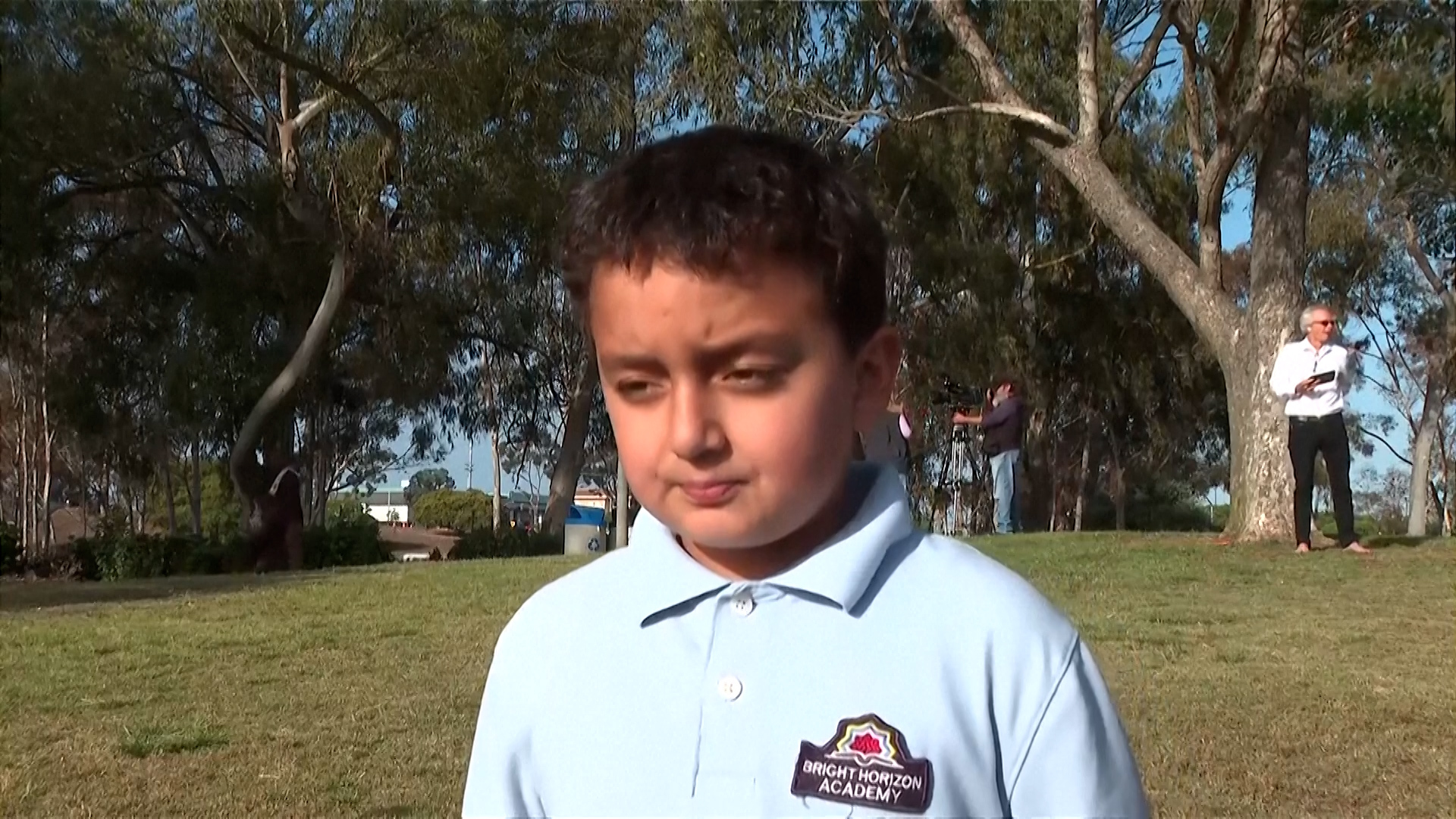
Child survivor of San Diego mosque shooting describes ordeal

Published

on

உலகம்

At least 87 Gaza aid flotilla activists abducted by Israel on hunger strike

Published

on

The protest comes after Israeli forces intercepted the last remaining vessel sailing towards the besieged Gaza Strip.

At least 87 people abducted by Israeli forces from an aid flotilla bound for Gaza have begun a hunger strike, organisers say, after Israeli forces intercepted the last remaining vessel in international waters.

The group is striking “in protest of their illegal abduction and in solidarity with the over 9,500 Palestinian hostages held in Israeli dungeons”, the Global Sumud Flotilla wrote on X on Wednesday.

Late on Tuesday evening, Israeli forces “kidnapped” six people on board the Lina al-Nabulsi boat, organisers said.

The boat was the last in a group of more than 50 vessels that left Turkiye’s port city of Marmaris last week to sail towards Gaza, with the goal of breaking Israel’s blockade of the Gaza Strip.

Israel’s Ministry of Foreign Affairs confirmed late on Tuesday that its forces were taking hundreds of flotilla participants to Israel.

“Another PR flotilla has come to an end. All 430 activists have been transferred to Israeli vessels and are making their way to Israel, where they will be able to meet with their consular representatives,” a ministry spokesman said, calling the effort “nothing more than a PR stunt.”

Israeli forces began overtaking the vessels in international waters off the coast of Cyprus on Monday, organisers said, where they raided boats, allegedly fired rubber bullets and abducted participants.

The detainees included nine Indonesian citizens, a spokesperson for Indonesia’s foreign ministry said Wednesday. Indonesia called for the immediate release of all vessels and said that “every diplomatic channel and consular measure will continue to be fully utilised”.

Some 15 Irish citizens, including Margaret Connolly, a doctor and the sister of Irish President Catherine Connolly, were among those being held.

Countries including Turkiye, Spain, Jordan, Pakistan, Bangladesh, Brazil, Indonesia, Colombia, Libya, and the Maldives denounced the Israeli interceptions as “blatant violations of international law and international humanitarian law”.

The United States, however, imposed sanctions on four activists for their involvement in flotillas that have tried to reach Gaza, claiming without evidence that the organisers were acting “in support of Hamas”.

Some previous flotilla participants have refused food upon being detained by Israel. Pro-Palestine activists jailed in the UK also participated in a high-profile, months-long hunger strike that began last year and led to severe health effects.

📰 மூல செய்தி (Source): https://www.aljazeera.com/news/2026/5/20/at-least-87-gaza-aid-flotilla-activists-abducted-by-israel-on-hunger-strike?traffic_source=rss

Continue Reading

உலகம்

San Diego mosque shooting: Who were the victims?

Published

on

Authorities say victims Amin Abdullah, Mansour Kaziha and Nader Awad played a role in responding to the attackers.

Daughter honours security guard father killed while protecting mosque

Authorities at the Islamic Center of San Diego confirmed the identities of two men killed in a shooting incident at the mosque on Monday. This came a day after friends and family identified Amin Abdullah as the security guard who was killed while trying to prevent suspected attackers from entering the mosque complex. Mosque authorities told Al Jazeera the other two victims also played a role in responding to the gunmen.

“We call them our brothers in the community. We call them our martyrs and our heroes,” said the mosque’s imam, Taha Hassane.

Two teenage attackers opened fire at the San Diego mosque while police officers were already looking for one of the attackers after his mother alerted the police, concerned that her son was suicidal and had run away, the police chief said. The suspected gunmen were later found dead of apparent self-inflicted gunshot wounds. Police have been investigating the attack as a hate crime.

Here is a look at the victims of the attack:

Kaziha, 78, also known as Abu Ezz, was a longtime employee of the mosque who had called the police before he was killed, the chairman of the mosque’s board of directors, Ahmed Shabaik, told Al Jazeera. He added that, originally from Syria, Kaziha was married with five adult children. “He was a cornerstone, a pillar of this masjid.”

Shabaik said Kaziha had been with the mosque since its construction in the 1980s.

“He does everything in the mosque, all the everyday demands. He also ran the gift shop inside the mosque and was behind all the cooking during Ramadan for iftar and made the suhoor meals,” Shabaik said.

Yasser Kaziha, Mansour Kaziha’s son, described his father as not only a pillar of the community, but “a pillar of our household”.

“He taught us to expect hardships and push through them to fill our individual purposes just like he did,” Yasser Kaziha said during a vigil Tuesday evening.

Awad, 57, lived across the street from the Islamic Center and attended prayers “every single day”, Hassane said.

When he heard gunfire, Awad ran towards the building, where his wife is a teacher at the school.

“He left his home, trying to go and do something to help,” Hassane said during the vigil.

“When he heard the shots, he ran into the masjid to help, he also diverted some people who were coming to the masjid at the time,” Shabaik said.

Speaking at a news conference on Tuesday, Hassane said Awad’s wife is a teacher at the Islamic school, and he was a devout member of the community.

“He is every single day at the Islamic Center, joining the prayers every single day,” he said.

After Abdullah, 51, was identified by reports as one of the men killed in the attack, tributes poured in online. A Facebook profile associated with him has 1,800 followers and lists Abdullah as married.

Local media reports suggest that Abdullah was a father of eight.

United States officials said the guard “played a pivotal role” in preventing the attack from being “much worse”. “It’s fair to say his actions were heroic,” San Diego Police Chief Scott Wahl said at a news conference. “Undoubtedly, he saved lives today.”

His daughter Hawaa Abdullah, surrounded by family members at a Tuesday news conference, said her father was loving and supportive, a “best friend” and a role model. He took his job protecting the community so seriously he sometimes wouldn’t eat during his shifts, she said.

“He wanted to save his food until after he left the job because he was afraid that if he were on his break, something bad will happen,” she said.

Abdullah greeted all visitors to the mosque with a smile and the traditional Muslim greeting in Arabic of “as-salamu alaikum”, or “peace be upon you,” according to Mahmood Ahmadi, a longtime attendee. Another friend, Shaykh Uthman Ibn Farooq, said Abdullah was there nearly every single day and was dedicated to his wife and eight children.

Abdullah was raised as a Christian, and described in a 2019 YouTube video his journey discovering the Islamic faith after graduating high school. Farooq said he met Abdullah shortly after he became a Muslim in the 1990s. Most recently, they had gone on a pilgrimage to Mecca together.

“Amin was born a Muslim to an African American mother. He was as American as one can get. He was also as Muslim as one can be. He was killed by guns fired by two American young men,” Kashif-ul-Huda, a biotech professional and former colleague of Abdullah, wrote for Al Jazeera in an essay published on Tuesday.

📰 மூல செய்தி (Source): https://www.aljazeera.com/news/2026/5/20/san-diego-mosque-shooting-who-were-the-victims?traffic_source=rss

Continue Reading

உலகம்

Is Russia ‘simulating diplomacy’ because of war losses in Ukraine?

Published

on

President Putin has talked about a ceasefire, but some analysts say it’s a ploy to buy time while Moscow’s soldiers are on the back foot.

While Kyiv has recently come under frequent bombardment, the residents of Moscow have largely felt safe.

At least three people, including an Indian citizen, were killed in a drone strike on the Russian capital on Sunday. That day, the Russian Ministry of Defence declared it had shot down more than 1,000 drones in 24 hours.

The attacks come a little over a week after Russian President Vladimir Putin said the war in Ukraine, which has now raged for more than four years and claimed hundreds of thousands of lives, may soon be “coming to an end”. They also followed a Russian assault on Kyiv that killed 24.

Putin made the remarks hinting at winding down the war to reporters during Moscow’s pared-back Victory Day parade on May 9. He even expressed a willingness to meet with his Ukrainian counterpart, Volodymyr Zelenskyy, in a neutral country to sign peace accords but added: “Victory has always been and will be ours.”

This is, of course, not the first time the possibility of peace has been raised.

Before beginning his second term in the White House in January last year, United States President Donald Trump repeatedly promised to end the fighting “within 24 hours”. This has clearly not happened although a three-day ceasefire was brokered by Trump this month.

So naturally, many met Putin’s words with scepticism.

“For this announced ceasefire, not even the announced prisoner exchange has actually taken place, the least that I expected, even that didn’t happen,” Simon Schlegel, Ukraine director at the Center for Liberal Modernity in Berlin, told Al Jazeera. “And then, of course, there is no seamless transition from the things where there are overlapping interests – that both countries get their prisoners and bodily remains back – to the zero-sum games that concern territory, security guarantees, Ukraine’s future geopolitical alignment.”

After the weekend attacks, Kremlin spokesman Dmitry Peskov told reporters: “The peace process is on pause.”

The Russian and Ukrainian positions are seemingly intractable.

In the past, Putin has insisted there can be no peace until Ukraine relinquishes all territory Russia has claims to, including land not yet under Russian control. If necessary, he warned in December, the territory will be seized by force.

Zelenskyy has countered that he is constitutionally barred from officially ceding any Ukrainian land and, in any case, Russia should not be allowed to claim its invasion as a success. However, Zelenskyy has proposed a ceasefire along the current front lines with a promise that territorial questions will be resolved diplomatically. He has also agreed to abandon Ukraine’s bid for NATO membership in exchange for security guarantees from Ukraine’s Western allies.

Although Russian troops are slowly advancing, they have yet to fully conquer the Donbas region of eastern Ukraine, which Moscow lays claim to.

Last year, sources close to the Russian government told the Moscow Times that the Kremlin was dragging out negotiations on purpose to consolidate battlefield gains and diplomats were playing for time while soldiers advanced.

“It’s a war of attrition. And right now, Russia is not winning this war,” Schlegel said.

“The Ukrainians gained the upper hand in the production of drones [and] deep strike capabilities that they didn’t have a year ago, which allowed them to compromise Russian oil exports. They have kept the interception rate of drones and cruise missiles very high despite the Russians more than doubling the numbers of drones and cruise missiles that they can send in the course of a year.”

The Russians, however, can adapt and overcome using their superior manpower.

“And that’s why they want to play for time. And simulating diplomacy is a good way of doing that,” Schlegel explained. “There is no movement in Moscow’s demands. There is no movement in Ukraine’s war objectives. A new element that was introduced for the May holidays is that Russia now signals that they want to involve Europe in some way in these negotiations.”

Earlier in May, European Council President Antonio Costa said the European Union was willing to negotiate with the Kremlin as well although he later clarified his remarks. It was not yet the “right moment”, he said, and the EU does not wish to disrupt Trump’s efforts.

Putin has suggested former German Chancellor Gerhard Schroeder represent the EU in any talks, a proposition met with scepticism in Brussels.

“Schroeder has been a high-level lobbyist for Russian state-owned companies. So it’s clear why Putin wants him to be the person so that actually, you know, he would be sitting on both sides of the table,” EU foreign policy chief Kaja Kallas said.

“Moscow is generally open to negotiations. The Russian leadership has repeatedly stated this,” Alexey Nechaev of the Moscow-based Digoria Expert Club, told Al Jazeera. “However, the problem is that, so far, European politicians’ statements about dialogue have been accompanied by actions that are directly contrary: expanding military support for Ukraine, developing joint defence production, creating new military-political mechanisms in Northern Europe and strengthening NATO infrastructure on Russia’s borders. This is precisely why Russia is currently cautious about such initiatives. The main question is whether European countries are ready to discuss the root causes of the crisis and Russia’s fundamental security interests. If politicians in Europe emerge who are willing to engage in such a meaningful conversation, Moscow will likely reciprocate.”

While the EU’s position remains strongly pro-Ukrainian for now – especially after Hungarian Prime Minister Viktor Orban, widely considered sympathetic to Russia, recently was voted out of office – Schlegel noted that may change after forthcoming elections, presenting another reason for Moscow to drag out negotiations.

“If next year the National Rally wins the [French] elections, we don’t know what this is going to mean for European support to Ukraine, but it’s certainly not going to get better,” he said.

“You’ve got Reform breathing down the neck of Labour in the United Kingdom. You’ve got the AfD polling as the strongest party in Germany. … And if Putin manages to play for time long enough, then there might still be a chance for him to influence European politics in such a way that Ukraine ends up with a lot less assistance.”

But the passage of time may be more favourable to Ukraine as well as Kyiv intensifies strikes on Russian equipment, infrastructure and supply lines.

The Ukrainians “have got a lot more leverage now than they had a year ago when Trump came into office and told them they had no cards”, Schlegel said.

“So we’re getting closer to a situation where Ukraine might be actually able to talk to Russia on Ukraine’s terms, but we’re still not anywhere close to any of the sides collapsing, and that’s going to be the moment when talks start in earnest.”

Nevertheless, observers such as Ilya Budraitskis, a Russian social scientist at the University of California in Berkeley, believe the Russian leadership is averse to any serious concessions at this stage. Budraitskis told Al Jazeera that Putin must fulfil the goals he set at the start of the full-scale invasion of Ukraine in 2022.

“And if none of these goals are achieved, he will look weak and defeated,” he said. “It’s important for him to demonstrate at least one of these targets has been achieved, and to realise this, he is prepared to sacrifice tens of thousands more Russian soldiers.”

But Budraitskis made a distinction between the interests of Putin’s government and Russia as a whole, which has suffered from sanctions, Ukrainian counterattacks and other disruptions to everyday life. If the interests of Russia’s population and international security could be decoupled from those of Putin, he argue

📰 மூல செய்தி (Source): https://www.aljazeera.com/news/2026/5/20/is-russia-simulating-diplomacy-because-of-war-losses-in-ukraine?traffic_source=rss

Continue Reading

Trending

Copyright © 2024 by 7Tamil Media, All rights reserved.