Connect with us

உலகம்

Can Macron’s Kenya visit revive French influence in Africa?

Published

on

France is facing deepening resentment in former African colonies where it once had political influence.

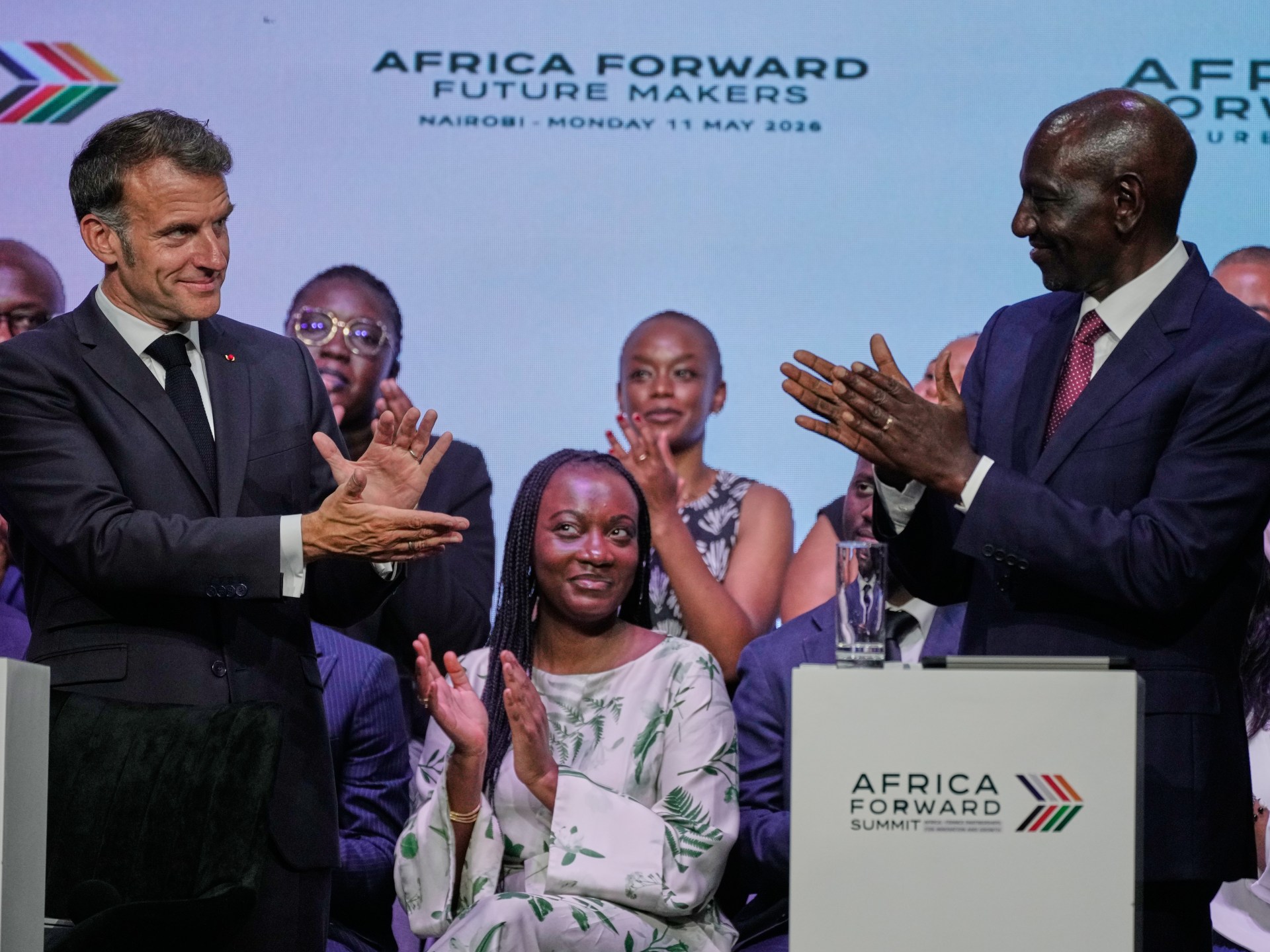
France’s President Emmanuel Macron has hosted a high-level meeting of heads of state and business leaders alongside his Kenyan counterpart, William Ruto, as Paris continues to pivot to other parts of the continent due to its strained relations with French-speaking West African countries.

The conference, which was held on Monday and Tuesday in Kenya’s capital, Nairobi, was France’s first Africa summit in an English-speaking country.

Due to colonialism, French influence on the continent has been strongest in central and West African Francophone countries, which include those in the arid Sahel region separating the Sahara from the coastal south.

However, as insecurity has continued to rack Sahelian countries from Mali to Niger over the last decade, anti-French sentiment has grown due to failed French military interventions and beliefs that Paris was interfering in the affairs of its former colonies.

France’s influence has shrunk dramatically across West Africa in recent years, with some countries turning to alliances with Russia.

Now, France says it wants to “overhaul” its engagement with African countries by pivoting to Anglophone countries where it lacks a colonial legacy. The summit in Nairobi was once such an attempt.

Was it a success? Here’s what happened at the summit:

Macron announced on Tuesday that France would invest 23 billion euros ($27bn) in African countries, particularly in energy, artificial intelligence, and culture.

Kenya’s President Ruto, for his part, reiterated several times that the new partnership must respect the sovereignty of African countries.

It “must not be built on dependency but on sovereign equality, not on aid or charity but on mutually beneficial investment, and not on extraction or exploitation but on win-win engagements”, Ruto said.

However, France’s new investments were overshadowed by online backlash that trailed some of Macron’s actions at the summit.

He interrupted an ongoing panel of young artists on one occasion by stepping on stage to scold the audience for murmuring, saying it showed a “total lack of respect”.

Macron also claimed at a news conference during the summit that he was “a true Pan-Africanist”, which critics argue is cultural or political appropriation.

Ahead of the summit, the French president had said that Paris wanted “to build partnerships on an equal footing, founded on shared interests and tangible results”.

But his controversial statements at the Nairobi summit raised questions among many Africans on social media about how seriously France will take its promises.

“It’s too early to tell if this is a successful pivot, as the partnership has only just been established,” Beverly Ochieng, Dakar-based West Africa analyst at intelligence firm Control Risks, told Al Jazeera.

Any success, she added, would depend on how Paris and new partners like Kenya manage the shadows cast by growing anti-France sentiments on the continent.

“Alongside this is whether France’s economic and cultural investments – a shift from focusing on military and development aid – are indeed on equal footing, are responsive to contemporary political pressures, and facilitate growth and productivity in Africa,” she said.

France maintains significant colonial-era influence in defence, currency, and commerce in “Francafrique”, which refers to France’s historical sphere of influence in Africa.

Paris has long maintained a military presence in the former colonies. Following the wave of independence movements in the 1960s, France granted independence to several countries, but in most cases, did not remove military assets.

Despite French troop presence, countries in the West African Sahel have continued to witness waves of instability, stemming from separatist movements as well as religious extremism.

In 2012, insecurity in Mali escalated, perpetrated by separatists and armed groups working together. The crisis spread across joint borders into Burkina Faso and Niger.

Amid the rising insecurity, and upon a request from Mali, France deployed thousands of troops, including several fighter jets stationed in Chad, a former colony. Over the next decade, attacks declined but continued intermittently.

However, when the military in Mali seized power in 2020, France condemned the coup led by current President Assimi Goita, angering the new government. Paris soon began to shift its assets and troops to Niger.

In a turn of events, the military also seized power in Burkina Faso and Niger and ordered French troops out.

Mali, Burkina Faso, and Niger have since formed the Alliance of Sahel States (AES) and turned to Russian mercenaries for support.

Even the more friendly governments of the Ivory Coast, Chad, and Senegal have requested the exit of French troops.

France handed over control of its last major military facility in Senegal last July after Senegalese President Bassirou Diomaye Faye, who attended the Kenya summit, said French bases were incompatible with the country’s sovereignty.

Despite reduced military influence, France retains monetary control through the Communaute Financiere Africaine (CFA) franc.

The currency was created in 1945. At the time, its acronym stood for “Colonies Francaises d’Afrique” (French Colonies in Africa).

There are two versions: the West African CFA franc and the Central African franc. Collectively, about 14 countries with a combined population of around 210 million use it, including the AES states.

The CFA has a fixed exchange rate that is tied to France’s own currency, the euro. Since the end of World War II, all CFA countries were required to keep 50 percent of their reserves in the French Treasury, and a French representative was always present on the currency board.

Although the CFA has been challenged by critics as a colonial relic, it remains in use to date.

In 2019, the West African franc was reformed so that countries no longer needed to keep half of their reserves in France.

However, it is still pegged to France’s currency, with supporters arguing its link to the more stable euro has protected those countries from inflation in a turbulent region.

There are more than 3,000 French ventures in Africa, according to business intelligence firm Kasi Insight.

Most are concentrated in North Africa – Morocco, Algeria, and Tunisia, and other Francophone countries. South Africa also holds significant numbers.

These businesses range from telecommunication companies like Orange to energy companies like TotalEnergies and Orano, as well as banks like Societe Generale.

In the West African Sahel, French investments are facing turbulent times amid tensions with the military governments.

In Niger, for example, Orano, which has mined uranium in the country for 50 years, said it lost control of its local subsidiaries after the 2023 coup. Last year, Niamey nationalised the mining company Somair, a subsidiary in which Orano had a 63 percent stake.

“Several French-linked companies have either reduced visibility, frozen expansion plans, or faced renegotiation pressure,” Yannick Lefang, founder of Kasi Insight, told Al Jazeera.

Sahel governments are now turning to partnerships with Russia, Turkiye, Gulf States, and increasingly, China.

However, Lefang said, Sahel governments cannot easily disengage from consumer-facing French companies like the Orange telecoms network because “they are deeply embedded in local economies and employment structures”.

Some 44 percent of the nearly 400 million people who speak French are in Africa. Kinshasa, the capital city of the Democratic Republic of the Congo, is known as the largest French-speaking city in the world.

Paris is swapping military support and development aid for pure commerce, analysts say.

“While headlines often frame this as ‘France leaving Africa’, our data suggests the reality is more a redistribution of influence than a full retreat,”

📰 மூல செய்தி (Source): https://www.aljazeera.com/economy/2026/5/13/can-macrons-kenya-visit-revive-french-influence-in-africa?traffic_source=rss

உலகம்

Police in Belfast use water cannon as anti-immigrant unrest continues

Published

on

Clashes come as family of knife attack victim calls for calm and condemns violence targeting immigrants.

Unrest in Northern Ireland: Second day of anti-immigration protests in Belfast

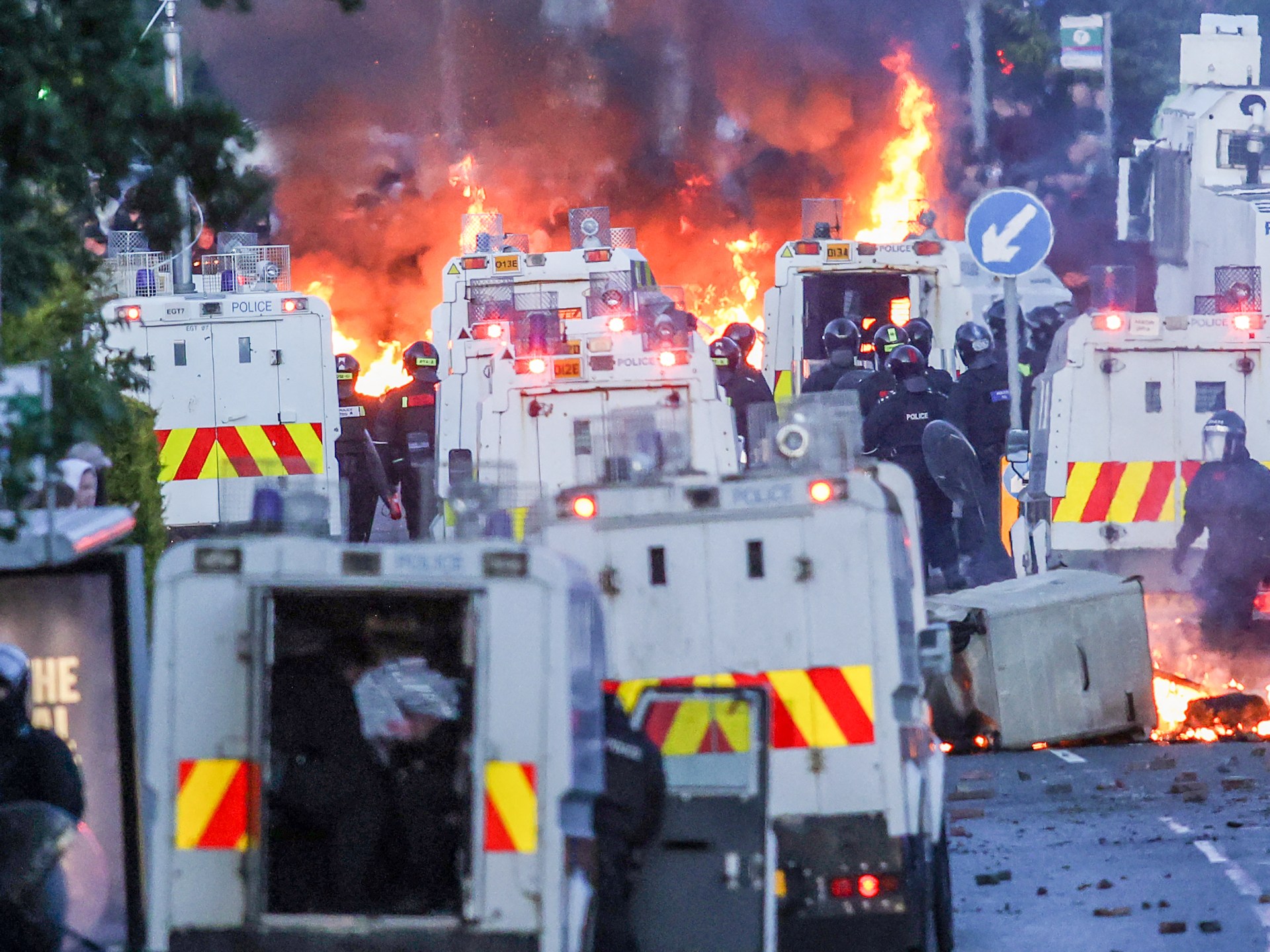
Police in the United Kingdom city of Belfast have used water cannon to disperse dozens of far-right protesters during a second night of unrest triggered by a knife attack involving a Sudanese refugee.

The clashes on Wednesday came as the family of the stabbing victim appealed for calm and condemned the wave of anti-immigrant violence in the city in Northern Ireland.

Police said the protesters threw “missiles” such as rocks and bottles at officers, while images from the scene showed several fires burning on the streets.

Police said officers deployed “water cannon in an attempt to maintain public order”.

But the unrest was markedly less severe than on Tuesday evening, when hundreds of masked men burned families out of their homes and set vehicles alight.

“We want to make it absolutely clear that overnight unrest is not welcome, and peaceful protest is the only way forward,” the family of the victim, Stephen Ogilvie, said in a statement.

“We have many migrants who make a deeply valuable contribution to our country… We do not want this terrible tragedy to be used to divide people or fuel hostility,” it said.

The family added that Ogilvie, who lost an eye and suffered serious wounds to his neck and face, was in a stable condition.

Their appeal came as the suspect in the attack, a 30-year-old ‌Sudanese national named Hadi Alodid, appeared in court on charges including attempted murder.

He was remanded in custody, and the case was adjourned to July 8.

Videos of the stabbing attack circulated online all day on Tuesday, sparking calls on social media for violent protest. Police had to help one family escape from a burning house, according to the Reuters news agency, while several cars and a bus were set on fire and reduced to shells.

Local politicians and a pastor said many of those targeted were Black.

UK minister Ruth Anderson said at least 27 people were made homeless in Belfast “because people went door-to-door to try and target foreign nationals”.

Resident Jamie Corry, 33, said he could only watch on as his house went up in flames.

“I was actually standing right there watching my whole house just go up, slowly but surely,” he told Reuters. “I told them and all, when they were lighting a car up on fire, ‘that’s my property, that’s my property’… and they still didn’t care.”

The attack comes at a time of heightened tensions in the UK following the murder of a student in Southampton who was handcuffed by police as he lay dying from stab wounds after his killer, a Sikh man, had falsely alleged a racist attack.

Tech billionaire Elon Musk reposted many messages that blamed migration on violence in the UK, sharing a post that argued that the “very deliberate policy of mass uncontrolled immigration and open borders” is increasing tensions.

Amid calls from Musk, other far-right agitators like Tommy Robinson called for more protests on Wednesday, Northern Ireland’s police chief said ⁠an extra 200 officers were being deployed on the streets.

“These idiots didn’t just target ethnic minority groups… they targeted society,” Chief ⁠Constable Jon Boutcher said of Tuesday night’s rioters.

Officers had to take a family that included a two-month-old baby to safety during Tuesday’s violence, which he branded “a huge act of self-harm by mindless idiots”.

Speaking in London, UK Prime Minister Keir Starmer said the knife attack raised serious questions, but that “driving people out of their homes is not … the right way to respond”.

He condemned the unrest as “shocking and completely unacceptable”.

Anna Turley, the chairwoman of the UK’s governing Labour Party, meanwhile, said that online platforms were “playing a role in driving” the unrest and suggested Musk was one of the “bad faith actors” inflaming tensions.

The United Nations human rights chief Volker Turk condemned what he called “incitement” on social media. “Dehumanisation of whole groups within a society is totally unacceptable and frankly despicable,” he told reporters in Geneva, adding that the violence in both Northern Ireland and Southampton had been “really shocking”.

Social media providers, he insisted, must take seriously their responsibility to prevent hate speech and incitement to violence.

Immigration has historically been low in Northern Ireland, partly due to the three-decade conflict between mainly Catholic Irish nationalists seeking Irish unity and predominantly Protestant pro-British “loyalists” wanting to stay in the UK and the British military.

However, migration has increased in recent years, and there has been an increasing sentiment against it in both Northern Ireland and parts of the Republic of Ireland.

📰 மூல செய்தி (Source): https://www.aljazeera.com/news/2026/6/11/police-in-belfast-use-water-cannon-as-anti-immigrant-unrest-continues?traffic_source=rss

Continue Reading

உலகம்

Dahiyeh crowds rally in favour of Iranian support against Israel

Published

on

Dahiyeh crowds rally in favour of Iranian support against Israel

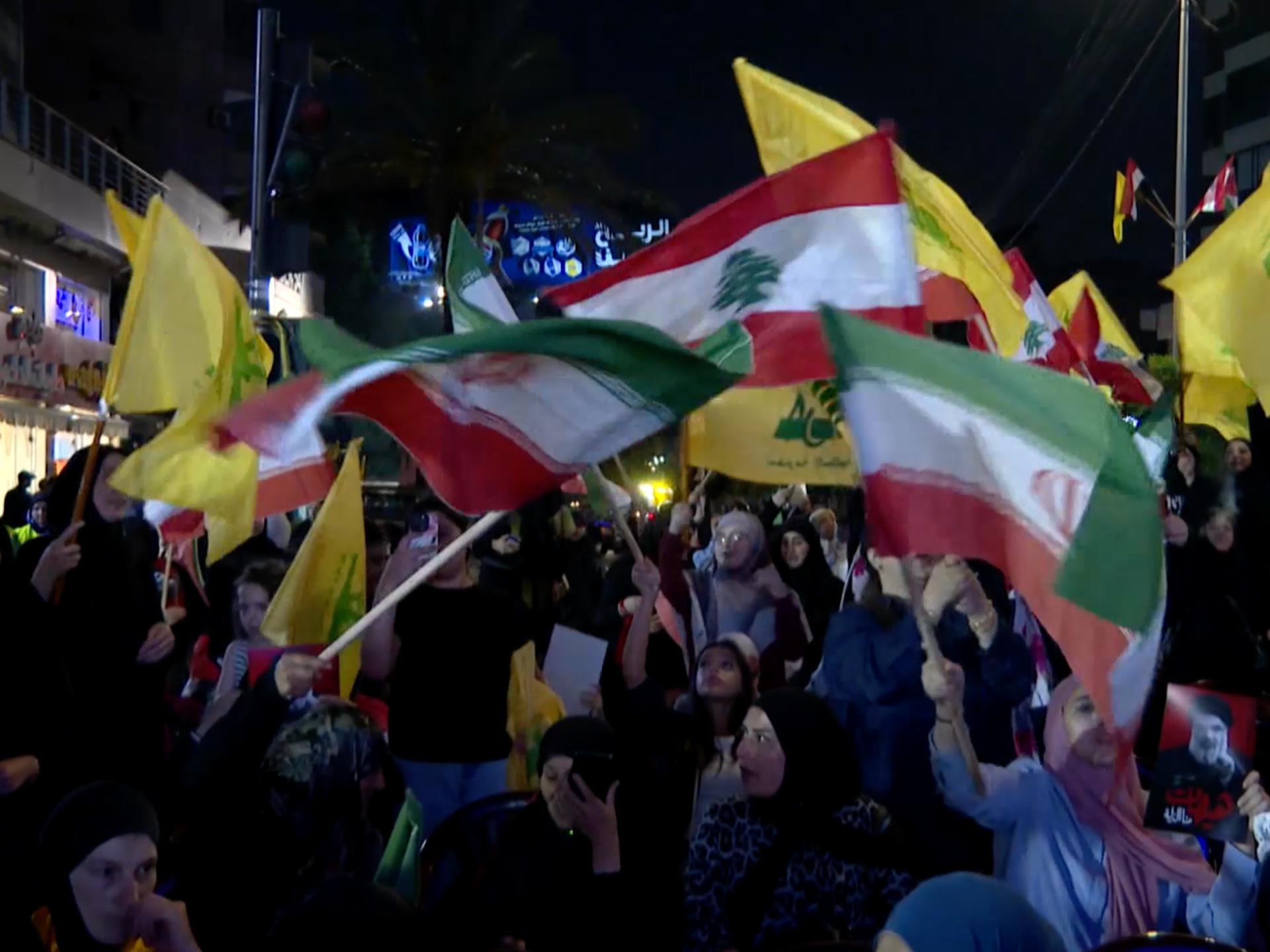
Defiant crowds of Hezbollah supporters rallied in Beirut’s Dahiyeh neighbourhood to support Iran’s role in standing against Israel, and rejecting efforts to separate Lebanon’s war from Iran’s. Al Jazeera’s Heidi Pett reports.

📰 மூல செய்தி (Source): https://www.aljazeera.com/video/newsfeed/2026/6/11/dahiyeh-crowds-rally-in-favour-of-iranian-support-against-israel?traffic_source=rss

Continue Reading

உலகம்

OpenAI says China-based actors stoking opposition to AI data centres

Published

on

AI company says ChatGPT accounts sought to ‘exploit and amplify existing public concerns’ about energy prices.

China-based actors are likely behind the use of ChatGPT for “covert influence operations” aimed at stoking opposition to data centres in the United States, OpenAI has said.

In a research report released on Wednesday, the company behind the world’s most popular AI chatbot said it had banned a cluster of accounts likely based in China for attempting to “manipulate a legitimate debate about American AI”.

OpenAI, whose release of ChatGPT in 2022 kicked off a global frenzy around AI, said the accounts were used to generate social media comments and images that blamed data centres for rising electricity prices in communities across the US.

Among other content, the accounts generated a comic strip showing a cigar-chomping businessman holding bags marked with dollar signs as a family reacted in shock to their electricity bill, according to the San Francisco-based company.

OpenAI said a second cluster of accounts had generated content casting US tariffs as an effort to “dominate technological competition” with China, and specified that the material should not mention Chinese leader Xi Jinping.

While the campaign sought to “exploit and amplify existing public concerns” about energy prices, OpenAI found no evidence that it had a “meaningful” influence, the company said.

“Foreign influence operations have long sought to latch onto existing local issues and sincerely held beliefs, using them to build credibility, amplify divisions or exacerbate public distrust,” the ChatGPT creator said.

“In this case, the operators attempted to covertly insert themselves into an ongoing American debate about the future of the country’s AI capabilities while hiding who they were and what motivated them.”

China’s embassy in Washington, DC, said it was not familiar with the report but that it opposed “any groundless attacks or smears against China”.

“AI is profoundly changing the way people work and live. It is a new frontier for all humanity,” an embassy spokesperson said in a statement provided to Al Jazeera.

“China believes in a people-centered approach to AI and advocates openness and inclusiveness to ensure AI is a force for good and for all.”

OpenAI is the latest prominent voice to suggest foreign influence could be behind opposition to AI in the US.

In May, Secretary of the Interior Doug Burgum told a policy event hosted by Breitbart News that the public’s increasingly negative sentiment towards the construction of data centres was not “organic” and could, in some cases, be linked to “foreign-sourced dark money”.

Darren Linvill, a professor at Clemson University in Clemson, South Carolina, who studies foreign influence campaigns, expressed doubt that the campaign identified by OpenAI or any other coordinated effort would have much impact on the “volume or tone” of the public debate.

“My team is very familiar with the work of various Chinese influence actors, and the AI work China has done to date has been interesting but not effective,” Linvill told Al Jazeera.

“It’s getting better with each passing month, and I’m concerned what they may be capable of in the future, but they aren’t there yet.”

“If China were really serious about meaningfully influencing the discourse around data centres using AI chat bots, I question if they would use OpenAI to do it,” Linvill added.

Opposition to the construction of data centres has been on the rise in the US, with at least 36 projects blocked or delayed between May 2024 and June 2025, according to Data Center Watch, a research project by AI security company 10a Labs.

In March, Senator Bernie Sanders and House Representative Alexandria Ocasio-Cortez announced legislation that would impose a moratorium on new data centres until the introduction of national safeguards to mitigate the risks of AI.

The legislation has little chance of becoming law in the near future due to US President Donald Trump’s laissez-faire approach to AI regulation and Republicans’ control of both chambers of Congress.

Opposition to data centres has been driven in part by the huge amounts of energy they consume supporting the computing power needed to train and run AI models such as ChatGPT.

The facilities accounted for 1.5 percent of global electricity use in 2024, with consumption growing 12 percent annually over the last five years, according to the International Energy Agency.

📰 மூல செய்தி (Source): https://www.aljazeera.com/economy/2026/6/11/openai-says-china-based-actors-stoking-opposition-to-ai-data-centres?traffic_source=rss

Continue Reading

Trending

Copyright © 2024 by 7Tamil Media, All rights reserved.