Connect with us

முக்கியச் செய்திகள்

Breakthrough ovarian cancer drug offers patients more time and better quality of life

Published

on

A breakthrough drug for ovarian cancer that is kinder on the body and extends lives is now available on the NHS.

The drug, called mirvetuximab soravtansine, is a known as a "biological missile" as it delivers chemotherapy drugs direct to the cancerous tissue rather than to the whole body – reducing debilitating side-effects.

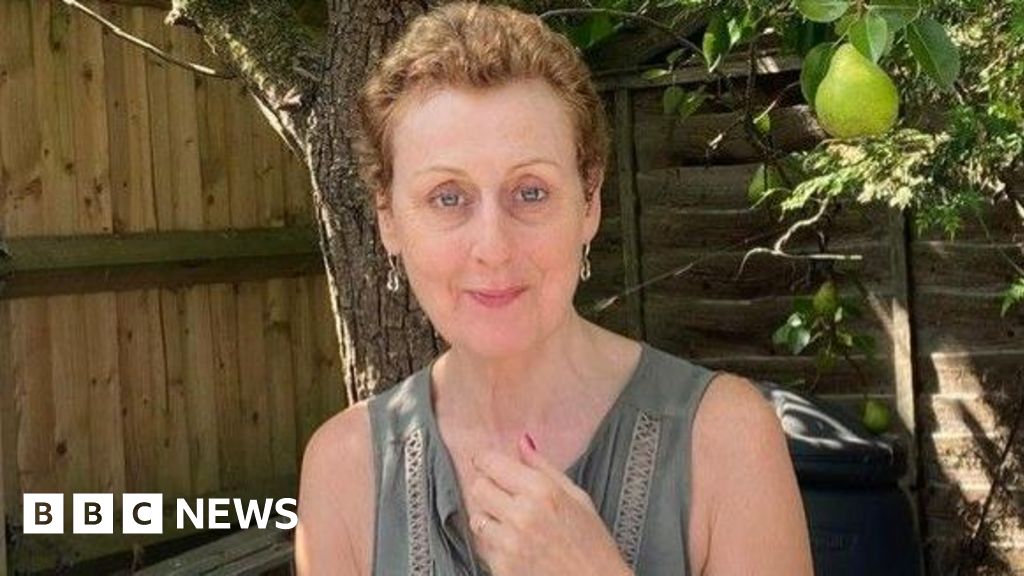
Patricia Hill, 64, said the treatment was allowing her to do things – like visiting family and going to the theatre – that were impossible on conventional chemotherapy.

Up to 400 patients a year in England could benefit from the new treatment – the first for hard-to-treat ovarian cancer in 20 years.

There are nearly 7,750 cases of ovarian cancer in the UK each year.

Patricia, from north London, was diagnosed in 2023 and had multiple rounds of chemotherapy. She started on mirvetuximab in January this year.

She said the difference was like night and day, and the therapy had given her "a lot of my life back".

She felt less tired and sick than when treated with standard chemotherapy, so felt "a lot better" and describes the drug as a "bit of a game changer".

The new drug has allowed her to see shows in London's West End, dine out at restaurants, attend the Chelsea Flower Show and visit family in Ireland.

"It actually opens up a lot of possibilities – you can actually go and do a lot more than you would normally do."

The drug – mirvetuximab – extends lives too, from 12.8 months on chemotherapy to 16.5 months on the therapy, on average.

But crucially it improves quality of life. It has fewer side-effects, women are able to keep their hair and it is given by a drip every three weeks, instead of weekly with conventional chemotherapy.

The drug is an advanced form of chemotherapy that hits cancer with a bigger dose, while reducing side-effects.

It is made from a deadly chemotherapy drug that has been fused to an antibody, similar to the ones the body uses to fight infection.

However, these antibodies have been designed to spot markings – called folate receptor alpha – that appear on the outside of some ovarian cancer cells.

So they travel to cancerous cells, stick to the surface and are then absorbed. Once inside they release their toxic payload, to kill the cancer.

This is the reason why this type of therapy is also known as a 'Trojan horse' therapy, after the Greek myth.

About 30-40% of cancers which do not respond to chemotherapy have these markings.

Jenny Green, 71 from Hertfordshire, was diagnosed in 2017 and was part of the clinical trials that proved the drug worked.

She said: "I seem to have tolerated it very well, with hardly any side effects at all. That's been amazing!

"I had a scan that showed my cancer nodules were shrinking, and my bloods were coming back into range – which is all pretty good to hear."

The drug has been approved by the medicines watchdog, the National Institute for Health and Care Excellence (NICE), in ovarian, peritoneal and fallopian tube cancer if chemotherapy no longer works and the cancers have the right markings.

NHS England says it will pay for the drug. Wales and Northern Ireland normally follow the same rules, while Scotland makes its own decisions.

Dr Rowan Miller, who ran the clinical trials at UCLH, said she was "really excited" this drug was coming to the NHS after a 20-year search for better medications.

"Finally, there's a drug that's available, that improves survival for this group of patients and in addition, the patients get on with the treatment well and find it easier to manage than standard chemotherapy," she told me.

Prof Ruth Plummer, NHS national clinical lead for cancer drugs, said it was the "most significant breakthrough" in treating these hard-to-treat ovarian cancers "in over two decades" and added she was "delighted" it was available on the NHS.

Victoria Clare, chief executive officer at Ovacome, the UK's ovarian cancer support charity, said: "This decision has the potential to make a real difference to those who are able to access this treatment. We are delighted."

Mirvetuximab soravtansine has been developed by the pharmaceutical company AbbVie.

Rachel Downing, head of policy and external affairs at Target Ovarian Cancer, said the drug becoming available on the NHS was "a hugely important moment" for women with platinum-resistant ovarian cancer and their families, "who have faced limited effective treatment options for far too long".

📰 மூல செய்தி (Source): https://www.bbc.com/news/articles/ce8p57y35lzo?at_medium=RSS&at_campaign=rss

முக்கியச் செய்திகள்

Here's to you, Ollie Robinson – England need you more than you will know

Published

on

How's that for a return?! Robinson takes three wickets in first over in two years

Paul Farbrace has a gag about how Ollie Robinson came to be Sussex captain.

Farbrace, the Sussex head coach, realised he had not got his step-son a decent Christmas present, so offered him the county captaincy instead.

It's a nice line. The truth is that Sussex wanted to get the absolute best out of their champion bowler and reasoned it would come through more responsibility.

Around the same time, England were getting their quadrennial shellacking in Australia. Among the myriad of English plans to fail down under was the idea of hitting the Aussies with high pace and hostility.

And so Robinson and England were once again set on convergent paths, culminating in his comeback for the ages on day one of the first Test against New Zealand.

With three wickets in his first over in an England shirt for more than two years, Robinson added his own moment of history to a Lord's ground celebrating its 150th Test. He reannounced himself as an international bowler, gave life to England's post-Ashes rebuild and quite possibly provided precious breathing space to the management that once discarded him.

It is 829 days since Robinson last played for England and 1,069 since he was last able to celebrate a wicket.

To look at Robinson's statistics would shed no light on the reason for his absence. A return of 76 wickets from 20 Tests at an average below 23 with a strike-rate better than 50 is world-class.

But England decided that Robinson was not worth the hassle.

On his Test debut in 2021, he was discovered to have made racist and sexist social media posts as a teenager. On the Ashes tour of that winter, his fitness was publicly questioned by then England bowling coach Jon Lewis.

Robinson was on the outside when the Bazball revolution began in 2022, yet, by the end of that summer, Robinson, calling himself a "gym freak", was a fixture under Brendon McCullum and Ben Stokes.

The harmony lasted little more than a year. Robinson suffered a back problem in the Headingley Ashes Test of 2023. When he returned in the fourth Test against India in Ranchi the following year, Robinson was struck by more back issues and dropped a crucial catch.

Off the field, he had gone through the break-up of a relationship and England were not impressed by a podcast he made with new partner, the golf influencer Mia Baker. McCullum and co had had enough.

Robinson ready to put in hard work after dream return

Stunning Robinson return gives life to England

Robinson was exiled for 24 Tests. In that time, 13 other men bowled seam in Test cricket for England. Fourteen, if you count Harry Brook's wrong-footed part-time filth.

Robinson spent part of the Ashes winter playing club cricket in Sydney, mainly to work on his game, but also to be in the right place if England needed him. One wonders how many bowlers would have had to go down for Robinson to get the call, especially given a reserve Lions squad was also in Australia. Maybe 15, even 20?

But necessity is the mother of invention or, in this case, reinvention.

Humbled in Australia, England were badly in need of an attack-leader, a reliable tone-setter.

This summer is the first since 2007 that none of James Anderson, Stuart Broad or Chris Woakes will play a Test for England. Throw in the likelihood that Mark Wood will never play another Test and it means the four cornerstones of England's pace attack have gone in the space of three years, taking 1,609 wickets with them.

So England reached out to Robinson, telling him at the start of the summer he was back on the radar. Already maturing with the captaincy, Robinson lasered-in on the goal of an international recall.

Those at Hove speak of an intense focus on a chance Robinson once thought had gone. Extra training sessions, leading on and off the field amid the turmoil of a points deduction for financial issues. The bowling was in good order, and there was even a vital century with the bat against Surrey.

When the England recall came, director of cricket Rob Key called Robinson "one of the best bowlers in the world". McCullum said he had "banged the door down", while Stokes challenged Robinson to "stay here as long as he can".

On a murky and moody Thursday at Lord's, Robinson rose to the challenge.

England had been rolled over for 140 by the excellent New Zealanders and all of Key, McCullum and Stokes must have been wondering if the Ashes rebuild was going to be reduced to rubble. Salvation came from the man they had shunned.

With the clouds hovering, rain threatening and pitch nibbling, Robinson was the perfect horse for this course.

Rumbling in from the Nursery End, nipping the ball down the slope to left-hander Devon Conway.

Third ball. Front pad. Finger up. Robinson's eyes wide with delight, Conway aghast at a review that showed enough of leg stump was being clipped.

Highlights: 16 wickets fall on opening day as England fight back against New Zealand

Two balls later and the crowd were singing Robinson's name as he rocked his shoulders towards Kiwi great Kane Williamson. Perfect length, Kane not able to get a proper stride. An inside edge to short leg.

Yet more to come. Rachin Ravindra. Another left-hander and another ball jagging down the Lord's slope. Only pad between ball and stump. A triple-wicket maiden and a return to go down in English cricketing folklore.

There was still time for one more trick of the hand. Daryl Mitchell not playing a shot, but this time the ball darted up the slope to uproot the unguarded off stump. Robinson sleeps with figures of 4-10, New Zealand on life support at 61-6.

The irony in all of this is the party line from Key, McCullum and Stokes on Robinson's prolonged absence.

Their demand has always been for Robinson to hit "82, 83 or 84 mph". On the first day at Lord's, Robinson's average speed was 80.3mph, the slowest of the eight seamers on show – including injured New Zealander Matt Henry. His fastest speed was 82.3mph – which he hit once – and slowest was 77.1.

Where Robinson excelled was in expert use of the helpful conditions with immaculate line and length, topped off with fingertip control to have the ball skipping off the seam.

Robinson ended the day on 80 Test wickets at an average of 21.9. Not since the legendary Fred Trueman hung up his boots in 1965 has any England bowler taken that many Test wickets at a better average. Using the same 80-wicket qualification, Robinson's strike-rate of 47.9 is the best since Sydney Barnes, whose career ended 112 years ago.

Is Robbo's return bittersweet? The wonder of what might have been, especially on those juicy pitches in Australia?

Perhaps it could only have been now that Robinson was ready for this moment – he admitted he was "nowhere near" being able to play a role in the Ashes.

So, Robinson is back. On this showing, for how long is up to him.

Here's to you, Ollie Robinson. England need you more than you will know.

Get cricket news sent straight to your phone

📰 மூல செய்தி (Source): https://www.bbc.com/sport/cricket/articles/cevpvx108l9o?at_medium=RSS&at_campaign=rss

Continue Reading

முக்கியச் செய்திகள்

Andrew was sub-letting Royal Lodge cottages, watchdog reveals

Published

on

Andrew Mountbatten-Windsor received an undisclosed rental income from sub-letting three cottages on the Royal Lodge estate that he leased from the Crown Estate, the public spending watchdog has revealed.

The National Audit Office (NAO) report also revealed that the King pays the rent for accommodation in royal palaces for Mountbatten-Windsor's daughters Princesses Eugenie and Beatrice, who are not working royals.

It is the first report into royal residences in 20 years and shows Mountbatten-Windsor and his family and staff had 12 properties, owned by the Crown Estate or the Royal Household.

A Buckingham Palace spokesman said the report was "in line with the Royal Household's commitment to transparency".

The watchdog report into royal residences shows that Princess Eugenie has a property in Kensington Palace and Princess Beatrice in St James's Palace.

They do not pay any rent for this central London accommodation, instead it is paid by the "privy purse", which is the monarch's personal money, to the Royal Household.

Both of the palaces are maintained by public funding, through the Sovereign Grant.

Norman Baker, former Home Office minister and critic of royal finances, said it was "outrageous to subsidise luxury accommodation" in this way and that the public was "being taken for a ride".

He said such arrangements should no longer be sustainable and that "deference is wearing thin indeed".

A Palace source said that the rent paid on these properties for non-working royals would cover any publicly-funded expenditure, so there would be no extra cost to the Sovereign Grant, which pays for the official duties of the monarchy.

The report does not specify how much rent is paid on the princesses' palace property, but the level is meant to be 60% of the open market rate.

The NAO report was prompted by the scandal surrounding Andrew Mountbatten-Windsor – and will be followed by an inquiry by MPs on the Public Accounts Committee.

It shows a collection of 12 properties used by Mountbatten-Windsor and his family.

Even though Mountbatten-Windsor left Royal Lodge earlier this year, moving to Sandringham in Norfolk, he still has the lease on Royal Lodge until October 2026.

There is no suggestion in the NAO report of any wrongdoing by Mountbatten-Windsor.

As well as the main building at Royal Lodge, there were another eight nearby properties, with Mountbatten-Windsor's lease allowing three of these cottages to be sub-let, which he did until April 2026.

The report does not say how much he received in rental income, but Palace sources suggest he rented the property to staff or retired staff and the amount was only enough to cover running costs.

Whatever the amount, it went to Mountbatten-Windsor rather than the Crown Estate, which would pay its profits back to the Treasury.

Mountbatten-Windsor had paid £7.5m for repairs when he took on the lease for Royal Lodge, and that meant that he did not have to pay a monthly rent.

He also had another lease for a property called East Lodge, which the BBC previously revealed was to be handed back to the Crown Estate.

His two daughters have homes in the Cotswolds and in Portugal as well as their royal properties in the palaces.

The report also reveals that the Crown Estate paid for repairs worth almost £400,000 before the Prince and Princess of Wales moved into their Windsor home at Forest Lodge.

Princess Michael of Kent, another non-working royal, also has a property in Kensington Palace which is paid for by the privy purse.

Eleven working royals have accommodation in the palaces without charge in exchange for their official duties.

These are: the King and Queen, the Princess Royal, Duke and Duchess of Edinburgh, Duke and Duchess of Gloucester, the Duke of Kent and Princess Alexandra. And the Prince and Princess of Wales have an apartment in Kensington Palace, as well as their Crown Estate property.

The report found 21 other royal post-holders, including 17 military knights, have accommodation without charge in the occupied palaces.

The NAO report doesn't make any judgements on value for money or draw any conclusions, but it is intended to provide information for MPs on the Public Accounts Committee.

"Our role is to set out the facts – and that's why this is an investigation that sets out the processes and the arrangements both from the Crown Estate and the Royal Household," said NAO director Lee Summerfield.

A Palace spokesman said it was "grateful" for the report which was "in line with the Royal Household's commitment to transparency".

"We hope that the findings will help correct, clarify or contextualise a number of points regarding royal properties," the spokesman added.

"As the report notes, arrangements for properties managed by the Royal Household vary based on a number of factors to ensure residences are filled appropriately, depending on their location, tenants and purpose," he said.

A spokesperson for The Crown Estate, said: "The Crown Estate welcomes the National Audit Office's review which confirms its leases with members of the royal family were agreed in line with independent, professional advice and open market valuations."

Sign up here to get the latest royal stories and analysis every week with our Royal Watch newsletter. Those outside the UK can sign up here.

📰 மூல செய்தி (Source): https://www.bbc.com/news/articles/ce8p8dzvjy9o?at_medium=RSS&at_campaign=rss

Continue Reading

முக்கியச் செய்திகள்

Mangrove forests are healing after decades of human destruction

Published

on

The world's coastal mangrove forests, which protect millions of people from storms – and soak up vast amounts of planet-warming gases – are staging an unexpected comeback, scientists find.

For decades these swampy trees had been declining rapidly as they were cleared for fish farms and housing.

But a new study shows that since 2010 the world has been gaining more mangroves than it has been losing – driven by stronger legal protections and increased public awareness of their importance, sparked by disasters such as the 2004 Indian Ocean tsunami.

The researchers say the key factor though is the remarkable capacity of these forests to regenerate naturally once humans stop chopping them down.

Mangroves are one of the world's unsung environmental heroes.

Not only do they store up to five times more carbon dioxide than land-based forests, but their tangled roots can also slow down waves and protect coastal communities from storm surges and tsunamis.

These same roots provide a perfect nursery for many species of fish and other marine life – protecting them from predators and providing ample food.

These benefits, though, have come under serious threat over the past century as the rise of fish farming, agriculture and the expansion of coastal cities and towns have seen mangroves chopped down and rapidly removed.

From the 1980s to 2010, over 12,000 sq km (4,600 sq miles) of mangroves were cleared or destroyed across Asia, Africa and the Americas – an area the size of Jamaica.

However, the new study shows a real reversal of that trend, particularly over the last decade. The total net losses – the forest lost and not replaced – since the 1980s have now been reduced to around 849 sq km (328 sq miles).

Restoration efforts over decades have helped degraded forests to recover, but the big change has come from the natural expansion of mangroves in many parts of the world following drops in deforestation.

This has enabled forest levels to stabilise in Indonesia and grow in Myanmar (formerly known as Burma) – two of the most mangrove-dense countries.

In Indonesia, the aftermath of the Indian Ocean tsunami in 2004 seems to have played a role in changing people's minds about the importance of mangroves, and the removal of trees for fish farming has slowed.

"Some islands were covered by mangroves and after the tsunami those islands were [still] protected very well, so that increased public awareness about the importance of protecting mangroves," said lead author Dr Zhen Zhang from Tulane University in the US.

A similar change in public attitude occurred in Myanmar after Cyclone Nargis in 2008 and a national logging ban in 2016.

Technology is also part of the answer, say the authors. For this study, a different satellite imaging system was used to map the forests in more detail, showing far greater numbers of new trees compared to previous studies.

This imagery came from the Landsat satellite "which is highly sensitive to canopy changes, and provides globally consistent observations that previous assessments may have missed," said Prof Elizabeth Robinson, director of the Grantham Research Institute, who was not involved with the study.

"This is a considerable advance on earlier global assessments," she told BBC News.

Some of the expanding growth, though, is likely to be double edged – it may be at the expense of environmental damage in other locations.

In many countries, including Brazil, new mangrove forests have taken hold along rivers and coastlines with an abundant supply of nutrients in the sediments.

But it has been the destruction of forests and mining further upstream which may have flushed the nutrients, like nitrogen, from soils into waterways, benefitting the mangroves down the river.

"This is good news for mangroves – there are more of them than we thought, and they are showing their resilience," said Dr Pete Bunting from Aberystwyth University, another of the authors.

"But it is only really good news if it is not a complete mess upstream."

The research also shows that whilst a combination of restoration and a reduction in chopping down mangroves has been successful, it has not been a uniform success across the globe.

West and Central Africa have emerged as hotspots of destruction.

"The Niger Delta is the poster child for mangrove pollution impact," said Bunting.

"Oil pollution is having massive impacts – and if you look at Google Earth you can see straight lines through the mangroves where the pipelines are."

Tropical cyclones also remain a serious threat – with storms responsible for some of the most dramatic single year losses recorded in the study, from Australia to the Caribbean.

Despite this, the authors agree this is a good news story.

"We are moving in the right direction because you can see a very clear trend of decreased loss rate," Dr Zhen Zhang told BBC News.

The study also found that many existing forests were actually becoming healthier. Since the 1980s, the proportion of closed canopy mangroves, the richest and most carbon-dense, has grown by nearly 20%.

"So, I think we are going the right way," said Zhen.

Sign up for our Future Earth newsletter to get exclusive insight on the latest climate and environment news from the BBC's Climate Editor Justin Rowlatt, delivered to your inbox every week. Outside the UK? Sign up to our international newsletter here.

📰 மூல செய்தி (Source): https://www.bbc.com/news/articles/cn4pk07npvvo?at_medium=RSS&at_campaign=rss

Continue Reading

Trending

Copyright © 2024 by 7Tamil Media, All rights reserved.