Connect with us

உலகம்

As Ethiopia votes, its deepening human rights crisis must be addressed

Published

on

Continuing internal conflicts and deepening repression are casting a long shadow over the general election.

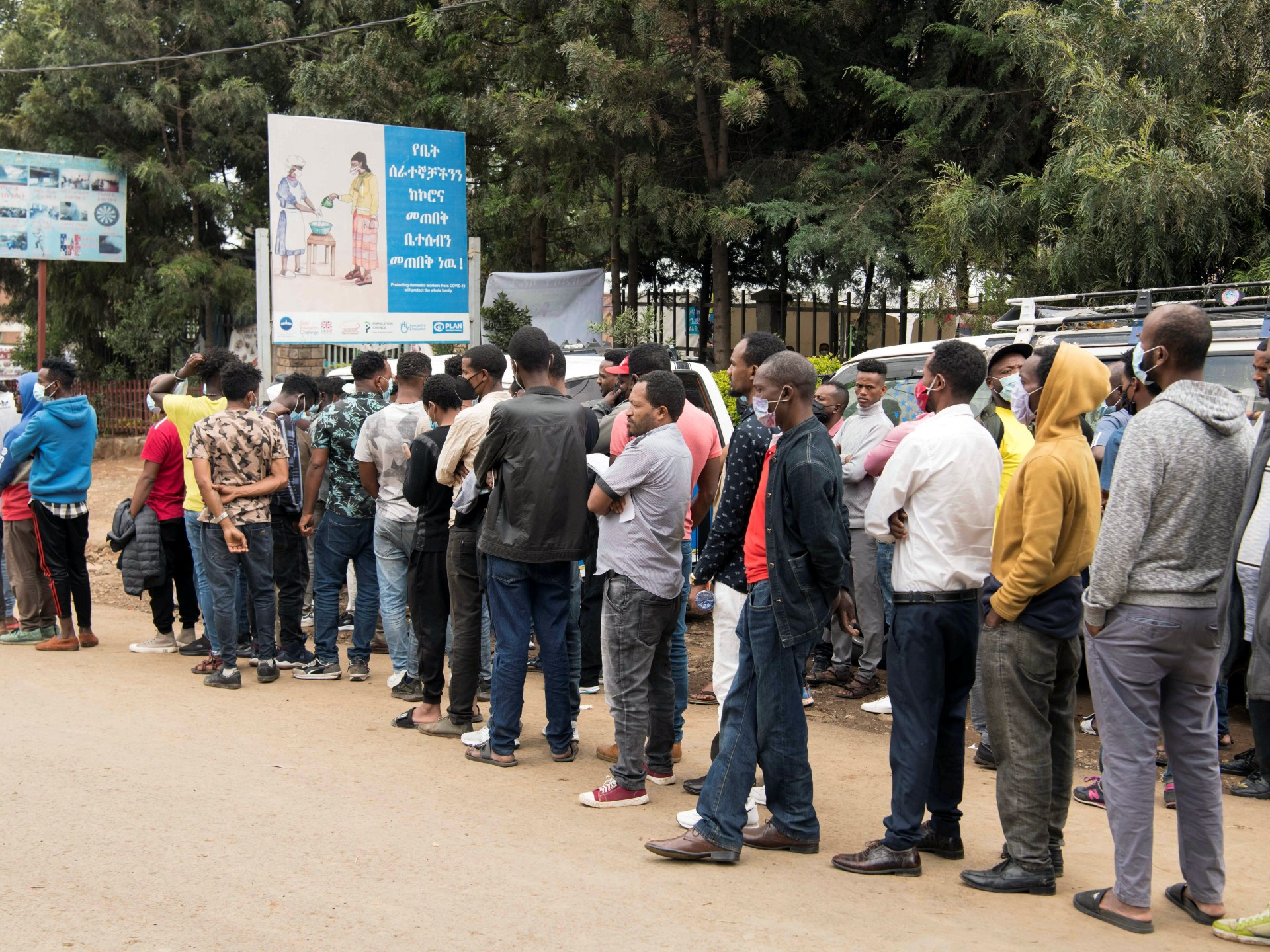
Ethiopia will hold its seventh national election on June 1. The National Election Board of Ethiopia (NEBE) gave a green light for the vote to proceed despite continuing internal conflicts and human rights abuses.

While it is important to keep the momentum of democratic transition going, the current situation in the country does not provide conducive conditions for free, fair, and credible elections.

When Prime Minister Abiy Ahmed came into power in 2018, there was significant optimism that the country would transition to constitutional democracy. While some were cautious, most Ethiopians were enthusiastic about the political change that came after a series of bloody political protests that crippled the then-authoritarian government of the Ethiopian People’s Revolutionary Democratic Front (EPRDF).

Indeed, after a few months of coming to power, Prime Minister Abiy delivered on many fronts. Political prisoners, journalists and activists who were imprisoned unjustly were released. Repressive laws, including the infamous “anti-terrorism” law, the media law, the electoral law and other legislation, were amended. Abiy also normalised relations with Eritrea, a development that ultimately earned him the Nobel Peace Prize and broad international acclaim.

But these reforms were soon overshadowed by internal conflict. In 2020, war erupted between the federal government and the Tigray People’s Liberation Front (TPLF), which resulted in the deaths of hundreds of thousands of people. Human Rights Watch, Amnesty International, and many rights groups concluded that government forces were implicated in massive and serious human rights violations.

Similarly, the International Commission of Human Rights Experts on Ethiopia established by the United Nations confirmed that war crimes and crimes against humanity, including mass murder, sexual violence and torture, were committed. Despite these findings, no concrete steps were taken to ensure accountability for the violations.

The Pretoria Peace Agreement, signed in November 2022, helped secure a cessation of hostilities and brought to an end the devastating conflict. However, fears of renewed violence are growing after the TPLF recently ousted the interim Tigray administration that had been appointed by the federal government.

Similarly, the conflict that began in the Amhara region in 2023 between federal forces and Fano militias has resulted in widespread and serious human rights violations, including war crimes and crimes against humanity, which continue unabated. For instance, in January 2024, government soldiers carried out a massacre in the town of Merawi in Gojam province; at least 89 civilians were taken from their homes, rounded up, and executed, as reported by Human Rights Watch.

Moreover, drone strikes in several incidents across Gojam, Wollo, and Shewa areas of the Amhara region have resulted in significant civilian casualties, further exacerbating the humanitarian crisis and deepening concerns about the conduct of hostilities.

Conflict has also persisted in Oromia region, where federal forces are clashing with the Oromo Liberation Army (OLA) amid continuing instability. In April 2024, Bate Urgessa, a leader in the Oromo Liberation Front (OLF) and an outspoken critic of the government, was killed in the town of Meki in the Oromia region. The precise circumstances surrounding his death, including the reasons he may have been targeted, remain unclear.

In recent years, the governing Prosperity Party has increasingly consolidated authoritarian rule by rolling back the legal and political reforms it introduced and resorting to extensive autocratic control.

The state of emergency imposed at the outbreak of the conflict in the Amhara region had a chilling effect, further eroding the exercise of fundamental human rights and democratic freedoms.

Political repression and the targeting of opposition members have continued unabated, with reports documenting the killings of political opponents.

The government has been accused of relying on covert security structures, such as the Koree Nageenyaa (“Security Committee”), which have reportedly committed serious human rights violations, including extrajudicial killings, torture, and arbitrary detention.

Rights groups also indicate increasing surveillance, intimidation and harassment of journalists, which has forced many of them into exile. A report by the Committee to Protect Journalists shows that since 2020, at least 54 journalists have been forced to leave their country because of the persecution they faced by government agents. A number of journalists, including Meskerem Abera, Dawit Begashaw, and Gobeze Sisay, were arrested under frivolous charges and remain in prison.

Prominent human rights defenders have also been forced into exile as a result of the government’s repressive measures. Yared Hailemariam, the head of Ethiopian Human Rights Defenders and one of the country’s most prominent human rights advocates, was compelled to seek refuge abroad. Similarly, Dan Yirga, the head of the Ethiopian Human Rights Council, was also forced to flee the country.

Ethiopia’s human rights crisis has inevitably had an impact on electoral politics. In a landmark 2024 decision on electoral democracy, the African Union’s rights body, the African Commission on Human and Peoples’ Rights, found multiple human rights violations in the context of the 2015 elections in Ethiopia. Although they took place before the Prosperity Party took power, the commission noted that the laws put in place in recent years to protect electoral rights should be more effectively implemented.

More recently, 41 countries issued a statement on March 2 about serious human rights concerns in Ethiopia and called for accountability, noting “the stalled transitional justice process” and “the need for its full and swift implementation”.

Without respect for fundamental freedoms, including freedom of expression, freedom of assembly, and the right to participate in the democratic process, merely casting ballots cannot ensure free, fair, and credible elections.

Ethiopia’s human rights, political, and security situation should be a matter of concern for the international community beyond the present election cycle. It is the second most populous country in Africa and has the ninth largest economy on the continent. Instability and violence in the country could have a negative impact across East Africa.

On the other hand, if the right political and economic policies are put in place, Ethiopia’s young and educated population could become a major driver of the country’s economic growth and regional prosperity.

The international community should exert maximum pressure to ensure that the government of Ethiopia undertakes meaningful reforms and adopts confidence-building measures, including advancing national reconciliation, engaging in political negotiations, releasing political prisoners, and respecting fundamental freedoms of expression, assembly, and political participation. All that should go hand in hand with the democratic electoral process.

The views expressed in this article are the author’s own and do not necessarily reflect Al Jazeera’s editorial stance.

📰 மூல செய்தி (Source): https://www.aljazeera.com/opinions/2026/5/31/as-ethiopia-votes-its-deepening-human-rights-crisis-must-be-addressed?traffic_source=rss

உலகம்

Donated milk reaches Cuba amid deepening shortages

Published

on

Cuba has begun distributing donated powdered milk from Mexico and Uruguay as the island faces severe shortages and a deepening economic crisis. Officials say young children, pregnant women and paediatric facilities will be prioritised.

📰 மூல செய்தி (Source): https://www.aljazeera.com/video/newsfeed/2026/6/1/donated-milk-reaches-cuba-amid-deepening-shortages?traffic_source=rss

Continue Reading

உலகம்

Colombia’s outsider candidate defied the polls

Published

on

Colombia’s presidential election is headed to a runoff on June 21. Far-right outsider, Abelardo de la Espriella, will face leftist senator, Ivan Cepeda. Professor Jorge Restrepo describes de la Espriella’s rise in the polls as a punishment vote against Colombia’s long-established political class.

📰 மூல செய்தி (Source): https://www.aljazeera.com/video/newsfeed/2026/6/1/aje-onl-nf_qt_guest-jorge-restrepo_colombia-elections-310526?traffic_source=rss

Continue Reading

உலகம்

‘Before, the land sustained us’: Who benefits from Guinea’s bauxite wealth?

Published

on

The country has vast reserves of the ore that is a source material for aluminium. But citizens still languish in poverty.

Bembou Silaty, Guinea – Mamadou Aliou walks through the small village of Bembou Silaty in northwestern Guinea carrying an irresolvable contradiction.

The 38-year-old works in the environmental health and safety department for a bauxite mining company, yet he is also an activist striving to improve life in his community, which often means criticising the actions of another mining company in the area.

“Before these companies arrived, we cultivated our land, and it sustained us,” Aliou told Al Jazeera.

“We could cover our daily needs, especially food. But now, when a piece of land is registered and belongs to a mining company, you have nothing there any more.”

The foreign-linked mining companies are part of the global scramble for Guinea’s bauxite. The West African nation holds the world’s biggest reserves of the ore, which is the source material for alumina and ultimately aluminium, a metal essential for car and aircraft frames, windows, wind turbines, and solar panels.

Over the past three decades, Guinea has multiplied its bauxite production tenfold. More than a dozen projects of bauxite production are currently ongoing in the country, according to the online cadastre.

As the global energy transition demands ever more aluminium, it has placed Guinea in a strategically crucial position. Approximately 75 percent of the bauxite exported by the country over the past decade has ended up in China, which produces 60 percent of the world’s aluminium.

Companies from Russia, the United States, and the United Arab Emirates have also established themselves in the country to secure the ore. In Bembou Silaty, an Indian company that began operations in 2019 now holds an exploitation concession until 2034.

Located in the prefecture of Telimele (Kindia region), Bembou Silaty has undergone a transformation since bauxite was discovered on its land about five years ago.

Yet, on the ground, many lament the cost: Contaminated water, loss of farmland, and a steep decline in agricultural productivity.

In the traditional bauxite heartlands of Kindia and Boke, the main roads are in notably good condition, a cut above the rest of the country. Steady jobs in technical roles or transport logistics have created economic opportunities for some Guineans.

Yet Bembou Silaty remains a quiet, peaceful village without electricity, and farming methods that are untouched by mechanisation.

Less than 2km (1.2 miles) away, however, the lush green landscape and mild climate of the rainy season give way to the electric-powered site of the Indian mining company.

There, excavators and trucks laden with bauxite constantly traverse the wide, unpaved roads, built to accommodate the heavy traffic, in a noisy, busy zone where the mining economy bulldozes its way forward.

People working in technical roles at the mine can earn up to about $300 a month.

For other locals who make a living from farming, most don’t have a regular wage and rely on the yield from their crops.

Across Guinea, an estimated half of the population depends on agriculture for their livelihood.

Locals in Bembou Silaty say every hectare claimed by mining is a hectare lost to farming, in a country that spent more than $500m importing rice in 2024.

“They give you compensation for your land, but it’s not enough, and in the end, it’s mismanaged,” Aliou said.

“Within a month or two, someone who received 50 or 100 million Guinean francs ($5,700-11,400) has nothing left. No land, no money. They have to start over, from below zero.”

Locals who still own land continue to grow rice, cassava, peanuts and cashews in the village, but they have ever less space and agricultural productivity is falling.

The village women have set up an association, “Allawalli” (which means “God help us” in Fula), to work cooperatively.

Walking through the alleys of Bembou Silaty, a few houses stand out.

They are made of cement, which withstands the rains better than the more common mud-brick homes, though many remain unfinished.

Locals say they were built with compensation money.

Fatoumata Binta Bah, a neighbour of Aliou’s, comes from a family of farmers. They once cultivated cashews, their livelihood.

Then the Indian mining company started up operations and offered them less than 50 million Guinean francs (about $5,700) for their land. That compensation, paid as a lump sum, seemed like a decent amount of money, she says.

But now, the money is gone, and their new house is still incomplete.

“The land they took from us was productive. That’s what we lived on,” said Bah, 20, as she prepared tea over a fire in the family courtyard.

“In the end, it wasn’t enough,” she lamented.

The Indian company did not respond to Al Jazeera’s questions on the purchase of land.

Meanwhile, on the outskirts of the village, surgical holes drilled into the ground mark where mining companies have tested for bauxite – a reminder to the farmers that the impact on the land is felt even before extraction begins.

In a recent report, Djami Diallo, the Guinean minister of the environment and sustainable development, stated that each year, certain companies had their impact studies and evaluation reports rejected for failing to comply with environmental standards.

Three or four companies in Boke, Kindia’s neighbouring region that is considered the bauxite capital in the country, were said to be affected. But the minister acknowledged that “just because companies do not meet the conditions to obtain the compliance certificate does not mean that everything stops.”

Not all homes in Bembou Silaty, a community of about 5,000, have indoor toilets and plumbing. In the centre of the village, there are communal latrines for those who do not have facilities available in their homes. Showers can be taken in the same place, using a bucket and water collected from the spring.

One small gain for the community since the mining company’s arrival is a new water point in the village. The tap serves nearly all the residents. Even Aliou uses it to fill buckets for his household – for cooking and drinking – though he says he knows the water contains iron, as contamination occurs.

Still, he considers himself luckier than his friends in the neighbouring village of Koussadji Dow, who rely on now-brown, contaminated river water.

Tala Oury Sow, a trader and farmer, washes her cooking utensils in the murky river water – a daily struggle.

She starts speaking softly, surrounded by neighbours, but her voice rises to a shout.

“We had hoped the mining company’s arrival would improve things, but it has gotten worse,” she protested.

“Since the mining companies came, we’ve had this problem with the water. The children get sick, and the parents too,” added Mariama Kindi Diallo, a farmer, in her courtyard.

“The doctors tell us not to drink the rain or river water. There are no roads, no school, no phone signal. What are we supposed to do? We are asking for help to have a dignified life,” she pleaded, as her family and neighbours nodded in agreement.

The Indian company did not respond to requests for comment on these issues.

To escape the increasingly difficult conditions in villages like Bembou Silaty, some people leave the rural areas and head to the capital, Conakry.

Bauxite mining so dominates Guinea that one can chance upon a driver of one of the trains hauling ore from the mines to the port of Kamsar.

Alpha, who did not want his real name published, works for a United States-backed company and provides a window into the immense volume of resources being exported.

“We operate six trains of 150 wagons each day,” he said, explaining that the annual target for 2025 was to export 17.5 million tonnes of bauxite.

“The government wants to change things, because the profits we make in Guinea right now are small. We need refineries here to increase the state’s revenue,” he

📰 மூல செய்தி (Source): https://www.aljazeera.com/features/2026/6/1/before-the-land-sustained-us-who-benefits-from-guineas-bauxite-wealth?traffic_source=rss

Continue Reading

Trending

Copyright © 2024 by 7Tamil Media, All rights reserved.