Connect with us

முக்கியச் செய்திகள்

Are US and Iran close to peace or sliding back to war?

Published

on

A ceasefire "hanging by a thread". A diplomatic process "making progress". A president "not satisfied". And explosions echoing around the Gulf.

What to make of the current, confusing state of relations between the US and Iran – are we close to peace or sliding back to war?

The latest word from the White House is that negotiators from both sides have agreed a framework for a 60-day extension of the ceasefire, to allow room for further talks – but that this still needs US President Donald Trump's approval. This has not been confirmed by Iran.

It comes towards the end of a week that has tested the ceasefire, which came into effect on 8 April and has now lasted considerably longer than the active phase of fighting which preceded it.

Iran responded to the latest US strikes – which included what US Central Command (Centcom) described as a "ground control site" in the southern Iranian port city of Bandar Abbas – with a warning that "aggression will not go unanswered".

Its Islamic Revolutionary Guard Corps (IRGC) then said it had attacked an American air base. It did not say which, but Centcom later said a ballistic missile had been intercepted over Kuwait, where the US has several bases.

Echoing Tehran's language, Centcom called the attack "an egregious ceasefire violation".

It all sounds ominous, but this is still a far cry from the furious exchanges that characterised the first five-and-a-half weeks of this conflict. In that time, the US and Israel launched thousands of sorties against targets all across Iran, and Tehran responded with volleys of drones and ballistic missiles against US bases, Gulf countries and Israel.

The US said on Thursday it had shot down five Iranian drones which "posed a threat around the Strait of Hormuz", suggesting shipping – commercial or military – was once again the focus of concern.

But neither side seems to regard the sort of tit for tat exchanges we have seen this week as marking a return to all-out war.

All the while, a tortured diplomatic process, involving multiple actors, is playing out in the background.

We get glimpses of that process from time to time, but they are partial and fleeting.

On Wednesday, Iranian state media reported elements of what they described as an unofficial draft of a 14-point memorandum of understanding.

The report included everything Tehran would like to see: the lifting of Washington's naval blockade of Iranian ports, the withdrawal of US forces from the "vicinity of Iran", and the restoration of non-military traffic through the Strait of Hormuz with Iran and Oman in control of the management and routing of vessels.

Notably absent from the report was any talk of Iranian concessions, especially on the all-important nuclear issue.

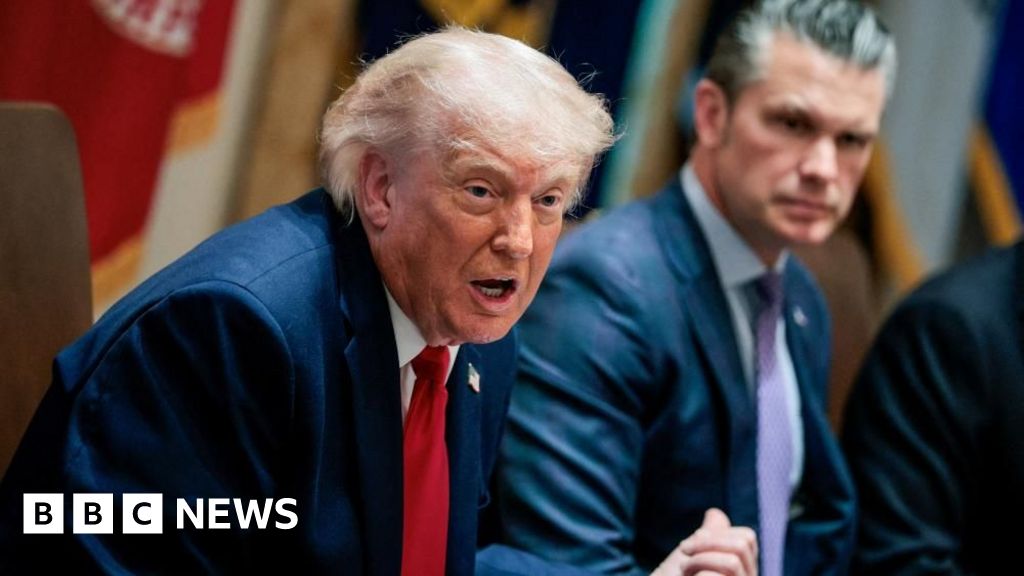
The White House issued a terse statement, calling the purported draft a "complete fabrication". Later, during the latest televised cabinet meeting at the White House, Trump said he was not yet satisfied with proposals for a deal.

Trump said Iran was "starting to give us the things that they have to give us". He did not elaborate and repeated his warning that Tehran's failure to comply would trigger a return to war.

"If they won't, then the man on my left is going to finish them off," he said, turning to US Defence Secretary Pete Hegseth.

There were characteristic signs of impatience too. Asked about reports that Iran and Oman might seek to control the movement of ships through the strait, Trump issued a stark warning to a traditional US ally.

"Oman will behave just like everybody else, or we'll have to blow them up," he said.

Meanwhile, the US Treasury on Wednesday sanctioned Iran's newly formed "Persian Gulf Strait Authority", set up by Tehran to oversee traffic through the Strait of Hormuz.

The Treasury's Office of Foreign Assets Control (OFAC) called the scheme "a new attempt by Iran's Islamic Revolutionary Guard Corps to monetise its campaign of state-sponsored terror".

As always, Trump was doing his best to sound as if the war were going to plan, brushing aside any suggestion that he needed to strike a deal quickly to avoid further spikes in the oil market – or political blowback at November's midterm elections.

But there is no denying that he is in a bind.

A satisfactory deal remains tantalisingly out of reach, and there are some in his own party – to say nothing of Israeli Prime Minister Benjamin Netanyahu – who would like him to go back to war to finish the job.

Similar pressures are at play in Tehran too, where some of the country's most hardline voices are insisting on maximalist goals, arguing that Iran has shown that it cannot be subjugated.

The diplomatic effort, spearheaded by Pakistan, is immensely complex.

The issues which divide the two sides are profound: Iran's nuclear programme, the future management of the Strait of Hormuz, the lifting of sanctions and unfreezing of assets.

The immediate objective – a memorandum which would end the war and set out a road map for the complex diplomatic negotiations that would follow – has proved elusive.

On Wednesday, US Secretary of State Marco Rubio said the coming hours or days would show whether progress was possible.

For all the domestic pressures at play on both sides and the febrile atmosphere in and around the Gulf, neither Iran nor the US seems interested in a return to war.

Despite appearances, the ceasefire – now more than seven weeks old – is still holding.

📰 மூல செய்தி (Source): https://www.bbc.com/news/articles/cze29764067o?at_medium=RSS&at_campaign=rss

முக்கியச் செய்திகள்

The Papers: 'Violence in Belfast' and Trump's 'war words'

Published

on

Many of the front pages carry a freeze-frame from the graphic video of Monday night's attack in Belfast.

The Guardian leads on the disorder in the city, saying the violence erupted after what it calls "agitators", including Tommy Robinson and Elon Musk, exhorted people to take to the streets.

The Daily Telegraph says a WhatsApp message that was "forwarded many times" predicted a "mad day in Belfast" and urged men aged 18 and over to "wear dark clothing" and "be prepared to fight or be arrested". The i Paper highlights pleas from the police for calm, and says there are fears of further disorder across the UK.

Many of the papers focus on the suspect, who police have said is a Sudanese refugee.

The Daily Mail says Britain has a "gaping back door", raising "grave questions". The Mail's leader column urges the government to face up to what the paper calls "the migrant threat".

The Times believes there will be "renewed scrutiny" of the Common Travel Area, which allows for the free movement of people between the UK and Ireland after police said they believed the suspect had travelled from Dublin to Belfast by bus, before claiming asylum.

The Daily Express praises those who sought to intervene in the stabbing, calling them "the very best of humanity". The Daily Mirror reports that a fundraising campaign has begun to buy a pint for the man who arrived at the scene with a hurling stick. Matt McKiernan is quoted in the Sun saying "instinct took over" and "most people" would have done the same.

And the Daily Telegraph interprets comments by Rachel Reeves at a conference yesterday as a signal that in order to pay for higher defence spending, taxes will need to rise. The chancellor is said to have told an investors' gathering that "despite the pain of higher taxes, better to do that than get into a situation where we were before, with interest rates climbing".

The Times reports that Prime Minister Sir Keir Starmer is preparing to announce the extra defence funding as soon as this week, with discussions going down to the wire.

Sign up for our morning newsletter and get BBC News in your inbox.

📰 மூல செய்தி (Source): https://www.bbc.com/news/articles/c982ddx2zkgo?at_medium=RSS&at_campaign=rss
Continue Reading

முக்கியச் செய்திகள்

Illegal mini-marts to shut for up to 12 months under law change prompted by BBC

Published

on

Illegal mini-marts, barbers and vape shops could be shut for up to a year under new powers announced by the government, following lengthy investigative reporting by BBC News into organised crime on British high streets.

We have exposed drug gangs, child sexual exploitation, money laundering and immigration crime linked to shops selling illegal cigarettes, vapes and drugs.

As the law stands in England and Wales, authorities can only close a shop for three months, with an option to extend closure to six months using anti-social behaviour legislation. The government's planned change will double the potential closure time.

Making the announcement, Home Secretary Shabana Mahmood praised the BBC's reporting, saying that people felt high streets were being taken over by "organised crime [and] immigration criminality". The government was "not prepared to tolerate it", she said.

This type of criminality "makes people lose faith, not just in their local area but in democracy, in what our country is, and we can't let that happen", she added.

The Home Office says the extended closures will give investigators more time to gather evidence, pursue prosecutions and identify business owners, while preventing rogue operators from simply reopening and resuming illegal activity.

The news has been welcomed by Trading Standards officers, who have repeatedly told us they lack the necessary powers to tackle the problem.

"Closure orders are a key enforcement tool… for tackling 'dodgy shops'" says John Herriman, chief executive of the Chartered Trading Standards Institute (CTSI).

There is "almost universal support" from his profession for the new measures, he adds.

Other Trading Standards officers told us it would become less financially viable for unscrupulous business owners to simply sit out closure orders, and it would force landlords to pay more attention to who they are renting to.

For nine months, we have repeatedly asked the home secretary for an interview to discuss what we had found.

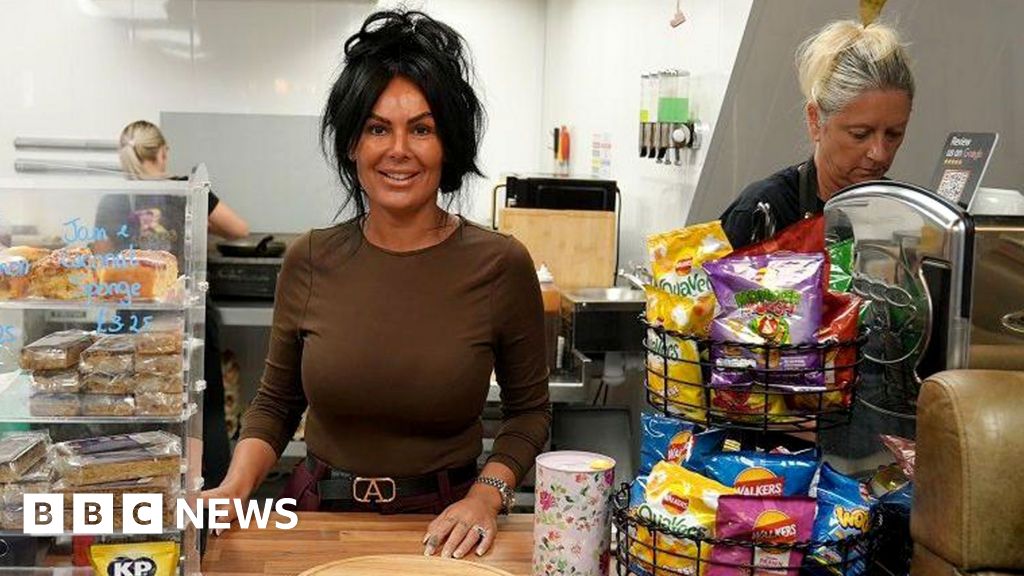
Last week, we were invited to join Mahmood on police raids of mini-marts on Soho Road in the Handsworth area of Birmingham – a high street bordering her own constituency.

At one shop, police and Trading Standards officers found illegal cigarettes and snuff (finely ground tobacco). A shopworker was arrested after a makeshift weapon – a plank with a nail – was found under the counter.

The shopworker, who said he was a student from Afghanistan, admitted that he thought selling illegal cigarettes was wrong.

When asked why he was selling them, he replied: "Perhaps you should ask the manager, he's the owner." However, the owner was not about, he said.

Soho Road has recently been the focus of Operation Fearless, a West Midlands Police initiative to tackle street-level crime.

"In all the areas I've worked in… it's by far the worst here," one of the officers involved, PC Victoria Gaunt, told us.

She said police had found shops selling prescription drugs, cocaine, heroin and cannabis. "You name it, you can probably buy it," she told us, and added that she would not feel safe in the area if she was not wearing her uniform and stab vest.

She also said she had seen "people walking around with machetes, chasing people" and witnessed "a huge increase in prostitution and exploitation of girls".

A BBC undercover reporter also visited about a dozen businesses on Soho Road and found counterfeit packs of cigarettes on sale for as little as £3. The average cost of a genuine pack is between £16.50 and £19.50.

Shopworkers also told the reporter there was open drug dealing on the street.

The home secretary told us she understood public feeling and said she and her family were also frustrated at seeing "people who are getting away with breaking our laws, getting away with open criminality".

Over the course of 14 months, BBC News has exposed the shocking reality of organised crime taking over high streets in England and Wales.

We joined the National Crime Agency (NCA) last year as it raided barbers, mini-marts and vape shops, after reports they were being used for money laundering and illegal working.

In the following months, we were shown shops with secret underground tunnels supplying sacks of illegal cigarettes, we exposed asylum seekers buying and selling shops for cash, and exposed a Kurdish organised-crime gang operating the length of Great Britain.

In March this year, we revealed how a senior council worker had repeatedly shared with local authorities reports of children as young as 11 being sexually abused in mini-marts.

Most recently, we went undercover to report how cocaine, cannabis, laughing gas and prescription pills were being offered on a West Midlands street described as "lawless" by an anonymous law enforcement source.

The home secretary said late last year that the BBC's evidence, gathered up until then, proved "the system was broken" and announced an "urgent" investigation led by the NCA, Immigration Enforcement, HMRC and police forces from across England and Wales.

Last month, the government announced a new £30m High Street organised crime unit which it said would deliver new police and Trading Standards officers, tax raids and a crackdown on illegal working.

Asked if the government's intervention was too little, too late, Mahmood told the BBC she believed the latest measures represented a "game-changing national crackdown".

The Home Office says the new extended closure orders should become law by the end of this year, after it lays secondary legislation. The new powers will then come into force in early 2027.

The government says it will be briefing authorities in Northern Ireland and Scotland of the changes to closure orders in England and Wales, as they have different enforcement legislation in place for shutting shops.

Additional reporting: Steve Fildes and Phill Edwards

📰 மூல செய்தி (Source): https://www.bbc.com/news/articles/cqj1rkqqrgro?at_medium=RSS&at_campaign=rss

Continue Reading

முக்கியச் செய்திகள்

Alleged Bondi Beach gunman charged with another 19 offences

Published

on

The man accused of killing fifteen people in an attack on a Jewish festival at Sydney's Bondi Beach in December has been charged with 19 additional offences.

Naveed Akram was already facing 59 charges after the shooting including 15 counts of murder, 40 counts of attempted murder, and one count of committing a terrorist act.

According to court records seen by the BBC, new charges were filed in April but have only now been confirmed by authorities.

The fresh charges are 10 counts of "shoot at with intent to murder", six counts of discharging a firearm with intent to resist arrest, and three counts of causing wounding or grievous bodily harm with intent to murder.

Akram, 24, has made a series of short court appearances but is yet to enter a plea to the charges. He is due back in court in August.

On Wednesday, prosecutors told the court that investigators from the Joint Counter Terrorism Team were "progressing" steadily through the evidence.

It includes 230,000 CCTV images as well as content on several devices belonging to people with alleged links to Akram which need to be translated, prosecutors said.

Outside court, Akram's lawyer Leonie Gittani told the media that the extra charges were not a surprise to her client.

"He was sort of aware of it on the last occasion, but [in] a matter of this magnitude, it's not unusual for additional charges to be laid," she said, according to the national broadcaster ABC.

"It's a process now that we've got to follow."

Asked about the CCTV images, Gittani said: "It's an unprecedented matter and so… there's a lot to come. We've got a job to do, and that's what we intend to do".

Akram's father Sajid Akram, 50 – who was also armed and shot at the crowd on Bondi Beach – was killed by police at the scene of the shooting on 14 December 2025.

The younger Akram was critically injured by police and later transferred from hospital to prison.

Court documents released in late December alleged that the two shooters "meticulously" planned the attack on Bondi Beach for months and visited the location for reconnaissance two days prior.

One video – taken on one of their mobile phones in October – was described as showing the men sitting in front of an image of an Islamic State group (IS) flag.

They could be heard making statements about their motivations for the attack and condemning "the acts of 'Zionists'", police said.

Police said separate footage from October showed the father and son "conducting firearms training in a countryside location", believed to be in New South Wales.

They were seen "firing shotguns and moving in a tactical manner", officials added.

In April, Akram lost a court bid to suppress the identity of his immediate family due to safety concerns.

The attack was Australia's worst mass shooting in almost three decades and prompted sweeping gun law reforms and a crackdown on hate speech.

It led to a royal commission into antisemitism in Australia. which began public hearings in February.

📰 மூல செய்தி (Source): https://www.bbc.com/news/articles/ckg0l7g7n9no?at_medium=RSS&at_campaign=rss
Continue Reading

Trending

Copyright © 2024 by 7Tamil Media, All rights reserved.