Connect with us

முக்கியச் செய்திகள்

Five questions awaiting Starmer as he faces Commons over Mandelson scandal

Published

on

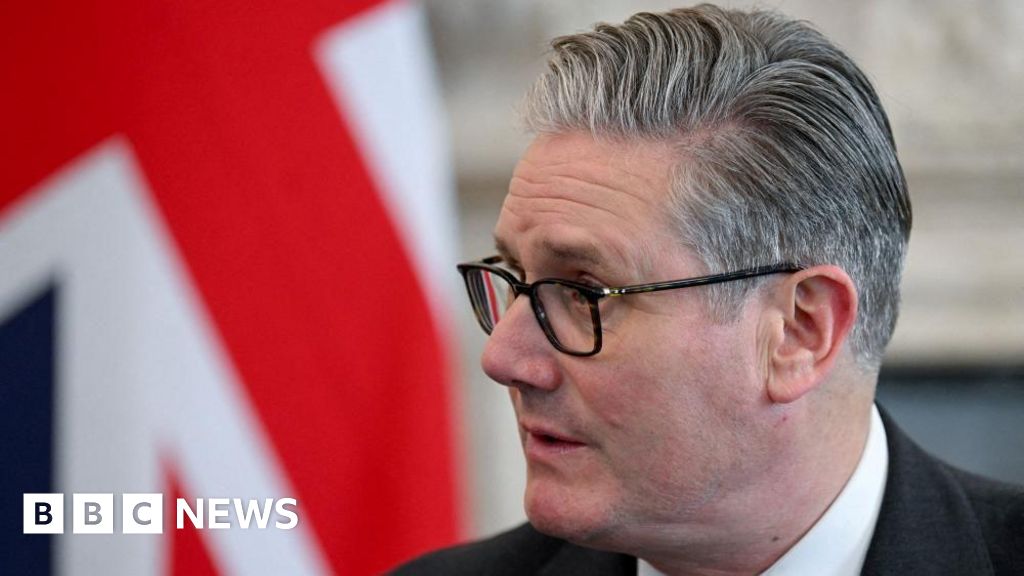
Prime Minister Sir Keir Starmer is set to face a packed Commons later where he will address questions over Lord Mandelson's vetting.

Sir Keir repeatedly told MPs that "full due process" was followed when Lord Mandelson was appointed as US ambassador in December 2024.

The prime minister said he was "staggered" to find out last week that civil servants in the Foreign Office withheld information from him about red flags in the initial vetting process.

Amid calls for him to resign from every opposition leader, Sir Keir pledged "true transparency" as he tried to set out what happened. Here are the main questions he needs to answer.

Sir Keir told reporters that the first he knew about the red flags was on Tuesday last week, despite them being initially raised to the Foreign Office by UK Security and Vetting (UKSV) officials in January last year.

He said the information was passed on to him by Dame Antonia Romeo, the head of the civil service, and Cat Little, the head of the Cabinet Office, who had received it two weeks prior.

The documents had been revealed after the Conservatives tabled a motion which demanded the publication of all paperwork relating to the vetting process.

The prime minister's head of press, Tim Allan, was contacted by the political editor of the Independent in September, with the paper publishing a story about Mandelson failing vetting later that month.

The prime minister has insisted that his former chief of staff, Morgan McSweeney, and staff in Number 10 also did not know about the UKSV warnings.

McSweeney quit his job over the Mandelson scandal in February.

However, opposition MPs say it is not credible that neither Sir Keir, nor anyone on his team, could have remained in the dark for more than a year.

Sir Keir moved to replace the previous US ambassador Karen Pierce, a civil servant, with Lord Mandelson when US President Donald Trump returned to the White House in January last year.

As a political appointee, critics say the risk of Lord Mandelson's appointment was higher than a career civil servant, so Sir Keir and Number 10 should have taken more care to ensure the vetting process was followed correctly.

Lord Mandelson's friendship with convicted paedophile Jeffrey Epstein was public knowledge well before his appointment, as were previous scandals around money and influence that led to him being forced out of Cabinet twice.

Yet it seems the first person to request the UKSV summary form was Dame Antonia, shortly after her appointment in February.

Sir Keir told MPs in September, a day before Lord Mandelson was sacked as US ambassador, that "full due process" had been followed during his appointment.

The Conservatives say Sir Keir misled the Commons and had therefore broken the ministerial code. The prime minister denies this, saying he had only been told about the vetting recommendation last Tuesday.

Under the code, the minister in question should correct the record in Parliament "at the earliest opportunity". Opposition party leaders say Sir Keir should have done this at PMQs last week, the day after he said he found out about the red flags.

Sir Keir told journalists that having found out the information on vetting last Tuesday, he asked his civil servants to provide full details so he could ensure accuracy when he returned to the Commons to answer questions from MPs on Monday.

There are sure to be questions about this six-day delay, although we know the prime minister was in Paris on Thursday for a pre-scheduled meeting of global leaders on the Iran war, and the next parliamentary sitting was Monday.

The remaining documents relating to Lord Mandelson's vetting and appointment are set to be released imminently.

They were initially withheld on the orders of the Metropolitan Police, which is investigating Lord Mandelson for potential criminal activity.

The documents also need to be inspected by the Intelligence and Security Committee of cross-party MPs, which is trying to balance allowing as much information as possible into the public domain without compromising national security.

Conservative leader Kemi Badenoch has demanded the papers be released by the end of the week.

In November, the then head of the civil service, Sir Chris Wormald, said Lord Mandelson was not formally interviewed for the role of US ambassador.

Sir Chris said Lord Mandelson was not directly asked in person about any conflict of interest, but instead needed to fill in a form aimed more at potential financial conflicts. This process has now been changed.

Details of the due diligence checks made before Lord Mandelson's appointment, which were carried out by the Cabinet Office on behalf of Number 10, are still to emerge. The publication of these checks were specifically demanded by the Liberal Democrats on Sunday.

However, Sir Chris told MPs in November that the document did contain an "initial assessment" of mitigations around potential professional or financial relationships and noted the inclusion of "a general reputational risk" linked to Epstein.

This scandal has dragged on for months and has so far cost Sir Keir his US ambassador, his chief of staff, and the head of the Foreign Office, Sir Olly Robbins, who was ousted on Thursday.

Sir Olly will appear before the Foreign Affairs Committee on Tuesday to give evidence on how Lord Mandelson's clearance was handled.

The committee chair, Dame Emily Thornberry, said she felt she had been "misled" by Sir Olly when he first appeared at the committee in November last year.

He will be expected to explain whether red flags about Lord Mandelson's appointment were ignored, and if so who by and why.

He is also expected to be asked whether Foreign Office staff were leaned on in any way by Number 10.

And then there is the question of whether Labour backbenchers, returning from a week on the campaign trail for local elections, will rally behind their leader.

The remaining documents linked to Lord Mandelson's vetting will be released at some point in the next few weeks, and the possibility of a criminal trial remains.

Sign up for our Politics Essential newsletter to read top political analysis, gain insight from across the UK and stay up to speed with the big moments. It'll be delivered straight to your inbox every weekday.

📰 மூல செய்தி (Source): https://www.bbc.com/news/articles/c5yw6egnjg2o?at_medium=RSS&at_campaign=rss

முக்கியச் செய்திகள்

New university free speech complaints system to come into force this year

Published

on

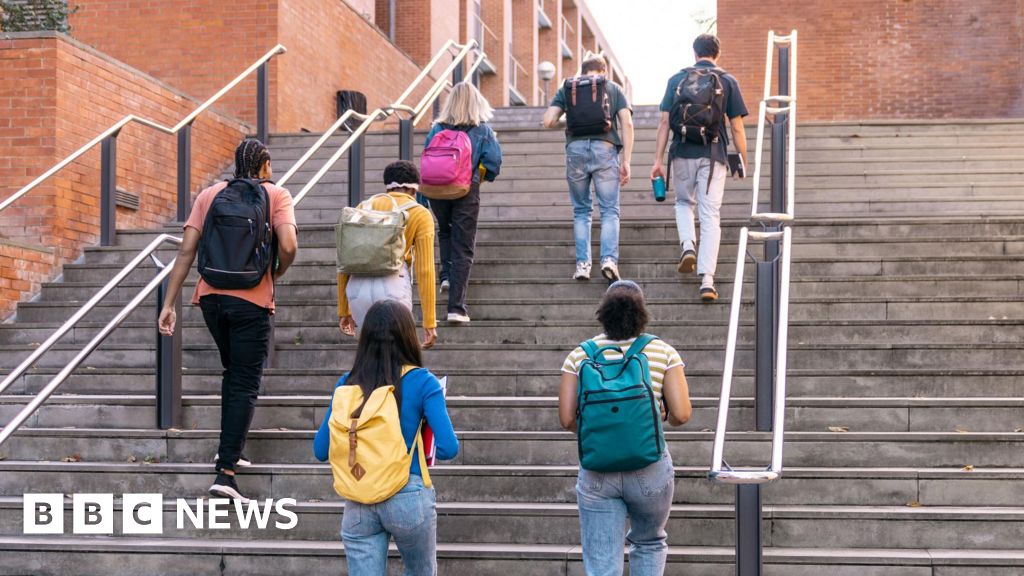
A new freedom of speech complaints system for England's universities will come into force for the next academic year, the government has said.

The new system will allow academics and other university staff to take their complaints directly to the Office for Students (OfS).

Then from April 2027, universities could face fines of £500,000 or 2% of their income if they are found to have failed to protect free speech.

Education Secretary Bridget Phillipson said "freedom of speech is the foundation of every university's success" but there had been too many cases contributing to "an unacceptable culture of fear and stifling the pursuit of knowledge".

The new system will not be open to students, who will be able to continue to raise concerns with their university and then to an independent adjudicator.

A stronger law on freedom of speech on England's campuses came into force in August 2025, but the complaints system element has been delayed.

The Labour government has removed an initial proposal which would have allowed individuals to take legal action against universities in the civil courts.

The lack of a complaints system has left academics having to pursue other routes, such as employment tribunals.

The government will set out further details on the new complaints system later on Monday.

Initially, the OfS will be able to review how an incident has been handled, tell universities to change their processes around freedom of speech and direct universities to pay compensation to individuals affected.

Significant fines, including from 2% of a university's income, could mean penalties run into millions for some.

While income varies, a medium-to-large-sized university's annual income can start at around £500 million and rise into the billions for the most high profile institutions.

This raises the possibility of fines significantly higher than the £585,000 issued to the University of Sussex in March 2025 – mainly over a transgender and non-binary inclusion policy which the regulator said had a "chilling effect" on freedom of speech.

Sussex strongly disputed the claim it had not upheld freedom of speech and launched a challenge of the fine in the High Court, in a case involving some quite obscure arguments about the regulator's powers. The judgement in that case is expected within the next few weeks.

The Free Speech Union (FSU) said nearly one in 10 of the 5,700-plus cases it had fought over the past six years involved universities "failing to protect free speech".

Under these new provisions, the OfS would in theory have the power to remove the right to provide university level education, although that is likely to remain a threat rather than a reality.

The body which lobbies for the sector, Universities UK (UUK), said it was important the new powers were used "fairly, transparently and proportionately".

Professor Malcolm Press, Vice Chancellor of Manchester Metropolitan University, urged a cautious approach. He said "protecting free speech while preventing harassment, hate speech, and radicalisation are complex tasks involving finely balanced decisions".

While universities have long had a duty to uphold freedom of speech, these stronger powers were initially proposed under the last Conservative government and are now gradually being introduced in an amended form.

Shadow education secretary Laura Trott said universities had "been left exposed to censorship with no clear route of redress".

"Research was silenced, controversial work was shelved and universities were able to dodge accountability," she said.

In 2024, Prof Jo Phoenix won an unfair dismissal case against the Open University over a failure to defend her gender-critical views.

Earlier this year, the leading music conservatoire Trinity Laban reached an out-of-court settlement with the jazz musician Martin Speake, after he criticised Black Lives Matter and critical race theory.

Another high profile academic Prof Alice Sullivan has begun legal action against the University of Bristol.

China's influence on freedom of speech, including academic research, has also been a concern, because of the financial importance of higher international tuition fees from Chinese students to universities.

A row over human rights research at Sheffield Hallam University brought the issues to public attention.

The new system will not consider these historic cases.

Reform's Suella Braverman said a "culture of censorship" had taken hold on university campuses, and while the measures were overdue the fines should be greater to act as a real deterrant.

The Lib Dems' universities spokesman, Ian Sollom, said a complaints scheme and bigger fines were only as good as the regulator behind them, and the OfS needed to issue clear guidance.

The Green Party was approached for comment.

📰 மூல செய்தி (Source): https://www.bbc.com/news/articles/cm29dngvjqeo?at_medium=RSS&at_campaign=rss

Continue Reading

முக்கியச் செய்திகள்

'They told me he was dead': Children born near army base learn truth about UK soldier dads

Published

on

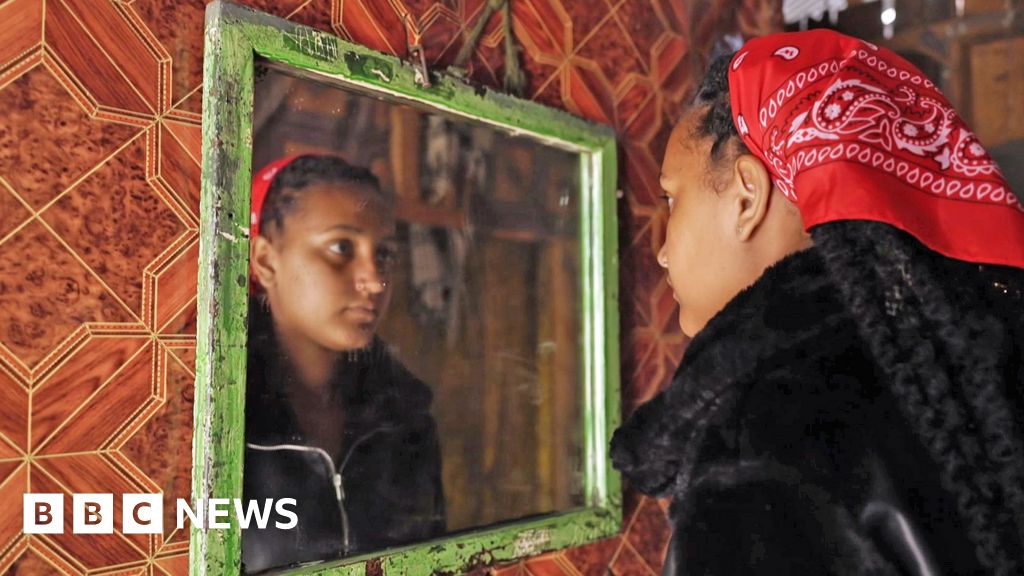
"Edward", a nine-year old Kenyan boy, has always been aware his father worked for the British military. The boy's skin colour, lighter than his peers, has provoked years of bullying. His father disappeared before Edward [not his real name] was born, leaving his mum living in extreme poverty, ostracised by some of her family.

Now this man, who worked as a contractor at a British army base in Kenya, along with 19 others who served as soldiers there, have been identified through a ground-breaking DNA and legal process as the fathers of children born near the base, and tracked down. Paternity has so far been legally confirmed in 12 of the cases by the UK's highest Family Court judge.

The process provides answers for children who did not know where, or even in some cases who their fathers were – or who had been led to believe they had died. All have been seeking answers about their heritage, and have faced financial hardship. Most of the 12 confirmed cases are now eligible to register for British citizenship. Those under 18 or in further education will be eligible for child support.

UK solicitor James Netto, and Kelvin Kubai, a lawyer finding clients on the ground in Kenya, say there are nearly 100 documented cases of children born near the British Army Training Unit in Kenya (Batuk) to British soldiers. Netto believes there could be many more.

Batuk, which was set up in 1964 and sees more than 5,000 British personnel pass through every year, has attracted significant controversy over the decades it has been located in Nanyuki, a market town 185km (115 miles) north of Nairobi.

A two-year Kenyan parliamentary inquiry published last December accused British soldiers of operating within "a culture of impunity" at the base, resulting in sexual abuse, two allegations of murder, rights violations, environmental destruction and the abandonment and neglect of local children.

The UK Ministry of Defence responded that it "deeply regrets those issues and challenges which have arisen in relation to the UK's defence presence in Kenya… We continue to take action wherever possible to address them".

James Netto was first alerted to the issue of children seeking their fathers in Nanyuki in 2024. He teamed up with leading genetics professor Denise Syndercombe Court and they arrived in Kenya "armed with a suitcase full of DNA kits".

They then cross-referenced the DNA samples they gathered with the genetic profiles available to view on commercial genealogy databases to find the absent British military fathers of clients aged from three years to 70.

"Nothing like this has ever been done before, where you're engaging DNA testing on such a scale" in the UK courts, Netto says. And he and his team have a huge pool of genetic information to compare their samples with. By last year, there were almost 30 million profiles available on Ancestry.com, the largest of the commercial DNA websites which Syndercombe Court joined and used as their main source.

Netto says they had no idea how many leads they would get and were astounded by the good results. "We had completely distant family members, we had relatively close family members, all the way up to the bullseye hit of fathers being named and identified."

The breakthrough is potentially life-changing for Edward and his mother Nasibo, as he will now be entitled to financial support from his father.

"I used to think they were gentlemen," Nasibo says of the British military. She believed Edward's father truly loved and cared for her. We have seen a letter the soldier's mother wrote to Nasibo, before she fell pregnant, thanking her for making her son so happy. And when Nasibo told him she was expecting, she says he seemed delighted. He urged her to name the child after his brother if he was a boy, she says, and returned from a trip back to the UK with an engagement ring.

But when Nasibo was four months pregnant, she says he told her he had to return to the UK for an emergency and cut all contact.

Nasibo was forced by some of her relatives to leave the family home, she says, and her son was bullied at school for his lighter skin.

"They nickname him 'the British coloniser'," she told us. The UK governed Kenya from 1895 to 1963.

Netto was able to locate Edward's father after the court directed the Ministry of Defence, Department for Work and Pensions and HM Revenue and Customs to share the man's name and address. The man has asked Netto not to share his contact details with Nasibo or their son, but the lawyer is now in the process of starting the court proceedings to force him to pay child maintenance.

Another Kenyan, 18-year-old Yvonne, knew even less about her father than Edward did. She had been told he served in the British military but she did not have a name for him, and grew up believing he was dead. Her mother died when she was a baby, and soldiers at Batuk allegedly told her grandparents that her father had died.

The legal project has revealed – through a match with the man's mother's cousin, whose DNA had been uploaded to Ancestry.com – that in fact her father is alive and living in the UK.

After breaching five court orders, he eventually attended on the day his case was being heard. He requested a DNA test to confirm that he was Yvonne's father, the result of which, a week later, showed this was the case.

He does not want contact with Yvonne at the moment. But his mother's cousin says she is eager to meet Yvonne.

Not all the identified fathers have been reluctant to engage.

Phill, a former British soldier who was stationed in Nanyuki in 2004, says he is enjoying getting to know his daughter Cathy, 20. He had previously proposed to Cathy's mother, Maggie, and spent extended time with his daughter over the first few months of their baby's life. But when he moved to another deployment, he says his phone was stolen and he lost their contact details.

Maggie felt it was easier to tell Cathy her father was dead. But as she got older, Cathy discovered he was alive and tried messaging him on Facebook, but he says he blocked her accounts, not recognising them.

At that point, he says, he had left the Army and for some of the time was homeless and struggling with his mental health. "Transitioning into civilian life wasn't easy," he says.

Cathy was also struggling at the time, culminating in an attempt to take her own life.

"Growing up, I felt like I really needed a father figure because there's some things that my mom couldn't understand because of race and all that. It made me feel really lonely.

"There's a part of you that you don't know about. Like it's completely a mystery to you."

With his paternity recently confirmed in the UK courts, Phill says he is glad to have been found, describing it as a "very happy surprise".

He says he is in touch with Cathy, and is already giving her and Maggie some financial support.

"I told Cathy… it doesn't matter what I do, I can never make up for the amount of time that I've lost with her. But all I can do is to do the best that I can."

Netto says that, to his knowledge, Phill is the only one of his clients' fathers so far to be sending their children money.

We asked local Kenyan lawyer Kelvin Kubai, who has set up a charity called Connecting Roots Kenya to help financially support British soldiers' children, if he believed there should be a blanket ban on such relationships, given the number of babies born out of wedlock. He firmly disagreed.

"This [would] be very racist in nature because you are asking predominantly white soldiers to avoid black women [just] because they may bring them trouble. The only… feasible solution… [is] just to ensure that these men are held accountable when they father children during their training duration in Kenya."

Netto and Kubai's work is continuing they say, with more cases due to be brought before the High Court in the next few months.

The Ministry of Defence told us: "Where a criminal accusation of unlawful activity against UK Service

📰 மூல செய்தி (Source): https://www.bbc.com/news/articles/c895k3537kgo?at_medium=RSS&at_campaign=rss

Continue Reading

முக்கியச் செய்திகள்

India has splurged billions on metro trains. But where are the commuters?

Published

on

On a weekday evening last month, Mumbai's southbound Aqua Line metro train nearly emptied out a couple of stops before the final one.

On de-boarding, the last station bore the look of a desolate Soviet-era structure rather than a bustling train terminal in a city where crowds typically jostle for space.

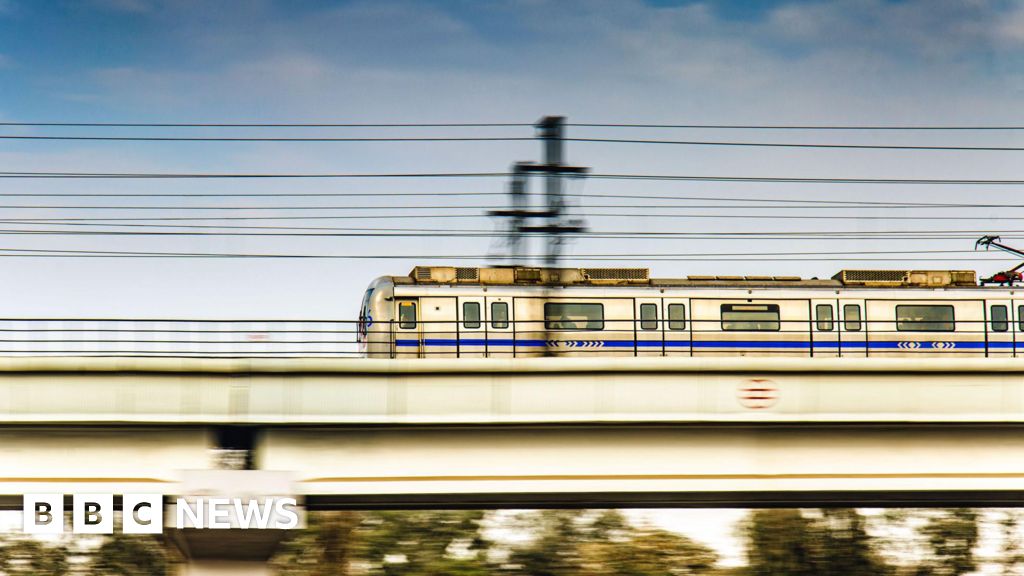
Aqua Line is the city's new fully underground metro train connecting the old business district of Cuffe Parade to newer commercial hubs like BKC and the airport terminals in the northern suburbs. It opened last year.

The 33.5km (20.8 miles) corridor was expected to ease congestion in India's financial capital and projected to carry nearly 1.5 million passengers every day. The actual numbers are about a tenth of that, as per various estimates.

"Not a lot of people are using the line. It's too expensive," a ticketing executive told the BBC at Cuffe Parade station.

The low ridership on this corridor is part of a broader trend confronting the breakneck expansion of India's metro network.

Since 2014, the Narendra Modi government has splashed out over $26bn on building metro connectivity across nearly two dozen Indian cities.

The network has grown fourfold from under 300km to more than 1,000km by 2025. Average daily ridership has also almost quadrupled from three million to over 11 million people in the last decade.

But these grand aggregate numbers mask worrying underlying data.

Most metro systems in India have failed to achieve even a sliver of the ridership projected during their planning stages, according to experts.

An Indian Institute of Technology Delhi report from 2023 showed ridership of merely 25-35% of the projected figures across corridors. And these numbers are unlikely to have significantly changed over 2024 and 2025, one of the study's authors told the BBC.

Other studies corroborate these findings.

According to the Observer Research Foundation (ORF) think tank, ridership in some tier-3 cities such as Kanpur was as low as 2% of the projected estimate, while in the southern Indian city of Chennai it was 37% for the first phase.

Data shared with the BBC by the Institute for Transportation and Development Policy (ITDP) also revealed actual ridership of between 20-50% in cities such as Pune and Nagpur in western India.

Capital Delhi, which has India's widest metro network, is perhaps the only exception where usage has slightly surpassed projections.

However two transport experts – Aditya Rane of ITDP and Ashish Verma of Sustainable Transportation Lab at the Indian Institute of Science in Bengaluru – told the BBC that this is because Delhi has begun to count interchanges as separate trips.

So why has metro travel struggled in a country where car ownership is still low and other public transport systems are overcrowded and overstretched?

It's a confluence of factors starting with consultants often inaccurately projecting potential demand, says Verma.

"It is a complex task [to project demand], and figures are sometimes exaggerated to show the project is economically viable," he said.

He added that forecasts were often made based on "offered capacity" on the trains – such as a certain number of coaches, or frequency times for trains. In many cases these have never been realised.

For instance, in Bengaluru, peak-hour train frequency on the busiest line is five minutes or more, while on a newer line, it goes up to 25 minutes.

Similarly, the number of coaches on many trains is only between three and six, whereas the busiest metro rail systems in the world typically operate with nine coaches and a frequency of a train every minute-and-a-half, according to the Sustainable Transportation Lab.

Affordability, or the lack of it, is another important factor.

A single journey on the Aqua line costs 10-70 rupees (£0.08- £0.56). A three-month unlimited travel pass on the local Mumbai suburban railway is significantly cheaper at 590 rupees.

"In Indian metro systems, the integrated journey cost can consume 20% of income for lower-income workers, above the global benchmark of 10-15%," says Rane.

Verma notes that there has been an increasing proclivity to reduce subsidies, which may not necessarily be a good idea in a price-sensitive country like India.

This was borne out by citizens' demonstrations after Bengaluru metro hiked fares last year and ridership dropped some 13% after the hike, as per data collated by Greenpeace.

"Even the London Tube till today is heavily subsidised. Because there is a purpose. You are trying to provide sustainable mobility and decongest the city," says Verma. [Despite the subsidies, London's Tube is still among the most expensive public transport systems in the world.]

Other issues that keep demand suppressed are poor network planning and last-mile connectivity.

"People will switch to public transport only when waiting times are as low as possible," Nandan Dawda, a Fellow at ORF's Urban Studies programme, told the BBC.

In India, a big problem is the lack of enough feeder buses to handle last-mile connectivity, he says.

Transit times between two lines are also often high, and unwieldy.

At Hauz Khas station in Delhi, for instance, it can take almost 15-20 minutes to transfer from one line to another.

"Institutional disaggregation" is an impediment to solving this, says Dawda. Various metro lines and bus networks even in a single city are run by different operators who often work in silos.

"There needs to be better operational integration between them," he adds.

Another issue in India is poor walkways and concerns about women's safety.

"Access and approach to and from metro stations to other destinations has to be convenient to support the use of public transport," said Verma.

"If I am a tourist even in a city like Delhi, I can't drag my bag to the metro easily and walk to my hotel 500m away."

For residents like Chetna Yadav, 40, who lives in north Delhi, safety is a prime concern.

"If I am coming home after sunset, I cannot rely on the metro. The station is about 15km from where I live and when I reach the final stop at night, it is next to impossible to get a cab home. I have been stuck in that situation a few times."

Still, despite all these problems, experts foresee metro use continuing to inch up incrementally.

Traffic, pollution, parking and road safety issues have reached a tipping point in many Indian cities. Calls to introduce congestion pricing for private vehicles have grown.

Without the promise of a cheaper, more seamless metro ride though, a swift and dramatic rise in adoption will be unlikely.

"The systems most likely to improve strongly are the ones that get bus integration, station access and fare integration right. Without that, India may continue to build metros that are operationally useful but still underperform against their original projections," says Rane.

Follow BBC News India on Instagram, YouTube, X and Facebook.

📰 மூல செய்தி (Source): https://www.bbc.com/news/articles/c4g833128vlo?at_medium=RSS&at_campaign=rss

Continue Reading

Trending

Copyright © 2024 by 7Tamil Media, All rights reserved.