Connect with us

உலகம்

How Chinese, Iranian companies profit in Russia-occupied Ukrainian regions

Published

on

More than a dozen Chinese companies operate in Donetsk and Luhansk, according to a Ukrainian monitor.

Kyiv, Ukraine – In November 2023, representatives of two Chinese companies signed a deal to supply stone-crushing machinery for construction projects.

Despite being inked in Moscow, the contract was not made with a sovereign nation. It was announced by Evgeny Solntsev, then the “prime minister” of the “People’s Republic of Donetsk”, a resource-rich, war-ravaged statelet carved out of southeastern Ukraine by Russia-backed separatists in 2014.

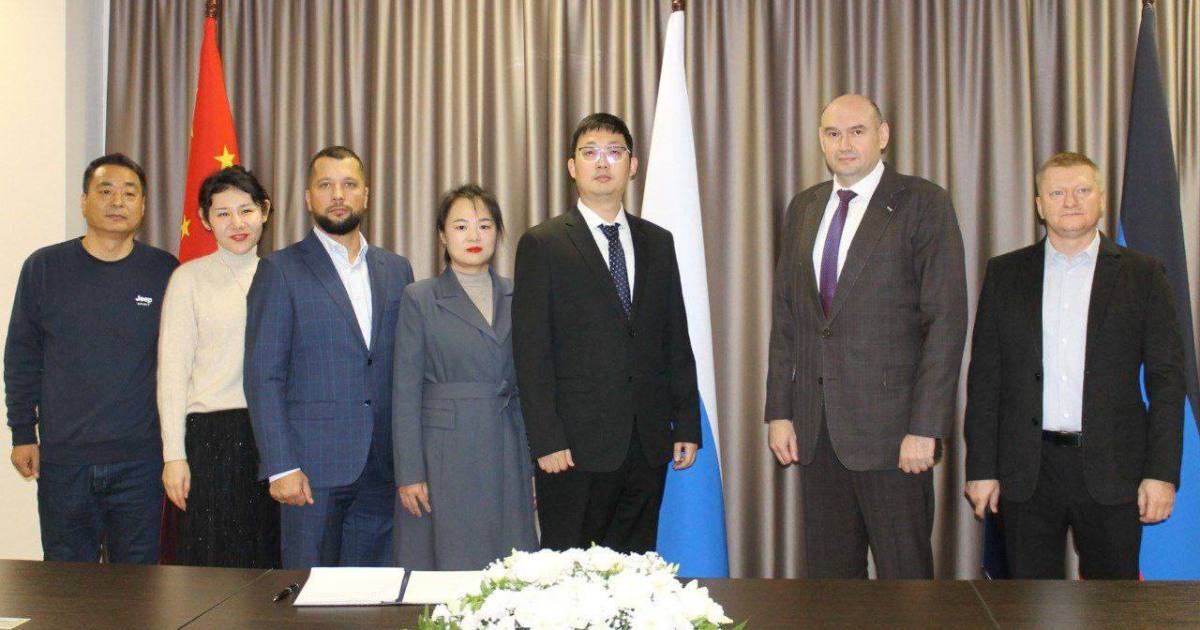
“I’m confident that the potential of our cooperation is huge, and we’re only beginning to implement it,” Solntsev wrote on his Telegram channel. The post included photos of four Chinese representatives standing next to separatist officials and the flags of China, Russia and the “People’s Republic of Donetsk”.

The companies – identified as Zhongxin Heavy Industrial Machinery and Amma Construction Machinery – supplied equipment to the Karansky quarry in the southern Donetsk region. The crushed stone has been used for construction projects in Russia-occupied areas in Ukraine.

One of the busiest construction sites is the Azov Sea port of Mariupol, where dozens of buildings are reported to have been erected on top of mass graves of thousands of civilians killed during the city’s siege in early 2022.

Zhongxin Heavy Industrial Machinery did not reply to Al Jazeera’s request for comment.

Amma Construction Machinery is harder to identify. Its website lists a phone number in the Russian city of Irkutsk in southern Siberia and a link to the website of Bark, a company that specialises in equipment exports.

It has not replied to Al Jazeera’s request for comment either.

Only North Korea and Syria under former President Bashar al-Assad recognised the People’s Republic of Donetsk and the neighbouring, smaller “People’s Republic of Luhansk” as independent nations.

Moscow annexed them and two other Ukrainian regions in 2022 – even though none of them is fully occupied by Russia’s military.

Donetsk and Luhansk retain fig leaves of independence, such as a cabinet and border checkpoints, but Moscow controls all walks of life there.

In both statelets, Russia-backed authorities have been accused of torture and extrajudicial killings of pro-Ukrainian activists or businessmen who reportedly refused to share their wealth with the separatists.

At least 17 Chinese companies operate in the occupied areas, and almost 6,000 Chinese-made relay stations for cellphone connections have been installed there, according to the Eastern Human Rights Group (EHRG), a Ukraine-based think tank that has for years studied developments in the occupied areas.

Chinese firms are involved in mining and construction, supply telecommunications equipment and provide financial services, it said.

They operate quietly, and often statements from separatist or Russia-appointed officials are the only source of information about their presence.

As Russia integrates its power in the occupied areas and transfers politicians to occupation administrations, Chinese companies carry out “another replacement, but in the economy”, the EHRG’s Maksym Butchenko told Al Jazeera.

Most of the enterprises in the occupied regions do not work. For example, out of 94 coal mines that operated in Donetsk and Luhansk, known collectively as the Donbas, before 2014, only five remain open.

The remaining ones “completely reoriented towards working with China and Russia”, Butchenko said.

Meanwhile, the occupied regions’ economy is “totally yuanised” as local businesses use Chinese electronic payment systems through Telegram channels that offer currency exchange and transfers, and yuan is sold in 79 banks in the occupied areas, the EHRG said.

“This is a threatening precedent from the viewpoint of international politics and law because this violates international agreements,” Butchenko said.

He called what China does there “shadow integration”.

Beijing, which calls the Russia-Ukraine war a “crisis”, has not recognised the occupied areas as part of Russia and repeatedly said it supports the idea of Ukraine’s “territorial integrity”.

Chinese factories are a source of the war’s key weapon – spare parts and accessories for millions of drones assembled by both sides.

Beijing’s official position on the war is neutrality.

Unofficially, Chinese companies have “almost captured the entire market in the occupied areas”, Butchenko said.

The Chinese companies operate as free agents, ready to risk being sanctioned, a Kyiv-based analyst said.

“China doesn’t prohibit [business in Russia-occupied areas], but it turns a blind eye to some things,” Volodymyr Fesenko, head of the Penta think tank, told Al Jazeera. “If a [Chinese] company has its interest, it’s ready to risk, including the risk of being sanctioned by Western nations and Ukraine.”

Kyiv sanctions such companies, urges the West to follow suit and bans them from doing business in Ukraine.

The list of sanctioned companies includes Alibaba, the owner of AliExpress; the mammoth China National Petroleum Corporation; and dozens of manufacturers of drone and missile components.

But sometimes, slapping sanctions on Chinese conglomerates is next to impossible because replacing their services and expertise is too costly.

Huawei, a telecommunications giant whose equipment is being installed in occupied areas, still operates in Ukraine.

“Their prices are way lower than those of their competitors,” a government-affiliated telecommunications expert told Al Jazeera on condition of anonymity because he is not authorised to discuss sensitive information.

“Once, their experts were rewriting the code for us all night, and the problem we were having was fixed in the morning,” he said.

Businesses in Russia-occupied areas often have no choice but to buy Chinese goods because other companies refuse to have their goods sold there.

“China is here for good,” a business owner in Donetsk told Al Jazeera on condition of anonymity because contacts with foreign media are forbidden. “All new equipment here is Chinese from machine tools to ventilators.”

Moreover, Moscow reportedly encourages the occupied regions to develop ties with Iran.

Tehran buys grain and coal and “integrates the economy of occupied Donbas into its own logistical chains created after decades of isolation”, the EHRG said in a report released in April.

Donskiye Ugli, a Russian coal mining company that operates “nationalised” mines in Donetsk and Luhansk, ships the fossil fuel to Iran, according to separatist official Andrey Chertkov.

The company reportedly has ties to fugitive Ukrainian oligarch Viktor Medvedchuk, whose daughter was baptised by Russian President Vladimir Putin.

It has not replied to Al Jazeera’s requests for comment.

Pavel Kovalev, the People’s Republic of Luhansk’s deputy prime minister, said in August that local food producers were ready to start supplying casein, a milk protein, to Iran.

The Iranian factor “shows that it was with Russia’s permission and insistence that Iranian companies appeared in the occupied territories”, Butchenko said.

“The Kremlin not only gives permission to Iranian companies to enter the occupied areas’ market but also encourages them,” he said.

📰 மூல செய்தி (Source): https://www.aljazeera.com/news/2026/5/21/how-chinese-iranian-companies-profit-in-russia-occupied-ukrainian-regions?traffic_source=rss

உலகம்

Ebola outbreak: When will a vaccine be developed for the new strain?

Published

on

The Bundibugyo strain of Ebola has a fatality rate of up to 50 percent and no approved vaccine as yet.

The World Health Organization (WHO) has declared that the latest outbreak of a rare strain of the Ebola virus in Democratic Republic of the Congo (DRC) and Uganda is a “public health emergency of international concern”.

No vaccine or treatment exists for the new Bundibugyo strain of Ebola, a disease whose strains have killed more than 15,000 people in Africa in the past half-century. The previous Ebola outbreak in West Africa, which lasted between 2013 and 2016, killed at least 11,000 people, according to the National Library of Medicine.

So, how quickly can a vaccine be developed to contain the latest strain?

The epicentre of the latest outbreak is in DRC’s northeastern province of Ituri, close to the borders with Uganda and South Sudan, whose status as a gold-mining hub leads to people regularly crossing it.

The virus has also spread into neighbouring provinces of DRC, as far as 200km (125 miles) away from what has been identified as the epidemic’s “ground zero” as well as beyond the DRC’s borders.

The toll from the latest strain of the Ebola outbreak has risen to an estimated 131 deaths from 513 suspected cases, Health Minister Samuel Roger Kamba told the media on Tuesday. Over the past 24 hours, 26 more cases have been suspected.

In Uganda, according to the WHO, at least one person has died and two more people have been infected with the latest strain of the virus. Uganda government spokesperson Alan Kasujja told Al Jazeera’s Catherine Soi that more than 120 people are being quarantined and added that he is confident Uganda can control the spread of the virus.

Fear has, however, gripped both countries.

In the DRC, from Bukavu to Kinshasa, concern is spreading among residents and street vendors as Ebola cases rise. In cities hundreds of miles apart, people are wearing face masks and calling for stronger protections from the latest outbreak.

“I am afraid of bringing the disease home to my family because I spend the whole day transporting people. I am afraid of dying, that is what scares me so much,” a motorbike driver in the country told Al Jazeera.

“Last time [between 2013 and 2016], it killed a lot of people and we heard that it has reappeared, which makes us very afraid. Especially those of us who sell things in the street. We are in contact with people we do not know and that really frightens us,” Marie Evuto, a street vendor, said.

The WHO chief, Tedros Adhanom Ghebreyesus, said on Tuesday that he is “deeply concerned about the scale and speed of the epidemic”.

“Early on Sunday, I declared a public health emergency of international concern over an epidemic of Ebola disease in the Democratic Republic of the Congo and Uganda,” Tedros told the World Health Assembly in Geneva.

The Bundibugyo strain of Ebola is a distinct species within the Ebola virus family. It differs from the Zaire Ebola virus strain, which caused the large 2014-2016 West Africa outbreak, Krutika Kuppalli, associate professor at the Infectious Diseases and School of Public Health at UT Southwestern Medical Center in Dallas, Texas, told Al Jazeera.

“While Bundibugyo has caused fewer outbreaks historically, it is still a very serious pathogen. Prior outbreaks have had case fatality rates ranging from approximately 30-50 percent, and the current outbreak is particularly concerning because there are currently no licensed vaccines or specific therapeutics for Bundibugyo virus disease,” she said.

Kuppalli added that ongoing conflicts in the region, which have been accompanied by vast population displacement, weak surveillance systems and delayed detection, will make the latest outbreak more challenging to contain.

“Early cases may have been missed in part because many front-line diagnostic platforms were optimised for Zaire Ebola virus and do not reliably detect Bundibugyo virus,” she said.

“We are now seeing this strain of the virus spread into urban and cross-border settings, which raises concern about amplification if containment measures are not rapidly strengthened,” she warned.

There is currently no approved vaccine for this strain of the Ebola virus.

A vaccine named Ervebo, ⁠manufactured by Merck, which was used against the Zaire strain of Ebola, has been shown to provide some protection against ⁠Bundibugyo in animal studies.

Kuppalli from the UT Southwestern Medical Center explained that vaccine development timelines are difficult to predict.

“The scientific community is not starting from zero as there is already extensive knowledge from prior Ebola vaccine work, including viral vector and mRNA platforms that could potentially be adapted for Bundibugyo virus,” she said.

“However, moving from candidate design to clinical trials, manufacturing, regulatory review, and deployment still takes time, particularly during an active outbreak in resource-limited settings,” she added.

She noted that organisations such as CEPI (the Coalition for Epidemic Preparedness Innovations) have already recognised the need for broader “multivalent” filovirus vaccines that could protect against multiple Ebola species, including viruses that have not yet emerged widely in humans.

“CEPI has recently funded research specifically focused on broadly protective filovirus vaccines and rapid-response vaccine platforms. Their work reflects a growing recognition that relying on species-specific vaccines leaves the world vulnerable when a different Ebola species emerges,” she said.

Until a vaccine to prevent the latest strain is developed, a WHO official said on Tuesday that medical supplies, including personal protective equipment (PPE) ⁠to prevent Ebola, were due to arrive in ⁠the DRC.

“We have sent 12 tonnes of supply. An additional six are arriving today. These include personal protective equipment for ⁠front-line health workers [and] samples,” Anne Ancia, WHO representative in the Democratic Republic of ⁠the Congo’s Ituri province, told media.

Jean-Jacques Muyembe, a virus expert at the DRC’s National Institute of Biomedical Research, told reporters the country was also expecting shipments of an experimental vaccine for different types of Ebola from the United States and the United Kingdom.

Many countries have raised concerns about the latest Ebola virus outbreak and some, including Bahrain, have suspended the entry of foreign travellers arriving from South Sudan, the DRC and Uganda, for 30 days due to the outbreak.

Rwanda has also closed its borders with the DRC.

The US has implemented a 30-day temporary entry restriction for non-US citizens and non-permanent residents who have travelled to the DRC, Uganda or South Sudan within the prior 21 days.

Meanwhile, governments across Asia have begun introducing border screening and bolstering quarantine preparedness.

There is not the same urgency about developing a vaccine for Ebola as there was during the COVID-19 pandemic, Kuppalli said.

“COVID-19 vaccine development moved at unprecedented speed because the outbreak affected wealthy countries and rapidly disrupted the global economy,” she explained.

“African outbreaks have historically not generated the same urgency, financing, manufacturing investment or political attention despite causing devastating local consequences,” she said.

Kuppalli noted that Ebola vaccine development following the 2014 outbreak accelerated only after thousands of people had already died in West Africa.

“I do think there has been progress since 2014. Global partnerships involving WHO, CEPI, GAVI [the vaccine alliance], African scientists, regulators and research institutions are much stronger than they once were,” she said.

“The challenge now is ensuring sustained investment before crises become global threats, rather than only responding once outbreaks reach high-income countries. This outbreak underscores why equitable investment in epidemic preparedness and vaccine research matters not just

📰 மூல செய்தி (Source): https://www.aljazeera.com/news/2026/5/21/ebola-outbreak-when-will-a-vaccine-be-developed-for-the-new-strain?traffic_source=rss

Continue Reading

உலகம்

Flooding in southern China washes away cars and destroys bridge

Published

on

Flooding in southern China washes away cars and destroys bridge

Heavy flooding has swept away cars, destroyed a bridge, and inundated streets in southern China. The torrential rain has killed at least 25 people, forcing evacuations across multiple regions.

📰 மூல செய்தி (Source): https://www.aljazeera.com/video/newsfeed/2026/5/21/flooding-in-southern-china-washes-away-cars-and-destroys-bridge?traffic_source=rss

Continue Reading

உலகம்

Kite carrying Palestinian children’s messages reaches Mount Everest summit

Published

on

Mountaineers carry a kite bearing messages and signatures from children in Gaza to the top of the world.

The hopes and dreams of Palestinian children from Gaza have reached the top of the world as a kite bearing their handwritten messages was carried to the summit of Mount Everest by a team of mountaineers.

The group summited the world’s highest peak at 10:48am local time (05:03 GMT) on Thursday, Jordanian Palestinian mountaineer Mostafa Salameh, who was spearheading the expedition but did not summit, confirmed in a social media post.

A team of Nepali Sherpas – led by Italian filmmaker and explorer Leonardo Avezzano – carried the kite to ensure that the dreams of children in the besieged Strip could make it “to the top of the world”, Salameh told Al Jazeera from the Everest base camp last week.

Salameh, who has previously summited Everest, stayed at the first base camp due to frostbite and a blood clot in his left hand.

The 56-year-old climber launched this expedition to raise $10m towards medical aid for children in the Strip and draw global attention towards the difficulties they have faced during the Israeli genocide in Gaza.

“After months of preparation, sacrifice, training, fear, hope, prayers, and carrying the weight of a message much bigger than themselves… the kite carrying the dreams of the children of Gaza is now flying above the highest point on Earth,” Salameh said in a video posted to Instagram.

“From the rubble and pain of Gaza … to the roof of the world. A dream refused to die,” he wrote in the caption.

Avezzano, who has documented the journey to the summit, and his team were hailed by Salameh.

“Tonight, at 8,848 metres (29,029 feet) in the death zone where every step feels like a battle between life and exhaustion, Leonardo carried that kite with courage, heart, and purpose.

“I am so proud of my brother Leonardo for believing in this mission and for carrying the voices, names, hopes, and dreams of children who deserve to be seen by the world,” Salameh added.

He emphasised that the summit was not only about climbing a mountain but about humanity, hope, and proving that “even from darkness, something beautiful can still rise into the sky.”

“Massive respect and gratitude to the incredible Sherpa team – the real heroes of the Himalayas. Without their strength, wisdom, and hearts, none of this would be possible. Thank you for protecting the team and helping carry this mission to the summit safely,” Salameh wrote.

Everest is one of the riskiest summits, as oxygen levels drop dangerously near the peak.

Salameh said the “mission [was] not accomplished yet” since summiting Everest was only the halfway point; returning to base camp safely was the next goal for Leonardo and his team, who would assess whether to sleep at camp four or continue down to camp two based on weather conditions.

“Tonight, the kite flies above Everest; tonight, the dreams of Gaza touched the sky,” Salameh said, ending the video with a chant of “Free, Free Palestine”.

Salameh is one of 20 people to have completed the Explorer’s Slam – the accomplishment of reaching the North and South poles and climbing the highest peaks on all seven continents. He has summited Everest four times, the first being in 2008, the year he was honoured with knighthood by King Abdullah II of Jordan.

“What I do best is climb mountains,” he told Al Jazeera in an interview last week from the base camp.

“I did promise lots of people in my life not to go back to Everest, but this is worth it. As a mountaineer, what I can do is bring the story and suffering of every Palestinian child all the way to the top of the world.”

Salameh acknowledged the immense risks – including death – that come with scaling Mount Everest at 8,000 metres with only 15 percent oxygen, but insisted it was “absolutely nothing” compared with what the Palestinians in Gaza have endured.

“This time is very personal for me,” Salameh said in another video.

“This one hits home for the child in me, because I know what it feels like to be a child at a refugee camp, and I feel for the children of Gaza and what they go through.

“What makes it more personal is that I visited these kids; I couldn’t visit Gaza but I was on the other side in Egypt and I saw them and sat down with them and it broke my heart.”

He said the people of Palestine give him inspiration to continue his work even in the toughest of circumstances.

“It doesn’t matter what happens; these people’s houses are being demolished and they put up a tent right there to stay on their land.

”I’ve learned massive lessons from them. I’ve learned dignity, I’ve learned freedom. I’ve learned to become a man, to be true to myself rather than be strong.”

📰 மூல செய்தி (Source): https://www.aljazeera.com/sports/2026/5/21/kite-carrying-palestinian-childrens-messages-reaches-mount-everest-summit?traffic_source=rss

Continue Reading

Trending

Copyright © 2024 by 7Tamil Media, All rights reserved.