Connect with us

உலகம்

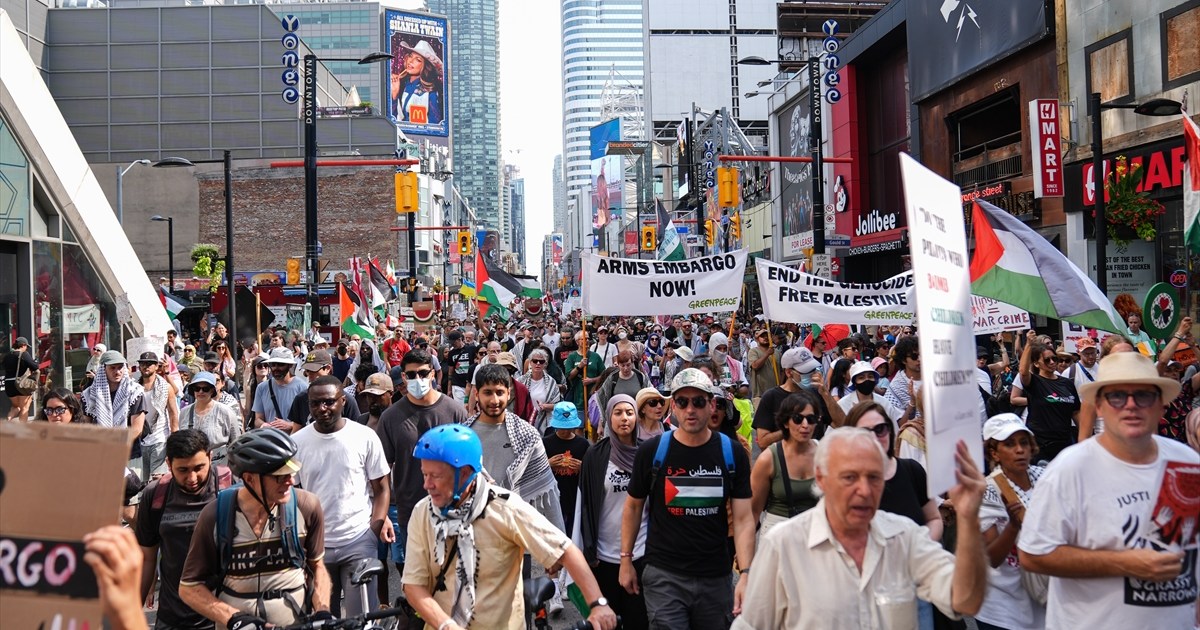
Canada is using its borders to police Palestine solidarity

Published

on

Critics of Israel’s war on Gaza are increasingly facing interrogations, visa revocations and denials of entry.

This past weekend, international scholars and speakers invited to the Muslim Association of Canada’s (MAC) annual convention in Toronto reportedly faced extraordinary immigration scrutiny. MAC said many had their electronic travel authorisations delayed for months or cancelled shortly before departure, while others had visas revoked without notice. Several were reportedly interrogated for hours at Toronto Pearson Airport, denied water and refused a space to pray. MAC described the treatment as “deliberate and coordinated”.

Among those affected was former South African ambassador to the United States Ebrahim Rasool, a veteran of the anti-apartheid struggle who was himself expelled by the Trump administration earlier this year after publicly criticising the MAGA movement. Rasool later told me the Canadian questioning reminded him of apartheid-era interrogations, albeit in a far softer and less openly coercive form. British Muslim commentator Anas Altikriti reportedly spent 11 hours under questioning before ultimately abandoning efforts to enter Canada.

In each case, those targeted had been publicly critical of Israeli policy or involved in Palestine-related advocacy.

These incidents do not stand alone. Earlier this year, French Palestinian member of the European Parliament Rima Hassan was denied entry into Canada ahead of speaking engagements in Montreal because of her outspoken criticism of Israel’s war on Gaza. In November, former United Nations Special Rapporteur Richard Falk and his wife, Hilal Elver, were detained and interrogated for hours at Toronto Pearson Airport before attending the Palestine Tribunal on Canadian Responsibility in Ottawa. Falk later said Canadian officials questioned him extensively about his work on Gaza, his criticism of Israeli policy and his participation in the tribunal. Officials reportedly suggested the couple posed a threat to Canadian national security. Falk later warned that the episode reflected “a climate of governmental insecurity” and an effort “to clamp down on dissident voices”.

At some point, such cases stop looking isolated.

They begin to reveal a political pattern.

When states become insecure about the moral and political consequences of their own alliances, they rarely begin by banning ideas outright. They begin more subtly. They delay visas. They intensify interrogations. They deny entry. They invoke “security concerns” without explanation. They create a climate in which dissent itself becomes suspicious.

That is increasingly what is happening in Canada to critics of Israel and advocates for Palestinian rights.

Canada likes to present itself internationally as a defender of multiculturalism, human rights and liberal democracy. But increasingly, Muslim scholars, Palestine advocates and critics of Israeli policy are encountering a different Canada at its borders: one where political viewpoints appear to trigger heightened scrutiny, where pro-Israel lobbying campaigns seem to shape policy and where criticism of Israel is increasingly treated as adjacent to extremism.

For years, a network of pro-Israel advocacy organisations and lobbying groups has worked aggressively to marginalise Palestine solidarity activism in Canada. Organisations such as HonestReporting Canada, B’nai Brith Canada, the Centre for Israel and Jewish Affairs, the Canadian Antisemitism Education Foundation and various aligned activists and media personalities routinely pressure universities, media outlets, public institutions and governments to cancel speakers, investigate activists and stigmatise criticism of Israel.

In the days leading up to the MAC convention, several of these groups and commentators publicly campaigned against invited speakers, urging venues and authorities to intervene. Similar campaigns preceded the denial of entry to Rima Hassan and the targeting of other Palestine solidarity events across the country.

To be clear, these groups absolutely have the right to advocate for positions they believe in. That is part of democratic life. Governments also have an obligation to prevent genuine hate speech, incitement to violence and legitimate security threats.

But that is precisely why what is happening now is so dangerous.

Because increasingly, the line between legitimate security concerns and ideological policing appears to be collapsing.

The issue is no longer merely whether certain individuals are controversial. The issue is whether state institutions are beginning to absorb and operationalise a political framework in which strong criticism of Israel, solidarity with Palestinians or independent Muslim scholarship become grounds for extraordinary scrutiny.

Across the Western world, governments that present themselves as defenders of liberal democracy are increasingly adopting measures that would once have been condemned as overt political repression. In Germany, Palestine solidarity demonstrations have been banned or heavily restricted. In France, activists and organisations have faced raids and dissolution threats. In the US, universities, lawmakers and lobbying organisations have aggressively targeted students and academics critical of Israel. The weaponisation of immigration law, surveillance powers and institutional pressure against dissenting voices is becoming normalised across much of the West.

Canada is now moving dangerously in the same direction.

The irony is that the state’s response to the MAC convention revealed far more about governmental anxiety than about the convention itself.

I attended. What I encountered was not extremism or radicalisation. It was thousands of ordinary Canadian Muslims, many with young families, attending lectures on spirituality, parenting, mental health, civic engagement, charity and social responsibility. There were political discussions too, naturally. Gaza has become one of the defining moral issues of this generation. But the atmosphere was overwhelmingly reflective, thoughtful and community-oriented.

The online hysteria surrounding the event bore little resemblance to reality.

Ironically, the campaign against the convention appears to have backfired. The gathering was well attended. Several speakers addressed audiences virtually instead. If the objective was to suppress ideas, it only amplified them.

But the deeper damage is not measured by attendance numbers.

It is measured in the growing alienation many Muslims now feel towards institutions that claim to protect equal citizenship while increasingly treating Muslim political expression through a national security lens.

For many Muslims of my generation, this moment feels painfully familiar. In the years after 9/11, Muslim communities across North America experienced surveillance, infiltration, no-fly lists, security certificates, charity investigations and the normalisation of collective suspicion. Entire communities were taught that they belonged conditionally, provided they remained politically quiet and ideologically acceptable.

Canadian Muslims spent decades trying to rebuild trust after those years. Many now fear those same instincts are quietly returning, only this time under the language of combating extremism, protecting social cohesion or fighting anti-Semitism.

Anti-Semitism is real. It is dangerous and must be confronted seriously wherever it appears. But increasingly, accusations of anti-Semitism are also being weaponised to suppress legitimate criticism of Israeli state violence, occupation and apartheid policies. The result is not greater safety for Jews or Palestinians. The result is a shrinking democratic space where criticism of a foreign state increasingly carries professional, institutional and even immigration consequences.

This should alarm everyone, not only Muslims or Palestine advocates.

History repeatedly teaches that extraordinary powers introduced against marginalis

📰 மூல செய்தி (Source): https://www.aljazeera.com/opinions/2026/5/21/canada-is-using-its-borders-to-police-palestine-solidarity?traffic_source=rss

உலகம்

Ebola outbreak: When will a vaccine be developed for the new strain?

Published

on

The Bundibugyo strain of Ebola has a fatality rate of up to 50 percent and no approved vaccine as yet.

The World Health Organization (WHO) has declared that the latest outbreak of a rare strain of the Ebola virus in Democratic Republic of the Congo (DRC) and Uganda is a “public health emergency of international concern”.

No vaccine or treatment exists for the new Bundibugyo strain of Ebola, a disease whose strains have killed more than 15,000 people in Africa in the past half-century. The previous Ebola outbreak in West Africa, which lasted between 2013 and 2016, killed at least 11,000 people, according to the National Library of Medicine.

So, how quickly can a vaccine be developed to contain the latest strain?

The epicentre of the latest outbreak is in DRC’s northeastern province of Ituri, close to the borders with Uganda and South Sudan, whose status as a gold-mining hub leads to people regularly crossing it.

The virus has also spread into neighbouring provinces of DRC, as far as 200km (125 miles) away from what has been identified as the epidemic’s “ground zero” as well as beyond the DRC’s borders.

The toll from the latest strain of the Ebola outbreak has risen to an estimated 131 deaths from 513 suspected cases, Health Minister Samuel Roger Kamba told the media on Tuesday. Over the past 24 hours, 26 more cases have been suspected.

In Uganda, according to the WHO, at least one person has died and two more people have been infected with the latest strain of the virus. Uganda government spokesperson Alan Kasujja told Al Jazeera’s Catherine Soi that more than 120 people are being quarantined and added that he is confident Uganda can control the spread of the virus.

Fear has, however, gripped both countries.

In the DRC, from Bukavu to Kinshasa, concern is spreading among residents and street vendors as Ebola cases rise. In cities hundreds of miles apart, people are wearing face masks and calling for stronger protections from the latest outbreak.

“I am afraid of bringing the disease home to my family because I spend the whole day transporting people. I am afraid of dying, that is what scares me so much,” a motorbike driver in the country told Al Jazeera.

“Last time [between 2013 and 2016], it killed a lot of people and we heard that it has reappeared, which makes us very afraid. Especially those of us who sell things in the street. We are in contact with people we do not know and that really frightens us,” Marie Evuto, a street vendor, said.

The WHO chief, Tedros Adhanom Ghebreyesus, said on Tuesday that he is “deeply concerned about the scale and speed of the epidemic”.

“Early on Sunday, I declared a public health emergency of international concern over an epidemic of Ebola disease in the Democratic Republic of the Congo and Uganda,” Tedros told the World Health Assembly in Geneva.

The Bundibugyo strain of Ebola is a distinct species within the Ebola virus family. It differs from the Zaire Ebola virus strain, which caused the large 2014-2016 West Africa outbreak, Krutika Kuppalli, associate professor at the Infectious Diseases and School of Public Health at UT Southwestern Medical Center in Dallas, Texas, told Al Jazeera.

“While Bundibugyo has caused fewer outbreaks historically, it is still a very serious pathogen. Prior outbreaks have had case fatality rates ranging from approximately 30-50 percent, and the current outbreak is particularly concerning because there are currently no licensed vaccines or specific therapeutics for Bundibugyo virus disease,” she said.

Kuppalli added that ongoing conflicts in the region, which have been accompanied by vast population displacement, weak surveillance systems and delayed detection, will make the latest outbreak more challenging to contain.

“Early cases may have been missed in part because many front-line diagnostic platforms were optimised for Zaire Ebola virus and do not reliably detect Bundibugyo virus,” she said.

“We are now seeing this strain of the virus spread into urban and cross-border settings, which raises concern about amplification if containment measures are not rapidly strengthened,” she warned.

There is currently no approved vaccine for this strain of the Ebola virus.

A vaccine named Ervebo, ⁠manufactured by Merck, which was used against the Zaire strain of Ebola, has been shown to provide some protection against ⁠Bundibugyo in animal studies.

Kuppalli from the UT Southwestern Medical Center explained that vaccine development timelines are difficult to predict.

“The scientific community is not starting from zero as there is already extensive knowledge from prior Ebola vaccine work, including viral vector and mRNA platforms that could potentially be adapted for Bundibugyo virus,” she said.

“However, moving from candidate design to clinical trials, manufacturing, regulatory review, and deployment still takes time, particularly during an active outbreak in resource-limited settings,” she added.

She noted that organisations such as CEPI (the Coalition for Epidemic Preparedness Innovations) have already recognised the need for broader “multivalent” filovirus vaccines that could protect against multiple Ebola species, including viruses that have not yet emerged widely in humans.

“CEPI has recently funded research specifically focused on broadly protective filovirus vaccines and rapid-response vaccine platforms. Their work reflects a growing recognition that relying on species-specific vaccines leaves the world vulnerable when a different Ebola species emerges,” she said.

Until a vaccine to prevent the latest strain is developed, a WHO official said on Tuesday that medical supplies, including personal protective equipment (PPE) ⁠to prevent Ebola, were due to arrive in ⁠the DRC.

“We have sent 12 tonnes of supply. An additional six are arriving today. These include personal protective equipment for ⁠front-line health workers [and] samples,” Anne Ancia, WHO representative in the Democratic Republic of ⁠the Congo’s Ituri province, told media.

Jean-Jacques Muyembe, a virus expert at the DRC’s National Institute of Biomedical Research, told reporters the country was also expecting shipments of an experimental vaccine for different types of Ebola from the United States and the United Kingdom.

Many countries have raised concerns about the latest Ebola virus outbreak and some, including Bahrain, have suspended the entry of foreign travellers arriving from South Sudan, the DRC and Uganda, for 30 days due to the outbreak.

Rwanda has also closed its borders with the DRC.

The US has implemented a 30-day temporary entry restriction for non-US citizens and non-permanent residents who have travelled to the DRC, Uganda or South Sudan within the prior 21 days.

Meanwhile, governments across Asia have begun introducing border screening and bolstering quarantine preparedness.

There is not the same urgency about developing a vaccine for Ebola as there was during the COVID-19 pandemic, Kuppalli said.

“COVID-19 vaccine development moved at unprecedented speed because the outbreak affected wealthy countries and rapidly disrupted the global economy,” she explained.

“African outbreaks have historically not generated the same urgency, financing, manufacturing investment or political attention despite causing devastating local consequences,” she said.

Kuppalli noted that Ebola vaccine development following the 2014 outbreak accelerated only after thousands of people had already died in West Africa.

“I do think there has been progress since 2014. Global partnerships involving WHO, CEPI, GAVI [the vaccine alliance], African scientists, regulators and research institutions are much stronger than they once were,” she said.

“The challenge now is ensuring sustained investment before crises become global threats, rather than only responding once outbreaks reach high-income countries. This outbreak underscores why equitable investment in epidemic preparedness and vaccine research matters not just

📰 மூல செய்தி (Source): https://www.aljazeera.com/news/2026/5/21/ebola-outbreak-when-will-a-vaccine-be-developed-for-the-new-strain?traffic_source=rss

Continue Reading

உலகம்

Flooding in southern China washes away cars and destroys bridge

Published

on

Flooding in southern China washes away cars and destroys bridge

Heavy flooding has swept away cars, destroyed a bridge, and inundated streets in southern China. The torrential rain has killed at least 25 people, forcing evacuations across multiple regions.

📰 மூல செய்தி (Source): https://www.aljazeera.com/video/newsfeed/2026/5/21/flooding-in-southern-china-washes-away-cars-and-destroys-bridge?traffic_source=rss

Continue Reading

உலகம்

Kite carrying Palestinian children’s messages reaches Mount Everest summit

Published

on

Mountaineers carry a kite bearing messages and signatures from children in Gaza to the top of the world.

The hopes and dreams of Palestinian children from Gaza have reached the top of the world as a kite bearing their handwritten messages was carried to the summit of Mount Everest by a team of mountaineers.

The group summited the world’s highest peak at 10:48am local time (05:03 GMT) on Thursday, Jordanian Palestinian mountaineer Mostafa Salameh, who was spearheading the expedition but did not summit, confirmed in a social media post.

A team of Nepali Sherpas – led by Italian filmmaker and explorer Leonardo Avezzano – carried the kite to ensure that the dreams of children in the besieged Strip could make it “to the top of the world”, Salameh told Al Jazeera from the Everest base camp last week.

Salameh, who has previously summited Everest, stayed at the first base camp due to frostbite and a blood clot in his left hand.

The 56-year-old climber launched this expedition to raise $10m towards medical aid for children in the Strip and draw global attention towards the difficulties they have faced during the Israeli genocide in Gaza.

“After months of preparation, sacrifice, training, fear, hope, prayers, and carrying the weight of a message much bigger than themselves… the kite carrying the dreams of the children of Gaza is now flying above the highest point on Earth,” Salameh said in a video posted to Instagram.

“From the rubble and pain of Gaza … to the roof of the world. A dream refused to die,” he wrote in the caption.

Avezzano, who has documented the journey to the summit, and his team were hailed by Salameh.

“Tonight, at 8,848 metres (29,029 feet) in the death zone where every step feels like a battle between life and exhaustion, Leonardo carried that kite with courage, heart, and purpose.

“I am so proud of my brother Leonardo for believing in this mission and for carrying the voices, names, hopes, and dreams of children who deserve to be seen by the world,” Salameh added.

He emphasised that the summit was not only about climbing a mountain but about humanity, hope, and proving that “even from darkness, something beautiful can still rise into the sky.”

“Massive respect and gratitude to the incredible Sherpa team – the real heroes of the Himalayas. Without their strength, wisdom, and hearts, none of this would be possible. Thank you for protecting the team and helping carry this mission to the summit safely,” Salameh wrote.

Everest is one of the riskiest summits, as oxygen levels drop dangerously near the peak.

Salameh said the “mission [was] not accomplished yet” since summiting Everest was only the halfway point; returning to base camp safely was the next goal for Leonardo and his team, who would assess whether to sleep at camp four or continue down to camp two based on weather conditions.

“Tonight, the kite flies above Everest; tonight, the dreams of Gaza touched the sky,” Salameh said, ending the video with a chant of “Free, Free Palestine”.

Salameh is one of 20 people to have completed the Explorer’s Slam – the accomplishment of reaching the North and South poles and climbing the highest peaks on all seven continents. He has summited Everest four times, the first being in 2008, the year he was honoured with knighthood by King Abdullah II of Jordan.

“What I do best is climb mountains,” he told Al Jazeera in an interview last week from the base camp.

“I did promise lots of people in my life not to go back to Everest, but this is worth it. As a mountaineer, what I can do is bring the story and suffering of every Palestinian child all the way to the top of the world.”

Salameh acknowledged the immense risks – including death – that come with scaling Mount Everest at 8,000 metres with only 15 percent oxygen, but insisted it was “absolutely nothing” compared with what the Palestinians in Gaza have endured.

“This time is very personal for me,” Salameh said in another video.

“This one hits home for the child in me, because I know what it feels like to be a child at a refugee camp, and I feel for the children of Gaza and what they go through.

“What makes it more personal is that I visited these kids; I couldn’t visit Gaza but I was on the other side in Egypt and I saw them and sat down with them and it broke my heart.”

He said the people of Palestine give him inspiration to continue his work even in the toughest of circumstances.

“It doesn’t matter what happens; these people’s houses are being demolished and they put up a tent right there to stay on their land.

”I’ve learned massive lessons from them. I’ve learned dignity, I’ve learned freedom. I’ve learned to become a man, to be true to myself rather than be strong.”

📰 மூல செய்தி (Source): https://www.aljazeera.com/sports/2026/5/21/kite-carrying-palestinian-childrens-messages-reaches-mount-everest-summit?traffic_source=rss

Continue Reading

Trending

Copyright © 2024 by 7Tamil Media, All rights reserved.