Connect with us

முக்கியச் செய்திகள்

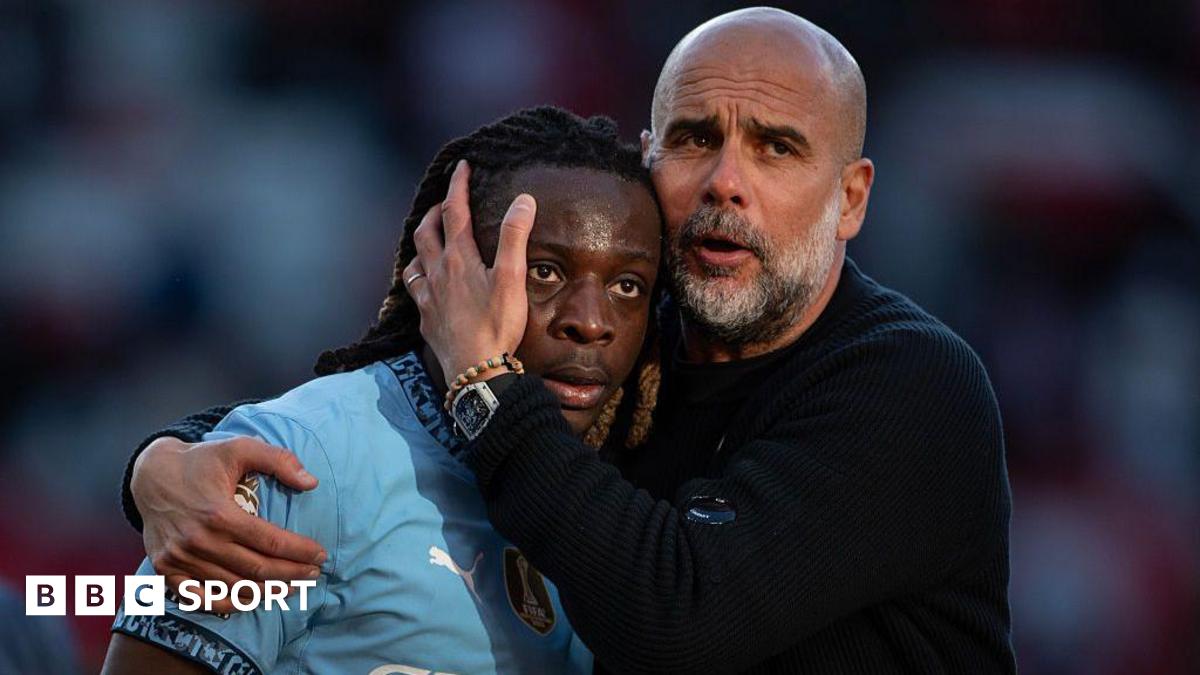
How Doku became key player for treble-chasing Man City

Published

on

Jeremy Doku has scored five goals and provided five assists in 28 Premier League appearances this season

When recently asked if Jeremy Doku could reach the levels of Vinicius Jr and Lamine Yamal, Pep Guardiola was in no doubt.

"Yeah, for sure," said the Manchester City boss. "And always accept being pushed. Always accept that. And that is so nice. We are really pleased. Now he is winning games. But he has always been really, really good."

Doku has evolved as a player and is beginning to realise his immense promise at City after nearly three years with the club.

Still just 23, the Belgium winger was signed from Rennes for £55.4m in August 2023, with City aware of his high potential.

His pace and dribbling quality have always been best in class – underpinning a unique profile in the modern game.

Speaking to The Athletic, Shaun Maloney, one of Doku's former coaches with Belgium, said that even during the Under-17 European Championships, the young winger's quality immediately stood out.

"What you see now in terms of one-v-one dribbling was exactly him then. He was taking it in his own half and dribbling 70 and 80 yards," Maloney said.

A few years later, during Doku's first year playing for Rennes, Kylian Mbappe and his father sat in the stands watching on in awe.

"I was speaking with my father about a player I had noticed from the stands because of his pace," said Mbappe.

"The player was Doku at Rennes. In my five years as a pro, I had never seen someone with so much explosivity in his first steps."

With specific standout qualities, players can forge strong careers, but becoming the star of an elite side comes from pulling together those qualities in a complete manner – something Doku has now started to do.

Saturday will see him hoping to help secure Man City a second trophy of the campaign, when they face Chelsea in the FA Cup final at Wembley.

Watch live on BBC One and BBC iPlayer (build-up from 13:15 BST) and listen to full match commentary on BBC Radio 5 Live and BBC Sounds. Follow live text commentary plus TV and radio coverage on the BBC Sport website and app.

'The Doku show' – Why Man City's winger is crucial for title hopes

As one of the fastest players in world football, even Kylian Mbappe was impressed by Jeremy Doku's pace

When talking about Doku, Guardiola is quick to stress the importance of standards off the pitch.

He said: "Everybody knows that he's made an incredible step in the sense of saying, 'I am Jeremy Doku, I am going to win games.' The greatest players always have that mentality.

"It [all] depends on mentality. [He has to say] I want to become one of the best in the world, otherwise you're in a comfort zone. That is how you reach that [next] level."

And for as much as Doku has improved on the pitch, he has shown that level of self-reflection, accountability and focus off it too.

Doku has spent time working with Gabriel Deieno, a mental performance coach who works with elite athletes.

And after a particularly impressive performance against Liverpool, Doku credited his deepening faith in God for his success.

The smallest of distractions at the highest level can derail the most talented of players but Doku has has found stability off the pitch

Across this season, Guardiola has trusted Doku in a number of roles. Irrespective of what he has asked from him, what has remained constant has been how much responsibility the City boss has given his winger.

With the increase in man-to-man defending in the Premier League this season, the strength and dribbling quality of Doku has allowed him to get the better of the opposing defenders even if teams double or triple up on him.

This changing tactical landscape has therefore made him increasingly key to City.

In City's 3-0 win against Manchester United, Doku was asked to leave the touchline, moving into the centre of the pitch. This helped City overload United's midfield two with four of their own players.

With City's midfielders close to each other, Doku – receiving in-field – would turn and drive at the defence, attracting players towards him while freeing up space for Nico O'Reilly on the left flank.

Against United, Doku moved into midfield helping City create central overloads – and left space for Nico O'Reilly on the flank

And much of City's success this season can be put down to the on-field relationship of that left-sided duo.

For most of the campaign Doku has taken a more natural left-wing position, which has put opponents in a lose-lose situation.

By doubling up on Doku, teams have attempted to minimise his dribbling threat, in turn leaving space for O'Reilly to get into the box. This has led to the England full-back amassing 15 goal contributions in all competitions this season so far.

When teams have instead focused on O'Reilly's central attacking position, Doku has then relished the chance to dribble past a single defender before dangerously cutting the ball back to his team-mates.

Here we see Doku's positioning dragging Arsenal's right-back Ben White out wide, leaving space for O'Reilly to run into

When Doku joined City, part of the rationale was to utilise him on the right wing – a position he played at Rennes more often than he has in Manchester.

From here, instructions were simpler. He could beat his man on the outside with his speed and play crosses with his stronger right foot.

Perhaps a sign of trust in his total footballing ability, Doku's role on the left wing has evolved further this season into one that allows him to cut inside and play centrally – often on his own accord.

By rolling his defender and facing the opposition's goal when the game becomes stretched, he has added to his arsenal of assists by playing through balls to Erling Haaland running in behind.

For the opening goal against Galatasaray, Doku finds Haaland running in behind. From central positions, Doku can play vertical passes that suit the Norway striker's strengths

Against more stubborn defences, Doku has shown an ability to cut inside and away from goal, increasing the distance from nearby defenders, before striking the ball into the far corner.

"When I look at all my goals this season, I don't see one tap-in," Doku says. And although this appears to be a good problem to have, the winger's thirst for self-improvement was clear.

"When I look at, for example, Sterling in his seasons here, all the tap-ins that he scored – at least five, six, seven a season.

"I want to score also those goals where I just tap-in, [back] post, run in and tap-in. That's really the thing that I need to work on."

Doku's signature finish appears to be this cut-back movement that gives him enough space to take a shot into the far corner

The strengths that set Doku apart came fairly naturally. But hard work has improved his understanding of the game to best maximise that talent.

While he looks to add tap-ins to his attacking game next, he deserves credit for already having improved his defensive understanding this season.

Guardiola's City have opted to defend in a 4-2-4 formation out of possession, holding their shape before pressing in specific moments.

The two strikers are tasked with blocking passes into midfield – so it falls to the wingers in this system to take on the physically taxing job of pressing the opposition's centre-back while also blocking passes into the full-back.

Doku, alongside Antoine Semenyo, has done this well and was key in nullifying Arsenal's build-up in both the Carabao Cup and Premier League wins in recent weeks.

City's 4-2-4 defensive shape requires intensity and an understanding of when to press from the wingers

Doku's tenacious pressing has also resulted in him winning the ball back high up the pitch then scoring after turnovers in games against Chelsea and Brentford.

Doku and two team-mates converge around Chelsea's Moises Caicedo. Doku wins the ball from this situation, drives at goal and scores City's third goal

Whether City win the FA Cup or the l

📰 மூல செய்தி (Source): https://www.bbc.com/sport/football/articles/cp9p4p98mv3o?at_medium=RSS&at_campaign=rss

முக்கியச் செய்திகள்

Robert paid £726 to skip the driving test waiting list. New laws mean others won't be able to

Published

on

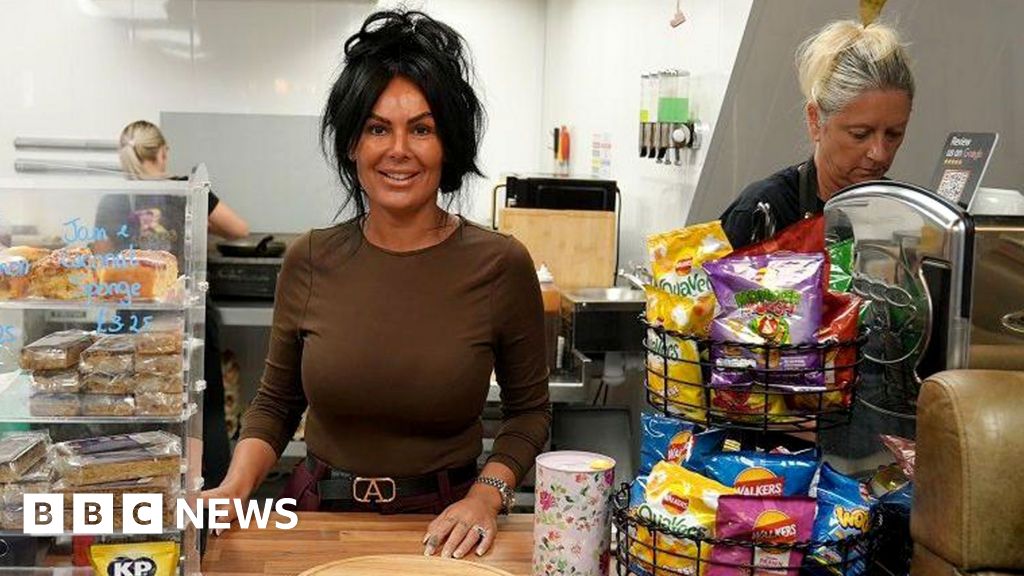
Robert Kamugisha had been desperate to sit his driving test. But the waiting list stretched for months, and every week without a licence meant more pressure – financially and personally.

So when he was offered earlier test dates for a hefty fee, he took the risk.

The 21-year-old criminology student from Croydon spent most of his savings – £726 – on three test slots, all bought through resellers who snap up appointments and sell them on at inflated prices. The actual cost to take a test is £62.

New government rules now mean only a learner driver can book their own test, part of a crackdown on third party operators using bots to hoover up thousands of slots. But it was too late for Robert.

"I spent most of my savings," he tells the BBC after passing in December, on his third attempt. "I felt like I was being scammed."

Driving instructors say the black market trade has exploded as waiting times across the UK have soared, and thousands of learner drivers have struggled to get driving tests without a long wait.

Figures provided to the BBC from the Driver and Vehicle Standards Agency (DVSA) earlier this week revealed the national average wait time for a practical driving test in April 2026 in Great Britain was 22.3 weeks.

Across the nations, Scotland's wait time was 22.9 weeks, in England it was 22.7 weeks, and Wales was slightly shorter at 17.3 weeks.

Robert says his driving instructor encouraged him to use a reseller to secure an earlier test date, reassuring him it was legitimate. The reseller logged in with Robert's details, booked the test, and the DVSA sent him a confirmation.

"Once I got the booking confirmation, that's when I felt a bit of relief," Robert tells the BBC after contacting BBC Your Voice. "The expense though was crazy."

Robert paid £242 per test, plus £150 each time to use his instructor's car, bringing his total cost to £1,176 – a figure that does not include the cost of his lessons.

Sophie Stuchfield, a driving instructor from Watford, tells the BBC the black market has taken advantage of the demand for earlier test slots.

"People have found ways to manipulate the system to be able to book thousands of driving tests themselves to then be able to resell on for a massively high inflated fee," she adds.

The use of automated booking programmes, or bots, has plagued the DVSA booking system since a huge test backlog built up during the pandemic.

Illicit operators moved in to exploit the demand and used bots to book tests on the official website and resell them.

Sophie has been added to messaging lists where third parties advertise driving tests for sale around Britain for hundreds of pounds.

"I've had 3,341 messages from people trying to sell me driving tests," Sophie says.

"Many people [learner drivers] message me on social media telling me that they are being asked to pay £200, £250, £300 for a driving test and sometimes it's unfortunately from their own instructor."

Sophie has refused to charge learners extra fees on the day of their driving tests to use her car, which has angered other instructors in her area who do.

She says some instructors wait until a week before a learner's test to tell them it's an extra £300 on test day to use their car.

"I've had phone calls from other local driving instructors in this area and they're asking me why do I not charge a fee to take someone on a driving test?"

"My response is always, 'I don't believe I should,'" she says. "I already feel sorry for that person on how much they're having to spend on learning to drive."

The new rules introduced this week mean it is now against the law for anyone apart from the learner driver to book their driving test with the DVSA and the government hopes this will stop third parties accessing the booking system using learner drivers details.

From now, it means anyone selling or changing a test on someone else's behalf will be breaking the law.

Those rules won't have a direct impact on waiting times for test slots, but should result in fewer wasted tests and help the DVSA measure where real demand is – helping the agency divert resources to testing centres that need it most.

But Carly Brookfield, chief executive of the Driving Instructors Association, doubts the changes will fix the problem.

She says the rule change scapegoats the majority of instructors who were doing the right thing, and she is already hearing reports of frustrated learners who now cannot be assisted by their instructor to book a test.

"There have been things the agency's done that have been productive to stop the rot of the bots," she tells the BBC. "But the reality is we've also got this massive test supply issue that if there's not enough tests going in, people will still not be able to get a test anywhere."

Simon Lightwood, the Minister for Roads and Buses, said the government had inherited record waiting times and a huge backlog of learners waiting for tests, with the system seeing too many people paying over the odds to third-party touts.

"But we're taking action and seeing results, delivering almost two million tests over the past year, more than 158,000 extra tests since June 2025, and military driving examiners now on the ground helping boost capacity across the country," he added.

Further changes will be introduced in June which will allow learners to swap their driving tests to only three of their local test centres.

📰 மூல செய்தி (Source): https://www.bbc.com/news/articles/cx219pn5g70o?at_medium=RSS&at_campaign=rss
Continue Reading

முக்கியச் செய்திகள்

Soprano Dame Felicity Lott dies aged 79

Published

on

Dame Felicity Lott, one of Britain's best-loved sopranos, has died at the age of 79.

The singer died on 15 May after a recent interview she gave to the BBC in which she announced she had been diagnosed with terminal cancer.

The acclaimed soprano built an international career spanning four decades, in which she performed at opera houses and concert halls around the world, singing works by composers including Richard Strauss, Schubert and Mozart.

Dame Felicity's agent told the BBC that "in her work, she was sublime; inhabiting every performance with precision, depth and beauty".

"But it was her humanity and kindness that really touched people… [We] will miss her warmth, sparkle and gloriously self-deprecating humour," the agent said.

Dame Felicity lived with "her illness with great dignity and acceptance" and "was characteristically classy and elegant to the end", the agent added.

Born on 8 May, 1947 in Cheltenham, Dame Felicity was musical from an early age.

At five-years-old she was playing the piano and by 12 she was singing and playing violin.

She went on to study at the Royal Academy of Music, and made her operatic debut and breakthrough role as a last minute stand-in as the character Pamina in Mozart's The Magic Flute in 1975.

At home, she was seen frequently on television, sang regularly at the BBC Proms and was made a Dame in 1996.

She was also the recipient of the Légion d'Honneur, France's highest cultural award.

📰 மூல செய்தி (Source): https://www.bbc.com/news/articles/cpqp1938d8do?at_medium=RSS&at_campaign=rss

Continue Reading

முக்கியச் செய்திகள்

The British White Lotus? A group trip goes wrong in BBC drama Two Weeks in August

Published

on

"It's a group holiday gone wrong," says actress Jessica Raine about new BBC drama Two Weeks in August.

Set on a sun-soaked Greek island, the drama follows a group of university friends reuniting for a long-awaited summer holiday.

Now older, the friends are still connected, but marriage, children and mental health struggles have reshaped their relationships.

Beneath the cocktails, boat trips and villa life, tensions simmer and emotions rise. Then an illicit kiss threatens to change their lives forever.

For its cast, the series felt instantly recognisable. "I've been on this holiday," says Damien Molony. "I know who these people are."

At the center is Zoe, played by Raine, a teacher and mother quietly struggling under the pressure of holding everything together.

Molony plays her husband Dan, whose depression hangs heavily over the trip, as cracks in their marriage begin to show.

Raine says she was drawn in by the script's exploration of modern expectations placed on women.

"I think it chimes really well with my generation of people-pleasing," she says.

"There's this idea that in order to be a 'good woman', you have to sacrifice yourself for your children or your husband… and the notion that you can have it all is a complete lie."

Molony says he was initially struck by how dark his character's early scenes felt when he first read the scripts.

"I didn't know it was a comedy at first," exclaims the Irish actor. "It felt quite tragic." He describes Dan as someone who is visibly struggling but unable to express it in a way that helps him.

"He's constantly trying to smile for the camera," he says. "But he doesn't really know how anymore."

From the outset, Dan's dark and emotional scenes put into motion a series of events that strain the wider group.

Antonia Thomas, who plays Jess, says the series captures what happens when people who once knew each other intimately realise how much they've changed.

"There's a real hopefulness about booking a nice villa somewhere and thinking everyone's going to have a great time together," says Antonia.

"But people change. They're not the same people they were 10 years ago."

Thomas says that gap between expectation and reality creates a particular tension within the group.

"It becomes a kind of pressure cooker," she explains. "Everyone falls back into old roles, even if they don't fit anymore."

She adds that Jess's place in the group reflects that sense of quiet disconnection, "She tries to connect, but doesn't always get it right."

You wouldn't be wrong to think of Two Weeks in August as something of a British White Lotus, a comparison its writer Catherine Shepherd has addressed.

Speaking in a recent interview with the Royal Television Society, Shepherd said that the tone and intent of the two shows are different.

She said that "the White Lotus is about people who are super rich", whereas Two Weeks in August focuses on "relatively normal people with normal concerns".

That distinction is key to the series' tone, less glossy satire and more grounded discomfort. Filmed in Malta and Gozo, the series also stars Leila Farzad and Hugh Skinner, whose performances lean further into the show's dark comedy.

For Nicholas Pinnock, who plays successful actor Solomon, that realism is what makes the show feel distinctly British in its outlook.

"There's a real stiff upper lip Britishness about it," he says. "People are trying to avoid the thing that's staring them in the face and brushing things under the carpet until eventually it all ignites."

But as the holiday begins to unravel, Two Weeks in August gradually weaves in Greek mythology increasing the group's tense dynamic.

For Raine, that was one of the script's biggest surprises. "It sort of sideswipes you," she says. "You're not expecting it."

The actress also points to the mythological figures known as The Fates or Moirai, who appear throughout the series and become increasingly central to Zoe's emotional unravelling.

In Greek mythology The Fates are three women who control the thread of human life, deciding how long a person lives.

"It's scary," she says. "She starts seeing them in the corner of her eye, almost like ghosts."

Two Weeks in August will air on BBC One and BBC iPlayer on the 23rd May.

📰 மூல செய்தி (Source): https://www.bbc.com/news/articles/cy0252zn0vno?at_medium=RSS&at_campaign=rss

Continue Reading

Trending

Copyright © 2024 by 7Tamil Media, All rights reserved.