Connect with us

முக்கியச் செய்திகள்

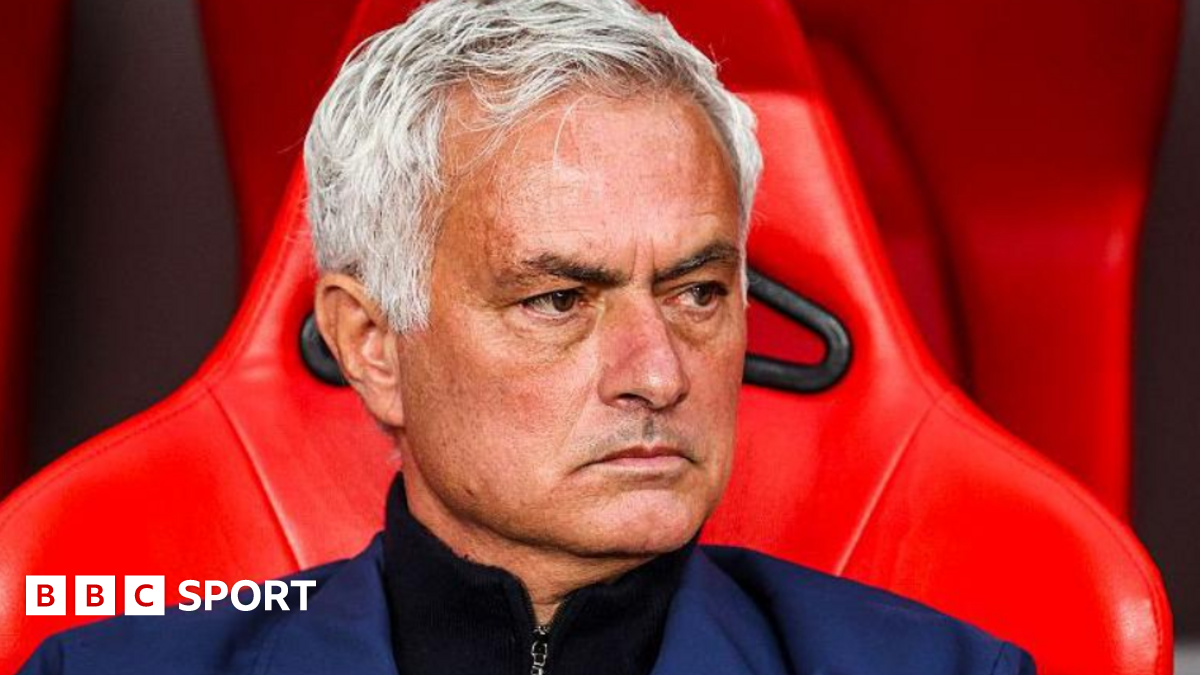
An iron fist joining a broken team: Inside Mourinho's Real return

Published

on

There are press conferences and then there are spectacles, not always matching communication strategies.

What Real Madrid president Florentino Perez staged on Tuesday – emerging after more than a decade without a press conference to rage against journalists, invoke conspiracies and warn that they would have to "shoot him out" of the Bernabeu – was a man in a bunker, surrounded by enemies real and invented.

It was the starting gun of a new era. Because hovering over that entire chaotic hour was the truth everyone in the room already knew: Jose Mourinho is coming back to Real Madrid, 13 years after his previous explosive stint.

And here is the darkly fitting thing: Mourinho's entire managerial philosophy – the siege mentality, the us-against-the-world framing, the weaponisation of grievance, the use of media as the enemies – is perfectly calibrated for the climate Perez has spent years cultivating.

A president who is highly critical of referees, who believes the media wants to destroy him, and that Barcelona are favoured by La Liga has finally found his ideal coach.

Mourinho in final negotiations to become Real manager

Quiz: Name every club Mourinho has managed

Jose Mourinho is returning to Real Madrid after 13 years away

The paranoia runs in the corridors of power at the Bernabeu and will now be in the dugout with Mourinho – although, in fact, predecessor Alvaro Arbeloa has bought that vision of the world already.

That, more than anything, is why this appointment makes sense in Perez's mind.

Madrid's dressing room is fractured. There have been fights between players. Vinicius Jr got what he wanted when Xabi Alonso was sacked as manager. Kylian Mbappe is not loved and seems a strange body in the club.

Then add to that the squad finished a second consecutive season without a major trophy.

Into this chaos walks a man with an iron fist, a famous surname and zero tolerance for insubordination. For a president who cannot control his own stars, the appeal of Mourinho is obvious.

But appetite is not the same as wisdom. And before Madrid celebrates the return of the 'Special One', it is worth asking a harder question: will he make the same mistakes again?

The numbers are not kind. Mourinho has not won a league title in 11 years. He has been sacked – or effectively pushed out – in five of his last six jobs.

At Tottenham, the Amazon documentary All or Nothing captured something instructive. Training sessions were described as tedious. Players disengaged. His half-time team talks veered between indifference and screaming.

After defeats, he blamed his players publicly. By the end, the dressing room had fractured into three camps: a small group of loyalists, a larger group who actively resented him, and a numb majority who had simply stopped caring. He won nothing and left the club worse than he found it.

At the core of those failures was something beyond tactics. It was culture. Mourinho's great blind spot has always been the assumption that his personality – his aura, his force of will – is sufficient to override the values an institution has built over decades.

At Spurs the club's identity, fragile as it was, disintegrated around him. Parts of his diagnosis of the situation, as at Manchester United, were spot on – but he possibly used the wrong medicine.

Real Madrid is not Spurs, not even Manchester United or Chelsea, not Roma. It is a club with its own culture, its own hierarchy of pride, and its own very particular expectations of what winning means.

When Mourinho was last here, between 2010 and 2013, he left behind relationships so damaged that he himself, in January this year, described that period as "almost violent".

The wounds from a spell that brought one league title and Copa del Rey did not heal cleanly. The fans are divided. But Perez, the guiding light, has told them already: we do have enemies and I will fight. Cue Mourinho entrance.

Jose Mourinho with Real Madrid president Florentino Perez

So what would a wiser return look like? The areas where Mourinho must improve are not mysterious.

He needs to recognise that winning is a shared vision, not a slogan he imposes. The bullet points from his Spurs and Manchester United tenure read like a manual of what not to do: failing to fully adapt his methods to his squad, ignoring the needs of some of the people around him, taking credit for victories while offloading blame for defeats.

There is also the matter of an incident that, in Spain, never quite became the scandal it perhaps should have.

Mourinho responded to allegations of racist abuse from Benfica's Gianluca Prestianni directed at Vinicius by invoking Eusebio, arguing, clumsily, that a club whose greatest legend was a black man could not be racist.

It caused a stir and then, remarkably, disappeared. It has barely surfaced in the debate about his return to Madrid, which perhaps tells you everything about the current mood at the club, so desperate for a solution that certain questions get quietly filed away.

At Madrid, with Vinicius and Mbappe already in a fragile coexistence, with a dressing room that has been allowed to run its own politics for two years, any repetition of them falling out might produce a quick catastrophe.

The Vinicius-Mbappe problem deserves more attention. Three managers – Carlo Ancelotti, Xabi Alonso, Arbeloa – have been unable to make them function as a partnership.

The chemistry that was supposed to make Madrid the most feared attack in Europe simply has not materialised. Mourinho's record with difficult combinations or personalities is mixed, but let's go with the hopeful.

He made striker Samuel Eto'o play as a right winger at Inter Milan and they won the Treble. He managed the Cristiano Ronaldo-Karim Benzema dynamic at Madrid, keeping them functional if not always comfortable.

He can do this. But only if he's willing to manage with empathy and communication rather than authority alone.

His demands have already been outlined. He wants input on signings – not names necessarily, but positions, areas of need.

He has identified imbalances in the squad. In his first Madrid spell, he pushed for Luka Modric, Sami Khedira and Mesut Ozil, and history would vindicate all three choices.

He also wants his staff around him, his own people in key roles. The club wants to retain their medical and physical department. Whether Mourinho can not only accept but work with that hybrid structure – his coaches, their doctors – will be an early test of how much he has genuinely changed.

What is also real is the weight of what he is inheriting.

Two titleless seasons and a squad that played without intensity and finished below the top 10 in the Champions League group phase – twice.

Perez's media conference yesterday named none of this. He spoke about the press, about conspiracies, about his enemies. He always does it in private, never so openly before.

He was singing from the Mourinho songsheet. He did not speak about the football.

Mourinho will have to do so. And beyond speaking about it, he will have to solve it by earning trust with his pupils. By managing culture rather than bulldozing it. By understanding that the club he is joining is bigger than any one person.

The press conference yesterday may well have marked the beginning of something. Whether it is a renaissance or a relapse depends almost entirely on whether Mourinho has learned anything from the last decade.

He says he has. Madrid is about to find out.

Listen to the latest Football Daily podcast

📰 மூல செய்தி (Source): https://www.bbc.com/sport/football/articles/clyp4rj9r01o?at_medium=RSS&at_campaign=rss

முக்கியச் செய்திகள்

Cuba has run out of diesel and oil, energy minister says

Published

on

Cuba has completely run out of diesel and fuel oil, the country's Energy Minister Vicente de la O Levy has said.

In an interview with state-run media, de la O Levy said there were limited amounts of gas available, but that Cuba's energy system was in a "critical" state as a US-led blockade of oil to the country squeezed supply.

Scattered protests against power cuts broke out in the capital Havana on Wednesday, the Reuters news agency reported.

The US this week reiterated its offer of sending $100m (£74m) in aid to the country in exchange for "meaningful reforms to Cuba's communist system".

"The sum of the different types of fuel: crude oil, fuel oil, of which we have absolutely none; diesel, of which we have absolutely none – I am being repetitive – the only thing we have is gas from our wells, where production has grown," de la O Levy said.

Under the US blockade, parts of Havana have been plunged into 20 to 22-hour blackout periods, he continued.

He also acknowledged that the situation in the country had been "extremely tense".

Hospitals have been unable to function normally, while schools and government offices have been forced to close. Tourism, an economic engine for Cuba, has also been impacted.

Cuba normally relies on Venezuela and Mexico to supply oil to its refinery system. However, the two countries have largely cut off supplies since US President Donald Trump threatened tariffs on countries that send fuel to Cuba.

Last week, US Secretary of State Marco Rubio said Havana had rejected a US offer of humanitarian aid worth $100m (£74m), a claim Cuba denied.

The US State Department repeated its offer on Wednesday, saying the humanitarian assistance would be distributed in coordination with the Catholic Church and "reliable" humanitarian organisations.

It continued: "The decision rests with the Cuban regime to accept our offer of assistance or deny critical living-saving aid and ultimately be accountable to the Cuban people for standing in the way of critical assistance."

Washington's blockade on the country ramped up in early May when the US targeted senior Cuban officials in a wave of sanctions accusing them of committing "human rights abuses".

Cuban Foreign Minister Bruno Rodriguez called the sanctions "illegal and abusive".

📰 மூல செய்தி (Source): https://www.bbc.com/news/articles/cd7pyrj0vx7o?at_medium=RSS&at_campaign=rss
Continue Reading

முக்கியச் செய்திகள்

A pothole has burst my tyre – what now and how do I claim?

Published

on

So you've hit a pothole and blown a tyre – what now?

This despairing question has been echoed by many a motorist – often accompanied by stories of drivers having as much difficulty navigating claims as they did steering around the crater-filled surfaces in the first place.

Now a BBC investigation has revealed three in four claims for pothole compensation are being turned down.

So how can you claim, and what are the challenges in doing so?

A pothole is a depression in a road surface – often caused by ground water or wear and tear.

When water gets into cracks in the road, it leads to potholes forming, especially when it freezes and expands.

According to the RAC motoring organisation, there are currently more than one million potholes across the UK. However, the number will vary depending on the season.

It estimates that, on average, there are about six potholes per mile on council-controlled roads in England and Wales.

Meanwhile, the Asphalt Industry Alliance (AIA) – the industry body that oversees road surfacing – warned in March that the cost of fixing all the potholes on local roads in England and Wales would be an estimated £18.6bn.

Take a drive into the town of Netherfield in Nottinghamshire, and you'll soon realise why signs like the below exist.

Resident Reg Patterson said the bumpy roads had become "part of the local environment".

"It's not very good," the 68-year-old added. "There have been some humorous signs around the local area, which are quite entertaining I think.

"In the last few weeks there has been a few temporary repairs I'd say. I think, generally, they're not very good at all."

Fellow Netherfield neighbour Georgina Swann described the state of the roads as an "absolute nightmare".

"There's a Facebook group that's dedicated to potholes around the area," the 57-year-old added.

"The council needs to do more. It's affecting people's cars.

"Last time there was a local election, one of the big things was potholes. Nothing's been done. It's just awful."

Swann's frustration has been echoed by other pothole protesters in Nottinghamshire when they gathered outside County Hall earlier this year.

In response, leader of the Reform UK-run council, Mick Barton, said fixing the roads was one of his top priorities when he unveiled two JCB machines for filling in potholes.

Across the county and much further afield, potholes have been causing headaches on and off the road, and also became the subject at the top of many voters' agenda as they headed to the polls earlier this month.

But as the problem of potholes is widening, what can you do to stop a nasty bump in the road becoming a bigger hit to your wallet?

Our BBC investigation found over 146,000 claims were submitted for pothole-inflicted vehicle damage over the past five years.

Figures – obtained through freedom of information requests – show councils across Britain have paid out about £13.5m in response to claims. However, this only covers a fraction of the total number of claims submitted.

Out of 207 local authorities that hold the information, 147 told us of the number of pothole claims received in the last five years and the ones that were successful. On average, these councils paid out 24% of pothole claims.

Back in Netherfield, further along Victoria Road, Mick Hampshire is four decades into his career as a mechanic.

He estimates he sees about five customers coming in every week after hitting a pothole – in his 40 years, he said he had never had to replace so many suspension struts, coil springs and new tyres.

"We have seen vehicles coming back with snapped coil springs again," he said.

He then shows me under a lifted car in his garage.

"When they're going over a pothole… what's that?" he said, while rapping the bottom of the vehicle with his fist.

"That's a fuel tank. Cars bottom in and it's hitting the fuel tank, which is potentially a sitting time bomb.

"I'm potentially seeing it now when lives are being put at risk, and the roads are a seriously dangerous place to be on."

Nadia Kerr, a solicitor at the firm Fletchers, has worked in the field of personal injury and highway claims for many years.

She said most of the claims she used to deal with related to crashes between cyclists and drivers. More recently, the focus has shifted to pothole claims.

"There has been an increase," Kerr added. "The state of the roads, we all know, is dreadful.

"Even though the local authorities are complying with the local policy, the number of incidents that are on the road are increasing and increasing."

However, the route to a successful claim is not always straightforward.

"You really need to know what you're doing and you need to find an expert in the field, because lots of people give up along the process," Kerr said.

"As soon as the local authority denies a claim, they tend to just advise there's nothing else you can do and they will close the file."

The quickest way for a council to dismiss a claim is by saying they did not know it was there to begin with, Kerr said.

"The best you can do as a road user is report the defects you can see," she added.

"As soon as they're reported, the local authority are on notice that they are there and they need some attention; and if they fail to have that attention… and then an accident happens, then they are much less likely to rely on that defence to avoid paying compensation."

To report a pothole in England or Wales, enter the postcode of the road where you found the pothole on the GOV.UK website.

In Northern Ireland, you can report potholes by marking them on a map and in Scotland, you can report potholes by selecting the relevant local council here.

Kerr said third-party apps like FixMyStreet or Fill That Hole were more accessible to road users. But there's a catch.

"The problem is that not all local authorities will accept reports from those apps," she said.

"Sometimes they require to set up an account, a login, a password, by which time in my opinion some people give up the task of reporting a pothole."

According to the solicitor, there are a number of reasons why a claim might be turned down.

"The local authority would often argue that they followed their processes and their policies, that they inspected the stretch of the highway as frequently as they needed to comply with their policy and that they reacted promptly to any problems," Kerr said.

"What we try and find is a number of reports from the members of the public that the council will not have acted on.

"We often see challenges when a defect has been seen but the local authority do not think it's problematic enough that it ought to be repaired, so we challenge that, providing evidence of measurements of the location."

A Nottinghamshire County Council spokesperson said: "Each claim is investigated based on the evidence provided to determine whether the council has adhered to its policy and the requirements of the Highways Act 1980, the legal framework in place to deal with the management and operations of the road network in England and Wales.

"If the council can evidence that it has adhered to its policy, the claim will be repudiated, however if it is found the council has not adhered to its policy and is found to be legally liable for the incident, then the claim will be settled."

Local authorities have also had to deal with a rise in fake or exaggerated pothole damage claims, due to the cost-of-living crisis driving a rise in fraud.

The insurance group Zurich Municipal, for example, has previously said it had detected a rising number of fraudulent claims made against councils worth millions.

A Department for Transport spokesperson added: "We're backing local councils with a record £7.3bn to fix potholes and are already seeing results, with 15% more prevention works carried out in 2025 compared to 2024."

Sarah Gray, from Sherwood in Nottingham, said she would be left hundreds of pounds out of pocket once she got her blue Peugeot 308 repaire

📰 மூல செய்தி (Source): https://www.bbc.com/news/articles/c5yxx7e84kmo?at_medium=RSS&at_campaign=rss

Continue Reading

முக்கியச் செய்திகள்

E-gate access to be expanded at UK airports to include younger children

Published

on

Children aged eight and nine returning to the UK from abroad will be able to use e-gates at airports and other re-entry points from 8 July, the Home Office has announced.

They need to be at least 120cm (3ft 11in) tall so they can be seen by the biometric scanners and must be accompanied by an adult.

By lowering the minimum age from ten, the government believes up to 1.5 million additional children will be able to use e-gates.

More than 290 e-gates in the UK and at juxtaposed ports, where border checks take place on the continent, are involved.

Minister for Migration and Citizenship Mike Tapp said more families would "experience a swifter and smoother journey home… this summer holiday season".

E-gates are designed to speed up passenger border checks through a digital passport scan.

Those in the UK will be available to Britons as well as citizens of EU states, Australia, Canada, Iceland, Japan, Liechtenstein, New Zealand, Norway, Singapore, South Korea, Switzerland and the US, and members of the Registered Traveller Service.

Border Force Director General Phil Douglas said the new measure allowed "highly skilled officers to focus on intercepting those who pose a threat to the UK".

Karen Dee, Chief executive of AirportsUK, the trade body for UK airports, called it a "welcome development".

"It will give more families the ability to take advantage of this technology, speeding up the border process and reducing waiting times for many," she said.

"Airports work very hard with border authorities to ensure the UK's front door is both secure and welcoming, with those coming home and visiting enjoying a smooth experience."

The e-gates are installed across 13 airports in the UK: Birmingham, Bristol, Cardiff, East Midlands, Edinburgh, Gatwick, Glasgow, Heathrow, London City, Luton, Manchester, Newcastle and Stansted.

They are also available in juxtaposed ports in Brussels and Paris.

E-gates are part of the government's Electronic Travel Authorisation (ETA) scheme which rolled out in February, providing digital permission for people to arrive in the UK.

Under the new system, travellers from visa-free countries like Canada and Australia now require an ETA to arrive in Britain at a cost of £20.

Digital passport checks caused long disruptions at some airports in Europe, including Italy and Portugal, in recent months, leading to warnings that new passport scanning systems could cause major delays over the summer.

Get our flagship newsletter with all the headlines you need to start the day. Sign up here.

📰 மூல செய்தி (Source): https://www.bbc.com/news/articles/c89300l2934o?at_medium=RSS&at_campaign=rss
Continue Reading

Trending

Copyright © 2024 by 7Tamil Media, All rights reserved.