Connect with us

முக்கியச் செய்திகள்

Christchurch mass killer loses bid to overturn conviction

Published

on

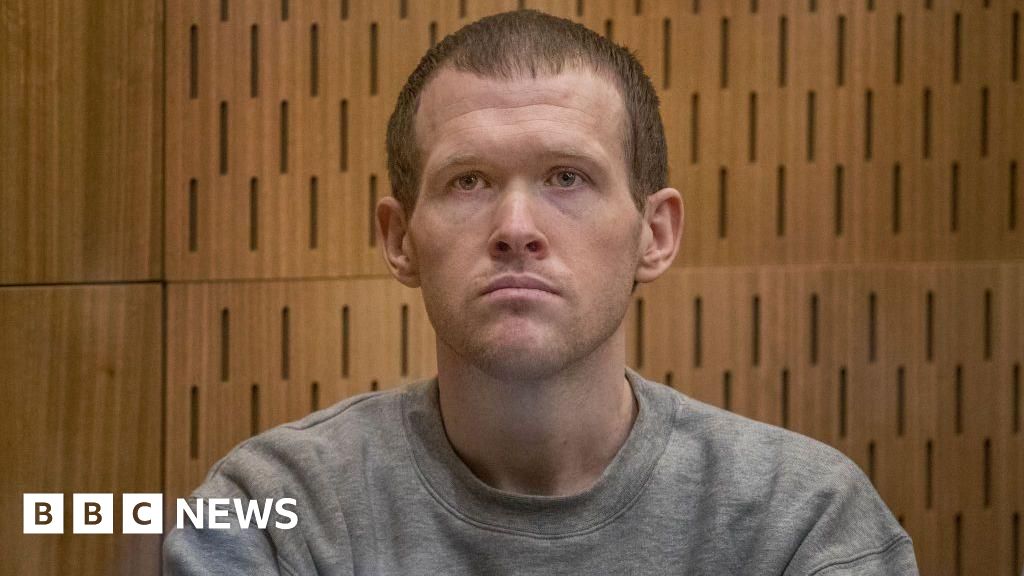
A white supremacist who killed 51 people at two New Zealand mosques has lost his bid to overturn his convictions and sentence.

Brenton Tarrant is serving a life sentence with no parole after admitting to the murders and trying to kill another 40 worshippers in the March 2019 attack in Christchurch.

During a week-long hearing in February, Tarrant, now 35, argued he was incapable of making rational decisions at the time of his plea because of "torturous and inhumane" conditions in prison. He also launched an appeal against his sentence.

New Zealand's Court of Appeal rejected his bid on Thursday, ruling that his arguments were "utterly devoid of merit".

The facts around Tarrant's crimes are "beyond dispute", the panel of three judges said in a unanimous decision.

In his appeal, Tarrant claimed he made the guilty pleas while he was "irrational" and under a poor mental state.

The judges found his claims inconsistent and not supported by other witnesses, concluding that he was not "coerced or pressured in any way" to plead guilty.

"He has not identified any arguable defence, or indeed any defence known to the law. We have also rejected his claim that his guilty pleas were the product of him having an irrational state of mind induced by his prison conditions," they said on Thursday.

The massacre at Al Noor mosque and Linwood Islamic Centre, parts of which were live-streamed, led to stricter gun laws in New Zealand.

Aya al-Umari, who lost her older brother Hussein in the attack, said she was "pleased and relieved" with the court's decision, "and to see justice is being served again".

"I was confident that there were no solid grounds for the appeal, and the decision today confirms that," al-Umari told the BBC.

"I remember thinking at the sentencing that this [would be] the end of it, and we can try to move forward and collect the pieces after the destruction of our lives. But things like this appeal hearing… takes you right back to the moments of fragility.

"Hearing the outcome today really gives that reassurance and comfort around the right processes being followed," she said.

Within a month of the shootings, the country's parliament had voted overwhelmingly to ban military-style semi-automatic weapons as well as parts that could be used to build prohibited firearms.

The government also offered to compensate owners of newly-illegal weapons in a buy-back scheme.

Tarrant was born in New South Wales, Australia, but moved to New Zealand in 2017 – prosecutors said that was when he started planning his attacks against the Muslim community.

He was active on fringe online forums and shortly before the attack, he had posted a 74-page "manifesto" outlining his racist views.

📰 மூல செய்தி (Source): https://www.bbc.com/news/articles/cg5p6zq19npo?at_medium=RSS&at_campaign=rss

முக்கியச் செய்திகள்

'I bought a baseball cap to hide my kippah': Jews observe first Shabbat after Golders Green attack

Published

on

For the first time in his life, Derek has decided to conceal his Jewish skullcap – known as a kippah – when out in public.

"I went shopping yesterday and bought a baseball cap," says Derek, who lives in Edgware in north London and did not want to give his full name. "I never wear a baseball cap.

"I felt that to go on the underground, as a religious Jew, was just too problematic."

Every Friday night, Derek and many other Jews across the world mark the end of the week by ushering in the start of the Jewish sabbath – Shabbat. Families light candles and gather around the table for Friday night dinner, sharing the comforts of food and conversation. On Saturday morning, they go to synagogue, to pray and reflect on the week that's just passed.

This Shabbat is no different. The candles were lit. The synagogues will be busy. Yet at the same time this weekend the ritual will feel different for every Jew in Britain.

Although he's covering up his kippah in public, Derek says he will attend synagogue as usual – but that it will feel especially intense.

"Unsurprisingly, this week we are going to have even more security. My synagogue is like a prison. And it's a small synagogue."

He adds: "I have never experienced – not the levels of hate, but the deafening silence of a community, of a country in the wake of such virulent antisemitism."

Adam Wagner, a prominent human rights lawyer, is one of those who have been agonising over whether to stick to his usual routine.

Like many Jews, Wagner prepares for Shabbat by going to buy a challah, a braided bread, from a kosher bakery. But the thought of going to a Jewish site in Golders Green fills him with fear.

"In the back of my mind, I'm thinking how to keep myself from being stabbed in the queue," he says.

Wagner has also been wrestling over whether to wear a kippah when walking to synagogue this week. His child has surprised him by asking him to promise not to do so.

"I still haven't decided," he says. "I will need to have a discussion with them on the day. I would prefer to wear it."

But these concerns won't stop Wagner from going to synagogue – though he knows the experience bears little in common with that at other religions' places of worship.

"I will be spending this Shabbat as I spend most – at my synagogue, behind high walls, volunteers wearing stab vests, specially installed car-ramming prevention barriers and professional security guards," he says.

This will be a similar scene at every synagogue.

Jonathan Romain, the former rabbi of Maidenhead synagogue in Berkshire, now regularly spends his Shabbat mornings standing outside it on guard duty.

"After many years of being inside the synagogue, leading services and being protected by others, I now repay the debt I've owed to others for so many years. I was on last Saturday, and I'll be thinking of them this Saturday," he says.

"I shall be worrying about copycat attacks to the one in Golders Green. I hope these new random street attacks will not suddenly multiply."

Two Jewish men suffered serious injuries after being stabbed in Wednesday's attack in Golders Green, which police declared a terrorist incident. On Friday, Essa Suleiman, 45, appeared in court charged with attempted murder of them and another man, Ishmail Hussein.

The attack came amid rising antisemitism and a spate of incidents in recent months targeting Jewish sites including an arson attack on ambulances also in Golders Green.

For some Jewish people, it simply feels too frightening to go to synagogue at all.

"In an ideal world, we would take our baby to shul [synagogue]," says Ben, a lawyer from north London.

"But ever since the attack on Yom Kippur last year [at Manchester's Heaton Park synagogue], we have been very, very scared about taking him. We have gone to synagogue less because of our baby and our need to protect him."

He adds: "I had an experience of leaving my shul with my dad and being shouted by a bunch of young boys, 'free Palestine'.

"My own personal experience, combined with what happened in Manchester last year, means that we are staying away. That saddens me massively and showed that our way of life has been hugely affected and trampled on as a result of these threats. So now, I try to do as much [of the prayers] as I can from home."

This week, Ben and his wife also made a big life decision. On the day of the stabbings, they decided they'd had enough of antisemitism in the UK.

"It was this week's attack that has made us decide to move to Israel. Seeing innocent Jewish people being stabbed – that pushed it over the edge for us," he says.

But many Jews say they have no intention of going anywhere.

Judith Nemeth, who hid behind a fence as the attack unfolded on Golders Green Road, is preparing to make the same walk down the same road to visit family and friends this Shabbat.

"Nothing has changed," says Nemeth, who attends the synagogue where the two men were praying before they were stabbed.

"You will find across the community that we will carry on business as usual, carry on leading our Jewish lives during the week and on Shabbat, just as usual.

"I'm very grateful that, though I was there on the scene, I was not hurt," she adds.

Those who were affected by the Golders Green attack will be in the thoughts and prayers of worshippers at many synagogues across the UK.

Zoë Jacobs leads prayer services as the cantor at Finchley Reform Synagogue, one of the Jewish premises in north London targeted in a recent spate of arson attempts. She says the two injured men "will be in our hearts and minds as we pray for their healing".

And she adds: "We will pray for the wisdom of our leaders, locally and nationally, of all religions, and of course, we will pray for a full and lasting peace throughout the world – as we do in every service.

"Ultimately the message I hope our community will take from this Shabbat is one of continued resilience."

The day after the Golders Green attack, Sir Keir Starmer, who has spoken of participating in regular Friday night dinners with his Jewish wife and father-in-law, announced a series of measures aimed at reassuring the Jewish community.

He said the government would strengthen the "visible police presence" in communities, increase investment in Jewish security services, and introduce stronger powers to shut down charities that promote antisemitic extremism and prevent "hate preachers" from entering the country.

But as the PM arrived on the scene on Thursday, he was met with shouts of "traitor" and "Keir Starmer, Jew harmer" by some Jewish protesters.

Lord Richard Hermer, the attorney general and one of the most senior Jewish politicians in the country, tells the BBC: "The fear in my community is palpable, and understandable."

"This Friday night, just like every other, my family will gather for Shabbat – with the wonders of technology adding on screen those at college or travel," he adds.

"At times of sorrow or fear, there is an added comfort in ritual and family. In my home, as the prayers end, we wish each other 'Shabbat Shalom' (a peaceful Sabbath), stand and hug each family member in turn, telling them we love them.

"I suspect Jewish parents around the country will find themselves hugging their children a little tighter tonight."

Many in the Jewish community in recent days have expressed frustration with what they see as a lack of government action on hate speech, and have renewed calls for Iran's Islamic Revolutionary Guard Corps to be proscribed.

Ministers are understood to be planning to introduce new anti-terror powers that would enable them to ban state threats such as the IRGC in the next parliamentary session.

A group suspected of having Iranian links has said it was behind the attack, but did not provide any proof. Iran's embassy in the UK says it "categorically rejects any allegations" of the country's involvement in "violent activities or incidents in the United Kingdom".

"The problem is coming from several dif

📰 மூல செய்தி (Source): https://www.bbc.com/news/articles/c3w2qp5gzn0o?at_medium=RSS&at_campaign=rss
Continue Reading

முக்கியச் செய்திகள்

'If we sleep they bite': Rats and weasels infest camps for displaced Gazans

Published

on

"We woke up to the sound of her screaming at 2am," Samah al-Daabla, the mother of four-year-old Mayaseen, tells the BBC.

"When my husband turned on the torch, the weasel ran away. I looked at my daughter's hand, and it was all blood. Everything was bloody."

In the Gaza Strip, left devastated by war, the daily battles are now with rats, urban weasels and other pests spreading diseases.

Aid workers are calling for urgent steps to counter a public health crisis.

Cogat, the Israeli defence body that controls Gaza's crossings, says it is working with international organisations "to address sanitation needs".

Mayaseen was given a tetanus injection in a Gaza City hospital but suffered from days of fever and vomiting. She is now recovering in her family's tent.

Social media feeds have recently shown footage of rats running amok in camps for displaced families, and of newborn babies, the sick and elderly after rodents have attacked them.

One grandmother with nerve damage to her feet caused by diabetes has spoken of having parts of her toes bitten off.

In a recent survey, cited by UN agencies, rodents or pests were frequently visible in 80% of sites where displaced families are now living, affecting some 1.45 million people.

Rodents can harm people through bites and scratches as well as their urine, droppings and fleas. These can cause respiratory and skin diseases, blood infections and food poisoning.

The local World Health Organization (WHO) representative, Dr Reinhilde Van De Weert, says the new infestations are "unfortunately, the predictable consequence of a collapsed living environment".

More than six months after the US brokered a Gaza ceasefire deal, it has failed to deliver hoped-for improvements in the humanitarian situation and progress appears to be stuck.

There are still regular deadly airstrikes in which Israel says it is targeting Hamas. Hamas, which triggered the Gaza war with its deadly assault on Israel and mass hostage taking in October 2023, has not committed to disarming.

No reconstruction has taken place. Gazans do not yet have any of the 200,000 caravans which Palestinian officials say they need as temporary homes.

With raw sewage water running through many overcrowded campsites, they have become breeding grounds for rodents. In the warmer springtime weather, the animals are thriving in the huge piles of rubbish which have accumulated next to people's tents.

Many parents say they keep vigil at night to protect their children and belongings from invading animals.

"We cannot sleep! If we sleep, they bite the children and disturb us. There are so many weasels and rats – an abnormal number," says Rizq Abu Laila, who lives right next to a rubbish dump in Gaza City with his four young children, one of whom has cancer.

"They go in the rubbish and fight because there are so many of them. I swear we can't endure it. The rats have torn our clothes and eaten our flour. There are mosquitoes and foul smells. We call on international institutions to help us."

UN agencies say they are working on improvements in pest control, drainage and sanitation.

"What is needed is a very large-scale campaign to be able to deal with the waste and rubble problems across Gaza," says the UN children's agency Unicef's deputy representative for Palestine, Ettie Higgins, in Deir al-Balah in central Gaza.

"Pipes have been destroyed, and treatment facilities have been destroyed so we are trying to scale up our support to manage the wastewater and sewage."

Humanitarian workers want more heavy lifting equipment as well as spare parts for existing machines to clear away rubbish. They are also asking for access to Gaza's major landfill sites which are in eastern parts of the strip now under full Israeli military control.

Ultimately, replacing damaged waste and sanitation facilities will need Israel to allow the entry of vital supplies from chemicals to pipes. It currently restricts these for security reasons, saying they could be used in the construction of new weapons by Hamas.

In a statement sent to the BBC, Cogat says that it "works in cooperation with the UN and the international community to enable a response in the fields of sanitation and essential infrastructure".

"This includes coordinating the removal of waste piles, facilitating the entry of dedicated equipment for infrastructure repairs in accordance with requests and identified needs, and facilitating the entry of trucks and tankers for waste removal on behalf of the international aid organizations.

"In parallel, and in accordance with requests from the UN and international aid organizations, ongoing coordination is conducted to facilitate the removal of garbage, solid waste, and sewage in designated areas."

Cogat says it has recently allowed humanitarian groups to take nearly 1,000 rat traps and almost 10 tons of pesticides into Gaza.

Some pest sprays have already been used in tent camps to combat the growing menace from bugs.

According to the WHO, there have been reports this year of some 111,500 cases of disease or infestation due to external parasites. These include scabies – caused by mites, lice and bed bugs. More than four-fifths of households in Gaza report skin infections and rashes.

Locals foresee that when summer comes, numbers of all pests are likely to rise, increasing the health hazards.

"I am now in a house with just the outside walls standing. We spend the whole night scratching from fleas on one side and mosquitoes on the other. There are weasels passing by or rats," says Hassan Al-Faqaawi a father-of-six in Khan Younis in southern Gaza.

"We need something to deal with it. I don't see any lasting peace at all in Gaza. Life is much harder that it was before. There is no life."

📰 மூல செய்தி (Source): https://www.bbc.com/news/articles/c202m54xp0mo?at_medium=RSS&at_campaign=rss

Continue Reading

முக்கியச் செய்திகள்

These twins were born within minutes of each other – but have different dads

Published

on

Twins Michelle and Lavinia Osbourne have always shared a special connection.

But when Lavinia clicked on an email with results of an at-home DNA test in September 2022, she was filled with a sense of dread.

Her test results revealed something astonishing: non-identical twins Lavinia and Michelle don't have the same father.

They were conceived naturally, grown together in the same womb, and born to the same mother within minutes of each other – but they are half-sisters.

Michelle and Lavinia, 49, exist because of an incredibly rare biological process called heteropaternal superfecundation. For it to happen, a woman must produce more than one egg during the same cycle, the eggs must be successfully fertilised by sperm from different men, and the resulting embryos must survive the pregnancy.

Only around 20 cases have ever been identified worldwide. After months of researching their story for the BBC Radio 4 series, The Gift, I've found that Lavinia and Michelle are the only set of twins with different fathers ever to be documented in the UK.

For Lavinia, the revelation was devastating. She and Michelle had shared a difficult childhood where they were passed around between homes and carers. The only stability the non-identical twins had was each other.

"She was the one thing that belonged to me, the one thing that I was certain about, the one thing that I was sure of," Lavinia says. "And then she wasn't."

But when Lavinia rang her twin to share the news, Michelle felt differently.

"I wasn't surprised," Michelle says. "I'm still in amazement that this can actually happen – it's super weird, super odd, super rare – but it makes sense."

Michelle and Lavinia's mother was a vulnerable 19-year-old when she gave birth to them in Nottingham in 1976.

"She had suffered abuse at the hands of [her] stepfather," Michelle says. "My mother was in and out of foster care and children's homes throughout her childhood."

Whenever the twin sisters asked who their dad was, their mum always said he was someone called James. "He wasn't in our life," Michelle continues.

Their mother was absent for much of their lives, too. When they were five years old, she got a place to study at university in London, and left her children behind in Nottingham with her best friend's mother, who the twins called "grandma".

"Grandma was strict – not very emotional, not very cuddly. The one constant I had was Michelle," Lavinia says.

As long as she had her twin, Michelle says, she felt safe.

Aged 10, the girls joined their mother in London. But within a few years, Lavinia and Michelle were sent away again, to live in one of their mother's old foster homes. They couldn't understand why their mum wanted to maintain a distance from them.

"Physically and emotionally, she was always out of reach," says Lavinia.

After being absent for most of their childhood, James came back into their lives when the twins were in their mid-teens. Lavinia managed to track him down – and while she thought she recognised herself in him, Michelle never felt sure he was her dad. Deep down, there were niggling doubts.

By late 2021, their mother had early-onset dementia, and was no longer able to answer their questions. Michelle saw a photograph of James, and became more convinced than ever that he couldn't be her father.

"I just thought, you don't even look anything like me," Michelle says. "So I bought myself a kit."

If you take a DNA test, you reveal truths about your family as well as yourself. But Michelle wasn't thinking of how her results might affect Lavinia when she sent her sample off to be analysed. The results arrived on 14 February 2022 – the same day Michelle and Lavinia's mother died.

James's last name didn't feature in Michelle's paternal line – he wasn't her father.

After weeks of investigation, Michelle discovered that her father was Alex, the brother of a woman who had been friends with their mother. Michelle contacted some of Alex's family, who warned her he had struggled with alcoholism and drug addiction for years, and was living on the streets.

Michelle and Lavinia met up with a woman called Olivine, who Michelle believed was a new first cousin to both her and her twin. Michelle felt an instant connection.

"I just knew she was blood," she says. But Lavinia didn't feel the same. And when Olivine took out photographs of her family, Lavinia didn't see herself in their faces.

Lavinia decided to also do a DNA test. She didn't expect to get a different result to Michelle, but she had to do something about her growing feelings of unease that Alex's family was not her own.

When she opened her results and saw the mind-boggling truth that her twin was her half sister, Lavinia was distraught – and furious.

"I was angry with Michelle for having me go through this, because I just didn't want this reality."

And there were more revelations to come. When Lavinia looked closely at her results, she saw that James wasn't her father either.

Lavinia had no interest in finding out who her dad was, but Michelle was determined to get answers. Combing through her twin's results, Michelle found Arthur, Lavinia's biological father. The twins drove to meet him at his home in West London.

"He was a little bit nervous, but he's got an exuberant character – like me," says Lavinia. At the end of their meeting, she kissed Arthur on the cheek.

Lavinia and Arthur have been close ever since, seeing each other several times a month, often alongside Michelle.

"I feel like I've found a place to belong, and that place is with my dad," Lavinia says. He has told Michelle that she, too, can call him Dad.

At a later meeting, the twins asked Arthur what he knew about how they came to be conceived.

"He said, 'Your mother knocked on my door. She was very upset. She was crying'," Michelle says. "She went to him because she wasn't safe, and she was in shock."

Michelle and Lavinia's mother is not here to tell us exactly what happened, but Arthur says she turned to him in a time of need.

Michelle was also able to meet her own biological father, Alex, through other newly discovered family members.

"He was clearly under the influence of drugs," Michelle says.

The resemblance between them was undeniable.

"He's mine, I'm his, but I didn't feel like he's someone I need to take forward in my future with me," she says.

The twins will never know whether their mother suspected they had different fathers.

"It must have driven her crazy," says Lavinia. "She must have seen something, felt something."

"I think in the back of Mummy's head, she knew, but she was in great denial," Michelle says.

As non-identical twins, Lavinia and Michelle have always been aware of their differences. The truths revealed in their DNA made those differences seem even more stark, at first. But they will always share a unique bond.

"We're miracles," Lavinia says. "We're always going to have a closeness that can't be broken."

"She's my twin sister," Michelle nods. "Nothing takes away from that."

You can hear Michelle and Lavinia's full story in episodes 1 and 2 of the new season of BBC podcast The Gift

📰 மூல செய்தி (Source): https://www.bbc.com/news/articles/cx21k6rzpdpo?at_medium=RSS&at_campaign=rss
Continue Reading

Trending

Copyright © 2024 by 7Tamil Media, All rights reserved.