Connect with us

முக்கியச் செய்திகள்

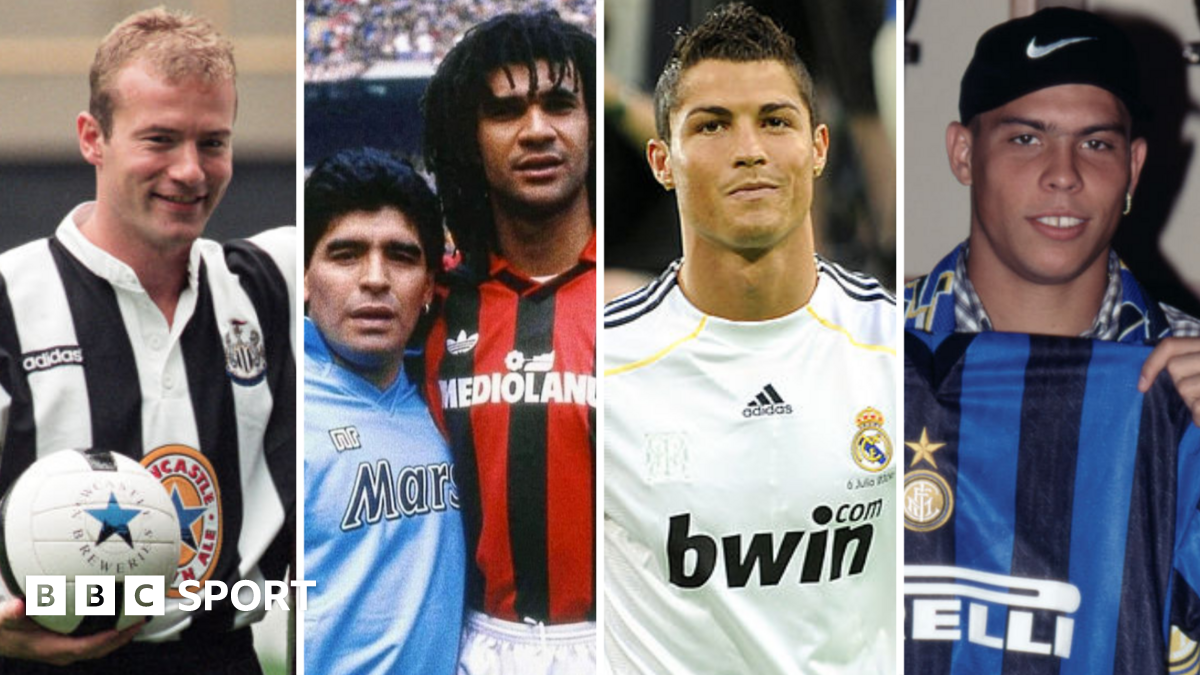
Ranking the most successful world record transfers of the past 50 years

Published

on

Will the £200m Paris St-Germain-paid Barcelona for Neymar Jr ever be surpassed?

Records are there to be broken, but that figure has stood as football's most expensive sum for almost a decade now and it is hard to see anyone topping it soon.

Yet tracking the progression of the world record fee offers an insight into evolving trends of power and dominance in global football – from the Italian golden era to Real Madrid's Galactico splurge and, ultimately, Parisian riches.

In the past half century, since Vicenza made jointly-owned Paolo Rossi the most expensive player when acquiring him from Juventus, the record has been broken 20 times, most recently in 2017.

The names glitter like their price tags, Diego Maradona and Brazilian Ronaldo both there twice – being the world's most expensive footballer places you in an elite club where goals, glory and prestige are currency.

Not all premium purchases pack a punch, of course. Neymar brought profile and panache to Paris but could not deliver the holy grail of European success, Denilson's trickery failed to help Real Betis beat the drop, a car crash curtailed Gigi Lentini's buccaneering brilliance.

But let's look at those record deals that did prove a hit – value for money, if you like, moves that would have money saving expert Martin Lewis nodding approvingly.

I've ranked the top 10 from the past 50 years. You can have your say below, too.

Haaland? Kane? R9? Ranking the best centre-forwards this century

Football's great entertainers – ranking the biggest showboaters

"Wales, Golf, Madrid." Gareth Bale wasn't always adored at the Bernabeu, and when former Real Madrid star Predrag Mijatovic suggested those were the order of the Welshman's priorities, it stuck.

For all the noise that he didn't care, though, Bale left Madrid with five European crowns.

Only Cristiano Ronaldo has more than his three Champions League final goals and arguably no one has done it better than Bale's 2018 bicycle kick against Liverpool.

His legacy among Madridistas may have been scorched by his penchant for the putting green, but Bale's ability to deliver big moments, and 106 goals in total, eked enough from his £86m arrival in 2013 to reach number 10 on this list.

Gareth Bale joined Real Madrid from Tottenham for £86m in 2013 – he won five Champions Leagues, scoring in two finals, as well as three La Liga titles, a Copa del Rey and numberous super cups

Which one of Ronaldo's world record moves was better? When he burst into the global footballing conscious with 47 goals in 49 games during a single season at Barcelona after arriving from PSV for £13.2m?

Or the debut campaign at Inter where, up against the pound-for-pound best defenders in the world, he toyed with Serie A markers and netted 34 goals in all competitions?

His first Ballon d'Or in 1997 straddled those electric campaigns, starring in Barcelona's Cup Winners' Cup and Copa del Rey triumphs, and at the Nou Camp they were certainly wowed – the Catalan giants just wish they could have held on to 'The Phenomenon' for longer.

Inter, having stumped up the Brazilian's buyout clause, got a 20-year-old with the world at his record-breaking feet who would lead them to Uefa Cup glory that season and later captain the Nerazzurri.

Ronaldo's Barcelona stint only lasted one season, but saw him score 47 goals in 49 games for Bobby Robson's side. At Inter, he netted 59 in 99 games

But Ronaldo's dreaded knee injuries meant his time at San Siro never realised the glorious heights of that first scintillating season.

After the initial injury in November 1999, by which point Inter had paid another world record fee for Christian Vieri, Ronaldo managed only 10 Serie A games in two years before joining Real Madrid after Brazil's 2002 World Cup triumph.

With that in mind, Ronaldo's Barcelona transfer pips his Inter move to come in at eight. If his mesmerising spell in Blaugrana had lasted longer, it would be a lot higher…

Alan Shearer scored 206 goals in 405 games during 10 seasons at Newcastle, after joining from Blackburn for £15m in 1996 – a fee that with inflation has been suggested would be worth more than £200m today

The summer of 1996 was a fruitful one for club accountants. Before July was out, Newcastle United broke the record again to take Alan Shearer from Blackburn Rovers.

Shearer – after three successive seasons scoring more than 30 Premier League goals and a Euro 96 Golden Boot – had his pick of Manchester United or Real Madrid.

Instead he chose a £15m homecoming, looking to propel Kevin Keegan's Toon outfit from runners-up to title winners.

The goals flowed even if the silverware didn't – 206 in total, the England striker charged around St James', arm aloft, to become Newcastle and the Premier League's all-time top scorer.

Netting the most satisfying volley in Champions League final history is perhaps worth the £46.6m Real Madrid paid Juventus for Zinedine Zidane alone. Real purchased peak Zizou and got an immediate delivery on their dough that season.

The Frenchman joins this list at six as, despite that being his only European triumph as a player, Zidane's affiliation with the club saw him return to lead Madrid to three successive crowns from the dugout.

Barca fans threw objects, including a pig's head, at former star Luis Figo every time he took a corner during the Clasico in November 2002 – such was the volume of objects thrown that play was suspended at the Nou Camp for almost 20 minutes in the second half

The transfer that altered the course of Real Madrid's modern history, though, was snagging Luis Figo from bitter rivals Barcelona in 2000, heralding the dawn of Florentino Perez's presidency and the club's Galactico era, breaking the transfer record five times in a row over the next 13 years.

Perez, bidding to be elected, bet all his chips on bringing Figo to Madrid as the Portugal star's contract talks at the Nou Camp stalled.

Figo unwittingly found himself embroiled in a soap opera of a transfer saga – power in the hands of those who wanted a slice of his talent and crazed by the cash that came with it.

Figo looked dazed and bewildered at his unveiling but showed his class once he hit the Bernabeu turf. Winning the Ballon d'Or months after arriving in Madrid, in part for his form at Barcelona, was further salt in the Catalan club's wounds.

Barca's Culers responded with a pig's head.

Roberto Baggio scored 115 goals in 200 games at Juventus during an Italian era characterised by frugal defending. Baggio won the Uefa Cup and Serie A title, as well as landing the Ballon d'Or while in Turin

The story goes Fiorentina president Flavio Pontello had to barricade himself inside Stadio Artemio Franchi as a rioting mob of angry La Viola fans protested the sale of star Roberto Baggio to rivals Juventus for a world record £8m in May 1990.

The same wrath greeted Baggio on his return to Florence even as 'The Divine Ponytail', who converted to Buddhism after a career-threatening injury, refused to take a spot-kick against his old club and then wrapped one of the purple scarves thrown towards him around his neck.

That did nothing to satisfy supporters in Turin, who felt Baggio was reluctant to join anyway, even if the diminutive Italian's brilliance helped drag Juventus to a Uefa Cup triumph in 1993 and overcome Milan's Serie A dominance two years later.

Baggio left Stadio delle Alpi with 115 goals and 54 assists in 200 games, but the 1993 Ballon d'Or winner's contribution cannot be determined merely by stats.

Following Baggio at three is Ruud Gullit, a transformative cog in Silvio Berlusconi's own all-star cast assembled at San Siro after joining AC Milan from PSV for £6m in 1987.

Shortly after touching down in Milan, the versatile 'total footballer' who could play anywhere and do almost anything with his poise, skill and formidable frame, won the Ballon d'Or and helped the Rossoneri clinch a first Scudetto in a decade.

Gullit was one of three famed Dut

📰 மூல செய்தி (Source): https://www.bbc.com/sport/football/articles/cje4k4p1z0xo?at_medium=RSS&at_campaign=rss

முக்கியச் செய்திகள்

Facing a seismic by-election, the people of Makerfield tell us what matters to them

Published

on

In a handful of former mining towns and villages in north-west England, there is a lot of frustration with the state of the UK.

It is common to hear people say "Britain is broken", "we are forgotten", and calls for "change".

This is the Makerfield constituency, where locals are being heard louder than ever before in the most consequential by-election in decades.

A constituency that made up 0.1% of voters at the last general election is not only picking a new MP on 18 June.

Voters here are also potentially choosing the next prime minister.

That is because Labour's candidate, Greater Manchester Mayor Andy Burnham, has said that if elected, he would seek to enter any Labour leadership contest to replace Sir Keir Starmer in Downing Street.

First, Burnham must defeat his main rival in Makerfield, local plumber Robert Kenyon, who is standing for Reform UK, an insurgent party that is also aiming to win power in Westminster.

Britain is "broken", Reform UK claims, while Burnham says the country has been on "the wrong path for 40 years".

But in the dozens of conversations I had with voters, residents, business owners and political campaigners in Makerfield, the mood was more nuanced than the rhetoric suggests.

So what exactly do they want to change – and what are the candidates promising to deliver?

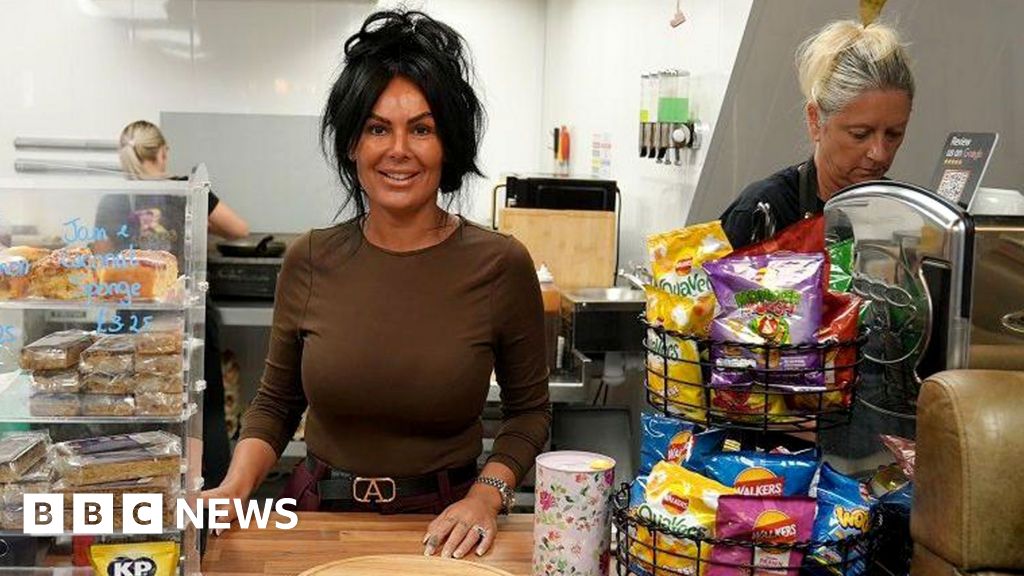
At Rose's Cafe, in Ashton-in-Makerfield, the largest town in the constituency, regulars are munching on their breakfast barms.

In 2023, Yasmin Ratcliffe jumped at the chance to open the cafe here, rather than where she lives, in nearby Leigh.

With the local council spending £6.6m on regenerating the town, Ratcliffe feels it is a good time to expand her business.

"I feel like it's a much better town in Ashton," she tells me. "It's a lot busier than we thought, so the team's growing."

On some indicators Makerfield seems to be doing well, with wages above the national average and high levels of home ownership.

The Greater Manchester region in which Makerfield sits has also been growing, generating a genuine buzz around Manchester as a city. A boom in developments, service industry start-ups and university graduates, among other factors, has driven economic growth.

While Manchester's lure has pulled in many entrepreneurs, Chris Ratcliffe saw potential in Ashton.

In 2019, having worked as an engineer near Manchester for 10 years, he founded Langen, a motorcycle manufacturer, in the town. The company's first line of 100 motorbikes sold out.

"There's an element of me that wants to prove a point that we can do it here," he says.

But Manchester's rising tide has not lifted all boats in Makerfield.

In some ways, the constituency is divided between the better-off neighbourhoods of Ashton, Orrell, and Winstanley in the west, and the more deprived areas of Platt Bridge, Abram and Hindley in the east.

In these latter areas, perceptions of "broken Britain" are easier to find. The problems residents complain about feel more acute and intractable.

Take the notorious illegal dump that has been piling up in the village of Bickershaw since late 2024. Despite several complaints, a fire at the site last summer, and a criminal investigation, the towering mountain of waste remains.

Even at a distance – about a quarter of a mile away – the acrid smell torments my nostrils.

Nicha Rowson, who lives near the tip with her husband and two children, has had to put up with it for almost two years now.

"The rats were a big thing," she says, sitting below what is left of her kitchen ceiling, which was largely removed to deal with the infestation.

It is yet to be fixed – and her neighbours are going through similar ordeals with rats.

She feels the seemingly immovable mess is a symbol of a country that is not working and where "human beings aren't a priority".

I found a similarly damning assessment in Platt Bridge, where residents have suffered severe flooding twice in a decade.

In 2015, Dawn Royds was assured it was a one-off – "an act of God". She believed that until New Year's Day last year, when she woke to blue flashing lights.

"The kids had been playing with some toys the night before and they were just floating about," she says. "That was what got me."

A minister was dispatched to survey the devastation. And since 2024, the government says it has invested £2.65bn in flood defences nationwide – in 2026-27, £329,000 has been allocated to Platt Bridge and nearby areas.

Yet, Dawn is convinced it will happen again. For her, it is one example of why "Britain isn't Great Britain anymore".

More evidence of this attitude can be seen in polls and research. In a report last year, More in Common said "broken" was the most common word Britons used to describe the country.

That has been true of focus groups the think tank organised in Makerfield, too. "They said Britain isn't working," says Luke Tryl, executive director of More in Common. "That the status quo isn't working."

The paradox, Tryl adds, is that people have very high trust in their neighbours and often describe their local area as "good".

Tryl says although it is clear Britain is "creaking at the top", his research on public opinion suggests the foundations of community still appear to be strong.

Even so, Reform UK tells me the "Britain is broken slogan has just cut through across the country".

"It's not something that we need to keep pushing to instil in people's minds," a Reform UK source adds. "Most people just know that Britain is broken."

Instead, the party's candidate, Kenyon, is focusing on hyper-local issues such as opposing new housing developments on green-belt land, pitching himself as a "normal" local lad.

Out on doorsteps, Reform UK is trying to contrast this with what it describes as Burnham using Makerfield as "a stepping stone" to No 10. This is echoed on Ashton High Street by Lewis Ash, who tells me: "I don't want it to be a stepping stone for Andy Burnham."

In the same shopping precinct, Daniel Jones says he is sceptical of every candidate's intentions, saying they have "all [have] got their own agenda… to advance their career".

On the campaign trail, Burnham has been having three simultaneous conversations – one with locals, one with the Labour MPs who could help make him prime minister, and one with the nation as a whole.

The Labour veteran is trying to keep it local in Makerfield, preferring to talk about his ideas to ease the cost of living and linking them to his record as mayor of Greater Manchester – pointing to cheaper bus fares.

Having claimed to have knocked on every door in the constituency several times, as Reform UK has, team Burnham's approach is to send their candidate to speak to undecided voters personally, often about local issues.

His team says he is embracing difficult conversations with voters who are looking for change in a constituency that has elected Labour MPs for 120 years under previous boundaries – but where Reform UK won every ward in May's local elections.

Although I saw mostly Reform UK and Burnham signs and posters adorning the streets I walked, other parties are vying for votes as well.

The Green candidate Sarah Wakefield says she wants to offer more "hope" and "better solutions" to voters in Makerfield.

A former mayor of Wigan, Conservative candidate Michael Winstanley is positioning himself as a community champion, while Jake Austin, who is standing for the Liberal Democrats, claims his party has the best plans for reducing household living costs.

Local campaigners believe the by-election is on a knife edge, not least thanks to Restore Britain, a relatively new party led by former Reform UK MP Rupert Lowe.

In the few constituency opinion polls there have been, which should be treated with caution, Restore sits in third-place and has been buoyed to an extent by support on X from the richest man in the world, Elon Musk.

"People are fed up," says one Restore door-knocker, among a group of six activists wearing matching party-branded caps and T-

📰 மூல செய்தி (Source): https://www.bbc.com/news/articles/ckg4dywykjeo?at_medium=RSS&at_campaign=rss

Continue Reading

முக்கியச் செய்திகள்

Social media on trial: Four important cases to watch

Published

on

When social media started to take over the internet 20 years ago, it was widely hailed as a game-changing technology that would connect people across divides and make information more accessible.

Today, companies like Meta, owner of Facebook and Instagram, Google, owner of Youtube, and Snapchat, along with relatively newer platforms like TikTok, Discord and social gaming platform Roblox, are facing thousands of lawsuits in the US over claims that they have instead harmed users, children in particular.

Taken together, the outcome of the lawsuits, whether they ultimately settle out of court or end up with jury verdicts against companies, could change the way social platforms operate forever.

"It's created a stage that not only legal observers are watching, but regulators and lawmakers are watching closely as well," Eric Talley, a lawyer and professor at Columbia Law School, said.

Talley noted that the way this growing wave of lawsuits against platforms is feeding into broader public perception is likely to influence political elections for the next several years, impacting new and revised laws and regulations.

Many of the cases are going through courts in California, where all of the major social platforms are headquartered. Known as the "California effect", legal and policy changes enacted in the state tend to lead to nationwide changes.

"There's no denying anymore that there is an issue with child safety on the platforms," Alexis Shore Ingber, a communications law expert and a professor at Syracuse University, said. "We are seeing an inflection point. These cases are significant."

Already this year, Meta and YouTube notched an unprecedented loss in a case brought by a young woman who claimed she was addicted as a child to social media, contributing to her mental and emotional health struggles. The companies were ordered by a jury to pay her a combined $6m (£4.5m) in damages. Both firms said they disagreed with the verdict and intended to appeal.

Meta also lost a bigger case in New Mexico, brought by that state's attorney general accusing the company of essentially misleading the public that its platforms were safe for children despite known issues with young people being sexually exploited on them. Meta said it also plans to appeal against this verdict.

During the years these cases were brought and resolved, Meta has released changes to its platforms aimed at making them safer for young users.

But broader change to the platforms, how they are designed and function and even accessed, is likely to take years more, and more court rulings against them.

Between this year and next, Meta and the other major social platforms are poised to fight their way through more trials where juries could consider a host of claims by young users, their parents, school districts, and state attorneys who allege an array of ill effects from the way social media platforms are designed and operate.

Even a billionaire is prepared to take Meta to trial over its hosting of advertisements that scam people out of money.

The BBC looked through scores of cases in the US to find the handful of lawsuits against social media and social gaming companies that are on track for trial in the next year or so and could have a significant impact on the platforms' businesses and operations.

According to Adam J. Schwartz, a lawyer who also founded an online document review tool, the following lawsuits "are the bellwether cases that will set the tone and tenor for shaping the law in the future".

This sprawling multidistrict litigation (MDL) in California includes allegations from more than 1,000 school districts across the US.

Broadly, the schools accuse Instagram, YouTube, Snapchat and TikTok of being intentionally designed to be addictive, which has allegedly harmed children mentally and emotionally through their excessive use of platforms.

The schools claim that dealing with the ill effects of social media has cost them money and resources, and that the platforms should be deemed a "public nuisance" and held liable for impacting children's well-being.

Although a jury trial for certain of the school districts' claims is now set to begin in February, as the platforms recently settled with a school district that was to be the first trial, all of the cases could take a couple more years to resolve completely.

Should court outcomes go against the platforms, everything from the way platforms display user engagement to who they allow on the platforms could change.

A spokesman for YouTube said: "The allegations in these complaints are simply not true."

A spokeswoman for Snapchat said: "We fundamentally disagree with the allegations – we do not target schools."

Meta declined to comment and TikTok did not respond to a request for comment.

Attorneys for California and Colorado led a group of 29 states in filing in 2023 a lawsuit against Meta and Instagram. It is set to go to trial in August.

While it is also before the same judge as the MDL in California, the states are accusing Meta alone of violations of the Children's Online Privacy Protection Act, a federal law known as COPPA. The law was intended to protect children under 13 years old from being targeted by businesses operating online but was enacted in 2000.

Meta has already provided more than 2 million documents in the case, according to court records.

Should the states prevail in their claims, it is demanding that Meta better prevent users under 13 years old from using its platforms and remove data it has previously collected from underage users, along with a host of other changes.

Meta uses such data to do things like ad targeting and train its artificial intelligence (AI) models and tools.

A spokesman for the company declined to comment.

This case against Roblox and Discord was brought by a 13-year-old boy in state court in San Mateo, California. The boy claims he was recently groomed and solicited through both platforms by an adult sexual predator who was subsequently arrested for his crimes against more than two dozen children.

The lawsuit argues both platforms were defectively designed and engaged in false marketing about safety for young users and so should be held liable for the harm young John Doe came to.

Roblox, which is a gaming-focused platform with many social media features, and Discord tried to get the case into arbitration, which is a private legal process outside the court system. The court refused, but the case is currently on hold pending the companies' appeal against that decision.

Should Roblox and Discord lose their appeals, the case could go to trial later this year. A court verdict against the platforms may bring changes to age-gating and the ability of strangers to interact with young users through platform messages and chat spaces.

A spokeswoman for Discord declined to comment. A representative for Roblox did not respond to a request for comment.

Not all of the cases against social media platforms heading towards trial have to do with harms against children.

Dr Andrew Forrest, an Australian billionaire, sued Meta in California in 2022 over the company's alleged failure to combat scam advertisements tricking Australians into fake investments that allegedly proliferated on Facebook using his name and likeness.

With claims including misuse of his image and unjust enrichment, because Meta makes money from ads on its platform no matter their goal or outcome, Forrest's lawsuit could be one of the most significant.

He is asking the court to find that Section 230 of the Communications Decency Act cannot be used as a defence by Meta in the case. Meta is arguing that it is protected from Forrest's claims by Section 230.

Enacted in 1996, Section 230, as it's usually referred, essentially gives legal immunity to platforms for anything that occurs on them.

If the court ultimately sides with Forrest, it could upend decades of defences by online platforms.

A spokesman for Meta declined to comme

📰 மூல செய்தி (Source): https://www.bbc.com/news/articles/c9q39l447l4o?at_medium=RSS&at_campaign=rss

Continue Reading

முக்கியச் செய்திகள்

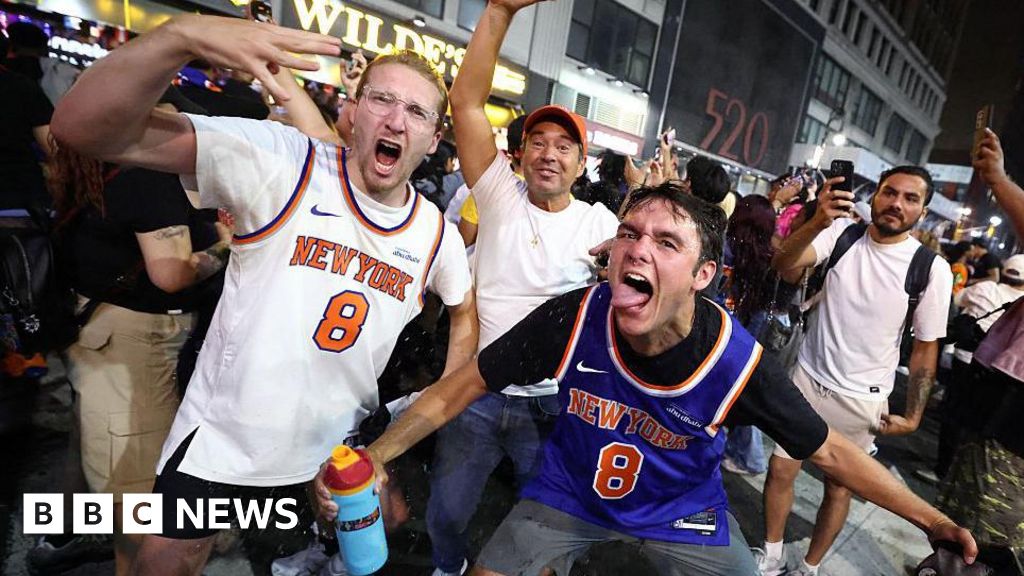
Knicks fans go wild as New York team makes biggest comeback in NBA Finals history

Published

on

A star-studded crowd saw the New York Knicks record the biggest comeback in NBA Finals history on Wednesday night, beating the San Antonio Spurs by one point in the last 1.2 seconds of the game, after trailing by 29 points.

It was game four of the feverish best-of-seven NBA Finals – the first finals the Knicks have hosted in 27 years.

The final score of 107-106 means the Knicks now enjoy a 3-1 lead and are just one win away from a famous series victory.

Famous and not so famous fans erupted in chants of "O-G! O-G!" for player OG Anunoby, who scored the winning three points. Taylor Swift, Timothee Chalamet and director Spike Lee were all watching in the Madison Square Garden stadium.

New York Mayor Zohran Mamdani posted on X in all caps, "SPEECHLESS", while Swift, who was wearing a T-shirt that said "Stevie Knicks" – a play on the name of the team and the Fleetwood Mac frontwoman – jumped for joy as she left the court, stopping to be twirled by one of the Knicks City Dancers.

Knicks coach Mike Brown OG Anunoby's move "has to be the most iconic shot in the history of New York basketball," Brown said. "It was just unbelievable."

This season has represented a stunning reversal of fortune for the Knicks who haven't been in the finals since 1999, when they lost to the Spurs. New Yorkers have been out in the streets celebrating each win.

"The city is electric," a fan told the BBC earlier in the week. New York has been decorated in a Knicks theme from the top of the Empire State Building to the paws of the marble lions outside the New York Public Library's Fifth Avenue branch.

"I can't say I've ever seen anything like this before because in 1999 I was 4 years old. I'm just trying to soak it all in," Resident Sol, 31, told the BBC earlier this week, saying he couldn't be more excited.

After Wednesday's result, the team need to win just one more game to win the national championship for the first time since 1973. Their first chance will come on Saturday night, when they will play Game five in San Antonio.

But comebacks can work both ways – San Antonio may be the new underdogs, but they could still win, if they take the next three matches.

📰 மூல செய்தி (Source): https://www.bbc.com/news/articles/cr47lyzr4q9o?at_medium=RSS&at_campaign=rss

Continue Reading

Trending

Copyright © 2024 by 7Tamil Media, All rights reserved.