More Iranians being sold ‘privilege’ of limited internet access, but most remain in the dark.
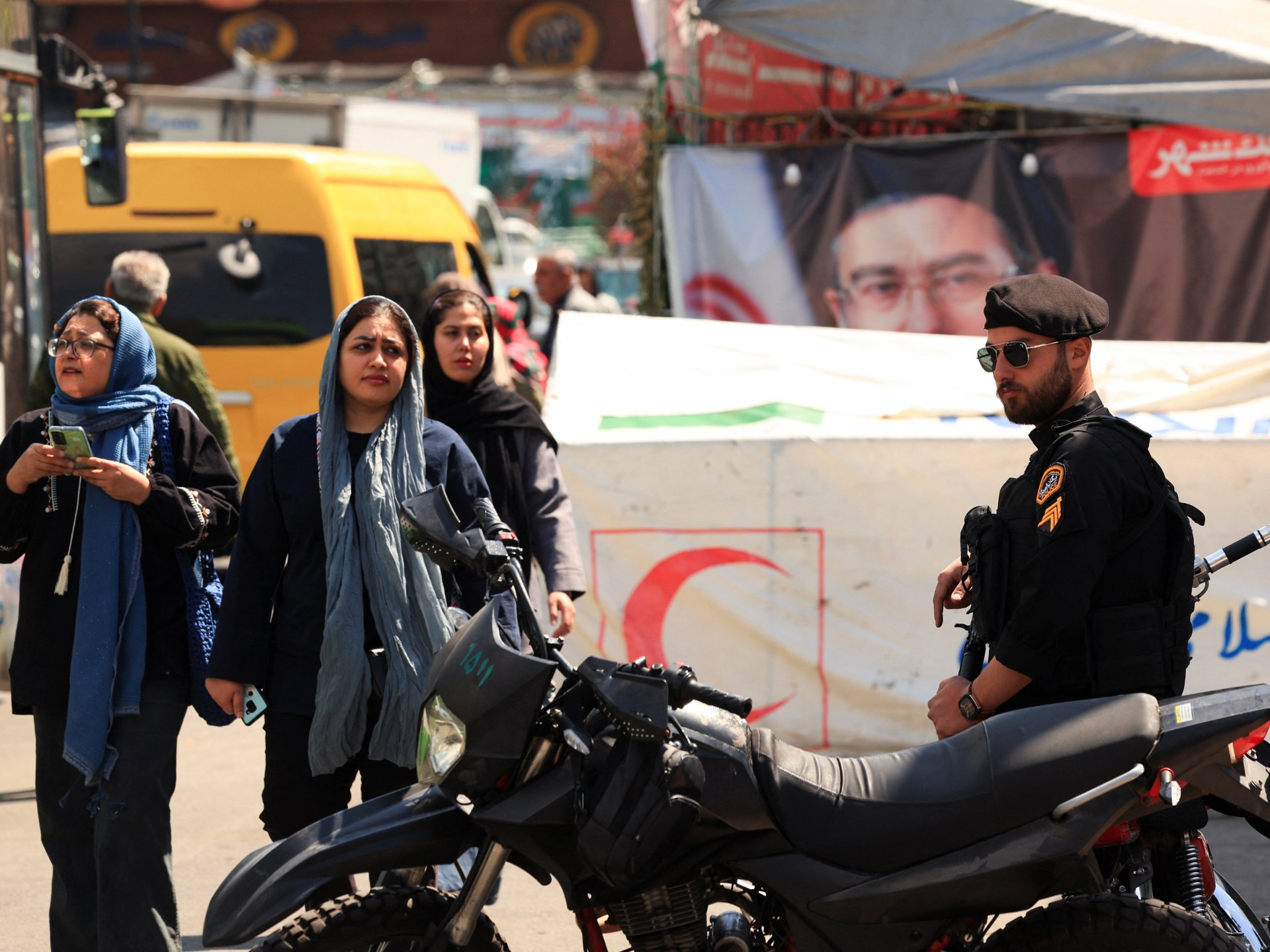
Tehran, Iran – Iranian authorities have been slowly expanding a list of individuals and entities deemed eligible to have limited internet access. However, the action serves only to illustrate that most of the population of more than 90 million people remains disconnected during the war with the United States and Israel.
The government imposed a near-total internet shutdown across Iran within hours of the first bombs falling in downtown Tehran on February 28. The move has seen internet connectivity reduced to about 2 percent of pre-war levels at most, according to monitors.
A limited intranet functions to keep some local services and apps alive, but people are highly frustrated, and the economy has suffered billions of dollars in lost revenue as a result of more than 1,200 hours of the digital blackout. One business, however, is thriving: the black market for internet connections.
This week, tens of thousands of people and organisations selected by the state based on their positions and professions signed up or received text message invitations to connect through a service called Internet Pro.
That is the name selected for a limited and metered internet connection through which thousands of sites and most global messaging services are blocked but some applications, app stores and Google services function.
The service is being sold in the form of 50-gigabyte data packages by three top state-linked telecommunications companies. State authorities can also issue limited internet protocols (IPs) for global connectivity to designated office spaces of approved companies and businesses.
Applicants need to provide full identification and professional or referral documents. Business owners and traders introduced to the Ministry of Information and Communications Technology and other authorities through their guilds and chambers of commerce were among the first to be connected this month.
Doctors, university professors, researchers and academics in various fields were nominated by the Ministry of Science this week. Freelancers were told to sign up through a webpage set up by the state-linked Iranian ICT Guild.
This is a separate service from that enjoyed by holders of “white SIM cards”, which offer less restricted connections and are reserved for officials, state-linked entities and individuals, journalists and some civilian supporters of the establishment perceived to be helping “get the message out” on behalf of the government.
For years, Iranian authorities have stressed that they are against a tiered internet system, which in effect renders connectivity a privilege, not a fundamental right in an age of rapid digital advancement.
But with such a system now in action and expanding, some state media are now framing it as a necessity despite harsh criticism regarding such an idea from the population over the years.
The state-linked ISNA news agency this week branded Internet Pro an “expert option providing a stable connection for professional activities”. The outlet encouraged potential applicants to contact the three telecommunications companies to see if they are eligible.
No such tiered system was implemented at a significant scale around the short-lived internet blackout imposed during the 12-day war with Israel in June or the 20-day near-total shutdown in January during deadly nationwide protests.
But the extended and unprecedented internet shutdown now in place sees eligible people and businesses giving in and electing to sign up.
Not all are convinced, however. Many are reported to have taken to state-run online platforms and news sites with demands for the full restoration of the internet.
On the local technology-focused site Zoomit, which can be reached through the intranet, thousands of people have recounted experiences of lost jobs and disrupted lives as a result of the shutdown.
“I’m a cybersecurity and network expert. Our servers and systems have not received security updates for about two months, and we’ve lost all our integration with open-sourced communities,” one user wrote. “This has significantly increased risks and stopped development, it’s unclear if my team will have its contract renewed this year in these economic conditions.”
Iranians circumventing the filternet through virtual private networks (VPNs) and other methods have also rejected the tiered system.
Aliasghar Honarmand, the editor in chief of an online privacy news website and an online medical news and research service, wrote on X that he has ignored multiple offers for Internet Pro over recent days.
“Access to the free internet is a fundamental and basic right for all people,” he wrote, adding that giving it to elites based on state classifications leads to normalising severe internet disruptions, creating an illusion of free connectivity, undermining social cohesion, violating personal privacy and propagating a black market.
Since the start of the war, Iranians going online from inside and outside the country have observed a battle between developers working on behalf of the state to deepen internet restrictions and those trying to skirt them.
This week, a circumvention method known as SNI (server name indication) Spoofing became popular after an unidentified user reported that he managed to establish a secure connection and published a guide.
The method tricked internet censors into thinking the users were visiting a permitted site or service when they were accessing blocked content. However, the authorities quickly moved to block gateways allowing the method to work, resulting in its demise within days.
Two experts who spoke with Al Jazeera said authorities are now deploying a heavily restrictive and centralised internet architecture through something called a national NAT (network address translation): a single country-scale gateway that all internet traffic must pass through.
This allows the authorities to reroute and bundle connectivity across Iran through a central operator with the aim of achieving higher levels of control and monitoring and an improved capacity to combat circumvention efforts.
But the method is hardware-intensive and costly, can lead to degraded or lagging connections and could potentially act as a single point of failure for saboteurs to exploit, the experts said.
One young resident of Tehran who has used Internet Pro issued for her university professor mother told Al Jazeera that most platforms considered essential by many people, such as Telegram, WhatsApp and Instagram, remain blocked on the service. ChatGPT was also blocked, but China’s DeepSeek was available on the service, she added.
“This is ridiculous and stupid because all groups of society, for whatever reason, need and deserve the internet. This move excludes most people who have no links to get them connected, including the elderly, and serves to keep the internet out for longer,” she said.
📰 மூல செய்தி (Source): https://www.aljazeera.com/news/2026/4/20/iran-expands-limited-internet-access-but-restrictions-remain-for-most?traffic_source=rss


















 உலகம்9 years ago