Connect with us

முக்கியச் செய்திகள்

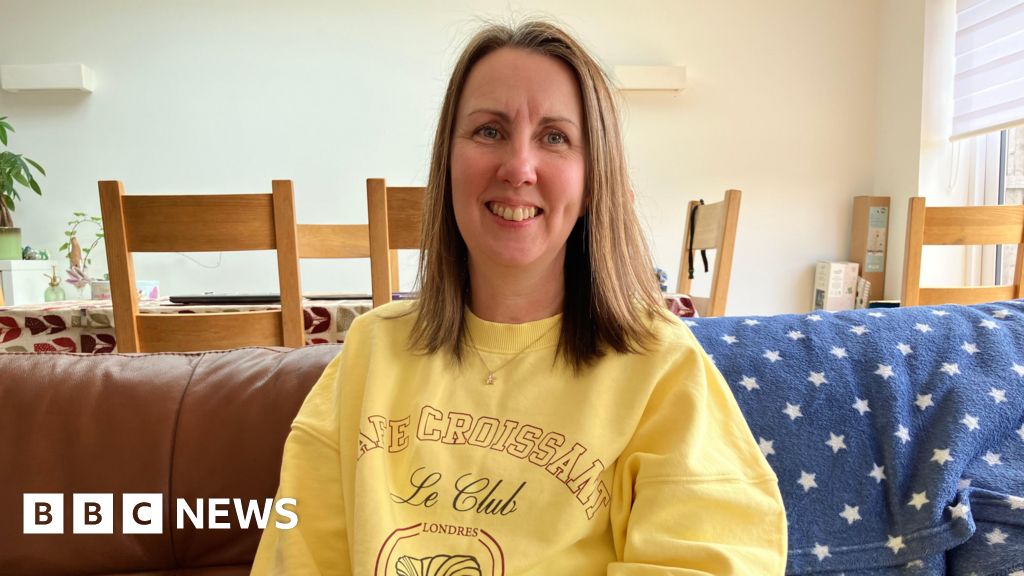
My weekly juggling act – being a teacher to other children and a mum to my own

Published

on

When she gets home from work, she worries she can be too short-tempered with her children.

"I'll be snappy with them when it absolutely isn't their fault."

Tickner is a teacher, as well as a mum of two.

She returned to teaching about four years ago, following an eight-year break to have her children. She worked part-time initially, before transitioning back to full time work.

She says balancing teaching and parenting can be like a "juggling act", and setting boundaries and routines has become paramount to managing the day.

"You feel like you don't get that moment to reset yourself between being a teacher and then coming home and being a mum."

The NASUWT teachers' union says the majority of people who responded to a recent survey of its members said they struggled to balance their work responsibilities with being a parent.

Seven in 10 of those responding said they had considered leaving teaching because of the impact of their work commitments on their children, the union says.

"I have considered leaving teaching, and have looked at other jobs outside the profession," she says, but adds that the salary she has reached at this stage of her career wouldn't be matched elsewhere.

Her husband works from home, which helps the family a lot, but Tickner says that sort of flexibility needs to be more prominent for teachers too.

It's an area the government is trying to improve as part of its pledge to recruit 6,500 new teachers.

It recently updated its guidance on flexible working, targeted towards schools on how to implement it, and for teachers who want to request it.

The latest annual data on teacher numbers, published last year, suggested the number of teachers leaving the profession had slightly improved in 2024-25, but remained high compared with previous years.

Tickner says some schools struggle to facilitate part-time or flexible staff, because of the need to have enough staff in school with the children each day.

But for her, more flexibility could be the difference between teachers staying in their jobs, or deciding to leave.

For Tickner and her family, a weekday starts at 06:00, when she and her husband get up, get ready and eat breakfast.

She is out of the door with her son Samuel at 07:30 to drop him off at the breakfast club at his primary school.

Her daughter Jennifer walks to her secondary school.

Tickner arrives at the school where she teaches at 08:00, with pupil registration starting at half past.

"I've got half an hour – that may be doing some last-minute printing or checking emails to see if there are any changes to the day," she says.

On Mondays, Tickner is on a cover rota, meaning she may have to take over a different lesson to that which she had planned to teach.

Teaching is an "all-consuming role", she says, and the behavioural issues she has to handle in the classroom can take an emotional toll – which she sometimes struggles to leave at the school gates.

"There's many children now with complex needs that you've got to take into account when you're teaching," she says. "It is hard, sometimes, not to take that home.

"I have been known to utter the phrase: 'I've spent a day being ignored by other people's children, I don't expect to be ignored by my own.'"

The school day finishes at 15:00, but is followed by teacher training every other Monday.

Tickner says she tries to finish as much of her lesson planning as possible while at school so she can leave by 17:00.

Planning takes up a lot of her time when she's not with her pupils.

After leaving school, she collects her son from after-school club, and arrives home at roughly 18:00 to have dinner.

"It can be as late as 10:30 in the evening that I can sit down and have time to myself or with my husband," she says.

Her working day varies throughout the week, with staff briefings and department meetings taking place on Tuesdays and Wednesdays.

As a head of department, Tickner needs to plan and deliver these sessions, which last an hour.

On Thursdays, after the school day has finished, there are academic board meetings every other week, and she hosts revision sessions for Year 11 students too.

It means she can stay at school for two hours after the end of the school day.

Her children also take part in after-school activities, with her daughter Jennifer at guides on a Wednesday and son Samuel at cubs on a Thursday.

Fridays are about trying to get ahead for the next week wherever she can.

"I make sure my lessons are prepared for the Monday so there are no surprises, sometimes there are phone calls to parents to make, they have to be fitted in as well."

Like lots of other teachers, there are evenings where she needs to do extra work, resulting in her giving her children more screen time than she would like.

"That can also create conflict and arguments in the home as well, as they don't always take too kindly to being told that screen time is over," she says.

"It feels like it could be avoided if I could focus more on them rather than work. It feels like you're just ignoring your own children."

She also believes she could have supported her own daughter more when she was making the move to secondary school, but at the time felt "overwhelmed" with work.

"It can be emotionally exhausting," she says. "I know that I am sometimes not the best mum myself when I get home."

Tickner acknowledges that school holidays are "certainly an advantage when it comes to childcare", but says work in term-time can get so intense "you need the holiday time to reset".

The cost of going away during the school holidays is also "restrictive", she says, and there is always work to catch up on or prep.

Over the Easter holidays this year she has supported her Year 11s with their revision. In summer, she is in school for exam results day, and as head of department she needs to provide analysis and feedback reports on those grades.

At the weekends, Tickner tries to structure her time to allow herself to spend as much time as possible with her children while doing school work.

When she worked part-time, she says she had the "luxury" of not doing any school work when the kids were in the house.

Now working full-time again, she tries to limit her work to around two hours on a Saturday or Sunday afternoon, as this fits around her children's swimming lessons and her son's cricket matches.

"You sort of swap one job for another one really," she says. "I need to do the meal planning, washing, ironing. That's another mum-wife job that I do at the weekend to make sure the weeks run smoothly."

At the weekends, "we make sure we do something as a family," Tickner says.

But she feels guilty when she can't spend as much time with her children as she would like.

There is often an expectation to offer after-school sessions, or even virtual sessions on a weekend, she says.

It can make her feel "conflicted and emotional" at the thought of missing one of her own children's milestones.

She was a stay-at-home mum when her daughter started school, so felt she was able to attend every event, like school plays or parent evenings.

But with her son it has been different since returning to full-time work.

"I've had to prioritise what I go to and what I don't," she says. "It makes me feel bad for not being able to support my son in the same way as I did my daughter."

Tickner says she feels she can manage the workload more effectively because of the support from her husband and the fact he can work remotely – but says she "can't imagine doing it all completely on my own".

She believes flexibility is crucial to retaining teachers like her.

"It is really hard to maintain that balance," she says. "There needs to be a more flexible approach again in schools.

"I think that would do a lot to retain female teachers."

📰 மூல செய்தி (Source): https://www.bbc.com/news/articles/c5yvvr5z2pro?at_medium=RSS&at_campaign=rss

முக்கியச் செய்திகள்

Iran says Strait of Hormuz is 'open' but tracking shows few ships moving

Published

on

Iran's foreign minister has said the Strait of Hormuz has reopened for commercial vessels, but added that ships should use designated safe lanes.

Tehran has effectively blocked the key oil shipping channel since the US and Israel attacked the country on 28 February. A ceasefire between the US and Iran is due to expire on 22 April.

US President Donald Trump said a naval blockade of Iranian ports would continue until a peace deal was agreed between the two countries but that it was "a great and brilliant day for the world".

Maritime groups say they are still verifying whether it is safe for vessels to travel through the strait, and tracking shows minimal ship movement.

The announcement by Abbas Araghchi, Iran's foreign minister, came on Friday – the first full day of a 10-day ceasefire between Israel and Lebanon.

"In line with the ceasefire in Lebanon, the passage for all commercial vessels through Strait of Hormuz is declared completely open for the remaining period of ceasefire on the coordinated route as already announced by Ports and Maritime Organisation of the Islamic Rep of Iran," he wrote on X.

Iranian state TV later quoted a "senior military official" as saying that the passage of these vessels would be through a "designated route" and that the passage of military vessels through the Strait would still be "prohibited."

This is likely referring to a map and two routes designated by Iran's Islamic Revolutionary Guard Corps (IRGC) and widely reported by Iranian media last week.

Some Iranian news outlets have criticised Araghchi's post. Tasnim News Agency, affiliated with the IRGC, called it "bad and incomplete", saying such passage would be considered "void" should the US naval blockade continue. Others called for the Iranian authorities to clarify the matter.

Iranian Parliament Speaker Mohammad Bagher Ghalibaf, who headed Iran's delegation in the recent talks with the US in Islamabad, said on X that Donald Trump "made seven claims in one hour, all seven of which were false".

On the Strait of Hormuz, he said that, with the "continuation of the [US] blockade", the Strait "will not remain open".

Iran is an ally of Hezbollah, a Shia Muslim political and military group based in southern Lebanon. Israel launched strikes on Lebanon on 2 March in response to those carried out by Hezbollah, which itself was retaliating against the US and Israel for its attacks on Iran.

Meanwhile, Trump said talks with Iran to end the war would continue over the course of the weekend, adding that he did not think there were too many significant differences between the two sides.

It comes after Iran's foreign ministry said the country's stockpile of enriched uranium would not be transferred "anywhere under any circumstances", denying Trump's claim on Friday that the regime had agreed to hand it over to the US.

Trump also told CBS News, the BBC's US partner, that no ground troops would be needed to remove the enriched uranium, saying that the US and Iran would "work together to go get it".

"And then we'll take it to the United States," he added.

About 20% of the world's oil and liquefied natural gas (LNG) usually passes through the strait, but the number of ships transporting this has dramatically decreased during the recent hostilities. Iran has threatened to attack tankers and other ships, as well as warning that it has laid mines.

This has sent shock waves across the global economy, causing fuel prices to soar. While the cost of oil plummeted on Friday following Araghchi's announcement, questions remain about the validity of it and whether a temporary reopening would allow ships to transit through.

"I need further clarification for the shipping industry that there will be no risks for the ships to navigate and it will be in accordance with international law," Arsenio Dominguez, the head of the International Maritime Organisation (IMO), told BBC World Business report.

The IMO has information that some ships have started to sail but that it still needed to verify this as "some ships turn off their identification systems in order not to be targeted", he said.

Cormac McGarry, director for maritime security at the consultancy firm Control Risks, said he was "no more optimistic than he was yesterday" about the strait reopening, despite Araghchi's announcement.

He told BBC's 5 Live Drive that the statement "basically changes nothing" as the implicit threat of mines remain.

"Right now, the scenarios are looking pretty bleak for shipping over the next few weeks," McGarry added.

UK Prime Minister Sir Keir Starmer said on Friday that his country and France would lead a multinational mission to protect commercial shipping routes in the Strait of Hormuz.

Speaking after a meeting of 49 countries, Starmer underlined the work would be "strictly peaceful and defensive" and would only be put in place once fighting in the region ends.

📰 மூல செய்தி (Source): https://www.bbc.com/news/articles/cwydexp39ddo?at_medium=RSS&at_campaign=rss

Continue Reading

முக்கியச் செய்திகள்

Orbán's era was over in a flash and Hungary's next PM is a man in a hurry

Published

on

Péter Magyar and his victorious Tisza party have wasted no time preparing for the transfer of power in Hungary after their dramatic landslide defeat of Viktor Orbán last Sunday.

They won 52% of the vote to put an end to his party's 16 years of continuous rule, which translates into up to 140 seats in the 199-seat National Assembly.

Orbán's Fidesz have slumped from 135 to about 55 seats.

The count will be finalised on Saturday – including recounts in closely tied constituencies, and votes cast abroad.

Magyar has won a pledge from President Tamás Sulyok to bring forward the formation of the new parliament to the week beginning 4 May. Parliament can then elect the new government.

He also gave combative interviews to public service TV and radio, which have largely ignored or attacked him for the past two years.

He has promised to pass laws to suspend their news programmes, until impartial editors can be appointed.

Armed with a so-called super-majority of more than two-thirds of seats in parliament, he also plans retroactively to limit the number of terms a prime minister can serve to two.

Viktor Orbán has already served five. If that goes through, Magyar could slam the door on Orbán's return.

It was not until late on Thursday that Orbán finally broke his silence after Sunday's defeat, in an interview on the Patrióta YouTube channel.

"This is the end of an era," said Hungary's beaten leader. "We must bear this defeat with dignity."

He spoke of feeling "pain and emptiness" about the defeat, taking full personal responsibility for what happened. But he offered no analysis of the main mistakes of his campaign, other than the failure to finish the Russian-designed Paks 2 nuclear power station, which is running six years behind schedule.

A meeting of the top leadership of Fidesz is scheduled for 28 April, ahead of a party congress in June.

In the interview, Orbán said he would continue to lead Fidesz if he was re-elected, but added the party needed "a complete renewal".

Of the rump of 55 seats Fidesz will occupy in the new Parliament, currently only 12 are from individual constituencies, and the rest are from the party lists.

Many of the new deputies on the party lists should be replaced, as they were not suited to working in opposition, he said. There have already been some calls for change, in a party where dissent is rarely expressed in public.

"I think [Orbán] does not have to resign at the moment," said András Cser-Palkovics, Fidesz mayor of the western city of Székesfehérvár. "He should wait for the national caucus and then start assessing [the result]. Then we should have a leadership election."

There is no obvious successor to Orbán in the party, and none with his skill or charm at integrating different opinions and ambitions.

US and British advisers criticised the main Fidesz campaign slogan "the safe choice", because it would alienate young voters.

But it was hard for a party in power for so long, to present itself to the voters as the party of change, one source told the BBC.

In response, two younger politicians, Foreign Minister Péter Szijjártó, 47, and Transport Minister János Lázár, 51, often appeared at Orbán's rallies. But rather than reinvigorating the party, their dynamism just made its leader seem old and tired.

Orbán will be 63 next month, but the wear and tear of 38 years in frontline politics are obvious to even his hardcore supporters.

There is a mood of fear and recrimination in the governing party.

Rumours of imminent arrests for corruption swirl around Budapest. On social media, Tisza supporters are impatient for those who grew rich illegally under the previous government to be held to account.

"My message to Fidesz leaders and their stooges: It's no use playing the innocent little ballet girl now, and acting as if nothing happened," he posted on Facebook. "We know what you've done to our beloved homeland and the Hungarian people. And don't doubt for a single moment that 'you will reap what you sow'."

In downtown Budapest, just about every single Fidesz poster has been defaced. On many, the word, Vége – the end – has been spray-painted. Others have been ripped, and redecorated with expletives.

The party's sudden fall from grace in the eyes of the population, even of some erstwhile supporters, has been spectacular.

The tough tone of the incoming Tisza leaders appears to be both emotional and tactical.

They are taking revenge for the campaign of demonisation which the government-controlled Central European Press and Media Foundation (Kesma) has orchestrated against them and against Magyar personally. Kesma includes 476 titles, of which around 50 are primarily news outlets.

One of the first problems Tisza faces is to stop money being taken out of the country by businessmen close to the ruling party. Dubai is a favourite destination of Hungarian oligarchs.

Another is to prevent the destruction of evidence of corruption, for example in government ministries.

While papers are shredded in some offices, two Tisza insiders told the BBC, officials are offering Tisza pen drives with digital copies, in exchange for keeping their jobs, or immunity from prosecution.

In the week before the election, as opinion polls consistently predicted a big opposition majority, Tisza claims dozens of contracts were signed with favoured companies, committing the state to future IT, research, construction and other projects.

With their new, two-thirds majority, they will be able to pass laws to restore checks and balances eroded or destroyed by Fidesz in the past 16 years.

In his campaign, Magyar promised to establish an office to recover stolen state assets.

This week, he repeated his promise to join the Luxembourg-based European Public Prosecutor's Office (EPPO). That would help prove to the EU that he is eager to fight corruption, but it only has the power to investigate the misuse of EU funds.

He has also held talks with Zsolt Hernádi, CEO of MOL, the Hungarian energy giant, which operates two refineries in Hungary and Slovakia, on which both countries depend.

The urgent restoration of oil supplies through the Druzhba (Friendship) pipeline from Russia across Ukraine, is one of the few subjects on which Magyar and Viktor Orbán agree. It has been closed down since late January, but Ukrainian President Volodymyr Zelensky said this week the oil could start flowing by the end of the month.

Hungary's incoming prime minister says he wants to diversify Hungary's oil supplies, especially by making better use of an alternative pipeline from the Croatian island of Krk.

Almost three-quarters of 18-29 year-olds are estimated to have backed Tisza, and a former Hungarian ambassador to the US under Orbán, Réka Szemerkényi, told the BBC she was impressed by the messages that Hungary's younger generation had conveyed to their new leaders.

"'Ria, Ria Hungaria', meaning we love our country," was one, said Szemerkényi, now at the Equilibrium Institute in Budapest. "Then the chants of 'Europa', and the third I heard repeatedly was 'Russians go home'. These three together are like a foreign policy agenda."

On Friday, a high level delegation from European Commission President Ursula von der Leyen's office arrived in Budapest for informal talks with Tisza officials, led by Péter Magyar.

To access €17bn (£15bn) in EU funds, withheld from the Orbán government, his new government will need to meet 27 criteria – on independence of the judiciary, tackling corruption, and liberating the media from government control.

Hungary's economy is in a deep slump, and Magyar and his team know they will have to hit the ground running.

📰 மூல செய்தி (Source): https://www.bbc.com/news/articles/c4g40npz37lo?at_medium=RSS&at_campaign=rss

Continue Reading

முக்கியச் செய்திகள்

Endangered British dishes – and the home cooks reviving them

Published

on

Ever heard of carrageenan pudding? No? Neither had food content creator Annie Mae Herring until a few weeks ago.

"It was awful," says the 33-year-old from Essex. "It was a soggy welly, with, like, Fairy Liquid and a bit of salt."

A milk-based dessert similar in appearance to a blancmange, the pudding uses carrageen moss – a type of seaweed found in coastal areas – to give it a gelatinous texture.

"Maybe I did it wrong, and I will absolutely throw my hands up in the air," Herring admits, before adding jokingly that, either way, it "may die a fiery death".

This pudding is one of many dishes Herring has been making and posting to her followers, as part of a social media series exploring endangered and lost recipes from the UK and Ireland.

Other dishes include a Staffordshire clanger – a half-sweet, half-savoury pasty she describes as "wonderfully strange"; Brown Windsor soup, which is associated with the Victorian royals; and chocolate concrete, a school-dinner classic Herring paired with a radioactive green custard, reminiscent of her own school days.

Herring has been making food content for a decade, but nothing has captivated her audience as much as this most recent series. Many of her viewers recall eating these dishes as children.

"Thanks for the trip down memory lane: we used to have this at primary school – it was my absolute favourite," one follower commented on a video of a Sussex pond pudding, which has a whole lemon encased inside a steamed suet pastry.

"Each table of six children had a whole one. One child was the server of the day, who sliced it into portions.

"We had a large slice each with custard poured by the pourer of the day."

Another commented on a video of an Eve's pudding, a cake batter baked with apples: "I think this is the dessert my grandmother always made for Sunday lunch!

"But as she grew up in the Depression and never had cream for the table, the family served it with milk. Now I just don't know how you could eat it if not with a splash of milk on top."

Herring says she had expected a little bit of nostalgia, but it's been "overwhelming just how emotional people have been".

Herring isn't the only one delving into the UK's culinary history.

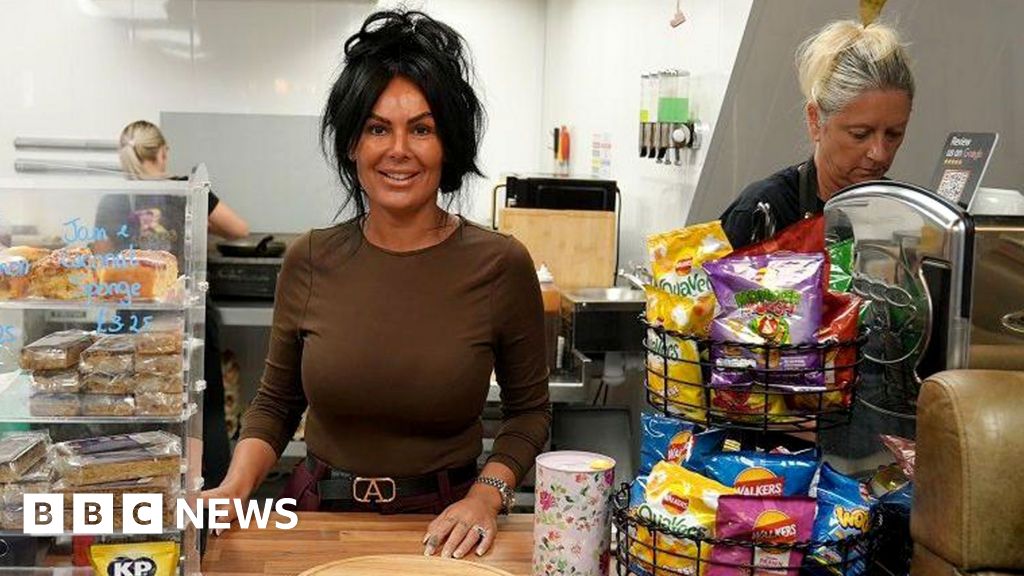
Shannon McCarthy, a self-described "goth baker" from Barnsley, has been exploring old regional recipes from across the country.

Dishes she's made range from panackelty, a stew consisting of potatoes, onions and corned beef, to Staffordshire oatcakes, a type of yeasted pancake, and Lancashire hotpot, made with mutton or lamb. All have evoked strong emotions among her followers.

"People love them so much, they can't believe that other people haven't heard of them," she says.

Dr Neil Buttery, a chef and food historian, says these "hyper-regional" dishes are among those most at risk of disappearing.

Others include jugged hare and flummery – an oat-based fermented jelly, associated with farmhouse production and poverty.

Some endangered dishes aren't quite so obscure, however.

Buttery says there are some we probably recognise the names of but probably couldn't describe in detail and wouldn't really cook any more – like spotted dick.

While some of these dishes can be found on the menus of high-end restaurants focusing on British cooking, he argues the bar in deciding whether they are endangered or not often lies in whether people still regularly make them at home.

Herring worries some of these rarer dishes may soon disappear altogether.

"It's important we know that these recipes exist before they entirely disappear," she says. "They provide a snapshot of a different time".

But not everyone feels all dishes need to be revered to the same degree.

Chef and restaurant owner Anna Tobias is a champion of old-school British desserts, which often feature on her restaurant Café Deco's menu. While she says they are often best-sellers, she feels that there are some recipes that deserve to be relegated to history.

"Ultimately, the recipe has to be good – there are some really awful ones," she says, referencing strange combinations she has seen in cookbooks, including banana and herring and lamb and crab.

"Classic dishes are classic for a reason," she continues, "because they're good.

"Because they've been tried and tested – and accepted."

One business cashing in on a classic regional dish is La Rondine bakery in Bedford.

It sells a former school-dinner staple known as chocolate toothpaste. A sweet tart filled with a chocolate paste made with cocoa and milk powders.

Carlo Garganese, who runs the bakery alongside his father, Salvatori, says he believes the tarts are so popular – with the bakery selling 1,000 a week – because anyone who went to school in Bedford will fondly remember eating them at lunchtime.

"I think that's carried over into their adulthood," he says.

One business that sells steamed savoury suet puddings, an old-school British classic, worries memories of days gone by may not be enough to keep their puddings going in the long term.

Matthew Botley, head of operations at Kentish Mayde, says he can see a time when the puddings will "get forgotten as a British food".

While the puddings are popular among an older demographic, younger people don't tend to buy them, he says.

"I think we've got a few years of it yet, but I can see a time when the people who are eating them are no longer around."

While nostalgia is "massively" important in preserving endangered dishes, Buttery says, "you've got to pass it down, so that the next generation below you, or even the next one down from there, can also feel nostalgic about it in 50 years time.

Photographs copyright of Annie Mae Herring and Shannon McCarthy

📰 மூல செய்தி (Source): https://www.bbc.com/news/articles/cje4pl85pxwo?at_medium=RSS&at_campaign=rss

Continue Reading

Trending

Copyright © 2024 by 7Tamil Media, All rights reserved.