Connect with us

முக்கியச் செய்திகள்

Top Foreign Office official to leave post after Mandelson vetting row

Published

on

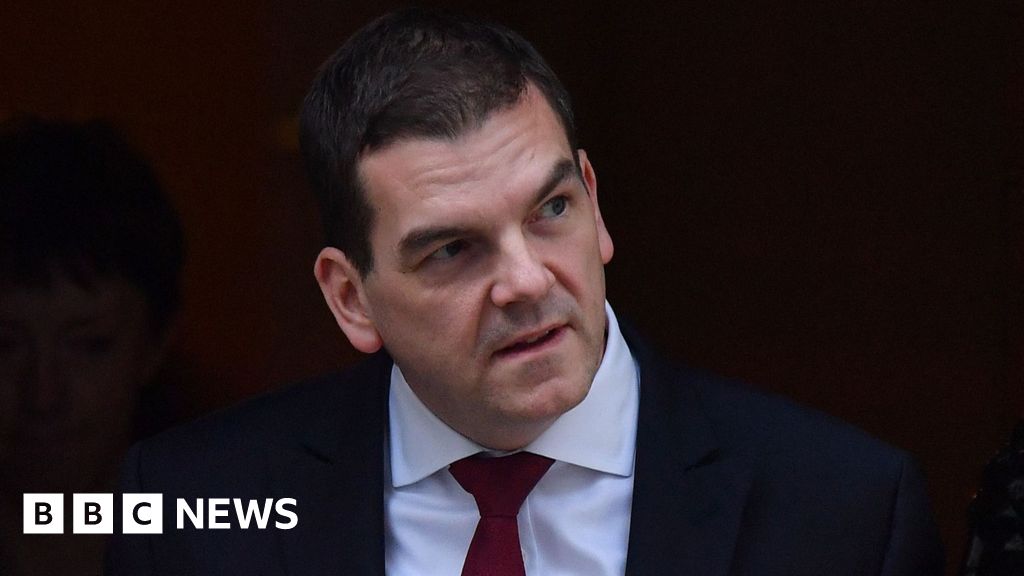
The Foreign Office's top civil servant has been effectively sacked after his department did not inform the prime minister that Lord Mandelson had failed security vetting for the role of US ambassador.

The BBC understands Sir Keir Starmer and Foreign Secretary Yvette Cooper have lost confidence in Sir Olly Robbins.

It comes after the government confirmed the Foreign Office went against the recommendation of the vetting agency and allowed Lord Mandelson to take up the post.

A spokesperson said neither Sir Keir nor any minister were aware Lord Mandelson had failed the vetting process until earlier this week.

Lord Mandelson was announced as the UK's ambassador to the US in December 2024, before in-depth vetting had been carried out, and formally took up the role on 10 February 2025.

Just seven months later he was sacked over his ties to the late convicted sex offender Jeffrey Epstein.

Sir Keir has faced calls to resign over allegations he misled Parliament and MPs when he claimed "full due process" was followed during the appointment.

During Prime Minister's Questions on 10 September 2025, Sir Keir said three times that "full due process" was followed for the appointment.

The Ministerial Code states that ministers who knowingly mislead Parliament are expected to resign.

Taking questions from journalists following a press conference on 5 February in Hastings, Sir Keir also said that there was "security vetting carried out independently by the security services, which is an intensive exercise that gave [Lord Mandelson] clearance for the role, and you have to go through that before you take up the post".

The revelations about Lord Mandelson's vetting have reignited anger over his appointment and raise further questions over the prime minister's judgement.

Sir Keir is expected to give a statement on the issue in the House of Commons on Monday.

Calling for the PM to stand down earlier, Conservative leader Kemi Badenoch said: "It is either, he knew that Mandelson failed the security vetting and lied to us in Parliament, on TV repeatedly, or he didn't know, didn't ask and said he had passed the security vetting – which means he is hopelessly incompetent."

Liberal Democrat leader Sir Ed Davey said that if it was true the PM was not aware Lord Mandelson had failed security vetting, he should have "told Parliament at the earliest opportunity, not waited for the media to force the truth out".

"His failure to do that alone is surely a breach of the ministerial code," he added.

Reform UK, the Green Party and Plaid Cymru have also called for the prime minister to go, accusing him of lying about Lord Mandelson's vetting.

Meanwhile, the Scottish National Party have written to the independent adviser on ministerial standards, Sir Laurie Magnus, calling for an investigation into whether the PM deliberately misled the public.

SNP Westminster leader Stephen Flynn said: "The prime minister is either incompetent, gullible or a liar. Or all three."

Sir Olly, who has held a number of senior Civil Service roles and served as Theresa May's chief Brexit negotiator, was appointed permanent under-secretary at the Foreign Office in January 2025.

Earlier, Labour MP Emily Thornberry, who chairs the Commons Foreign Affairs Committee, said she felt she had been "misled" by Sir Olly when he gave evidence to her committee last November about Lord Mandelson's vetting.

"We gave them direct questions and they half answered it, but they missed out the bit that was important… he didn't pass the vetting," she told the BBC.

Friends of Morgan McSweeney, the PM's chief adviser at the time who resigned in February over his role in Lord Mandelson's appointment, told the BBC he had not known about the conclusion of the vetting process.

The developed vetting process is carried out by UK Security Vetting, a specialist agency within the Cabinet Office, and is designed to make sure individuals are unlikely to abuse their access to secret material, or be subject to blackmail or bribery.

It includes checks on a candidate's credit history and criminal record.

Those being vetted also have to undertake an interview with a specially trained vetting officer, which can cover areas including candidates' health, friendships, family and sexual history.

The BBC understands Lord Mandelson had no knowledge about the judgements reached during his vetting process until it was reported in the media, and that no-one at any level raised anything about it with him following his vetting interview.

In February, the government agreed to release documents relating to Lord Mandelson's appointment, following a vote by MPs for them to be published.

However, the Guardian reported that senior government officials had been considering whether to withhold documents from Parliament revealing Lord Mandelson was not given vetting approval from security officials.

A spokesperson said the government was committed to complying with a parliamentary motion demanding the release of documents related to the appointment "in full as soon as possible".

Sir Keir was said to be "furious" after he found out on Tuesday evening that Lord Mandelson had failed vetting, as part of the process of going through documents to be published.

The BBC understands David Lammy, the foreign secretary at the time of Lord Mandelson's appointment, did not find out the Foreign Office had overruled the vetting until Thursday afternoon.

📰 மூல செய்தி (Source): https://www.bbc.com/news/articles/c747r3v90k3o?at_medium=RSS&at_campaign=rss

முக்கியச் செய்திகள்

Dog walker beaten with hockey stick by top horse trainer says his jail term is too soft

Published

on

A man who was beaten with a hockey stick by a Grand National trainer while walking a dog on his land has described the sentence as "unduly lenient" and said he was challenging it through official channels.

Martin Dandridge, 72, was repeatedly struck during the night-time assault in Llancarfan, Vale of Glamorgan, by Richard Evan Rhys Williams, 54, known as Evan Williams.

Dandridge's arm was broken during the attack in December 2024, leaving him with "ongoing pain" in his forearm.

Williams was sentenced to three years in prison on Tuesday, but Dandridge said he had "challenged the leniency" through a scheme overseen by the Attorney General's office.

In a victim impact statement, Dandridge, from Swindon, said he thought he was "going to die" during the attack.

"That moment is still vivid in my mind," he added.

Dandridge also said the assault has had a lasting physical and mental impact, and that he struggles with "the memory of feeling completely helpless and defenceless".

"Sadly, because of the assault and what has followed, I don't feel like the same person I was before," he said, adding that he still has problems with his left forearm and hand.

Last month, a jury at Cardiff Crown Court found Williams guilty of causing grievous bodily harm with intent.

Sentencing him on Tuesday, Recorder Angharad Price described it as an "appalling offence".

"You had a choice that night. You could have waited and let the police deal with the situation but instead you urgently raced to the paddock to deal with it yourself.

"It is never acceptable to take the law into your own hands."

Dandridge told the BBC he believes Williams's sentence was "unduly lenient given the aggravating features in the case", including the fact he had used as a weapon, and the injuries that were caused.

He said he would challenge it through the Unduly Lenient Sentence scheme, which allows anyone to request a review of Crown Court sentences if they believe them to be too low.

A spokesperson for the Attorney General's Office said law officers have received a request for Richard Evan Rhys Williams's sentence to be considered under the scheme.

They have 28 days to decide if they think a case is too lenient, and if so can request the Court of Appeal to consider.

📰 மூல செய்தி (Source): https://www.bbc.com/news/articles/cvg4z0dqne8o?at_medium=RSS&at_campaign=rss

Continue Reading

முக்கியச் செய்திகள்

Finance ministers and top bankers raise serious concerns about Mythos AI model

Published

on

Finance ministers, central bankers and financiers have expressed serious concerns about a powerful new AI model they fear could undermine the security of financial systems.

The development of the Claude Mythos model by Anthropic has led to crisis meetings, after it found vulnerabilities in many major operating systems.

Experts say it potentially has an unprecedented ability to identify and exploit cyber-security weaknesses – though others caution further testing is needed to properly understand its capabilities.

Canadian Finance Minister François-Philippe Champagne told the BBC that Mythos had been discussed extensively at the International Monetary Fund (IMF) meeting in Washington DC this week.

"Certainly it is serious enough to warrant the attention of all the finance ministers," he said.

"The difference is that the Strait of Hormuz – we know where it is and we know how large it is… the issue that we're facing with Anthropic is that it's the unknown, unknown."

"This is requiring a lot of attention so that we have safeguards, and we have processes in place to make sure that we ensure the resiliency of our financial systems," he added.

Mythos is one of Anthropic's latest models developed as part of its broader AI system called Claude, a rival to OpenAI's ChatGPT and Google's Gemini.

It was revealed by Anthropic earlier this month, when developers responsible for testing AI models and their performance of so-called "misaligned" tasks – which go against human values, goals and behaviour – said it was "strikingly capable at computer security tasks".

Citing concerns it could surface old software bugs or find ways to easily exploit system vulnerabilities, Anthropic has not released the model.

Instead it has made Mythos available to tech giants like Amazon Web Services, CrowdStrike, Microsoft and Nvidia as part of an initiative called Project Glasswing – which it calls an "effort to secure the world's most critical software".

On Thursday, Anthropic released a new version of an existing model, Claude Opus, saying it would allow Mythos' cyber capabilities to be tested in less powerful systems.

Concerns raised about Mythos may exceed chatter around previous AI models, but some cyber-security experts have questioned how justified they are – especially given the model has not been tested by the wider industry to see how capable it actually is.

The UK's AI Security Institute has been given access to a preview version of it, and has published the only independent report into the model's cyber-security skills.

Its researchers noted it was a powerful tool able to find many security holes in undefended environments, but suggested Mythos was not dramatically better than Claude's predecessor, Opus 4.

"Our testing shows that Mythos Preview can exploit systems with weak security posture, and it is likely that more models with these capabilities will be developed," the report authors said.

It is also not the first time an AI developer has claimed the capabilities of its models means they should not be released – something critics argue is a tactic to build hype.

In February 2019, OpenAI cited similar fears when it chose to stagger the release of GPT-2, an earlier version of its models which now power its biggest tool ChatGPT.

Top bankers are to be given access to the model in advance to test out their systems.

The chief executive of Barclays, CS Venkatakrishnan, told the BBC: "It's serious enough that people have to worry.

"We have to understand it better, and we have to understand the vulnerabilities that are being exposed and fix them quickly."

He added that "this is what the new world is going to be" – referencing a much more connected financial system, with both opportunities and vulnerabilities.

While developer Anthropic has said the model has already exposed multiple security vulnerabilities in some critical operating systems, financial systems and web browsers, governments and banks are being offered access in advance of its public release to help protect their own systems.

Bank of England governor Andrew Bailey told the BBC the development had to be taken very seriously: "We are having to look very carefully now what this latest AI development could mean for the risk of cyber crime."

He added: "The consequence could be that there is a development of AI, of modelling, which makes it easier to detect existing vulnerabilities in sort of core IT systems, and then obviously cyber criminals – the bad actors – could seek to exploit them."

The US Treasury confirmed it had raised the issue with its major banks encouraging them to test out their systems, before any public release of Mythos by Anthropic.

Financial industry sources indicated that another prominent US AI company could soon release a similarly powerful model but without the same safeguards.

James Wise, a partner at Balderton Capital, is chair of the Sovereign AI unit, a venture capital fund that will invest in British AI companies, backed by £500m of government funding.

He said Mythos is "the first of what will be many more powerful models" that can expose systems' vulnerabilities.

His unit is "investing in British AI companies that are tackling that – companies working in AI security and safety", he told the BBC's Today Programme.

"We hope the models that expose vulnerabilities are also the models which will fix them."

Sign up for our Tech Decoded newsletter to follow the world's top tech stories and trends. Outside the UK? Sign up here.

📰 மூல செய்தி (Source): https://www.bbc.com/news/articles/c2ev24yx4rmo?at_medium=RSS&at_campaign=rss

Continue Reading

முக்கியச் செய்திகள்

Can Oli Sykes still scream? Bring Me The Horizon re-recording debut 2006 album

Published

on

Rock band Bring Me The Horizon are celebrating 20 years of their debut album by re-recording it – something that has got fans asking questions.

The four-piece from Sheffield started out in 2004 in the deathcore genre, a form of metal known for its heavy and aggressive sound.

Their 2006 debut record Count Your Blessings was very much in that style, but the group's following albums moved towards metalcore, pop and electronic rock.

Despite that, they've been a key part in heavier music breaking through into the mainstream – and last year headlined Reading and Leeds Festival.

Frontman and lead vocalist Oli Sykes told the BBC Radio 1 Rock Show earlier this week that going back to their roots was "a lot of fun" as they "got to remake the album how we wanted it to sound back then".

But some fans have questioned if the original lyrics, which have been described as misogynistic, are still appropriate today.

While others are wondering whether Sykes – now 39 – will be able to recreate the intense screaming vocals he previously recorded as a teenager.

Diehard fan Sash Vee tells BBC Newsbeat the announcement was a "very nice surprise" and it's good to see the group "appreciating their beginnings".

However, the 27-year-old, who became a fan following the release of their later albums, is in two minds about whether the lyrics should be kept the same.

Some of the band's earlier lyrics have been criticised for being aggressive towards woman, particularly Sykes' ex-partners.

Vee recognises controversial lyrics were part of the scene "back in the day" and wants the re-recording to be "similar to the original" as she thinks "it's sort of a time capsule".

"But things evolve and if you're going to have the opportunity to remaster something, then why not, let's update the lyrics as well," she says.

Sykes told Radio 1's Rock Show that after originally recording Count Your Blessings as a 19-year-old, he felt "really bummed out about how it sounded".

The singer said he could tell he was tired and they didn't have the right producer for the sound they wanted.

"There was no-one there helping us with BPMs [beats per minute] and tempos and all that. We had no clue what we were doing," he said.

Having improved and refined their technique, Sykes said the new record would be "way easier to listen to now because it sounds like a proper record".

Discussing whether the band have changed aspects of the songs, Sykes said if they went down that road "it just wouldn't be the record that people love".

"For better or for worse, we left it as it is."

Lorna Crowther, who has been a fan of the band for more than 15 years, is among those welcoming a return to their original music.

The 24-year-old tells Newsbeat she feels the group's early sound is a "masterpiece" because it "brings in these raw, disgustingly beautiful vocals".

Bring Me The Horizon began to evolve their approach from their second album, 2008's Suicide Season, moving towards a more accessible metalcore sound.

Their fourth record, Sempiternal, and fifth, That's The Spirit, pushed them further into the mainstream, with the albums peaking at number three and two in the Official Albums Chart respectively.

Crowther says the later album was "quite a big change" and left some fans questioning if the band's new sound was for them.

In the last two decades, Sykes' voice has also evolved and suffered an injury.

The band cancelled numerous shows of their US tour in 2019 after he ruptured a vocal cord and was warned that carrying on could lead to permanent damage.

This has left fans wondering whether the singer will be able to recreate the distinctive growls and screams which appear in Count Your Blessings.

Vocal coach and metal singer Jade Maris tells Newsbeat that producing harsh sounds can cause damage if done incorrectly, but says there are safer ways to do it.

"People definitely get a bit more scared than they need to," the 25-year-old says.

"As long as you're practicing safely, you're checking in, as long as you don't feel any pain or discomfort, then generally it's safe to continue."

However, she says back in the early 2000s there was less awareness on how to practice scream singing in a sustainable way.

Sykes told the Radio 1 Rock Show that when he was re-recording the album, it took him a while to tap into that style of singing.

"It was hard, I don't know how I used to do that voice. I can still do it but it took me a minute to remember the technical aspects of it," he said.

"Sometimes [it takes] that much to sound like a demonic gremlin that I'm like: 'What am I actually doing?'"

Sykes' attempt to rediscover his scream will also be tested outside the studio, with the band performing the full album in Manchester in July.

It's this style which some early fans love, and Crowther says it will be "nice to introduce that to the new audience".

While Vee says it will be "really interesting" to hear the screaming in Sykes' new voice.

"His voice has evolved and matured, I'm so excited to see how that then translates into the material."

The re-recorded version of Count Your Blessings will be released 10 July. The band will also play the album in full on 10 and 11 July in Manchester, with tickets on sale now.

Listen to Newsbeat live at 12:45 and 17:45 weekdays – or listen back here.

📰 மூல செய்தி (Source): https://www.bbc.com/news/articles/c79jjdqv3p9o?at_medium=RSS&at_campaign=rss

Continue Reading

Trending

Copyright © 2024 by 7Tamil Media, All rights reserved.