Connect with us

உலகம்

Modi is using a cannon to kill a cockroach

Published

on

A student parody account has rattled India’s most powerful man and exposed just how thin his skin has become.

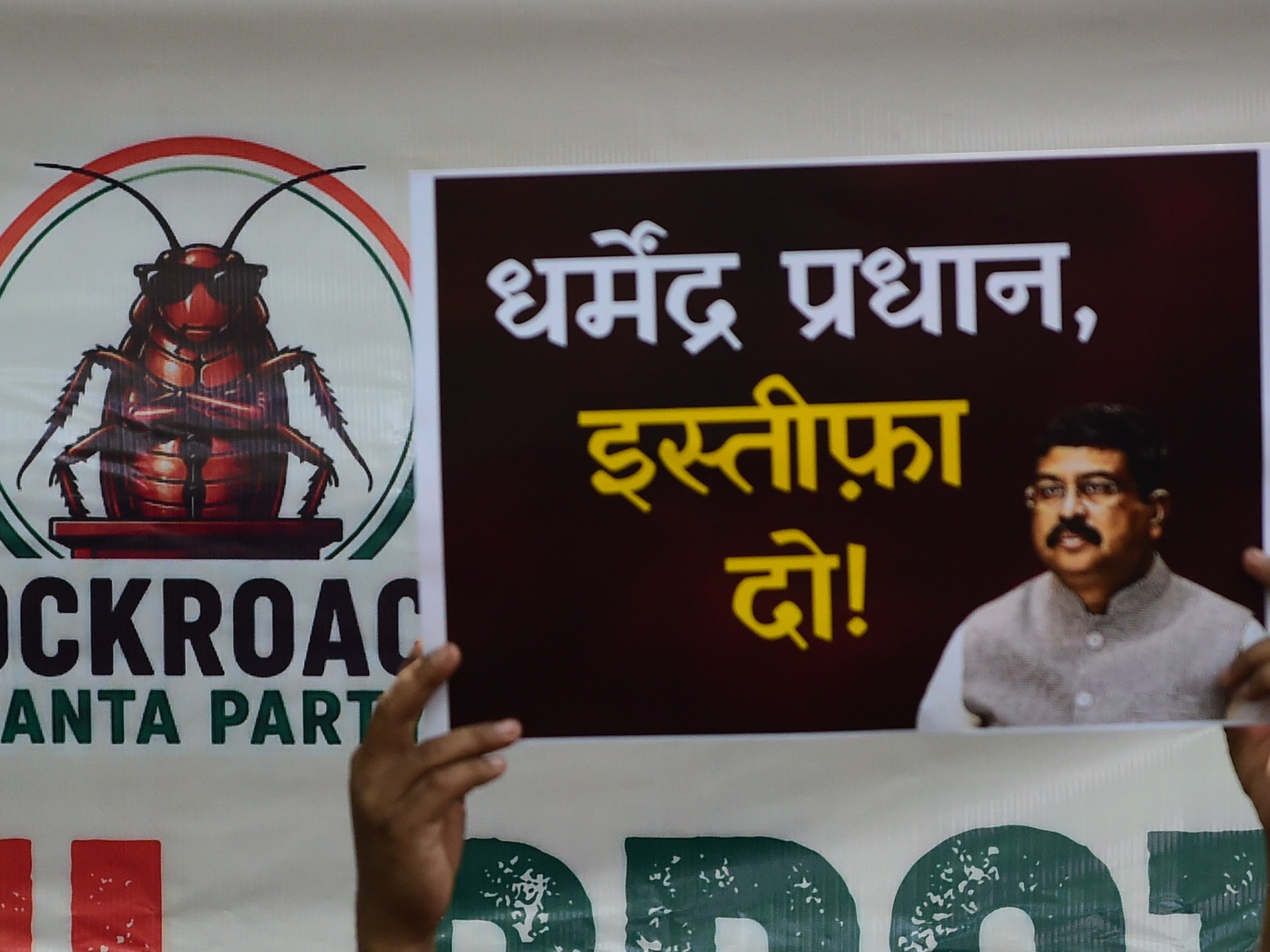
In recent weeks in India, Prime Minister Narendra Modi’s government’s profound insecurity has resulted in the deplatforming of college students who came together to form a satirical parody account called “Cockroach Janta Party”.

The Cockroach Janta Party (CJP) came to be after India’s Chief Justice Surya Kant compared unemployed young people drifting towards journalism and activism to cockroaches and parasites. The harmless joke quickly attracted millions of online followers across Instagram and X, formerly Twitter, which resulted in even more media coverage from BBC, CNN, The Guardian and France 24, making India’s geriatric government pay attention.

Instead of engaging with the discontent meaningfully, the Modi administration has framed it as jeopardising the country’s “national security” and “posing a threat to the sovereignty of India”. The group’s page is no longer accessible in the country. In fact, the government began a multiplatform pressure campaign against the satirical account to push it into oblivion. Its website was taken down, ministers accused the founder of being under “foreign” influence, and a petition was filed in the Supreme Court seeking action against the CJP founder, Abhijeet Dipke.

Going after online accounts with such fierce indignation is like using a cannon to kill a mosquito.

The imaginative prank signals the distress among India’s youth, who enter a market with no jobs, survive extreme weather ranging from heatwaves to unbreathable air, and are constantly lectured about the sacrifices demanded of them. Last month alone, the national entrance exam for undergraduate medical students was found to have been compromised after papers were leaked, while school students were hit by a separate marking scandal. Students who expressed their disappointment on social media were termed “Pakistanis” by our state-sponsored television channel, Doordarshan. We are now a country that accuses our own children of treachery when they express genuine concern. The exam scandals have resulted in a spate of suicides among students, but did not move Prime Minister Narendra Modi to offer a few words of solace.

The same indifference is visible elsewhere. One of the patterns of Modi’s leadership is that his sympathy for the sufferings of humanity tends to increase in direct proportion to the distance of those suffering from Indian borders. He has not acknowledged the alarming deaths from heatwaves – 67 people died in Telangana in a single day – but has taken the time to grieve for the lives lost in China’s Shanxi province in a mining accident.

Modi rules India like a cruel taskmaster, and every task is also a test of loyalty.

His latest order is to work from home, not spend fuel unnecessarily, avoid foreign travel, reduce consumption of cooking oil, abstain from buying gold, work longer, consume less, and be patient. At this point, if you have a job, own a fridge, can afford an air conditioner as well as a foreign trip, the Modi administration considers you to be living in an abyss of decadence. None of it would pinch as much if he did not jet off to Europe right after his sermon about our patriotic duty to tighten our belts.

This time, Modi went on a European tour while refusing to engage with Europe’s free press. In Norway, Helle Lyng Svendsen, a journalist, dared to ask him why he did not take questions from the “freest press in the world”. Modi avoided eye contact and walked away without responding, his body language noticeably sheepish. Watching from India, it seemed absurd that such a person existed in the world who could shout a question at Modi. After 13 years, watching her ask a simple question and expect an answer felt like watching a whole new species that knew how to breathe underwater. It was exhilarating and humiliating at the same time. It does not help that Norway is rated number one while India is ranked 157 in the World Press Freedom Index.

The Indian embassy in Oslo then took to X, announcing a news conference out of spite, in which Sibi George, a diplomat, had a 13-minute outburst filled with boilerplate responses to almost any question about India’s declining freedoms, with a word salad of “140 crore people”, “5,000-year-old civilisation”, “yoga” and “Gandhi”.

For Svendsen, this experience ended with a dose of reality the Indian press has to deal with. She was called a foreign spy and doxxed by Indian right-wing troll armies. Her address and phone number were made public, and, finally, she was deplatformed from Instagram.

Faced with the free mind – be it online with the CJP or with the free press in Norway – Modi, his administration and his trolls tend to go into a physiological, existential shock, and lash out like a toddler throwing a temper tantrum in the chocolate aisle of the supermarket.

A regime that gets so terrified of simple questions or prank tweets by young people tells us very little about the questioner and a lot more about the ruling government. The truth is, the sheen maintained by a formidable propaganda machine has been wiped clean by world events. As war, inflation, H-1B visa restrictions, and tariffs imposed by the United States expose Modi’s ineptitude, his skin grows thinner.

The last few years have been a time of pervasive tragedy.

Modi’s policy misadventures have left deep, gaping wounds in the country – demonetisation, the abrogation of Article 370 in Kashmir, and the handling of COVID-19 may be the big failures, but the everyday failures: Bridges falling, communities running out of water, paper leaks that damage students’ academic prospects, are what have jolted the youth more. All of them reflect how much this government has failed the common people. Despite a lot of well-financed publicity, it has become difficult to mask this loss of hope in India.

Every nation requires a modicum of material prosperity, hope and confidence in the future. Today, we live in a country where no one trusts what the prime minister says. He is as unpopular as he has ever been, and is running a government with no mandate – the last two election results have been contested by opposition parties, journalists and transparency activists. India has been declared an “electoral autocracy”.

At this point, the BJP is an election-winning machine with no capacity for any other form of political work, much less skilful governance. Pierced by every meme, tweet or question from a journalist, the giant balloon that is Modi’s self-esteem is leaking from a thousand cuts. Agitated, he and his bureaucrats, like George, make increasingly incoherent statements which even his lapdogs cannot spin to make him look good.

Satire has long been a pressure valve in democracies, and suppressing the grievances of India’s youth will not eliminate dissent; it will radicalise them. The government has reasons to be rattled, as regimes across South Asia have fallen after waves of Gen Z protests that began just as innocuously as CJP.

The only joy in this misery is that the intoxication of Modi’s success has evaporated. In the teeth of so many things that might prevent it, the CJP thrives. So do other forms of dissent. In contrast to the temporary balloon of the last two terms, this one, likely to be his final term as prime minister, is already unprecedentedly heavier. One day, soon enough, his government will fall — outlived by India’s ‘cockroaches’.

The views expressed in this article are the author’s own and do not necessarily reflect Al Jazeera’s editorial stance.

📰 மூல செய்தி (Source): https://www.aljazeera.com/opinions/2026/6/9/modi-is-using-a-cannon-to-kill-a-cockroach?traffic_source=rss

உலகம்

Police in Belfast use water cannon as anti-immigrant unrest continues

Published

on

Clashes come as family of knife attack victim calls for calm and condemns violence targeting immigrants.

Unrest in Northern Ireland: Second day of anti-immigration protests in Belfast

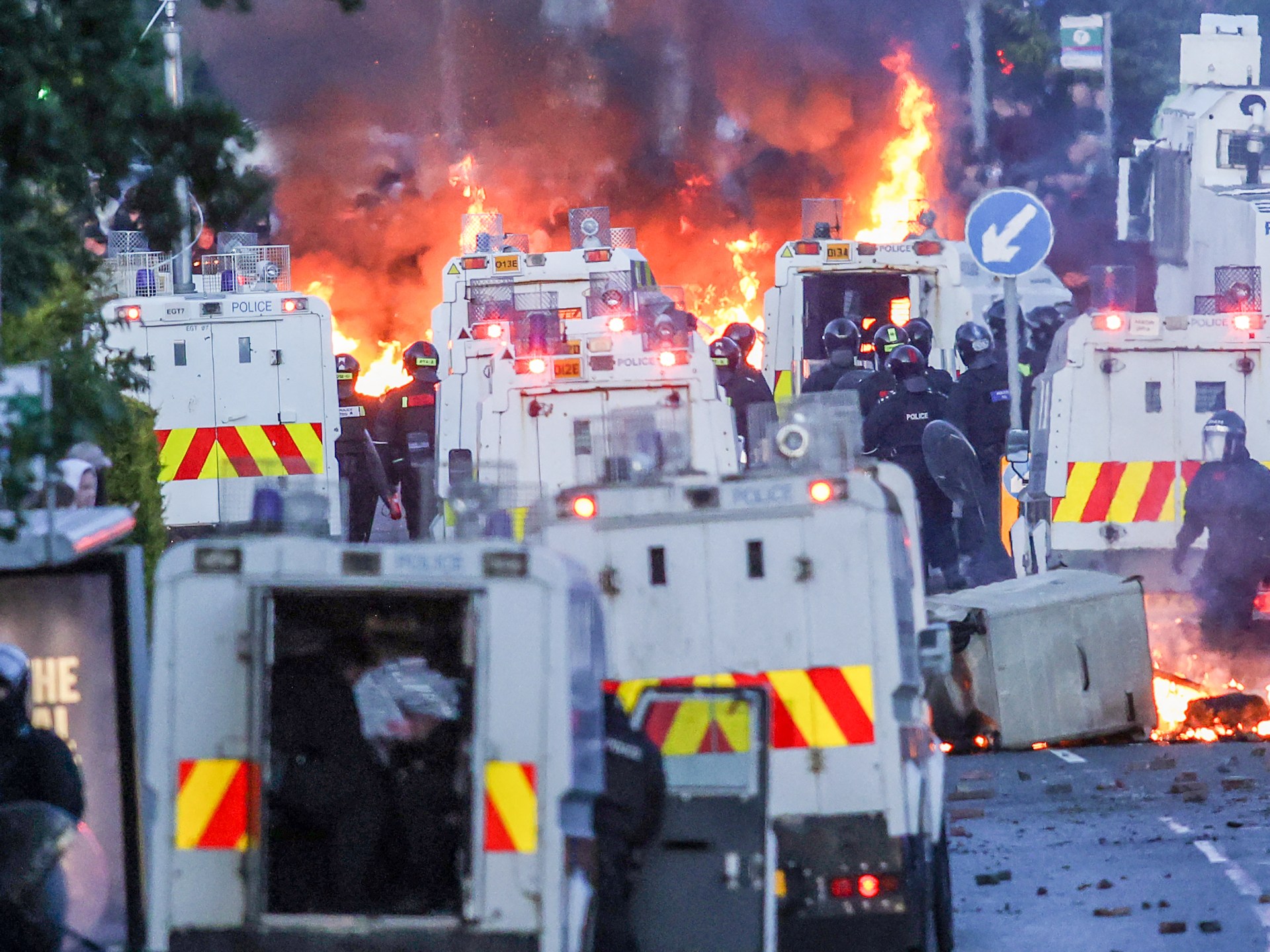
Police in the United Kingdom city of Belfast have used water cannon to disperse dozens of far-right protesters during a second night of unrest triggered by a knife attack involving a Sudanese refugee.

The clashes on Wednesday came as the family of the stabbing victim appealed for calm and condemned the wave of anti-immigrant violence in the city in Northern Ireland.

Police said the protesters threw “missiles” such as rocks and bottles at officers, while images from the scene showed several fires burning on the streets.

Police said officers deployed “water cannon in an attempt to maintain public order”.

But the unrest was markedly less severe than on Tuesday evening, when hundreds of masked men burned families out of their homes and set vehicles alight.

“We want to make it absolutely clear that overnight unrest is not welcome, and peaceful protest is the only way forward,” the family of the victim, Stephen Ogilvie, said in a statement.

“We have many migrants who make a deeply valuable contribution to our country… We do not want this terrible tragedy to be used to divide people or fuel hostility,” it said.

The family added that Ogilvie, who lost an eye and suffered serious wounds to his neck and face, was in a stable condition.

Their appeal came as the suspect in the attack, a 30-year-old ‌Sudanese national named Hadi Alodid, appeared in court on charges including attempted murder.

He was remanded in custody, and the case was adjourned to July 8.

Videos of the stabbing attack circulated online all day on Tuesday, sparking calls on social media for violent protest. Police had to help one family escape from a burning house, according to the Reuters news agency, while several cars and a bus were set on fire and reduced to shells.

Local politicians and a pastor said many of those targeted were Black.

UK minister Ruth Anderson said at least 27 people were made homeless in Belfast “because people went door-to-door to try and target foreign nationals”.

Resident Jamie Corry, 33, said he could only watch on as his house went up in flames.

“I was actually standing right there watching my whole house just go up, slowly but surely,” he told Reuters. “I told them and all, when they were lighting a car up on fire, ‘that’s my property, that’s my property’… and they still didn’t care.”

The attack comes at a time of heightened tensions in the UK following the murder of a student in Southampton who was handcuffed by police as he lay dying from stab wounds after his killer, a Sikh man, had falsely alleged a racist attack.

Tech billionaire Elon Musk reposted many messages that blamed migration on violence in the UK, sharing a post that argued that the “very deliberate policy of mass uncontrolled immigration and open borders” is increasing tensions.

Amid calls from Musk, other far-right agitators like Tommy Robinson called for more protests on Wednesday, Northern Ireland’s police chief said ⁠an extra 200 officers were being deployed on the streets.

“These idiots didn’t just target ethnic minority groups… they targeted society,” Chief ⁠Constable Jon Boutcher said of Tuesday night’s rioters.

Officers had to take a family that included a two-month-old baby to safety during Tuesday’s violence, which he branded “a huge act of self-harm by mindless idiots”.

Speaking in London, UK Prime Minister Keir Starmer said the knife attack raised serious questions, but that “driving people out of their homes is not … the right way to respond”.

He condemned the unrest as “shocking and completely unacceptable”.

Anna Turley, the chairwoman of the UK’s governing Labour Party, meanwhile, said that online platforms were “playing a role in driving” the unrest and suggested Musk was one of the “bad faith actors” inflaming tensions.

The United Nations human rights chief Volker Turk condemned what he called “incitement” on social media. “Dehumanisation of whole groups within a society is totally unacceptable and frankly despicable,” he told reporters in Geneva, adding that the violence in both Northern Ireland and Southampton had been “really shocking”.

Social media providers, he insisted, must take seriously their responsibility to prevent hate speech and incitement to violence.

Immigration has historically been low in Northern Ireland, partly due to the three-decade conflict between mainly Catholic Irish nationalists seeking Irish unity and predominantly Protestant pro-British “loyalists” wanting to stay in the UK and the British military.

However, migration has increased in recent years, and there has been an increasing sentiment against it in both Northern Ireland and parts of the Republic of Ireland.

📰 மூல செய்தி (Source): https://www.aljazeera.com/news/2026/6/11/police-in-belfast-use-water-cannon-as-anti-immigrant-unrest-continues?traffic_source=rss

Continue Reading

உலகம்

Dahiyeh crowds rally in favour of Iranian support against Israel

Published

on

Dahiyeh crowds rally in favour of Iranian support against Israel

Defiant crowds of Hezbollah supporters rallied in Beirut’s Dahiyeh neighbourhood to support Iran’s role in standing against Israel, and rejecting efforts to separate Lebanon’s war from Iran’s. Al Jazeera’s Heidi Pett reports.

📰 மூல செய்தி (Source): https://www.aljazeera.com/video/newsfeed/2026/6/11/dahiyeh-crowds-rally-in-favour-of-iranian-support-against-israel?traffic_source=rss

Continue Reading

உலகம்

OpenAI says China-based actors stoking opposition to AI data centres

Published

on

AI company says ChatGPT accounts sought to ‘exploit and amplify existing public concerns’ about energy prices.

China-based actors are likely behind the use of ChatGPT for “covert influence operations” aimed at stoking opposition to data centres in the United States, OpenAI has said.

In a research report released on Wednesday, the company behind the world’s most popular AI chatbot said it had banned a cluster of accounts likely based in China for attempting to “manipulate a legitimate debate about American AI”.

OpenAI, whose release of ChatGPT in 2022 kicked off a global frenzy around AI, said the accounts were used to generate social media comments and images that blamed data centres for rising electricity prices in communities across the US.

Among other content, the accounts generated a comic strip showing a cigar-chomping businessman holding bags marked with dollar signs as a family reacted in shock to their electricity bill, according to the San Francisco-based company.

OpenAI said a second cluster of accounts had generated content casting US tariffs as an effort to “dominate technological competition” with China, and specified that the material should not mention Chinese leader Xi Jinping.

While the campaign sought to “exploit and amplify existing public concerns” about energy prices, OpenAI found no evidence that it had a “meaningful” influence, the company said.

“Foreign influence operations have long sought to latch onto existing local issues and sincerely held beliefs, using them to build credibility, amplify divisions or exacerbate public distrust,” the ChatGPT creator said.

“In this case, the operators attempted to covertly insert themselves into an ongoing American debate about the future of the country’s AI capabilities while hiding who they were and what motivated them.”

China’s embassy in Washington, DC, said it was not familiar with the report but that it opposed “any groundless attacks or smears against China”.

“AI is profoundly changing the way people work and live. It is a new frontier for all humanity,” an embassy spokesperson said in a statement provided to Al Jazeera.

“China believes in a people-centered approach to AI and advocates openness and inclusiveness to ensure AI is a force for good and for all.”

OpenAI is the latest prominent voice to suggest foreign influence could be behind opposition to AI in the US.

In May, Secretary of the Interior Doug Burgum told a policy event hosted by Breitbart News that the public’s increasingly negative sentiment towards the construction of data centres was not “organic” and could, in some cases, be linked to “foreign-sourced dark money”.

Darren Linvill, a professor at Clemson University in Clemson, South Carolina, who studies foreign influence campaigns, expressed doubt that the campaign identified by OpenAI or any other coordinated effort would have much impact on the “volume or tone” of the public debate.

“My team is very familiar with the work of various Chinese influence actors, and the AI work China has done to date has been interesting but not effective,” Linvill told Al Jazeera.

“It’s getting better with each passing month, and I’m concerned what they may be capable of in the future, but they aren’t there yet.”

“If China were really serious about meaningfully influencing the discourse around data centres using AI chat bots, I question if they would use OpenAI to do it,” Linvill added.

Opposition to the construction of data centres has been on the rise in the US, with at least 36 projects blocked or delayed between May 2024 and June 2025, according to Data Center Watch, a research project by AI security company 10a Labs.

In March, Senator Bernie Sanders and House Representative Alexandria Ocasio-Cortez announced legislation that would impose a moratorium on new data centres until the introduction of national safeguards to mitigate the risks of AI.

The legislation has little chance of becoming law in the near future due to US President Donald Trump’s laissez-faire approach to AI regulation and Republicans’ control of both chambers of Congress.

Opposition to data centres has been driven in part by the huge amounts of energy they consume supporting the computing power needed to train and run AI models such as ChatGPT.

The facilities accounted for 1.5 percent of global electricity use in 2024, with consumption growing 12 percent annually over the last five years, according to the International Energy Agency.

📰 மூல செய்தி (Source): https://www.aljazeera.com/economy/2026/6/11/openai-says-china-based-actors-stoking-opposition-to-ai-data-centres?traffic_source=rss

Continue Reading

Trending

Copyright © 2024 by 7Tamil Media, All rights reserved.