Connect with us

முக்கியச் செய்திகள்

Spain's visitor numbers hit new highs as tourists avoid Middle East

Published

on

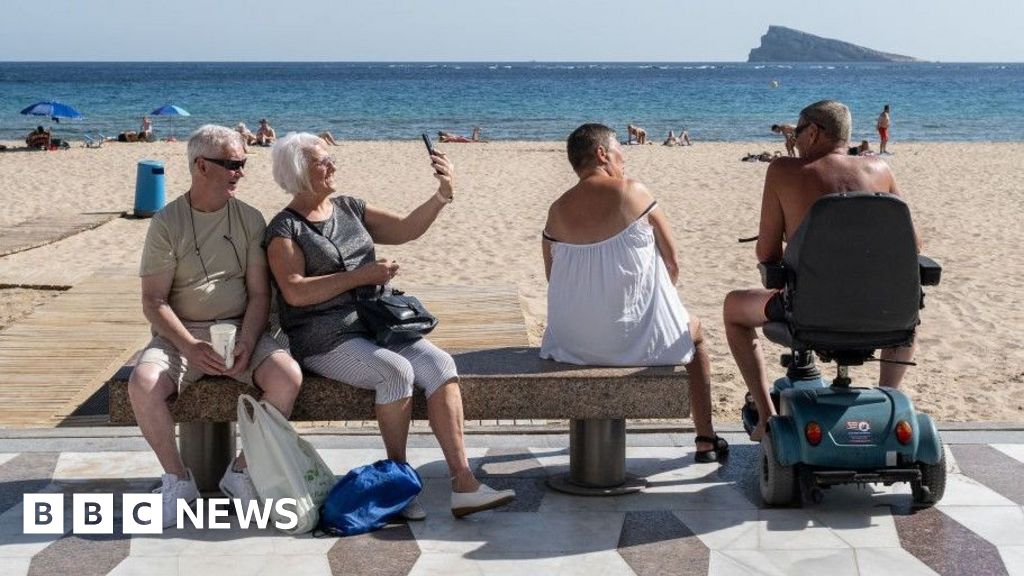
From the rooftop terrace of a hotel, Fede Fuster looks out across Benidorm, at the nearby high-rise buildings and the town's famous, sweeping beach.

"With all its virtues and its defects this is a place we feel proud of," he says. "It's a place of opportunities."

Fuster is the president of the local tourism association, and his family was one of the first to build a hotel in this Mediterranean city, in the 1950s.

Benidorm's population is still only 77,000, but it swells to around five times that number in the height of summer, due to its status as one of Spain's prime tourism draws.

Since the Covid pandemic left resorts like Benidorm virtually deserted and the Spanish tourism industry at a standstill there has been a remarkable recovery. Foreign arrival numbers into the country have broken records each year, and totalled 97 million in 2025.

Currently the world's second-biggest tourist destination, just behind France, Spain is expected to consolidate its recent success in 2026.

"I think this is going to be a great year," Fuster says. "I'm optimistic, we're talking about reaching 100 million tourists in Spain. If we keep growing like this we're going to be number one [in the world] very soon."

Industry experts had originally expected 2026 to see more modest growth. But the outbreak of the US-Israeli conflict with Iran has made Spain an attractive alternative compared to Middle Eastern holiday destination Dubai, and countries in the eastern Mediterranean, such as Turkey and Cyprus.

"In these moments of crisis, of [military] strikes or wars, the bookings always increase," says Fuster, who recalls a similar phenomenon in 2011, during the turmoil of the Arab Spring, although he insists he would prefer to compete with other countries without this advantage.

"Any time that you have a crisis in the [eastern] Mediterranean or the Middle East, Spain is seen as a secure place to go," says Francisco Femenia-Serra, a lecturer in geography at Madrid's Complutense University.

He explains that "part of the tourists that would normally go to Turkey or Egypt because of the [low] prices, for instance, might end up in Spain".

Spain's official tourist arrival figures appear to bear this out. The country received 9.1 million international visitors in April, a new high for the month. This was 5.2% more, or 450,000 additional people, than April 2025.

Meanwhile, Dubai International Airport saw its passenger numbers drop by 66% in March as flights and bookings were significantly reduced due to the Iranian situation.

With tourism directly contributing 13% of Spain's GDP, the industry has been a crucial component in the country's growth of recent years, which has outstripped that of France, Germany, Italy and the UK.

One cloud on the horizon is the possible impact of rising fuel costs, which could end up curtailing Europeans' foreign travel.

The other major concern for the Spanish industry is more domestic – growing anger among local residents at the impact tourism is having on their home environments.

"Tourism was always accepted as a positive economic sector for Spain," says Femenia-Serra. "That changed from 2016, 2017, with the label of over-tourism being put on some cities, like Barcelona.

"And now, most young Spaniards under 45 have a different image of tourism. They see it as a sector that obviously has a positive impact but also some negative outcomes in their lives."

Since 2024, Barcelona and many other tourist hubs, along the Mediterranean coast, in the Balearic Islands and the Canary Islands, have seen summer protests against perceived excessive visitor numbers.

A Europe-wide YouGov poll published in September 2024 found that 28% of Spaniards had a negative view of foreign tourism, by far the highest percentage of any country. The report also found that two-thirds of Spaniards sympathised with the protests.

Locals' grievances include the congestion caused by visitors in city centres, their environmental impact and, above all, the idea that they are exacerbating Spain's housing crisis. A new wave of protests at the country's soaring rentals has begun in recent weeks, with tourism often closely associated with the problem.

In a bookshop in the centre of Valencia, a group of local tenants meet regularly to discuss their housing-related problems with representatives of the Sindicat de Llogateres (Tenants' Union) activist group. Many of those who attend have seen their rentals increase sharply when landlords have revised their contracts.

"We have on the one hand the tourist accommodation market and on the other the residential market," says Jordi Vila, a representative of the Sindicat de Llogateres.

"When it comes to renewing rental contracts, the owners of properties no longer think about setting rents according to local salaries, but rather the salaries of people visiting from abroad, which might be three or four times higher. So local people end up getting pushed out of their homes."

He points to Barcelona, further up the Mediterranean coast, as the epitome of this phenomenon, describing the centre of the city as "a kind of theme park" where the proliferation of tourist accommodation has displaced locals.

In the northern region of Asturias, graffiti has been daubed in recent days on holiday rental properties, with the slogan: "Your business, our ruin."

While organisations such as the Sindicat de Llogateres continue to campaign, the left-wing coalition government has also identified tourist accommodation as a problem.

In 2025, Prime Minister Pedro Sánchez warned that "there are too many Airbnbs and not enough homes". In December, his government fined the holiday rental platform €65m ($75.5m; £56m) for advertising unlicensed apartments.

Local governments have also announced measures both aimed at curbing the growth of holiday accommodation and managing the large numbers of tourist arrivals.

Some city halls are restricting the granting of tourist-flat permits, and Barcelona has said it will revoke the licenses of all its 10,000 short-term apartments by 2028. It has also announced a doubling of the city's tourist tax to eight euros for those arriving on cruise liners for short-term stays.

Local activists applaud such measures yet demand more be done. The tourism industry, however, is concerned. The Exceltur tourism association has called for "the reparation of the links between the tourism sector and local residents".

The holiday apartment sector, meanwhile, has pointed to a report by PwC on the Barcelona licence-revocation plan, warning it could undermine the city's competitiveness and cause the loss of thousands of jobs.

Femenia-Serra says that cities are still searching for satisfactory formulas.

"We have measures that try to alleviate the impact that tourism has and that try to distribute tourists in cities in a different way," he says. "But we still haven't seen a single measure that is effective in reducing the number of tourists."

In Benidorm, as he ponders what looks likely to be another record-breaking summer for Spain, Fede Fuster acknowledges the backlash against his sector.

"We say we are the industry of happiness," he says. "But we also have to realise that we impact the normal life of citizens.

"The way we welcome people and we care about them and our happiness, the way we live, I think that's something the tourist really appreciates – that's the key," he explains.

"That's why we have to work a lot in these places, mostly in cities, where there is a feeling of not welcoming tourists. It's very important for us because if we lose that, we're dead."

📰 மூல செய்தி (Source): https://www.bbc.com/news/articles/c4gvndd2qelo?at_medium=RSS&at_campaign=rss

முக்கியச் செய்திகள்

The Papers: 'Iran fires missile barrage' and 'New Eriksen hell'

Published

on

Sign up for our morning newsletter and get BBC News in your inbox.

Copyright 2026 BBC. All rights reserved. The BBC is not responsible for the content of external sites. Read about our approach to external linking.

📰 மூல செய்தி (Source): https://www.bbc.com/news/articles/cvgl3gx9y32o?at_medium=RSS&at_campaign=rss

Continue Reading

முக்கியச் செய்திகள்

How the High Street became a window on our political instability

Published

on

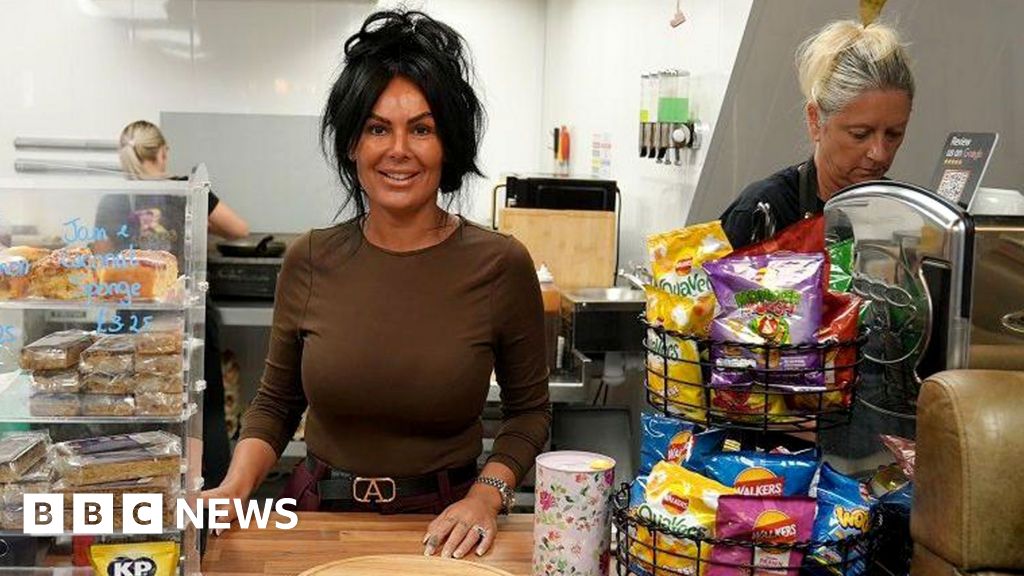
For a number of years, people around Britain have spoken of what they perceived to be "dodgy shops" on their High Street. To many, it seemed new businesses were popping up that had little obvious purpose or, in many cases, a huge number of direct competitors already in situ. Rumours spread between neighbours about money-laundering mini-marts and gang-owned vape stores.

There was a vague feeling of unease about all of this – but it was difficult for ordinary people living nearby to prove there was anything amiss.

And so when we started looking into the topic last February, I didn't truly appreciate the scale of what was really going on on our High Streets.

Our BBC team has travelled across the UK – including to Plymouth, Rochdale, Shrewsbury, Newport and Bradford – exposing what we have found to be brazen criminality on the High Street.

In Hull, we unearthed underground tunnels supplying sacks of illegal cigarettes to High Street mini-marts. In Swansea, we watched as officers smashed in windows of "stash cars" that were used to hide illegal cigarettes during the day, and deal drugs at night. And we exposed a network of high street shops selling illegal tobacco fronted by "ghost directors" masking the real owners.

Freedom of Information requests revealed for the first time that more than 3,600 shops across the UK had illegal goods – such as counterfeit cigarettes, tobaccos, and vapes – seized over 2024-25. The then-Home Secretary Yvette Cooper described some of our findings as a "disgrace". Throughout our reporting we were repeatedly attacked and threatened.

In lots of places, it seems, High Streets have become a front for organised crime. The National Crime Agency (NCA) estimates that at least £1bn of criminal cash is laundered through UK High Street stores each year.

"People want to feel safe… [going] down the local High Street," says John Herriman, chief executive of the Chartered Trading Standards Institute. "The concern is that they don't feel as safe as they used to."

Every episode of High Street criminality causes local angst. But when you look at the national picture – as we have done over the last year – another broader lesson emerges. High Streets seem to offer insight into Britain's troubles. Like a cracked mirror, they reflect other trends in British society, including lacklustre income growth, inequality and the boom in online shopping.

And some analysts tell us that obvious criminality on the High Street is shaping politics too, turning voters away from long-established parties and towards political newcomers.

So how did it get to this? And is there a solution for the decline of Britain's High Streets?

Organised crime has always existed on the High Street, says Elijah Glantz, a research fellow into organised crime at the Royal United Services Institute (Rusi), a security think tank.

"Nail bars, pubs, certain restaurants – anything that's cash-intensive has always been vulnerable to organised crime exploiting it," he says. Criminals like cash because unlike card transactions or bank transfers, it is largely untraceable, which makes it useful for both transactions and money laundering.

But in the last decade, he says, both the police and Trading Standards – a body enforcing consumer protection laws – have been squeezed. In 2002, there were 4,260 staff employed by Trading Standards, but in 2025 there were 2,378. Since then, crime has seemingly become more visible.

"There does seem to be an increase in the visibility of it. We're looking at organised crime that has manifested because nobody has put it away, nobody has forced it underground," says Glantz.

And that brazenness has a sharp psychological effect, analysts say – particularly on politics.

Nick Plumb, a director at the Power to Change think tank, says that the sight of open criminality on the High Street fuels feelings of "powerlessness" – a force that's proving potent in UK politics.

"The sense of a lack of control… has been a key feature of our politics over the last decade," he says. "High Streets are incredibly important [to] how people feel about the country… and politics."

And it's not just criminality that people care about. There is the issue of empty shops too.

In particular, Plumb's analysis showed that in the 2024 general election, support for Reform UK was higher in the 100 places in England with the biggest increases in persistent High Street vacancy relative to the rest of the country. This is based on parliamentary seats they won, or came second in. It built on previous research – from academics at the universities of Warwick and Oxford, and Imperial College London – that linked visible High Street decline to support for the United Kingdom Independence Party, an earlier political outfit of Nigel Farage, between 2009 and 2019.

Plumb says that "High Street decline is only partially explained by deprivation," and points to the "rise of online shopping and out-of-town retail, distant and uninterested ownership [and] changing working habits" as a factors behind the decline.

This decline often starts with those vacant units.

Glantz from Rusi thinks that as legitimate businesses close, crime moves in. "Rents are down, there's a lot of empty spaces, so landlords are willing to pretty much take just about anybody," he says.

Plumb came up with a new name for these areas: the "shuttered front", a string of constituencies with struggling High Streets that Power to Change think could play a pivotal role in future elections.

Indeed, Reform's Nigel Farage and Richard Tice were among the first mainstream politicians to regularly talk about visible signs of High Street criminality.

In 2024, Farage said at an event: "You can see High Streets with five, six, seven barber shops in them." Tice added: "Seriously, how come lots of these new barber shops have got no customers in them? How come they all want cash only? These are fronts for money laundering and drug money, and someone has to talk about it."

And in a social media video he made last year – one that quickly set parts of the internet alight – Robert Jenrick, who was then the shadow justice minister, listed "weird Turkish barber shops" as a visible sign of decline, alongside bike theft, phone theft, and drugs in town centres. "It's all chipping away at society," he said. He later clarified that he was "obviously not talking about all Turkish-style barber shops". Jenrick defected to Reform earlier this year.

Some politicians argue the language around High Street decline is in danger of becoming racially coded. In January, Miatta Fahnbulleh, then the devolution, faith and communities minister, agreed when asked by the Guardian if she thought the focus on Turkish barbers had racist overtones. "Yes, I do. The fundamentals aren't to do with the colour of the skin of people running our High Streets. It's to do with long-term decline and neglect."

At the time a Reform spokesman was quoted as saying: "This is not a matter of ethnicity.

"The National Crime Agency itself has said many of these establishments are used as fronts for money laundering as well as a whole range of criminality which is why they carried out hundreds of raids on them last year."

Meanwhile, immigration – the issue that voters consistently highlight as among the most pressing, and that Reform campaigns heavily on – came up in our investigation too. We exposed a Kurdish gang that was enabling migrants to work illegally in mini-marts the length of Britain, by offering to put their own names to official paperwork. Trading Standards told us they find a constant supply of staff from asylum hotels, who are vulnerable to abuse by employers, working in those shops.

Josh Nicholson, a researcher at the Centre for Social Justice think tank, says, "Chaos and flux in Westminster are reflected in our High Streets.

"People feel powerlessness, they look at Westminster and see an inability of politicians to grapple with the basics and that feeds down to

📰 மூல செய்தி (Source): https://www.bbc.com/news/articles/cq5p59286v5o?at_medium=RSS&at_campaign=rss

Continue Reading

முக்கியச் செய்திகள்

'A World Cup for them not us': Fans' anger at US travel bans and visa restrictions

Published

on

When Iraq's football team qualified for the World Cup at the end of March, Abdulla Adnan bought tickets for his country's matches against Norway and France, which will be played in the US cities of Boston and Philadelphia this month.

"To go to a match, a stadium, a crowd, cheering, and see my team – that is worth the world to me," he says. "It's a feeling that no other feeling can compare to." This is only the second time Iraq has qualified for the World Cup – the first was in 1986.

And Adnan is not alone. Fans from more than a quarter of the countries taking part in the World Cup are facing travel bans, tighter restrictions or high visa rejection rates, analysis of travel data by the BBC World Service shows.

However, Iraq is not on Trump's travel ban list, so in Adnan's case, the obstacle was an unexpected one.

After the start of the US-Israel war with Iran, the US suspended routine consular services in Iraq due to concerns about security in the region. This means there is nowhere in the country where Adnan and other Iraqi fans can get visas, as they have to attend an in-person interview.

So Adnan travelled to neighbouring Jordan to try to get a visa at the US embassy there. But when he arrived for his appointment, staff told him that because he wasn't a Jordanian citizen, that embassy could not give him a visa.

The tickets for the match and the trip to Jordan cost him about $1,800 (£1,300).

Adnan considered applying for visa in Turkey, but the process could take up to two weeks, he decided that he couldn't spend that much time away from home. He has given up on trying to get a visa.

Fans from several countries have told the BBC World Service that other obstacles are also causing widespread anger and upset.

One of the barriers is President Trump's list with bans and greater restrictions on visas for certain countries, including four competing at the World Cup – Haiti, Iran, Senegal and Ivory Coast. This means their citizens are barred from receiving the type of visitor visa that US authorities recommend for fans.

Strict immigration policies and a clampdown on undocumented migrants were a key part of Trump's re-election campaign in 2024. US authorities say their system needs to be rigorous due to the challenges they face in managing the huge flow of people that cross the country's borders.

Julien Kouadio Adonis from the Ivory Coast's fan association, the National Committee for the Support of the Elephants says: "It's a form of segregation that doesn't dare speak its name, but the proof is there.

"No European country has faced this kind of restriction. Why Africa?"

His association normally sends a group of fans to the World Cup but decided not to bother even trying to go to the US because of the regulations.

Although he is relieved they will avoid what he called "exorbitant" ticket prices, Adonis believes a country that doesn't want to welcome supporters from qualifying teams shouldn't be allowed to host the World Cup.

"Football is a spectacle and a spectacle needs people watching," he says.

Forty-two generally wealthier countries benefit from a visa waiver programme, where applications are made online through the US's Electronic System for Travel Authorization (Esta). This costs about $40 (£30). There are no African countries on this list.

The visa that the US recommends for World Cup fans who need one costs $185 (£137) and applicants must attend an in-person interview. The State Department says they must demonstrate "your intent to depart the United States after your trip, and/ or your ability to pay all costs of the trip".

However, in May the US announced it would drop the requirement for deposits of up to $15,000 (£11,000) for people from World Cup qualifying countries Algeria, Cape Verde, Ivory Coast, Senegal and Tunisia, provided they have valid World Cup tickets. Supporters from Senegal and Ivory Coast had to secure visas before December, after which the restrictions began.

Seneglese fan Aliou Ngom has been to the last two World Cups in Qatar and Russia. For him, one of the highlights of the tournament is seeing "cultures coming together from all over the world".

A training camp in the US for Senegal's women's basketball team was cancelled last year when several players were denied a visa, and like Adonis, Ngom thought there was little point him applying for a visa as fan.

BBC analysis of US State Department data found that the visa rejection rate for citizens of 11 of the 48 countries that have qualified for the World Cup was higher than 40%. This includes applicants of all kinds, not just World Cup hopefuls.

That compares to an average rejection rate for B1 business and B2 tourist visa applications – the type recommended for fans going to the tournament – from all countries of 34%.

The data covers the year from October 2024 to the end of September 2025, so does not take in football fans who applied in the last eight months. The 11 countries are Ecuador, Egypt, Haiti, Algeria, Uzbekistan, Cape Verde, Jordan, Iran, Democratic Republic of the Congo, Ghana and Senegal.

With a high rejection rate, it is hard for fans from these countries to know whether to risk spending a lot of money on match tickets before applying for a visa, which they might not get.

If they do buy tickets directly from Fifa, they can resell them on the Fifa website for a fee if they need and can use the Fifa Pass system to speed up the visa application process.

"Fifa Pass is a positive step because it tries to move ticket holders into priority visa interview appointments," says Celine Atallah, who runs an immigration law firm based near Boston in Massachusetts.

But she adds that while it makes the process faster, it doesn't make it any more likely a visa will be approved.

"The visa system is the invisible gatekeeper of the World Cup," Atallah says. "Fifa can sell a ticket, but the US government decides who gets a visa, and CBP [Customs and Border Protection] decides who actually enters."

Even with a visa, anyone travelling to the US is not guaranteed entry on arrival, as border officials can still turn people away.

Abu Kass is the head of the football fan association for Jordan, a country where 57% of visa applications for the US were refused in the year to the end of September 2025.

"They've been rejecting people over the past three to four months," he says, adding that he doesn't know of a single supporter who has received a visa. The Jordanian supporters association in the US told the BBC it only knew of one Jordanian fan who had received a visa.

Kass says he took more than 42 documents with him to his visa appointment in the Jordanian capital Amman, where his application was rejected. The US does not give a reason when it refuses a visa.

"This World Cup is not ours," says Kass. "It's not for Arabs this World Cup, it's for them. If the head of the fan association was refused, who will be accepted?"

A State Department spokesman told the BBC that the administration was "prepared to welcome visitors from around the globe for the largest and greatest Fifa World Cup in history" and that "most overseas fans did not need to use Fifa Pass because they are nationals of Canada or one of the 42 countries that qualify for visa-free travel" or already held a visa.

It said that in every case "we will take the time necessary to ensure an applicant does not pose a risk to the safety and security of the United States" and that "we adjudicate each visa application on a case-by-case basis after rigorous review and thorough vetting to determine whether the individual is eligible under US law".

The Department of Homeland Security is concerned about people remaining in the country after visas have expired and says there were more than 538,000 "overstay events" between October 2023 and September 2024. The Pew Research Center estimates that in 2023, before President Trump's crackdown on undocumented migrants, there were 14 million immigrants living illegally

📰 மூல செய்தி (Source): https://www.bbc.com/news/articles/cx212p8r28eo?at_medium=RSS&at_campaign=rss

Continue Reading

Trending

Copyright © 2024 by 7Tamil Media, All rights reserved.