Connect with us

முக்கியச் செய்திகள்

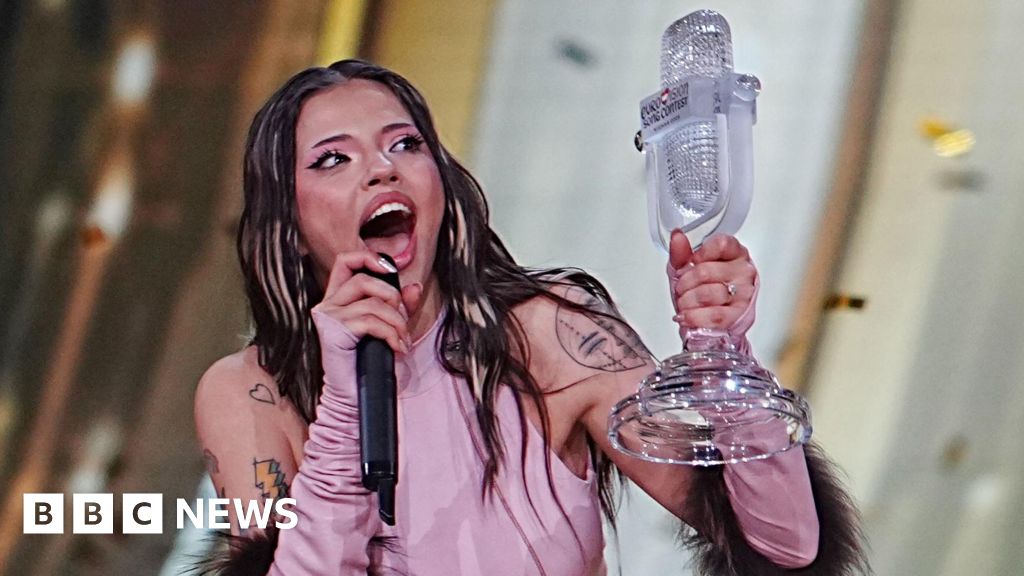
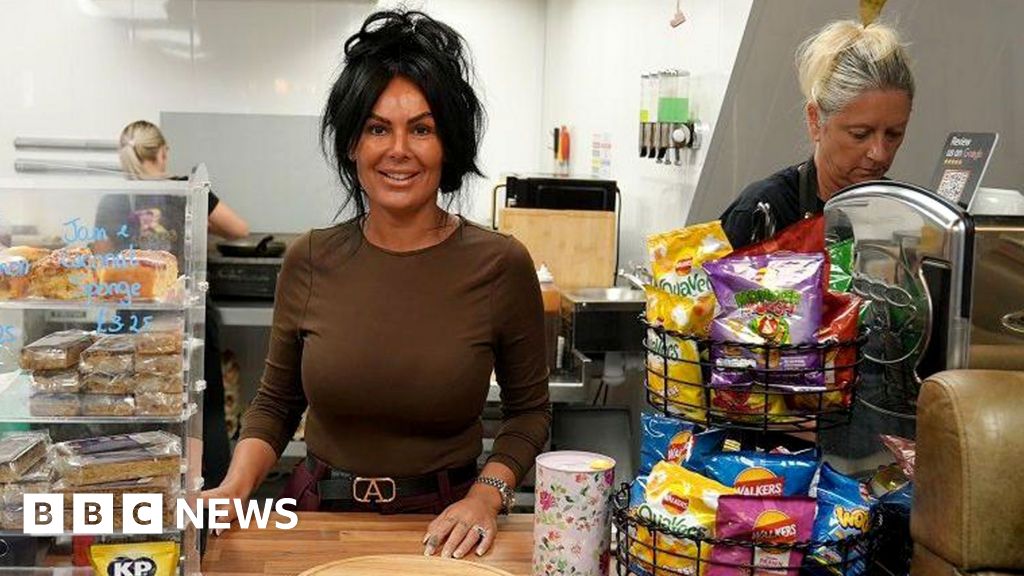
I wanted to quit Eurovision twice – then won it, says Bangaranga singer Dara

Published

on

Eurovision Song Contest winner Dara says she wanted to quit the competition twice before securing Bulgaria's first ever victory.

The Bangaranga singer has told BBC Newsbeat she considered dropping out to protect her mental health.

Dara says she was left "shaking in her bed" after being announced as her country's act, fearing her newly diagnosed ADHD would be exacerbated by participating in Vienna.

"That was how my body reacted," the 27-year-old says, "and I was trying to calm myself down for three hours."

Dara won Eurovision by a record-breaking points margin in May, despite initially being little more than an outside favourite.

As polished as it was quirky, the performance was packed with personality and one of the sharpest hooks to ever sink its claws into the contest.

But Bulgaria's historic win may never have happened had its star followed through with her plan to quit.

"The first time I said no because there were some things that I was not okay with in the contract," says Dara.

Already an established artist, problems started to stack up when she was announced as Bulgaria's first Eurovision entry since 2022.

"I immediately felt like I did something bad, that I'm not worthy," she says. "I didn't want to risk my mental health to such a degree that I couldn't heal it."

Eurovision is an infamously wild ride for performers, who are required to navigate an increasingly political narrative, a packed schedule and a vast audience.

When commentator Graham Norton asked Olly Alexander what advice he'd give acts based on his own experience in 2024, Alexander's reply was telling.

Dara says professional help she received after her ADHD diagnosis prepared her for the contest.

"I work with a therapist and she helped me with how to feel in a place full of people," she says. "I think she did a great job. I really felt in my zone wherever I went."

Dara says breathing exercises, drawing, journalling and meditation helped "keep her in the centre".

"Eurovision is so, so big – the biggest thing that artists can do," she says. "But I've never felt more calm on stage, more secure."

Vienna saved its biggest moment for Dara until last – one of the most emphatic wins in Eurovision history.

"I was just calm," Dara says, recalling how she felt as points flowed in from across the world.

"I opened my heart and just kept repeating, 'Thank you God for putting me on that stage and for these people around me.'"

The ticker tape had barely settled in Austria before Bulgaria's national broadcaster BNT confirmed Sofia as next year's host city.

Dara was met by huge crowds as she returned to the Bulgarian capital, where she will play a key role in whatever the country plans for 2027.

But after securing her place in Eurovision's hall of fame in Vienna, Dara's idea of future success is a little closer to home.

"I want to have kids some day," she says. "I want to be healthy and that is much more important than being successful in my career.

"Being successful as a human being is pretty big on my list."

Listen to Newsbeat live at 12:45 and 17:45 weekdays – or listen back here.

📰 மூல செய்தி (Source): https://www.bbc.com/news/articles/c1k2dml10ezo?at_medium=RSS&at_campaign=rss

முக்கியச் செய்திகள்

D-Day veterans mark anniversary as nearly 100 British names added to memorial

Published

on

Some of the last surviving UK veterans are commemorating the anniversary of D-Day, 82 years since the allied invasion of northern France in World War Two.

The huge operation, which took place on 6 June 1944, saw British, American and Canadian troops storm beaches along the Normandy coastline to begin the liberation of France from Nazi occupation.

This year's commemorative events are the first since nearly 100 more names were added to the British Normandy Memorial, which lists troops who died in the campaign.

"To most people coming here they're just a series of names," 100-year-old veteran Kenneth Hay told the BBC. "To people like myself, they're people, I can see their faces."

At the British Normandy Memorial above what was known as Gold Beach in 1944, an extra 98 names have been added to its roll of honour.

Research has uncovered men who fought in the battle – but inaccurate records meant their names were not carved on to the memorial's walls – until now.

In some cases families have managed to provide evidence that a relative was killed in Normandy, and in others men who were mortally wounded there but died in hospital back in Britain were also left off the original lists.

Cecil Green is among the newly-added names.

He was mortally wounded in Normandy, but his death in a British hospital meant he had not been formally commemorated.

"I was really pleased, I cried," Cecil's son John told the BBC, after he learned his campaign to have his father's name added had been recognised.

"It's a strange mixture of being glad and happy and sad at the same time," John said, as he touched the stone where his father's name is now inscribed.

This year will see the smallest number of Normandy veterans to have attended the ceremony since the memorial opened in 2021, with only six confirmed to be attending.

D-Day was the largest military seaborne operation ever attempted, and marked the start of the campaign to liberate Nazi-occupied north-west Europe.

It involved the simultaneous landing of tens of thousands of troops on five separate beaches in Normandy.

More than a year in the planning, D-Day was originally set to start on 5 June, judged to be the most likely date to combine calm seas, a full moon and low water at first light. However, storms meant it was delayed by 24 hours.

The "D" simply stands for "day". D-Day is a military term for the first day of an operation.

Commemorations to mark the 82nd anniversary started with French schoolchildren walking across Juno Beach to mark H-Hour, the time at which British servicemen were deployed.

Serving military personnel, the grandson of British Commander Field Marshal Montgomery and pipers from the Jedburgh Pipe Band marched with the schoolchildren.

UK Defence Secretary John Healey also paid his respects as he laid a wreath at the foot of the British Normandy Memorial, which lists 22,540 British names on its Roll of Honour.

📰 மூல செய்தி (Source): https://www.bbc.com/news/articles/cvgm53nqvndo?at_medium=RSS&at_campaign=rss

Continue Reading

முக்கியச் செய்திகள்

The Nowak murder has lit a match under British politics. This is how we got here

Published

on

Henry Nowak's mum and dad were being shown round the Victorian maze that is the Houses of Parliament when they heard politicians talking about their 18-year-old son's murder.

They were being taken on a tour of the labyrinthine building in between meetings with Conservative leader Kemi Badenoch and their appointment at Downing Street with the prime minister. They'd climbed the steep steps to the crammed public gallery to take a peek at the Commons Chamber when, by chance, the leader of the Commons, Alan Campbell, and his opposite number, Jesse Norman, both paid tribute to their son, and the dignity of the family.

In a terrible week of grief, I'm told they were touched to hear their son's death being acknowledged calmly in the country's parliament.

The same would not apply to the ugly conversations of the day before. The family were, mercifully perhaps, not present to hear the vicious argument with shouts of "condemn it", cries of "shame", and jeers and boos on Wednesday.

MPs had rounded on Reform leader Nigel Farage as he repeated his claim that "growing millions" in the UK believe we live under what he has long described as "two-tier policing" – that's the suggestion that police are more lenient towards ethnic minorities than white people for fear of causing racial tensions or being accused of prejudice. And he warned that the anger seen "spilling out" in Southampton was "in danger of getting considerably worse" if the public lose trust in the police.

But the Hampshire Conservative police commissioner, Donna Jones, who has been helping support Nowak's parents, told me: "Farage's comments on Wednesday were irresponsible and will lead to more division on Britain's streets – the Nowaks had called for calm reflection and reiterated that to me on Friday, and asked me to represent that view".

Now,  this weekend, to the horror of Downing Street, even the vice president of the United States has piled in. A torrid political argument is raging, one that's gone way beyond the tragedy of one family – it's a new fault line in British politics, involving the Trump administration too.

Claims of "two-tier" policing, which conveniently for the prime minister's critics, can be made into the damning rhyming jibe of "two-tier Keir", first started to circulate in mainstream politics in the summer of 2024. Although claims of a "two-tier" system had been made by the convicted far-right activist Stephen Yaxley Lennon (Tommy Robinson) many years before.

But two years ago, there were violent protests in towns and cities across England and Northern Ireland after fatal stabbings at a children's dance class in Southport on 29 July. Unrest had been stirred by misinformation on social media that the suspect was an illegal migrant.  It was not until 1 August that the identity of the girls' killer was made public.

Public anger at the girls' deaths, and the digital howlround about what had happened, led to clashes with police, attacks on mosques and asylum hotels. There were more than 1,800 arrests, and suspects were fast-tracked through the courts.

The new prime minister, Sir Keir Starmer, wanted to stamp his authority, and fast. But accusations started to emerge that the summer rioters, mainly white, were being treated more harshly than protestors had been at other recent demonstrations. The optics of other offenders being released early because of prison overcrowding was an uncomfortable contrast too.

Claims of an unfair approach were strongly rejected by the police and later, an independent committee of MPs found there was no evidence to back up the "two-tier" allegation – the response had been strong and swift because the disorder was serious, they reported. But the idea had gained traction, not least because the prime minister's unflattering nickname had been used online by Elon Musk – yes, the world's richest man, who just happens to own one of the biggest social media platforms in the world.

Fast forward to the start of 2025, when long-held fears about gangs of South Asian or British Pakistani men abusing young girls in British towns, as happened in Rochdale, Rotherham and Telford, reared their heads. Oldham Council's request for another inquiry into what became known as "grooming gangs" had been turned down.

When that was reported, opposition politicians started to push the prime minister for a national inquiry. And Elon Musk piled in again with extraordinary accusations against the prime minister and one of his ministers, Jess Phillips, but the nickname of "two-tier Keir" spiked again.

Unlike the allegations that 2024 rioters had been overly harshly treated because they were white, which were not proven, there had been evidence for years that investigations into grooming gangs of mainly Pakistani men were affected by concerns over race.

Dame Louise Casey, who led the inquiry into what happened in Rotherham, and later, looked at the situation across the country, even revealed that in one file she'd seen the word "Pakistani" tippexed over, suggesting that "do-gooders" had covered up the identify of abusers out of fear of stirring up racism.

It is broadly acknowledged now, across the political spectrum, that girls were terribly let down, in part because the authorities were worried about stirring up community tensions. And despite his own record of challenging and convicting those abusers as the director of public prosecutions, that row gave Keir Starmer's critics another chance to make the argument there the authorities do not treat everyone equally, fuelling the claims of "two-tier Keir".

But let's set aside the contested claims of the 2024 protests and the shame of grooming gangs scandal, and take a look at the overall picture. Even a glance at statistics suggests that, overall, ethnic minorities fair overwhelmingly worse in the police and justice system.

Black people are seven times more likely to be stopped and searched than white people, and five times more likely to be subjected to the use of force. There is a long, shameful and well-documented record of racism in the police, from the Stephen Lawrence murder back in the 1990s to an undercover Panorama last year that revealed those attitudes on display in a London police station even now.

There is a genuine political debate about whether recent efforts to right those wrongs in the police have gone too far. Ministers have acknowledged already that guidance to forces is clunky and ought to be reviewed. But they also say there is a history of racism in policing that needs to be recognised. The Conservatives have called for an "independent rapid review" into the circumstances surrounding Nowak's death. And the shadow home secretary Chris Philp has said: "Two-tier policing is real. It is hardcoded into policy documents, recruitment, and training".

Liberal Democrat leader Ed Davey called the killing "an evil murder made so much worse by the police response" but said we must avoid attempts to politicise the death and "divide our country".

Some officers have reported pressure to change their conduct out of the fear of allegations of racism, as my colleague Sima Kotecha has been reporting. But that does not mean it is accurate to make bold claims that the whole system is definitively stacked against white people. And Farage, now aided by the White House, has been using the occasion to make a wider claim about our overall culture, that he believes the rights of ethnic minorities are being protected over whites. In his words: "We're living in a two-tier culture in this country where the rights and privileges of white people matter less than those of ethnic minorities."

JD Vance even claims that Nowak's death was a result of a "mass invasion" of migrants, making dramatic comments about the decline of European civilisations, which Farage has reshared online. We don't know if Vance doesn't care, or isn't aware, that Nowak's killer was born in Britain. Nor do we know if he's aware that by crashing into the polit

📰 மூல செய்தி (Source): https://www.bbc.com/news/articles/c39297vxmw2o?at_medium=RSS&at_campaign=rss

Continue Reading

முக்கியச் செய்திகள்

West Ham joint chairman David Sullivan steps down after 'serious' historical allegations

Published

on

David Sullivan has been a West Ham fan since his family moved to Essex when he was a child

West Ham United co-owner David Sullivan has stepped down from his position as joint chairman of the club with immediate effect.

The Hammers said they had "been made aware of the impending publication of serious historic allegations" concerning Sullivan.

In a statement of his own, the 77-year-old said a "small number of improper conduct claims" have been made against him, adding: "I categorically deny these claims."

He said the "decades-old allegations concerning my personal life" are "factually incorrect and entirely false".

Sullivan, who had held the role for 16 years, said he stepped down "to apply my full energy and attention on fighting these false allegations".

Sullivan also said he plans to sue the BBC for libel "along with any other media outlet that repeats any libellous allegations".

The Hammers were relegated from the Premier League at the end of the 2025-26 season after finishing 18th.

"At what is already a challenging and important time for the club, I refuse to allow personal matters concerning me to become an unnecessary distraction or a source of instability," added Sullivan, who has also resigned as a director.

"Therefore, after very careful consideration and with a heavy heart, I have decided to resign."

In a club statement, West Ham said Sullivan has denied any "illegal conduct" and is leaving "in order to avoid disruption to the club while he addresses the matter privately".

Sullivan has been the club's largest single shareholder since the death of his business partner David Gold in January 2023, which left him with a 38.8% stake.

Sullivan and Gold became joint chairmen of West Ham when they completed their takeover of the club in January 2010.

"It is understood none of the allegations relate to West Ham United or any of its operations," said West Ham.

"Interim chief executive officer Karim Virani, reporting into the current board of directors, will continue to be responsible for leading the club's day-to-day operations.

"The club will provide an update on the future structure of the board of directors in due course, but will make no further comment at this time."

Sullivan and Gold had previously been co-owners of Birmingham City from 1993 to 2009.

They oversaw West Ham's move from Upton Park to London Stadium in 2016 and their Conference League win in 2023 – the Hammers' first major trophy since the 1980 FA Cup.

The club's best Premier League finish during their tenure was sixth in 2021, but the Hammers have finished in the bottom half in three of the past four seasons and their 14-year spell in the top flight came to an end last month.

West Ham fans have held protests on numerous occasions during the 2025-26 season, calling for Sullivan and Baroness Brady to step down.

Brady left her role as vice-chair on 15 April.

Fans' fury as West Ham on brink of drop – how have they got here?

Latest West Ham news, analysis and fan views

Ask about West Ham – what do you want to know?

📰 மூல செய்தி (Source): https://www.bbc.com/sport/football/articles/clypyk2e7vyo?at_medium=RSS&at_campaign=rss
Continue Reading

Trending

Copyright © 2024 by 7Tamil Media, All rights reserved.