Connect with us

உலகம்

Ethiopia’s election is about affirming national commitment to democracy

Published

on

A national vote alone cannot address all challenges in the country, but it can be a step toward democratic consolidation.

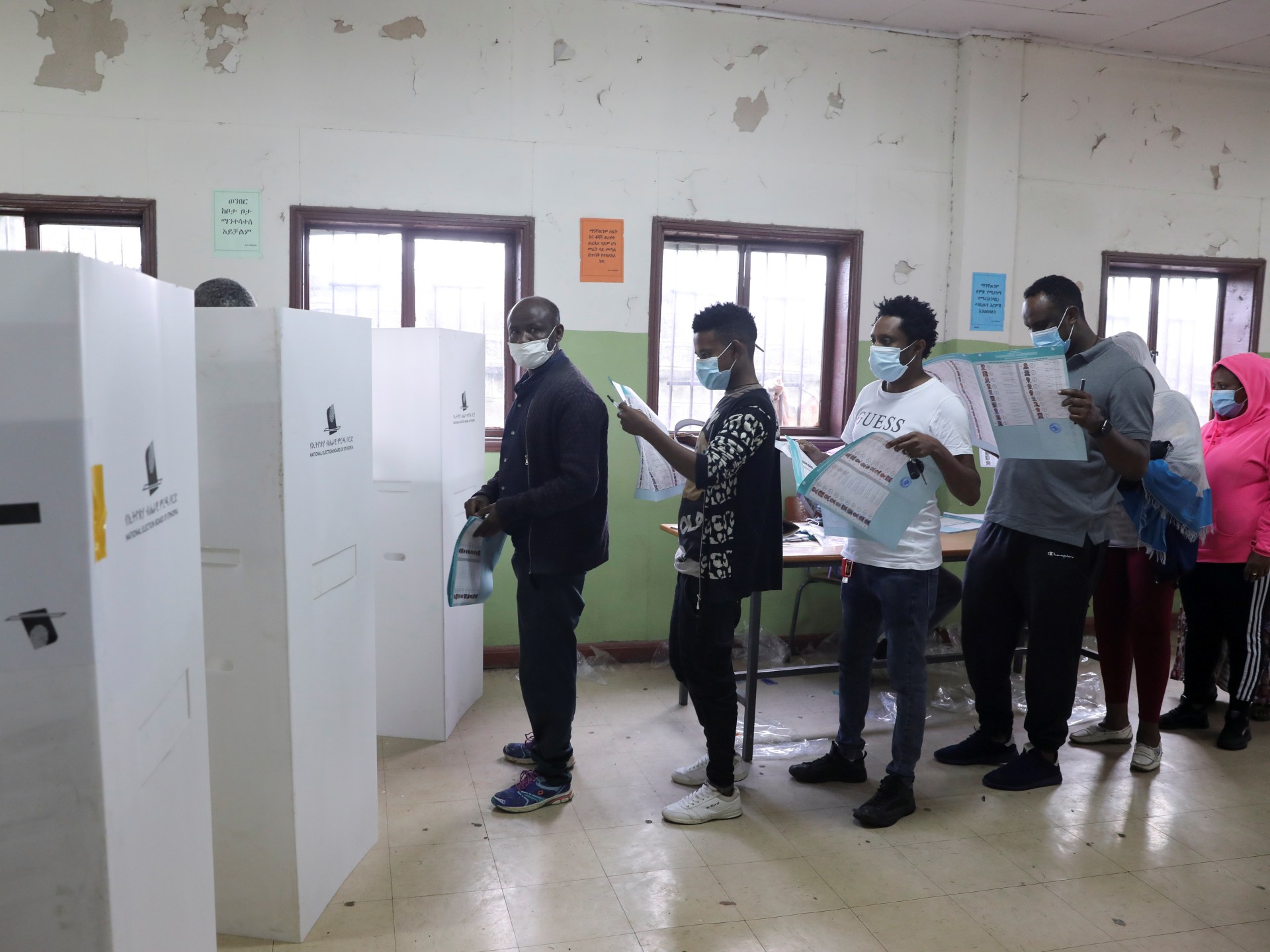
On June 1, more than 57 million Ethiopians are going to the polls in the country’s seventh national election since the adoption of the 1995 constitution. At a time when democratic systems across the world are under strain, Ethiopia’s vote is more than a routine electoral event — it is a significant test of whether a large, diverse, and rapidly changing state can navigate the difficult process of democratic transition.

Ethiopia’s electoral system differs from that of many African countries. Voters do not directly elect a president; instead, they choose parliamentary representatives, reflecting a system closer to that of the United Kingdom. In this election, 47 political parties and more than 10,000 candidates are competing for seats at both the federal and regional levels.

The government’s performance in key sectors over the past few years is expected to reflect positively on the election outcome. During the past electoral cycle, Ethiopia has recorded strong economic growth, with average annual gross domestic product (GDP) expansion of around 7.5 percent and projections for this year reaching more than 10 percent.

These figures are not just abstract statistics. Across major cities, including Addis Ababa, visible urban transformation is under way, reinforced by ambitious infrastructure development and a renewed push in agriculture and industry.

Export performance has improved markedly, driven by agriculture and mining, while sectors such as tourism and digital services are beginning to play a growing role in the economy. The completion of the Grand Ethiopian Renaissance Dam has further cemented the country’s position as a regional energy powerhouse, with additional large-scale projects in the pipeline pointing to continued economic momentum.

At the same time, the government faces serious challenges. Economic and security challenges remain areas that need continued intervention from the government to meet the ever-growing public demand. Yet the opposition has not managed to capitalise on this challenge by developing a coherent and compelling alternative way to address the challenges.

Many opposition groups remain fragmented along ethnic and sectarian lines, limiting their ability to compete effectively within Ethiopia’s first-past-the-post electoral system. In such a system, a divided opposition risks diluting its own support base, often translating into disproportionate advantages for the incumbent.

Against this backdrop, steps have been taken to broaden political participation. The ruling party has refrained from fielding candidates in a portion of available seats, aiming to create space for opposition representation and encourage a more pluralistic parliament.

There is also an expectation that the post-election political landscape will continue the recent practice of including opposition figures in executive roles, reflecting an ongoing effort to build a more inclusive political culture.

Ethiopia’s democratic trajectory must also be understood within a broader global and historical context. Even established democracies are grappling with rising polarisation, disinformation and political extremism.

In Ethiopia, these pressures are compounded by longstanding structural challenges, including deep-rooted ethnic divisions and a recent history of conflict.

For this reason, elections alone cannot resolve all of Ethiopia’s political challenges. The country’s ongoing National Dialogue Process is a critical complement to electoral politics. By seeking consensus on fundamental constitutional and political questions through an inclusive, deliberative process, the dialogue aims to address issues that lie beyond the reach of simple majoritarian decision-making. Its successful conclusion will be as important as the election itself in shaping Ethiopia’s democratic future.

The significance of the upcoming vote, therefore, lies not only in who wins, but in what it represents. It is an exercise in popular sovereignty under challenging conditions, and a step — imperfect but meaningful — along a longer path towards democratic consolidation. For a country of Ethiopia’s size, diversity and geopolitical importance, the stakes extend well beyond its borders.

More than 57.2 million citizens heading to the polls are not only choosing representatives; they are affirming a collective commitment to a democratic future. The question is not whether the journey will be difficult — it already is — but whether the institutions, processes, and political will can continue to evolve to meet that challenge. Anyone who knows Ethiopia’s history of resilience knows the answer to this important question.

The views expressed in this article are the author’s own and do not necessarily reflect Al Jazeera’s editorial stance.

📰 மூல செய்தி (Source): https://www.aljazeera.com/opinions/2026/5/31/ethiopias-election-is-about-affirming-national-commitment-to-democracy-2?traffic_source=rss

உலகம்

Donated milk reaches Cuba amid deepening shortages

Published

on

Cuba has begun distributing donated powdered milk from Mexico and Uruguay as the island faces severe shortages and a deepening economic crisis. Officials say young children, pregnant women and paediatric facilities will be prioritised.

📰 மூல செய்தி (Source): https://www.aljazeera.com/video/newsfeed/2026/6/1/donated-milk-reaches-cuba-amid-deepening-shortages?traffic_source=rss

Continue Reading

உலகம்

Colombia’s outsider candidate defied the polls

Published

on

Colombia’s presidential election is headed to a runoff on June 21. Far-right outsider, Abelardo de la Espriella, will face leftist senator, Ivan Cepeda. Professor Jorge Restrepo describes de la Espriella’s rise in the polls as a punishment vote against Colombia’s long-established political class.

📰 மூல செய்தி (Source): https://www.aljazeera.com/video/newsfeed/2026/6/1/aje-onl-nf_qt_guest-jorge-restrepo_colombia-elections-310526?traffic_source=rss

Continue Reading

உலகம்

‘Before, the land sustained us’: Who benefits from Guinea’s bauxite wealth?

Published

on

The country has vast reserves of the ore that is a source material for aluminium. But citizens still languish in poverty.

Bembou Silaty, Guinea – Mamadou Aliou walks through the small village of Bembou Silaty in northwestern Guinea carrying an irresolvable contradiction.

The 38-year-old works in the environmental health and safety department for a bauxite mining company, yet he is also an activist striving to improve life in his community, which often means criticising the actions of another mining company in the area.

“Before these companies arrived, we cultivated our land, and it sustained us,” Aliou told Al Jazeera.

“We could cover our daily needs, especially food. But now, when a piece of land is registered and belongs to a mining company, you have nothing there any more.”

The foreign-linked mining companies are part of the global scramble for Guinea’s bauxite. The West African nation holds the world’s biggest reserves of the ore, which is the source material for alumina and ultimately aluminium, a metal essential for car and aircraft frames, windows, wind turbines, and solar panels.

Over the past three decades, Guinea has multiplied its bauxite production tenfold. More than a dozen projects of bauxite production are currently ongoing in the country, according to the online cadastre.

As the global energy transition demands ever more aluminium, it has placed Guinea in a strategically crucial position. Approximately 75 percent of the bauxite exported by the country over the past decade has ended up in China, which produces 60 percent of the world’s aluminium.

Companies from Russia, the United States, and the United Arab Emirates have also established themselves in the country to secure the ore. In Bembou Silaty, an Indian company that began operations in 2019 now holds an exploitation concession until 2034.

Located in the prefecture of Telimele (Kindia region), Bembou Silaty has undergone a transformation since bauxite was discovered on its land about five years ago.

Yet, on the ground, many lament the cost: Contaminated water, loss of farmland, and a steep decline in agricultural productivity.

In the traditional bauxite heartlands of Kindia and Boke, the main roads are in notably good condition, a cut above the rest of the country. Steady jobs in technical roles or transport logistics have created economic opportunities for some Guineans.

Yet Bembou Silaty remains a quiet, peaceful village without electricity, and farming methods that are untouched by mechanisation.

Less than 2km (1.2 miles) away, however, the lush green landscape and mild climate of the rainy season give way to the electric-powered site of the Indian mining company.

There, excavators and trucks laden with bauxite constantly traverse the wide, unpaved roads, built to accommodate the heavy traffic, in a noisy, busy zone where the mining economy bulldozes its way forward.

People working in technical roles at the mine can earn up to about $300 a month.

For other locals who make a living from farming, most don’t have a regular wage and rely on the yield from their crops.

Across Guinea, an estimated half of the population depends on agriculture for their livelihood.

Locals in Bembou Silaty say every hectare claimed by mining is a hectare lost to farming, in a country that spent more than $500m importing rice in 2024.

“They give you compensation for your land, but it’s not enough, and in the end, it’s mismanaged,” Aliou said.

“Within a month or two, someone who received 50 or 100 million Guinean francs ($5,700-11,400) has nothing left. No land, no money. They have to start over, from below zero.”

Locals who still own land continue to grow rice, cassava, peanuts and cashews in the village, but they have ever less space and agricultural productivity is falling.

The village women have set up an association, “Allawalli” (which means “God help us” in Fula), to work cooperatively.

Walking through the alleys of Bembou Silaty, a few houses stand out.

They are made of cement, which withstands the rains better than the more common mud-brick homes, though many remain unfinished.

Locals say they were built with compensation money.

Fatoumata Binta Bah, a neighbour of Aliou’s, comes from a family of farmers. They once cultivated cashews, their livelihood.

Then the Indian mining company started up operations and offered them less than 50 million Guinean francs (about $5,700) for their land. That compensation, paid as a lump sum, seemed like a decent amount of money, she says.

But now, the money is gone, and their new house is still incomplete.

“The land they took from us was productive. That’s what we lived on,” said Bah, 20, as she prepared tea over a fire in the family courtyard.

“In the end, it wasn’t enough,” she lamented.

The Indian company did not respond to Al Jazeera’s questions on the purchase of land.

Meanwhile, on the outskirts of the village, surgical holes drilled into the ground mark where mining companies have tested for bauxite – a reminder to the farmers that the impact on the land is felt even before extraction begins.

In a recent report, Djami Diallo, the Guinean minister of the environment and sustainable development, stated that each year, certain companies had their impact studies and evaluation reports rejected for failing to comply with environmental standards.

Three or four companies in Boke, Kindia’s neighbouring region that is considered the bauxite capital in the country, were said to be affected. But the minister acknowledged that “just because companies do not meet the conditions to obtain the compliance certificate does not mean that everything stops.”

Not all homes in Bembou Silaty, a community of about 5,000, have indoor toilets and plumbing. In the centre of the village, there are communal latrines for those who do not have facilities available in their homes. Showers can be taken in the same place, using a bucket and water collected from the spring.

One small gain for the community since the mining company’s arrival is a new water point in the village. The tap serves nearly all the residents. Even Aliou uses it to fill buckets for his household – for cooking and drinking – though he says he knows the water contains iron, as contamination occurs.

Still, he considers himself luckier than his friends in the neighbouring village of Koussadji Dow, who rely on now-brown, contaminated river water.

Tala Oury Sow, a trader and farmer, washes her cooking utensils in the murky river water – a daily struggle.

She starts speaking softly, surrounded by neighbours, but her voice rises to a shout.

“We had hoped the mining company’s arrival would improve things, but it has gotten worse,” she protested.

“Since the mining companies came, we’ve had this problem with the water. The children get sick, and the parents too,” added Mariama Kindi Diallo, a farmer, in her courtyard.

“The doctors tell us not to drink the rain or river water. There are no roads, no school, no phone signal. What are we supposed to do? We are asking for help to have a dignified life,” she pleaded, as her family and neighbours nodded in agreement.

The Indian company did not respond to requests for comment on these issues.

To escape the increasingly difficult conditions in villages like Bembou Silaty, some people leave the rural areas and head to the capital, Conakry.

Bauxite mining so dominates Guinea that one can chance upon a driver of one of the trains hauling ore from the mines to the port of Kamsar.

Alpha, who did not want his real name published, works for a United States-backed company and provides a window into the immense volume of resources being exported.

“We operate six trains of 150 wagons each day,” he said, explaining that the annual target for 2025 was to export 17.5 million tonnes of bauxite.

“The government wants to change things, because the profits we make in Guinea right now are small. We need refineries here to increase the state’s revenue,” he

📰 மூல செய்தி (Source): https://www.aljazeera.com/features/2026/6/1/before-the-land-sustained-us-who-benefits-from-guineas-bauxite-wealth?traffic_source=rss

Continue Reading

Trending

Copyright © 2024 by 7Tamil Media, All rights reserved.