Connect with us

முக்கியச் செய்திகள்

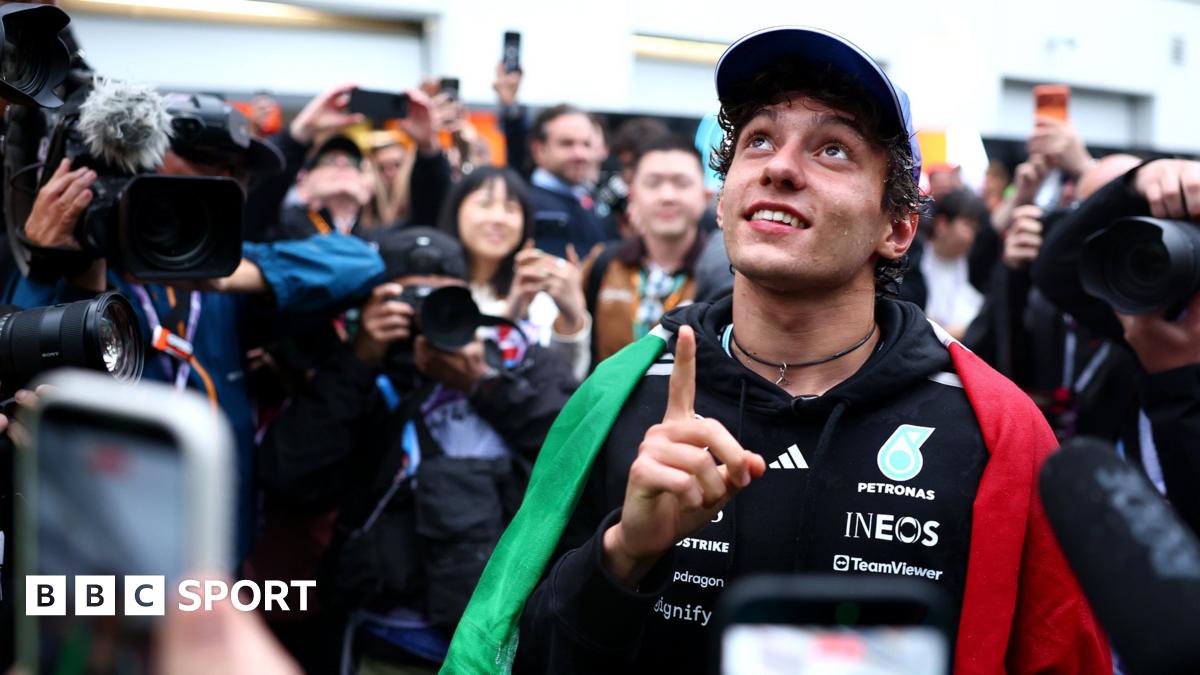
The title battle finally came alive – then Antonelli took control

Published

on

Kimi Antonelli is now 43 points ahead of Mercedes team-mate George Russell in the drivers' championship

The Canadian Grand Prix was the race in which the Formula 1 title battle finally came alive this year.

It was also, however, the race in which it took a potentially decisive turn, putting a huge dent in George Russell's hopes of beating his 19-year-old Mercedes team-mate Kimi Antonelli to the championship.

Russell's retirement from the race came after 30 laps of frenetic battling between the pair which lit up the Circuit Gilles Villeneuve on a damp, gloomy day so cold it tempted world champions McLaren into a seemingly inexplicable decision to start the race on a dry track on wet-weather tyres.

Russell's retirement handed the win to Antonelli, his fourth in a row, and the Italian now has a massive 43-point lead.

Doubtless there are many twists and turns to come in the remaining 17 races. Even so, that will take some recovering.

Afterwards, Russell was stoic but understandably downbeat.

"Right now it's his to lose," he said. "He is so many points ahead. It feels like the gods don't want me to be in this fight, when I look at the safety-car timing in Japan, breaking down in China Q3, fighting for pole, breaking down from the lead here today.

"But, you know, the pressure's off. Go out, enjoy every single race. Try to win every single race. And I've got nothing to lose.

"I don't want to be stood here talking like that. It is, of course, frustrating, but I want to be in that fight. Hopefully, the luck will turn."

Antonelli wins again to capitalise on Russell retirement in Canada

Hamilton 'all smiles' & Antonelli 'not afraid to fight' – driver ratings

Chequered Flag podcast: Canadian Grand Prix review

Russell's references to luck refer to a series of situations where the dice have very much fallen in Antonelli's favour.

Two separate technical problems in qualifying in Shanghai prevented him fighting for pole. Antonelli took it instead, and his first win followed.

In Japan, Russell had been running second to McLaren's Oscar Piastri in the early laps, while Antonelli fought back after falling to sixth with a slow start.

The safety car came out after Russell had made his pit stop and before Antonelli had made his, handing the lead to the Italian on a plate, and leaving Russell a frustrated fourth.

It was far from a foregone conclusion that Russell would have converted his lead into a win in Montreal. The two had fought so hard for so long, and were running together at the time, the fight having cooled a little after they had both been warned the team would step in if they did not tidy things up after some incidents that team boss Toto Wolff felt were too close for comfort.

But the suspected power-unit failure that stopped Russell ensured the points swing was enormous rather than manageable, even if Antonelli had been the one who came out on top.

For Russell, it was especially galling that it came after a victory in the sprint race on Saturday – after another tense and tight scrap with Antonelli – that had stemmed the Italian's recent momentum a little.

The battle Russell and Antonelli staged was gripping.

After reclaiming first and second places from the fast-starting McLaren of Lando Norris, they exchanged places several times, often as a result of one or the other of them locking up at the hairpin while trying to race on tyres that were too cold.

"I loved it," said Russell. "I thought it was great. I've not had a battle like this in years. I haven't seen a battle like this, probably, since Lewis [Hamilton] and Nico [Rosberg] in Bahrain 2014. And these new cars allow you to do that. These new engines allow you to do that.

"I don't know why anybody wants to change them, because we had amazing battles in Melbourne. We had great battles in China. Kimi and I have had a great battle today and yesterday, and that's only possible because of how these power units are."

Russell did not see there was anything wrong with it.

"We know how we need to race," he continued. "I think we both had it under control and it was great. I really enjoyed it. It was exceptionally difficult, this circuit, to break that one-second overtake mode."

Antonelli described it as a "really fun battle, really close".

Just like in Saturday's sprint race, Russell and Antonelli could barely be separated until the Briton's retirement

The team were enjoying it, too – but only up to a point.

Eventually, when Antonelli ended up locking up on the outside of Russell on lap 24 at the chicane and went through the run-off area, their engineers came on the radio and warned them that if they couldn't tidy it up the team would call off the fight.

This will lead to some discussions between Wolff and the drivers over the coming days.

Wolff said: “It's always easy at the end now to say 'well that was great for the team and great for the sport and didn't we all enjoy watching the battling?' And that is true to a degree.

"But there is another side which we need to look at and that was it was close a few times. Kimi tucking back in and locking the tyres could have ended in a double DNF and not because of, you know, over-aggressive driving each other, simply by mistake.

"So it's important to analyse the race and discuss with the drivers whether they think it was a bit close and, if that is the case, how can we avoid these very, very tough situations or situations where we've been a little bit too close.

"As much as we look very sportsmanlike today, allowing it, there could be a situation where we would maybe turn it down a notch."

Wolff was also not happy with some of the radio messages from the drivers, especially Antonelli, who had called for a penalty for his team-mate in the sprint, and also accused him of "pushing me off" in the grand prix.

Russell, too, was admonished by Wolff when he made a sarcastic comment about the location at which Antonelli had chosen to give back the lead after skipping the chicane.

"Obviously when you listen to some of the radio comms, I think there is room for improvement," said Wolff.

As for Russell's title hopes, Wolff said there was no reason to panic.

"Things have been going against him in the last few races," he said. "Today certainly would have been big points to collect. He was in the lead.

"But, if there's one guy that I would choose on this paddock in terms of resilience and determination, that would be George.

"He's had to overcome adversity previously, whether it's from karting or junior formulas. And he's not going to give up that fight. There's 17 races to go. So many points to score.

"So, yeah, this is just, you know, wake up tomorrow and digest, forget, move on, move forward and drive the best you can. And that's exactly what he's got to do."

📰 மூல செய்தி (Source): https://www.bbc.com/sport/formula1/articles/czr2ed3zrr5o?at_medium=RSS&at_campaign=rss

முக்கியச் செய்திகள்

UK braces for hottest May day on record as 30C heat continues

Published

on

Heatwave conditions were reached in several parts of the UK on Sunday

The UK is likely to experience its hottest May day on record on Monday as searing heat continues.

Temperatures are forecast to reach as high as 34C, breaking the previous May record of 32.8C set more than 80 years ago. The 32.3C recorded at Kew Gardens in south-west London on Sunday was the highest of the year so far, the Met Office said.

It comes as eight regions in southern and eastern England officially entered heatwave conditions on Sunday, after three days at or above the temperature threshold.

Amber heat health alerts are in place in parts of the Midlands and eastern England until at least Wednesday.

Monday is forecast to bring the most widespread heat of the week with all nations set for their hottest day so far this year

Monday and Tuesday are forecast to be the hottest days of the week with temperatures on both days reaching the mid-30s in southern Britain.

However, Monday will bring the most widespread heat with all nations set for their hottest weather so far this year.

Wales could also set a new May heat record in the next few days, surpassing the 30.6C recorded in Newport in 1944.

But it is not just daytime heat records at risk.

It is possible on Monday or Tuesday night that somewhere stays warmer than the May record of 18.9C set in Folkestone in 1947.

What are UV levels and how can you protect yourself?

The hot weather may spark a few thunderstorms in central England and Wales on Tuesday. However, they are likely to be very localised and not enough to cause a significant break from the heat.

On Wednesday, a break in the heat is expected widely across much of eastern and southeastern England. Cooler air will temporarily spread off the North Sea as some locations experience a five to 10-degree drop.

However, Wales and southwestern England will remain fairly hot, sheltered from the North Sea breeze. Highs, here, could still reach 30C.

By Thursday, the supply of cooler air will be cut off as hot air resurges from France once again. This means that temperatures will increase, with 30C back on the cards.

Most weather forecast models show that respite will begin next weekend and more starkly into next week.

The jet stream, to the north of us this week, will wobble back southwards, meaning areas of low pressure, occasional rain, stronger winds, and a drop in temperature as we head into the first week of June.

The heatwave that began early last week across southwestern Europe is consistent with what we would expect in a changing, hotter climate.

Even by mid-summer standards, the current hot spell would be significant – let alone for May.

According to the latest European State of the Climate report, Europe is the fastest warming continent in the world with heatwaves becoming more frequent and more intense.

Since record-keeping began in the UK, there have only been a handful of years when temperatures reached or exceeded 30C in May.

Values in the mid-30s were once uncommon in the British Isles even at the height of summer, yet we are now on course to reach those levels before June has even begun.

Statistically, the UK experiences its highest temperatures at the end of July or the beginning of August, so it's likely we'll see even higher temperatures during the summer.

How to keep cool at your summer festivals

Six ways to keep your home and yourself cool in hot weather

📰 மூல செய்தி (Source): https://www.bbc.com/weather/articles/c794j5zwppno?at_medium=RSS&at_campaign=rss
Continue Reading

முக்கியச் செய்திகள்

Beer boom goes flat as breweries call last orders

Published

on

Walking down the streets of Burton-upon-Trent 30 years ago, Al Wall could smell different aspects of the beer brewing process through the day – but those moments are now few and far between.

He is the head brewer at the oldest and largest independent brewery remaining in the town that once produced a quarter of British beer, with more than 30 breweries at its peak.

These days the brewing scene in Burton is a shadow of its former self, and the town is not alone.

Across the UK 320 businesses shut last year, Companies House data shows. Yet only 170 opened, resulting in a net loss of 150.

In addition, the beer industry estimates that around two pubs closed a day in the first quarter of 2026.

The net loss has continued this year. As of April, the number of UK beer brewing companies fell to 2,320. It peaked at 2,594 in 2022.

Tim Webb, from the Campaign for Real Ale (CAMRA), explained the domination of big brands is one of the main issues.

"The big problem that breweries have got, and it is getting worse, is access to market," he said.

"The problem, which is really happening everywhere across Europe, is large brewery companies owning the draught lines in pubs."

Smaller breweries are also blocked from supermarket sales due to price undercutting.

Webb said some closures are due to the lingering impacts of Covid, but consumer habits are also key.

Less than a decade ago, England's beer businesses were booming. In 2017 alone, 317 breweries were incorporated – more than double last year's figure.

While England still accounts for the vast majority of the UK's beer-brewing businesses, its total has fallen below 2,000 this year for the first time since 2018.

Of the 1,965 remaining, 95 are in the process of administration, insolvency or liquidation.

The South East's oldest brewery, based on the year of incorporation, is Oxfordshire's Hook Norton.

James Clarke is the fifth generation of his family to run the company and has been brewing for over 30 years.

He has seen a large change in "consumption, attitudes and lifestyle".

"Back in the early nineties, we brewed three beers, a mild, a bitter and Old Hooky," he said.

"I think beer consumption in the UK was about double the volume that it is now."

Hook Norton is brewing half the amount of beer it was 15 years ago, but a wider variety, and Clarke believes there is a "small renaissance in the traditional styles of beer".

Webb added: "The part of the beer market that's holding up or growing is the interesting part.

"So you've got heritage beers, craft beers, in some cases very strange wacky new types of beer – those are all doing fine."

"What is slowly but surely contracting, and has been for decades now, is the bright, shiny, frothy top, see-through lager market."

A crucial part of continued success for Hook Norton has been finding ways to diversify.

Clarke said: "We were probably the first with a visitor centre of any scale and we were one of the first with a microbrewery within the main brewery."

Andy Slee, chief executive of the Society of Independent Brewers and Associates (Siba), said many of its members are looking to diversify, with some opening taprooms that allow breweries to serve beer directly to customers.

"In order to survive, you just can't stay doing what you were doing before," he added.

"Although the beer market has been in consistent decline, demand for independent beer is relatively strong."

However, breweries are facing a "suffocating level of taxation" and Siba wants to see a tax reduction on draught beer in pubs.

"When a brewery or a pub dies, something in that community dies," Slee said. "A place to meet, a place of employment, a place that pays local tax."

London is the only English region which didn't see a net loss of companies last year.

In the West Midlands, the home to the former capital of beer brewing, nine companies were started up but 21 were dissolved – a loss of 12.

Back in Burton, Al Wall and Emma Cole, brewery manager at Burton Bridge and Heritage Brewing Company, hope to preserve their history and be a "bastion of independence".

"It is about hope," Cole said. "People see us carrying on and it gives hope that beer isn't going to die in Burton."

The breweries rely on selling beers through its taproom. Cole added: "There's so many pubs we just cannot sell to at all."

She explained that breweries are facing rising costs, from business rates to "astronomical" fuel prices, but the consumer doesn't expect their beer to go up in price.

At its peak, Burton-upon-Trent was home to 30 breweries – now there are just eight according to Camra data .

While a far cry from 30 in a single town, there are still some dense clusters of breweries in the UK.

Triple Point Brewery is one of ten locations within a mile radius in Sheffield.

Co-founder George Brook said: "One of the reasons why I love this city, and also Bristol, both are so much more accepting of independents than anywhere else I have been or lived.

"The culture of drinking local beer is one of the things that makes Sheffield great."

Although the brewery has "grown every year", success has not come easily.

"We just accept that it's going to be harder next year to make the same amount of money as we did the year before," the Brook said.

"I think we would be very tight if we had to rely just on the brewery. If someone came and shut down our taproom tomorrow, we would be in a serious pickle."

But there may be hope on the horizon for independent breweries.

The goverment has recently reviewed the beer market to "determine barriers preventing small breweries from accessing pubs" and launched a £4.3 billion business rates support package.

"We know the vital role independent breweries and pubs play in local communities, supporting jobs and growth across the UK," a spokesperson said.

Additional reporting by Lauren Woodhead and Jonathan Fagg

📰 மூல செய்தி (Source): https://www.bbc.com/news/articles/c9werp5keqlo?at_medium=RSS&at_campaign=rss

Continue Reading

முக்கியச் செய்திகள்

'I live in survival mode': The rise of the multi-job workforce

Published

on

More than a million people in the UK now have second jobs as rising costs, insecure work and industry changes push workers into a growing gig economy.

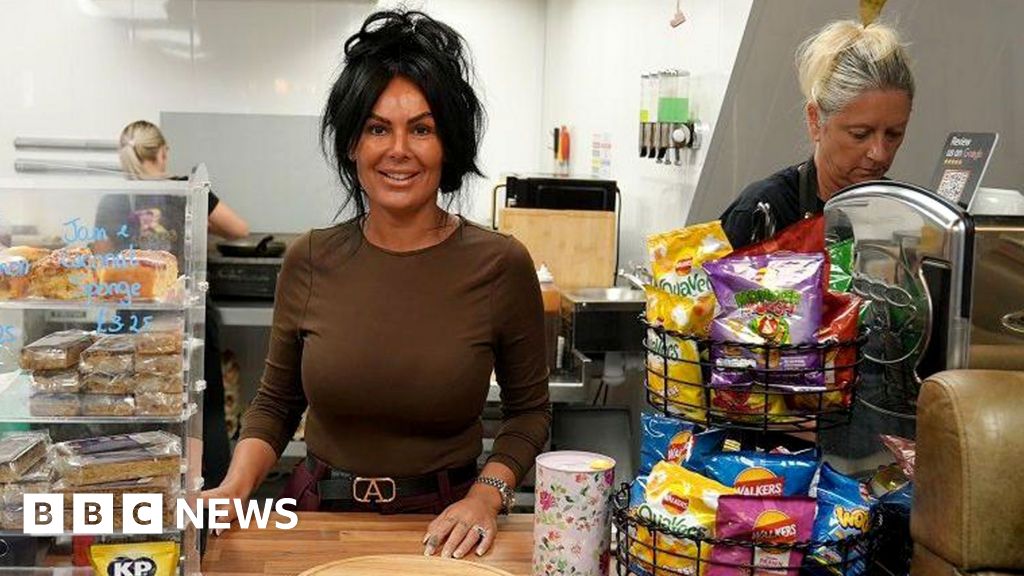
Billy-Jo Pierce says she is "living in survival mode", juggling multiple jobs to stay afloat in Bristol, the UK's second most expensive city.

She is is one of a growing number of people who have taken on an extra paid role to combat the cost of living crisis and build financial security and flexibility.

Pierce, 29 and originally from Birmingham, says she loves her work but admits that the "burn out is real."

She works 50-60 hours a week running a business decorating customers' teeth with cosmetic gems, while taking on reception shifts, bar work, festival jobs and selling clothes online.

Data from the Office for National Statistics shows roughly 1.3m people in the UK currently have a second job, a slight decline compared to a record high of 1.35m people recorded in 2025.

Pierce's entrepreneurial journey began while studying interior design at university.

Despite graduating with a first-class degree, she struggled to find work in the industry and took a 9-5 gaming job while building her business on the side.

"I'd finish work at like five, six pm and then go straight to my own business and stay there till like 11 pm.

"I was working way too much, I had no social life.

"I felt like I was part of a massive rat race that I wasn't going to win in.

"I was working so hard but I wasn't saving and I wasn't really living."

After being made redundant last year, she decided to focus on her business full-time.

But rising costs and Bristol's high living expenses made it difficult to survive on one income.

Research suggests material costs in the beauty industry have risen by more than 90% over the past decade.

Pierce now lives in a van to cut expenses and works several jobs to support her business.

A typical weekday sees her in the studio from 10:00 to 19:00, followed by reception shifts until as late as 23:00. Weekends are often spent working in bars or festivals.

Despite this, she says she still worries constantly about money.

"Work is a lot and I still feel like I'm not earning a good monthly wage to ever get close to owning a house," she says.

"I feel like it's quite the norm at the moment to work multiple jobs. There's definitely something wrong with what's going on at the moment."

The UK unemployment rate recently increased to 5% while the number of job vacancies has fallen to its lowest level in five years.

At the same time, the gig economy – freelance or contract work rather than permanent employment – has grown significantly.

Just under five million people now take part in gig work- such as food delivery, freelance design, cleaning, dog walking, or selling clothes online – although only a fifth rely on it as their primary income.

When unemployment rises, more people turn to gig work.

For many, especially younger workers, relying on one employer no longer feels secure.

Engy Elboreini, a freelance graphic designer from Bristol, says she has had to diversify her work as the industry changes.

"The last two years have been my worst trading years," she says.

"I've noticed that within the digital design industry, tools like AI and Canva being so accessible to my client base means that they end up doing a lot of the work themselves."

After more than a decade in design, the 35-year-old says AI has "eradicated" much of the demand for traditional design work.

Alongside freelance projects, she now works in creative production and coordination roles and is retraining in events management.

"Whenever there is scarcity, as humans, we find solutions," she said.

"Especially if you're creative – you'll always find solutions."

Still, financial pressure has forced her to cut back on luxuries such as holidays and festival tickets.

"Is this the lifestyle that I want to live? No. But being in Bristol is fun and being embedded in creative circles is more than fulfilling."

For others, the move into multiple jobs is driven by personal circumstances as well as finances.

Hollie, from Bristol, became a single mother and needed flexible work to support her son Max as she survives on a single income. Through a recommendation, she began working as a life model.

"It wasn't something that I ever planned, but when you're in that position, you become open to things you might not have considered before," she said.

The 41-year-old, who also works as a part-time legal assistant and occasionally as a TV extra, says the work allows her to fit employment around school hours.

"I'd rather take my clothes off and stand in a room full of artists than work a minimum wage job where I'm rushed off my feet and can't make ends meet and miss the time with my son," she said.

She says the work has helped her overcome feelings of vulnerability.

"I'm worried a lot of time about money or about my son. But I don't feel that fear naked in a room full of strangers," she said.

Like many gig workers, she says the lack of long-term security creates a "constant pressure."

"I'm always thinking about the next bill, the next job, even though work is coming through, there's no real security," she said.

Despite the instability, she believes changing economic realities are reshaping attitudes towards work and what people are willing to do to get by.

Follow BBC Bristol on Facebook, X and Instagram. Send your story ideas to us on email or via WhatsApp on 0800 313 4630.

📰 மூல செய்தி (Source): https://www.bbc.com/news/articles/c70vwr8z7pyo?at_medium=RSS&at_campaign=rss

Continue Reading

Trending

Copyright © 2024 by 7Tamil Media, All rights reserved.