Connect with us

உலகம்

For third year in a row, Israel blocks Hajj pilgrimage for Gaza Muslims

Published

on

As millions of Muslims gather in Mecca, Palestinians in Gaza face a third year of heartbreak as Israel has shut the border.

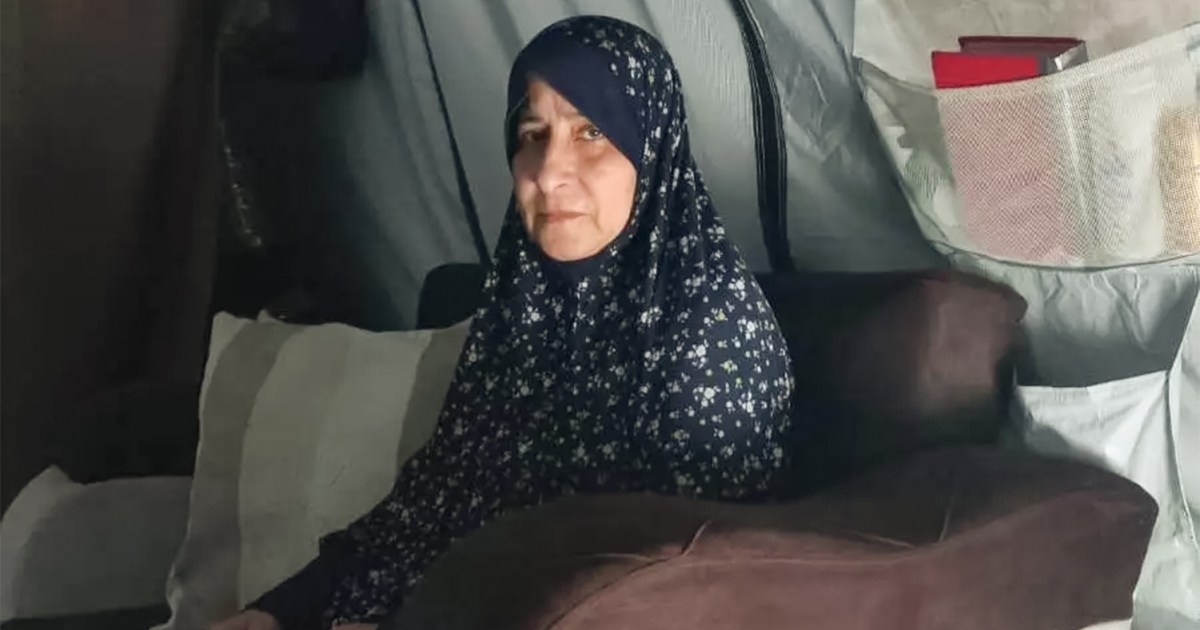
Hanan al-Hams was among the 3,000 Palestinians from Gaza scheduled to travel for the annual pilgrimage to Mecca in 2024. But her lifelong dream to perform Hajj, one of the five pillars of Islam, was shattered by Israel’s war on Gaza, launched on October 7, 2024.

“I lost my son, my home was destroyed, and now I am deprived of the journey I waited decades for,” al-Hams, 65, told Al Jazeera, sitting inside a makeshift tent pitched over the ruins of her home in northern Gaza.

Entry and exit from Gaza were decided by Israel even before the war began. A partial opening in February of the Rafah crossing – the only connection to the outside world –  has allowed passage only for patients who need medical treatments abroad.

For any other travel requirement, including pilgrimage, study, and work, getting out of the enclave is near to impossible amid an Israeli land, air and sea blockade in place since 2007.

Most of Gaza’s 2.3 million people remain displaced, living in tent camps and destroyed houses as Israeli forces have turned the besieged enclave into rubble, killing at least 72,775 Palestinians during the ongoing genocidal war that has drawn condemnation from across the world.

A ceasefire in October 2025 ended the war, but Israel has continued its military offensive and continues to occupy more than 60 percent of Gaza’s territory in breach of the truce.

Across the besieged Gaza Strip, scenes of profound grief are echoing as the Hajj season commences in Saudi Arabia. Adnan Abu Foul and his wife, Um Ibrahim, wept as they watched pilgrims circumambulate the Kaaba on a small mobile phone screen.

“The war stopped, and we hoped to perform Hajj, but for three years, I haven’t been able to leave,” Abu Foul said.

According to Gaza’s Ministry of Awqaf and Religious Affairs, more than 10,000 citizens have been prevented from performing Hajj over three years due to the Israeli shutdown of the Rafah crossing, which borders Egypt.

At least 71 Hajj pilgrims, who had won the official draw in previous years, died during the Israeli war before they could perform the ritual, according to the Awqaf.

The deprivation of Gaza’s pilgrims extends beyond border closures, revealing a systematic dismantling of the enclave’s religious tourism economy.

A study published in May 2026 by the Palestinian Center for Political Studies (PCPS), authored by researcher Khaled Abu Amer, describes the Israeli campaign against Gaza’s Hajj and Umrah sector as a “structural economic genocide”. Umrah is an optional pilgrimage to Mecca that Muslims can perform at any time of the year.

The study reveals a complete collapse of all 78 licensed travel companies in the sector. Mohammed al-Astal, head of the Association of Hajj and Umrah Companies in Gaza, noted that the vast majority of offices were damaged or destroyed in the conflict.

This destruction resulted in capital losses exceeding $4m, alongside an estimated $2-3m in frozen funds held by external agents, such as airlines and hotels in Saudi Arabia and Egypt.

Before the war, the sector injected at least $12m annually into the local economy. The loss of this revenue has impacted more than 1,500 direct and indirect workers and their livelihoods.

Mohammed Abdul Bari, a local Hajj organiser, stood before the rubble of his company, recalling how they used to deploy 20 buses in massive farewell festivals that have now vanished into the ruins.

The PCPS report argues that the repeated targeting of the sector proves the destruction is an intentional policy rather than accidental collateral damage.

This systematic eradication legally constitutes “collective punishment”, which is strictly prohibited under Article 33 of the Fourth Geneva Convention. Furthermore, denying residents the ability to travel for religious purposes through Israeli-controlled crossings represents a dual violation of the right to freedom of religion and freedom of movement, protected under Articles 18 and 12 of the International Covenant on Civil and Political Rights. It also constitutes a violation of Article 53 of the Fourth Geneva Convention, which prohibits the destruction of civilian property.

Due to the blockade, the annual Hajj quota of around 3,000 is currently being filled by Palestinians holding Gaza IDs residing in Egypt and other countries. Thousands of spots have also been temporarily transferred to pilgrims from the occupied West Bank and East Jerusalem, with an official agreement to compensate Gaza with these numbers in future seasons.

For now, however, thousands of Gaza’s elderly and sick remain trapped, holding onto fading hopes.

“We could not organise the season because we were given no guarantees that the crossing would open,” said Rami Abu Staitah, director general of Hajj and Umrah at the Waqf Ministry. “The preparations require early, complex contracts for housing and transport, which are impossible under these conditions.”

The ministry has urgently appealed to the international community, Saudi Arabia, and Egypt to intervene, urging them to separate the religious pilgrimage from political calculations.

📰 மூல செய்தி (Source): https://www.aljazeera.com/news/2026/5/24/for-third-year-in-a-row-israel-blocks-hajj-pilgrimage-for-gaza-muslims?traffic_source=rss

Continue Reading
Click to comment

Leave a Reply

Your email address will not be published. Required fields are marked *

உலகம்

Clashes in Belgrade as student-led protests demand elections

Published

on

Demonstrators challenge President Vucic’s rule and demand elections, justice and rule of law.

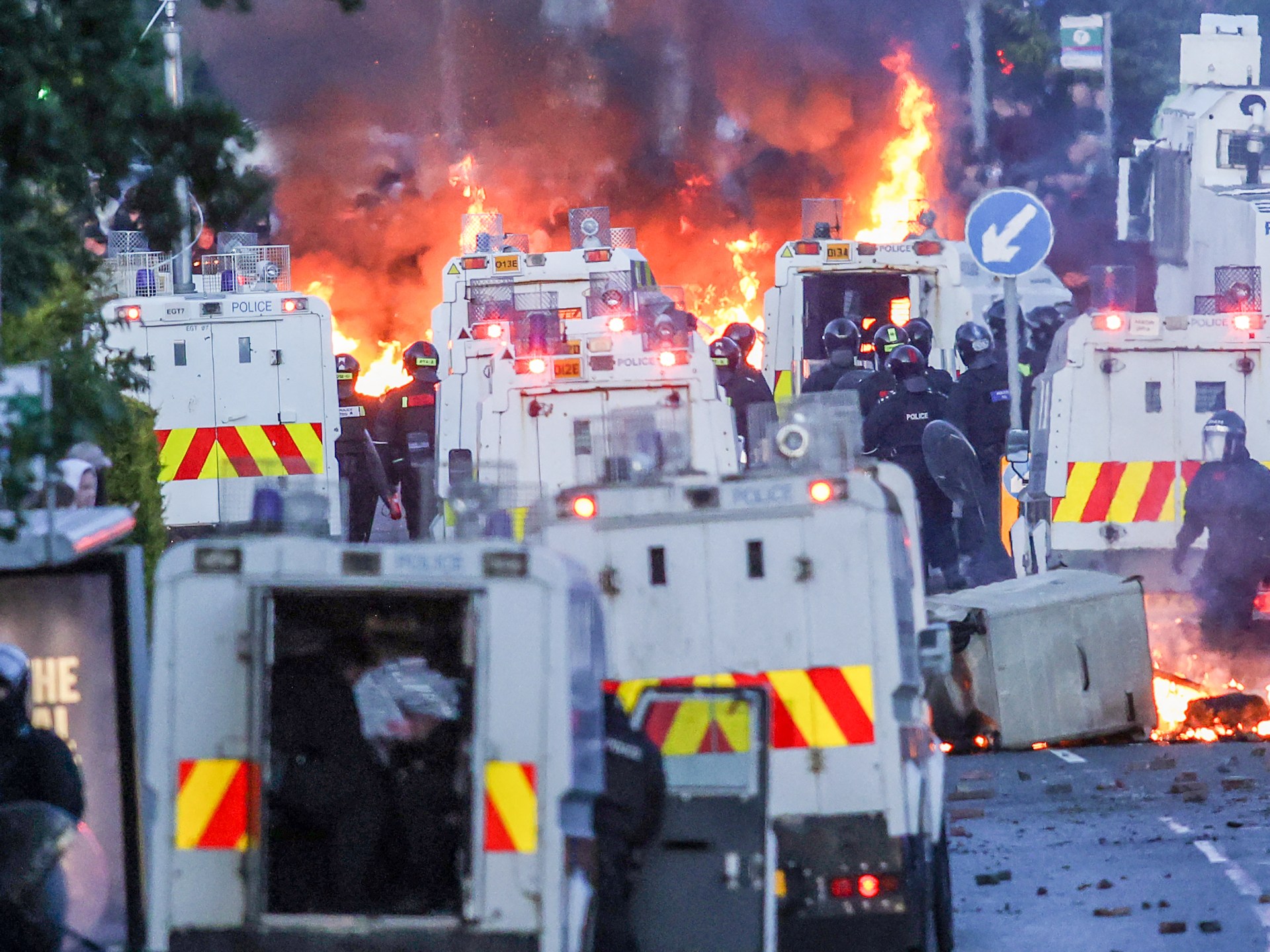
Clashes have broken out between protesters and riot police after an antigovernment rally in the Serbian capital, Belgrade.

Large crowds of demonstrators poured into central Belgrade on Saturday, many carrying banners and wearing T-shirts emblazoned with the “Students win” motto of the youth movement that organised the gathering.

Serbian President Aleksandar Vucic has sought to rein in mass demonstrations that have challenged his hardline rule in the Balkan country. The size of Saturday’s turnout suggested that dissent remains strong more than a year after protests first began with demonstrators demanding accountability for a train station tragedy in northern Serbia in November 2024 that killed 16 people.

Anticorruption protests forced then-Prime Minister Milos Vucevic to resign in January 2025 before the authorities moved to clamp down on the movement. Many in Serbia blamed the concrete canopy collapse at the station on alleged corruption-fuelled negligence during renovation work carried out with Chinese companies.

On Saturday, Serbia’s state railway company cancelled all trains to and from Belgrade in what appeared to be an effort to prevent at least some people from travelling to the capital from other parts of the country.

In a video posted on Instagram on Saturday, the president said protesters “have shown their violent nature and that they cannot stand political opponents”. Vucic, who was en route to China for a state visit, added: “The state is functioning and will continue to work in line with the law.”

Students on Saturday demanded early elections and the rule of law, accusing the government of crime and corruption. They said they now plan to challenge Vucic in this year’s elections, which they hope will unseat his right-wing populist government. Vucic said on Thursday that the parliamentary elections could be held between September and November.

Clashes were first reported near a park camp of Vucic loyalists outside the Serbian presidency building. The camp was set up before another large antigovernment rally last March as a human shield against protesters. Folk music blared from a fenced-off area surrounded by rows of riot police in full gear.

The Serbian president has come under international scrutiny for his hardline tactics against demonstrators over the past year, including arbitrary arrests and the use of excessive force. The Council of Europe’s commissioner for human rights, Michael O’Flaherty, criticised Serbia’s government in a report after he visited the country last week and said he “will monitor the situation closely”.

O’Flaherty also cited “reports of police protecting unidentified and often masked attackers of journalists and protesters”. He said the overall human rights situation has deteriorated since his previous visit in April 2025.

Serbia is seeking to join the European Union while cultivating close ties with Russia and China. Democratic backsliding under Vucic could cost the country about 1.5 billion euros ($1.8bn) in EU funding, the bloc’s top enlargement official warned last month.

📰 மூல செய்தி (Source): https://www.aljazeera.com/gallery/2026/5/24/clashes-in-belgrade-as-student-led-protests-demand-elections?traffic_source=rss

Continue Reading

உலகம்

Blast hits train in Pakistan’s Balochistan, killing at least 24 people

Published

on

More than 50 people injured in attack on train carrying military personnel in Quetta, capital of the southwestern province.

At least 24 people have been killed in a blast targeting a train carrying military personnel in Pakistan’s restive southwestern province of Balochistan, according to a senior official.

Army servicemen were among those killed in the provincial capital, Quetta, on Sunday in the attack, which wounded more than 50 people.

The official said the train was passing the Chaman Pattak signal in Quetta “when an explosive-laden car hit one of the carriages that resulted in a big blast”.

The force of the explosion caused two carriages of the train to overturn and catch fire, sending thick black smoke billowing into the sky.

The attack took place in an area where security forces are usually stationed, badly damaging several nearby buildings and shattering more than a dozen vehicles parked along the road.

The Balochistan Liberation Army separatist group claimed responsibility for the attack.

📰 மூல செய்தி (Source): https://www.aljazeera.com/gallery/2026/5/24/blast-hits-train-in-pakistans-balochistan-killing-at-least-24-people?traffic_source=rss

Continue Reading

உலகம்

Suicide car bombing attack on a train in Pakistan kills dozens

Published

on

Suicide car bombing attack on a train in Pakistan kills dozens

A Baloch separatist group has claimed responsibility for an attack on a train carrying soldiers in Quetta, Pakistan. The suicide car bombing killed at least 24 people and injured dozens more, including women and children.

📰 மூல செய்தி (Source): https://www.aljazeera.com/video/newsfeed/2026/5/24/suicide-car-bombing-attack-on-a-train-in-pakistan-kills-dozens?traffic_source=rss

Continue Reading

Trending

Copyright © 2024 by 7Tamil Media, All rights reserved.