Connect with us

முக்கியச் செய்திகள்

In Japan, divorce splits parents from children. Could a law change end sole custody?

Published

on

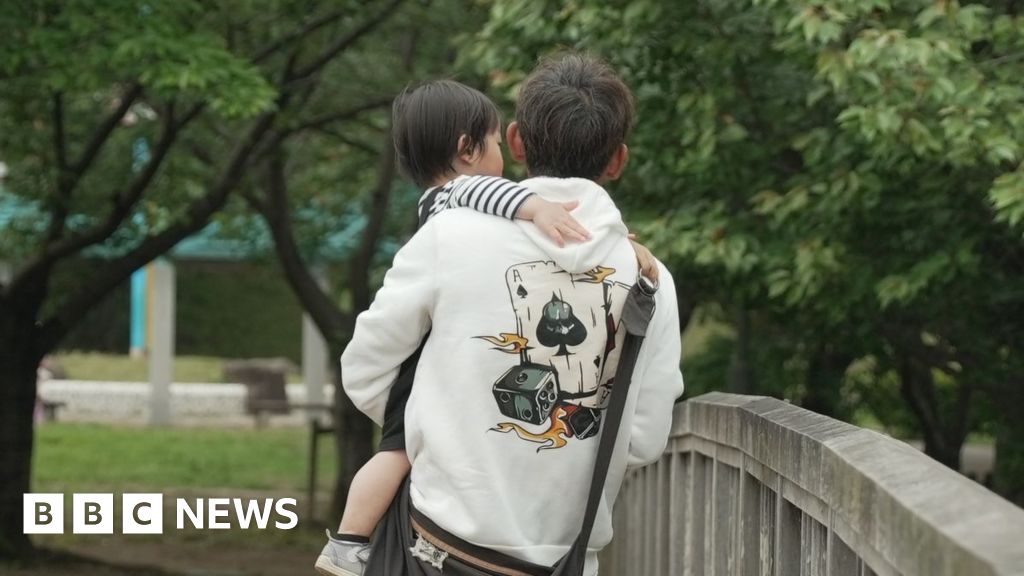
On a weekday afternoon in Japan, John Deng stands near the playground, listening to other children play and laugh.

His own son and daughter are nowhere in sight. He longs for the ordinary moments he once shared with his children: taking them to the park, watching them wake up, and being part of their lives.

Deng, not his real name, is originally from Hong Kong and has lived in Japan for the past 22 years. It's where he built his life, met his former partner, and became a father to two children, an eight-year-old son and a 10-year-old daughter.

But, he says, that life has come undone. His marriage fell apart, and his children were taken away by his ex-partner without warning.

His story is not unusual here. For decades, divorce in Japan often meant a child would lose the presence of one parent entirely. Often in cases like this, custody went to the parent who left with their children first.

Under the old sole custody system, only one parent held legal rights after separation. That meant – regardless of their relationship with the child – the other parent could be forced to disappear from their life, unless the parent with custody grants them access.

But things look set to change. Japan is redefining what "family" looks like after a separation.

On 1 April, 2026, a landmark revision to Japan's Civil Code took effect, allowing divorced couples to share custody of their children. Before parliament approved the amendment in 2024, Japan was the only G7 country that did not recognise the legal concept of joint custody.

"It always shocked me that every time I speak to lawyers in the US and the UK, they say that it's not about win or lose," recalled Seiya Saito, a family lawyer at Setagaya International Law Office based in Tokyo. "It's just focusing on the best interest of children."

Deng remembers the exact moment he realised he lost the kids. "I felt helpless — sad and also angry about the system that is allowing that to happen," he said quietly. "They mean the world to me."

Now, Deng says he has no choice but to cling onto any opportunity he gets. He maintains two residences, one in Tokyo and the other an hour away, closer to where his children live.

Even so, he is only allowed a few hours of supervised time each month, with no contact in between.

He says his former partner stopped allowing his daughter to communicate with him by phone. That means the absence is not only felt physically, missing birthdays, school recitals, and holidays like Father's Day, but also emotionally.

"I just feel so empty," he said, holding back tears. "I think it's the kids' rights to speak to their parents, both parents, anytime they feel they need to or want to and that's not happening at the moment."

The change in custody law offers some hope for parents like Deng who feel they have been cut off from their children.

It marks one of the most significant changes to Japan's family law in decades.

According to Japan's Ministry of Health, Labor and Welfare, around 38.5% of marriages in Japan ended in divorce in 2024 – the most recent year we have statistics for. That's roughly one in three couples.

That year, women kept custody in more than 86% of cases, while shared custody arrangements accounted for only a fraction of all agreements reached. In total, across Japan, there were more than 164,000 children under the age of 18 who had divorced parents and were impacted by custody arrangements that year.

The new law recognises that children can often benefit from maintaining relationships with both parents, while helping distribute parental responsibility more evenly.

"I'm 100% sure it's a good change to our society, especially for the children," Saito said.

"For those who are already amicable, and can make decisions together, it's very good for them to have an option to choose joint custody. I think it's a great step forward."

The change also comes as Japan faces a declining birthrate and a rapidly aging population. The demographic trend has intensified calls for the government to support families better and reduce the financial burden for single parents.

While the new law brings Japan more in line with its global peers and gives parents like Deng an opportunity to reunite with their children, it also raises serious concerns.

Critics warn that joint custody could put victims and survivors of domestic violence and abuse in bigger danger, or force continuing or renewing contact with abusive partners.

"There is a risk that those suffering from domestic violence or child abuse may be unable to escape," said Chisato Kitanaka, co-head of All Japan Women's Shelter Network.

She runs the non-profit and warns parents to fully understand the implications of joint custody arrangements in Japan, particularly in cases involving safety concerns.

For some families, shared custody raises deep, personal fears.

Taro Suzuki may now be 18, which means he is no longer under his parents' guardianship. But he says watching his mother Ryo suffer years of abuse at the hands of his father has left him traumatised. Both their names have been changed for safety.

"I wish I didn't exist in this world. I even wish my mother and father had never met, and I had never been born," Taro said. "I really think this is a law that shouldn't exist."

Ryo – who describes incidents in which her ex-husband would choke her against a wall, dangling in mid-air, and being dragged along by her hair – is also worried.

"It's really scary. When I got sole custody, I used to think, 'It'll be okay from here on out,' but now there's the possibility that we might be tied together," Ryo said.

She fears it may allow her ex-husband to reapply for joint custody of their 15-year-old daughter, pulling them back into contact.

"I really do think it's a problem. I'll have to live with that anxiety until my daughter becomes an adult."

However, there are legal protections in place for cases where there is risk of abuse or harm to a child's physical or mental well-being.

"If the court is convinced that there are domestic violence issues before the separation, before divorce, then the court must choose sole custody," Saito explained.

Still, some survivors like Ryo worry family courts in Japan will require hard evidence, and she is not convinced the courts will get all the cases right. She says in her experience, there were hardly ever physical signs of abuse because her ex-husband was cautious about leaving marks.

For now, the law sits in the middle of a delicate balance, between protecting vulnerable parents and preserving a child's relationship with both.

Back at the neighbourhood park, Deng is hopeful the new law may allow him to once again be part of his children's everyday lives.

"The fact that they're not physically here with me just makes me feel sad," he said. "It's something that no parent should face."

📰 மூல செய்தி (Source): https://www.bbc.com/news/articles/clyp15g9nk4o?at_medium=RSS&at_campaign=rss

Continue Reading
Click to comment

Leave a Reply

Your email address will not be published. Required fields are marked *

முக்கியச் செய்திகள்

Seven flotilla activists detained in Israel arrive back in UK

Published

on

Seven activists whose Gaza-bound aid flotilla was intercepted in international waters by Israeli forces have returned to the UK after being deported.

They were among more than 422 people involved in the Global Sumud Flotilla (GSF), which aimed to break the maritime blockade of Gaza and deliver food and medical aid.

The group, who arrived at at London Stansted on Saturday via Turkey, told the BBC they witnessed people being "systematically tortured and abused over two days" on Israeli vessels and in prison.

The Israeli military previously rejected similar allegations, telling the BBC that its orders "require respectful and appropriate treatment of flotilla participants".

More than 50 boats taking part in the GSF set sail from Turkey last Thursday carrying a token amount of aid.

Israel's government dismissed the action as a "PR stunt" serving the Palestinian armed group Hamas, and ordered commandos to board the boats west of Cyprus on Monday and Tuesday.

The detained activists were transferred to Israeli vessels and taken to an Israeli prison after arriving at the port of Ashdod.

The flotilla's organisers alleged there were "at least 15 cases of sexual assaults", while other people who were detained said they were beaten and mistreated.

The BBC has not been able to independently verify the allegations. Israel's prison service has dismissed them as false, saying all detainees were "held in accordance with the law".

Katy Davidson, 49, from Cornwall arrived in London in a grey tracksuit which she said she was made to wear after their belongings were thrown away.

She said: "These marks are from the handcuffs. When I asked them to loosen them they said they didn't care. They didn't care about human rights, or whether I lost my hand.

"When I actually got my hands through to have them adjusted they actually tightened them and laughed."

Hannah Schafer, a 62-year-old sailing instructor, said the aim was to open the humanitarian corridor to Gaza.

She said participants in the flotilla were taken onto "two prison ships".

Schafer alleges flotilla members were "systematically tortured and abused over two days".

Israeli authorities have said there was little humanitarian aid onboard the flotilla and it was a PR stunt.

Documentary film maker Dáša Raimanová, 44, said there were moments she thought she'd never see her daughter again but that what they faced was "nothing compared to the people of Palestine".

"It's not a PR stunt it's raising awareness and mobilising together that as civil society we have power to do something when governments are ignoring genocide," she said.

Elliott Roberts, 34, who lives in both Lincoln and Torquay, claimed the vessel he was on was fired at.

"I was taken into a small tent straight off the boat, two soldiers were crouched down ready for me to enter, they lifted me up turned me over and smashed me into the ground and now I think I've got a broken spine," he said.

He claimed he was denied medical treatment.

Israeli authorities have denied forces sexually assaulted and seriously abused people from the flotilla.

In an earlier statement, the Israel Defense Forces (IDF) said: "IDF orders require respectful and appropriate treatment of flotilla participants on the intercepted vessels, and there are clear and established procedures in this regard.

"No specific incidents of deviation from these binding procedures are known within the IDF. Any concrete complaints submitted to the IDF on the matter will be examined thoroughly."

📰 மூல செய்தி (Source): https://www.bbc.com/news/articles/c78krdgxl91o?at_medium=RSS&at_campaign=rss

Continue Reading

முக்கியச் செய்திகள்

BBC at the site of China's worst mining disaster in more than a decade

Published

on

At least 82 people have been killed and two are missing after a coal mine blast in northern China, officials have said.

The gas explosion at the Liushenyu Coal Mine is the worst mining disaster in China since 2009, and Chinese President Xi Jinping said no effort must be spared in the search and rescue operation.

Early on Sunday morning, rescuers deployed mine inspection robots underground, equipped with gas sensors and infrared cameras, state media reported.

The BBC's China correspondent Stephen McDonell is at the scene of the blast in Shanxi province.

A North Korean women's football team played in South Korea marking the first time athletes from the North have crossed the border in nearly 8 years.

Pakistan says it hit 'military and terrorist infrastructure' – but the UN and victims' families reject this claim.

Officials said the group had been hiking up the active volcano despite a climbing ban.

A glamping facility was destroyed by the raging torrent in Bogor, West Java on 4 May.

Thousands of people have been displaced after a fire destroyed around 1,000 homes in Malaysia's Sabah state.

The escape of Neukgu, a two-year-old wolf, from a zoo in the city of Daejon captured national attention.

The Philippine President challenged anyone questioning his fitness to join him in the gym.

K-pop stars BTS kicked off their marathon world tour in South Korea, with a heavy nod to their new album Arirang.

The megastars kick off their grandest tour, the largest in K-pop history, in Seoul on Thursday after a nearly four-year hiatus.

Drivers are queuing for hours at petrol stations in Myanmar as the Iran war continues to send shockwaves across the globe.

BBC News Asia Business Correspondent Suranajana Tewari spoke to people taking to the streets of Manila.

Some 260,000 fans are expected to watch BTS perform together on Saturday for the first time since 2022.

Eleven people were killed and dozens injured when a huge blaze engulfed a car parts factory in the central city of Daejeon.

Senior Kashmir leader Farooq Abdullah escaped unhurt after the incident and the suspect is in custody.

A young Japanese macaque at the Ichikawa City Zoo in Japan went viral, after videos showed him playing with a soft toy that zookeepers gave him for comfort.

Wanted for multiple counts of theft, the suspect was caught outside a temple on the outskirts of Bangkok.

A court is due to deliver its verdict in the insurrection trial of Yoon Suk Yeol.

The BBC's Arunoday Mukharji explains why India needs to capitalise on the momentum.

A Lakshmi goddess shrine at Bangkok shopping mall has become a place where young people come to pray for love.

BBC South Asia correspondent Azadeh Moshiri visited Sheikh Hasina's former residence which is now a memorial for the student protesters killed in the 2024 uprising.

📰 மூல செய்தி (Source): https://www.bbc.com/news/videos/c809m33yjz7o?at_medium=RSS&at_campaign=rss

Continue Reading

முக்கியச் செய்திகள்

Emotional Kostyuk dedicates win to Ukraine

Published

on

Marta Kostyuk's best French Open result was reaching the fourth round in 2021

Ukraine's Marta Kostyuk won "one of the most difficult matches" of her career as she reached the French Open second round on the same morning that a Russian missile struck close to her parents' home.

Russia launched a large-scale wave of overnight strikes against Ukraine, firing hundreds of drones and dozens of missiles.

Four people were killed in the capital Kyiv – where Kostyuk was born – and at least 83 people were injured across the country.

Kostyuk became tearful during her on-court speech following her 6-2 6-3 victory over Russian-born Oksana Selekhmeteva.

To loud cheers of support, the world number 15 said: "This morning, 100 metres away from my parents' house, a missile destroyed the building.

"It was a very difficult morning for me, I didn't know how this match would turn out for me or how I would handle it.

"I have been crying this morning. I don't want to talk about myself today.

"All my heart and all my thoughts go to the people of Ukraine today."

A one-horse French Open or will somebody stop Sinner?

Selekhmeteva was playing her first match under the Spanish flag, having switched allegiance earlier this week.

Kostyuk did not shake hands with her opponent, as Ukrainian players have a long-standing policy of not shaking hands with Russian or Belarusian players.

The 23-year-old has been an outspoken critic of Russia and its ally Belarus since it began its invasion on Ukraine in 2022.

"My biggest example is the Ukrainian people," Kostyuk said.

"I woke up this morning and looked at all these people who woke up and kept living their lives, kept helping people who are in need.

"I knew a lot of Ukrainian people would come out and support today. My friends from Ukraine came to support and I'm very happy to have them here.

"I'm incredibly proud of myself. I think it was one of the most difficult matches of my career."

Only Mirra Andreeva (15) has claimed more wins on clay on the WTA Tour this season than the in-form Kostyuk (12), who remains unbeaten on the surface in 2026.

She will face Katie Volynets next after the American beat France's Clara Burel 6-3 6-1.

Live text commentaries of key matches on the BBC Sport website and app, along with daily commentary live from Court Philippe-Chatrier across 5 Live Sport, BBC Sounds and the BBC Sport website and app

📰 மூல செய்தி (Source): https://www.bbc.com/sport/tennis/articles/cx214p4gvr0o?at_medium=RSS&at_campaign=rss

Continue Reading

Trending

Copyright © 2024 by 7Tamil Media, All rights reserved.