முக்கியச் செய்திகள்
Unfair dismissal claims face five-year delay as tribunal backlog grows
Published
40 mins agoon
Unprecedented employment tribunal service delays in England and Wales mean people bringing unfair dismissal claims are waiting up to five years for their case to be heard.
Expert lawyers say there must now be radical change if there is to be justice for both claimants and the companies involved.
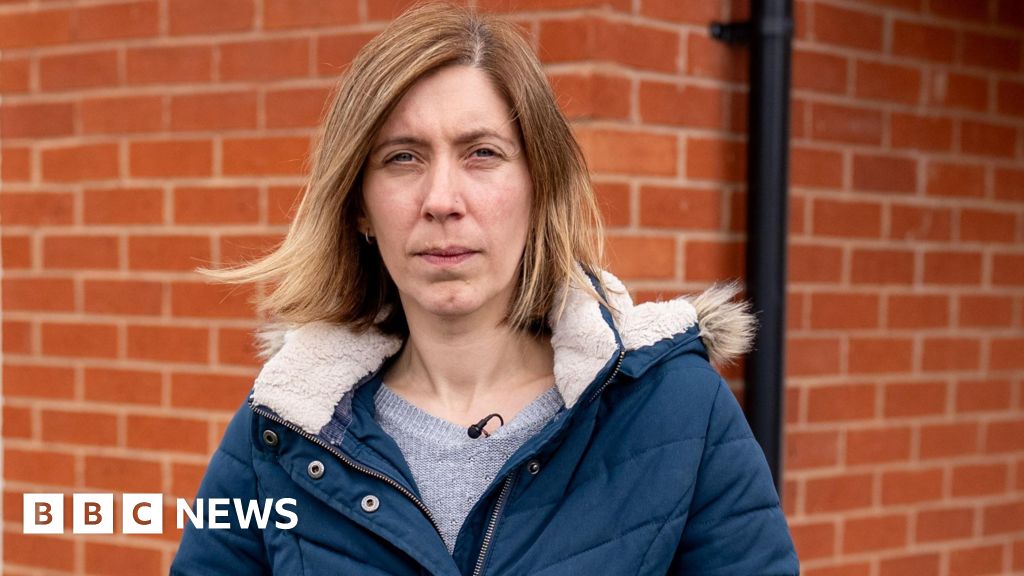
One of those affected is Catriona Ball, whose husband Lewis died in 2024, weeks after he quit a job he believed had been making him ill.
After his death, she lodged a claim at the Employment Tribunal for constructive unfair dismissal and an alleged failure to make reasonable adjustments for disability. His former employer is contesting the claim.
This story is not about what went on between him and the company and who's right or wrong – but how long it will take to resolve the case.
Catriona filed the claim in February 2025, but the case will not come before a judge for a full hearing and judgment until 2029.
For Catriona, the daily roller coaster of coping with the death of her husband has been worsened by the legal limbo she now finds herself in.
It began as just a normal Saturday at Aylestone St James, Lewis's childhood rugby club, half an hour from where they lived with their two children near Kettering – and where he still played.
"Part-way through the game, he came into the clubhouse, saying he had chest pains," says Catriona.
"He then went off to try and find aspirins at the far end of the clubhouse – and collapsed."
Everything was done to try to save Lewis – including using a defibrillator he had helped the club to secure.
There was nothing anyone, including the paramedics, could do and he died at the scene.
"It's been horrific," she says. "Grief is brutal. Every day is affected and you have to get through each day. You've got kids who need you. You have to just take it literally one day at a time."
Lewis died of coronary artery disease and hypertension.
He had quit his work weeks earlier because he believed he was under intolerable stress that was not being taken seriously.
Catriona says she will have to sell the family home in order to fund her tribunal case, because until it is completed she cannot settle her late husband's estate. There's virtually no legal aid for employment tribunals.
"He was very loving and very family-oriented, very funny," she says. "It's hard. I don't have much opportunity to think back about the positive things about him, because I'm stuck in this grief and managing legal issues.
"I was told it would take a good few months, potentially a year, year and a half, but I never anticipated it to take as long as what it is now looking like it will take.
"It's shocking, absolutely shocking. It stops me getting closure and feeling like Lewis can rest in peace."
Catriona's loss is exceptional – but the legal limbo she is experiencing is not.
The latest figures show that there is now a backlog of almost 72,000 claims before the Employment Tribunal – up almost 26,000 in a year.
In practical terms, say expert lawyers in the field, unfair dismissal claims being lodged now may not go to a full court hearing for five years.
That's tens of thousands of lives on hold – and businesses that cannot put a case behind them either.
The Employment Lawyers' Association (ELA) is now calling on the government to take radical steps to turn around the enormous backlogs.
"The system isn't coping at the moment, and it's only going to get worse in the future," says Caspar Glynn KC, the chair of the ELA.
"Normally in an employment tribunal, the worker has been dismissed, they have no income, they have nothing to live on, and a delay of five years is effectively economic servitude for that person."
Workers are not the only losers, he says. Firms who may have a solid case to defend themselves find it harder to do so because delays mean people leave their company and, on occasion, a key witness may have even died.
"We have examples of cases where a case has been struck out [because] the judge has said it's no longer possible to have a fair trial. My real concern is whether cases are going to be struck out because of the delays themselves."
The reasons for the delays in the Employment Tribunal are complicated.
There has been a rise in complex discrimination and whistleblowing claims. Many of these take a long time to hear in court.
But there is also a twist in the tale caused by the very tool that you might think would speed things up: Artificial Intelligence.
Many people seeking redress for alleged unfair dismissal go to court as "litigants in person" because they cannot get legal aid to pay for a professional lawyer.
That enormously slows down the proceedings – and self-represented people are turning to AI for help.
"What we're now finding is that a litigant in person, unsure of their rights because no-one's helping them, goes to the internet and inputs it into an AI service," says Glynn.
"They then get a voluminous case, bringing up every single possible claim there is, and every single fact that could possibly be in the person's favour, and indeed sometimes also imagining those rights.
"Now you have claims, which used to be, say, one or two pages long, that are now 30 to 40 pages long."
And every time this happens the delays get longer because judges need more and more time to consider the claims being submitted to them.
The ELA is recommending a new dispute resolution body to cut the number of workplace disputes going to court.
It wants the tribunal service to start using an AI model to evaluate claims, rather than expand them, and to split the caseload into different "tracks" depending on their complexity and their value.
Simple claims could be handled by a legal officer of the court, rather than a judge – vastly cutting the time and expense.
A Ministry of Justice spokesperson said: "We recognise the pressures on Employment Tribunals and we're taking action to bring down the backlog, drive efficiencies and ensure swifter justice.
"That includes maximising sitting days, recruiting more employment judges, using virtual hearings where appropriate, and investing in new digital systems."
Whatever the government does, Catriona remains stuck for now.
"There's a big expense to me personally, continuing with this," she says. "I could easily end it. I could easily withdraw the claim. But there's an amount of pressure to do it for Lewis on his behalf.
"He certainly wouldn't want me suffering the way I am because of this process, but equally he would want some accountability."
📰 மூல செய்தி (Source): https://www.bbc.com/news/articles/cp9pj2pk2j7o?at_medium=RSS&at_campaign=rss
You may like
-
Southampton lose appeal against play-off expulsion
-
'We'll go down in history' – Villa's new heroes triumph to end 30-year wait
-
Why illegal children's homes are being paid up to £2m per child by councils
-
UK agrees £3.7bn trade deal with six Gulf states
-
SpaceX files for IPO that could make Elon Musk a trillionaire
-
Martinez breaks finger… then helps Villa win Europa League
முக்கியச் செய்திகள்
Southampton lose appeal against play-off expulsion
Published
40 mins agoon
May 20, 2026
EFL rules forbid any team from trying to watch another side training in the 72 hours before a game
Southampton's appeal against being thrown out of the Championship play-off final for spying has been rejected.
The match will now go ahead on Saturday between Hull City and Middlesbrough (15:30 BST kick-off), with a place in the Premier League on the line.
An EFL independent disciplinary commission on Tuesday evening expelled Southampton from the play-offs and reinstated Middlesbrough, who had lost 2-1 to the Saints on aggregate in the semi-finals.
Southampton appealed against their removal, calling it "manifestly disproportionate to every previous sanction in the history of the English game". However, the EPL has rejected Saints' appeal and upheld the punishment.
"A league arbitration panel has tonight dismissed Southampton Football Club's appeal against the independent disciplinary commission's sanction following the admittance of multiple breaches of EFL regulations," the EFL said on Wednesday.
"The determination means that the original sanction of expulsion from the Championship play-offs remains in place, as does the four-point deduction to be applied to the 2026-27 Championship table and the reprimand in respect of all charges."
The decision is final and there is no further right of appeal to the Court of Arbitration for Sport.
Southampton issued a statement calling the ruling "an extremely disappointing outcome".
It added: "While we fully acknowledge the seriousness of this matter and the scrutiny that has followed, the club has consistently believed the original sporting sanction was disproportionate, a view that has been widely shared by many in the football community over the last 24 hours.
"While tonight is a painful moment, this football club will respond with humility, accountability and determination to put things right."
Saints midfielder Leo Scienza said his side's expulsion was "heartbreaking" and expressed sympathy for everyone involved, including Hull and Middlesbrough.
He posted on Instagram, external: "Disappointment, anger, sadness. It's difficult to find the right words for what we're all feeling right now.
"What has happened over the last days is heartbreaking. For the club, for every player in this dressing room, and above all for our supporters. A moment like this should never end the way it did.
"I feel sorry for every football fan, as well as the players and supporters of Hull and Boro, who were caught up in all of this chaos too.
"We gave everything for this dream. Day after day, sacrifice after sacrifice, always believing we could bring this club back to where it belongs. For me, the dream of playing in the Premier League was something I fought for with everything I had. That's why this pain cuts so deep."
All you need to know about Southampton's spying
Earlier on Wednesday, Southampton chief executive Phil Parsons said the club could not "accept a sanction which bears no proportion to the offence".
Parsons pointed to a £200,000 fine issued to Leeds United in 2019 for spying on Derby as evidence of precedent.
However, when Leeds were punished seven years ago, regulation 127 – which expressly forbids observing an opponent within 72 hours of a game – did not exist. It was introduced as a result of Leeds' wrongdoing.
Hull, meanwhile, are unhappy they will have to face different opponents at short notice, with owner Acun Ilicali suggesting the club could take legal action if they lose the final.
Ilicali told Sky Sports he was not happy with the situation, but there was no other option "in order to finish this mess".
When asked, he did not rule out considering legal routes should Hull fail to reach the Premier League.
"I don't want to accuse anybody and until we see the full picture, but it has had too much of an effect on us," Ilicali said.
"I am representing a big club and a big family and I will not let our family get harmed with injustice."
With the EFL's process regarding 'Spygate' now complete, attention will turn to the Football Association, which could bring separate charges against individuals.
It was January 2022, and Southampton were 14th in the Premier League table, 10 points clear of the relegation zone.
Saints had been in the top flight for 10 seasons, and had stabilised as a mid-table club under coach Ralph Hasenhuttl.
The club had just announced a takeover by Sport Republic, a company backed by Serb media mogul Dragan Solak.
"It is a pivotal moment in time," chief executive Martin Semmens told BBC Radio Solent.
It did turn out to be pivotal, but not in the way they had hoped.
The perception was that Southampton had stalled under their former owner, Chinese businessman Gao Jisheng. This was a chance for them to push on again.
But Saints endured a dismal end to the 2021-22 season, losing nine of their remaining 12 games. They just stayed up but it was a sign of what was to come.
Three months into the new season, Hasenhuttl was sacked.
"He'd done a really good job on under a tight budget," BBC fan writer Martin Sanders said. "They sacked him at the first opportunity, and they appointed a manager [Nathan Jones] who just wasn't good enough for that level."
Saints would go on to finish bottom of the table, 11 points adrift of safety.
While Southampton earned an immediate return to the Premier League through the play-offs, the 2024-25 campaign was dismal.
Saints finished on just 12 points, narrowly avoiding Derby's all-time record of 11 for the lowest total.
"The fans were disgusted at the last season in the Premier League," Sanders said. "We almost went down as the worst team ever."
72+ EFL Pod: Southampton no saints as Boro back in
A just or harsh punishment? Reaction to Southampton expulsion
'It's been messy' & 'no winners among fans' – play-off final chaos
Sport Republic appointed a series of under-performing and uninspiring managers.
Jones, Ruben Selles, Ivan Juric and Will Still all failed to get results.
Only Russell Martin, who earned promotion, claimed any credit from his time in charge.
When Still was sacked in November, Sport Republic turned to Tonda Eckert on an interim basis.
The German had only joined Southampton last summer as manager of their under-21 squad.
After picking up 12 points from 15 available, he was handed the first-team job on a three-year contract.
Eckert had no experience as a first-team manager, mainly working within academies, but had been the assistant manager at Barnsley and Genoa.
"I was always unsure about giving [the job to] somebody – and it's easy to say in hindsight – that's not got experience in the game of managing a men's team," Sanders added.
"And some fans would say that's maybe come back to bite them a bit."
It is going to bite Saints hard after they lost their appeal against expulsion – and the chance to play for a place in the Premier League.
Sanders says there is no way Eckert can stay at the club – and everyone implicated has to be swept out too.
"Parsons and [owner] Dragan Solak will be fuming, but I think it's down to them to make huge changes inside the football club," Sanders said.
"They will have to make wholesale changes, especially from the coaching point of view, if they want to regain any credibility.
"It's so important because the whole club is tarnished. How this has been allowed to happen is just shocking.
"Tonda Eckert will never manage a game for Southampton Football Club ever again.
"Nor should he, and the fans would not allow it."
📰 மூல செய்தி (Source): https://www.bbc.com/sport/football/articles/cn4p284ny2ko?at_medium=RSS&at_campaign=rss

முக்கியச் செய்திகள்
'We'll go down in history' – Villa's new heroes triumph to end 30-year wait
Published
40 mins agoon
May 20, 2026
Unai Emery won three Europa League titles with Sevilla and one with Villarreal
Three-and-a-half years ago he walked into Villa Park and vowed he had joined Aston Villa to win trophies.
Skipper John McGinn lifted the Europa League after a 3-0 victory over Freiburg to etch Villa's name into the history books again.
In front of nine of the 1982 European Cup heroes – including captain Dennis Mortimer and goalscorer Peter Withe – Villa wrote themselves another momentous chapter.
Spectacular strikes from Youri Tielemans and Emi Buendia sent them on their way, with Morgan Rogers sealing victory.
This time they still played in white and beat a German team in red. Instead of Bayern Munich it was Freiburg. Instead of Rotterdam it was Istanbul.
For Withe it was Tielemans, Buendia and Rogers as Emery clinched his fifth Europa League title.
Unai Emery had won three Europa League titles with Sevilla and one with Villarreal
Emery's previous four were already a competition record and while he dismissed the suggestion he was a European king, he is a serial winner.
It now six finals and five wins – with the latest cementing a legacy at Villa Park which will last decades.
Villa officials were nervous talking about the trophy parade in advance, which needed to be organised ahead of time given the disruption in Birmingham, but the squad will flaunt it in the city Thursday afternoon.
Emery said: "I am thankful to [co-owners] Nassef [Sawiris] and Wes [Edens]… they are supporting always. I am thankful to the supporters and I am thankful for he players.
"All the times I am successful in this competition I needed good players. Now I am so thankful for the players, they are following our ambitions.
"They are protagonists on the field. This is the reason I am not feeling the king in this competition. I am feeling really thankful – we are the kings together.
"After 1982 the club won the European Cup, it was something they were missing – the supporters – a trophy. Achieving this one is making us so, so happy but we are not going to stop."
If Tielemans' volley – rounding off a short corner routine – gave them the platform then Buendia's curler into the top corner put one hand on the trophy.
Former Villa midfielder Ian Taylor, a fan of the club who scored in the 1996 League Cup win – the last time Villa had won major silverware – leaped out of his press box chair and punched the air.
Rogers' third had the substitutes celebrating on the pitch and an airborne Emery jumping on the touchline with clenched fists. Victory was assured.
"I feel amazing," Tielemans told TNT. "My voice is a bit gone but it's all good. We put in a shift, a top performance, we had a great season. To top it off with this is amazing.
"It's been a season with a lot of ups and downs. We started so so bad. Our standards were very poor.
"The way we turned things around was a credit to the players and staff. We kept working, believing. We got the win in the end, Champions League next season and a trophy."
England forward Morgan Rogers has scored 15 goals for club and country this season
Yet it was not without early nerves. Emi Martinez needed his right ring finger taped and treated in the warm up – evoking memories of Nigel Spink replacing Jimmy Rimmer after just nine minutes in the '82 final.
But those concerns evaporated, Villa were never in danger and the fans who packed Besiktas Park had already started celebrating by half-time.
Villa's official ticket allocation was 10,758 but 20,000 travelled to Turkey, they clearly outnumbered Freiburg's following and crammed into the bars and cafes off Istanbul's famous Taksim Square.
Among them in the stadium, Prince William who had already sent a message of good luck on social media and he watched on as Emery was hoisted on to Martinez's shoulders as Villa celebrated on the pitch.
Head of football operations Damian Vidagany held his hands on his head at the final whistle, signifying a release of pressure, before embracing Tielemans.
Martinez struggled to contain his emotions while co-owners Nassef Sawiris and Wes Edens greeted the players before they collected their medals.
The future king filmed the trophy lift on his phone as Villa celebrated a milestone moment.
Rogers told TNT: "It's hard to put into words, we've worked so hard for this. We've delivered and come through. It's a great moment for the fans, great for the club. We'll go down in history."
It was the first win of a potential English treble, with Crystal Palace's Conference League final against Rayo Vallecano next week before Arsenal's Champions League showdown with Paris St-Germain on 30 May.
Uefa may have problems with English dominance going forward, but Villa will not care much about the others now.
A return to the Champions League was already assured after Friday's 4-2 win over Liverpool secured a top-five finish in the Premier League, easing at least a little pressure.
Emery has taken Villa into Europe in every season, even reaching the Conference League in 2022-23 after taking over with the club just three points above the relegation zone.
It is an extraordinary record given the financial restrictions Villa have worked under – selling talent every year to comply with Profit and Sustainability rules.
For all of their money woes the £5.2m paid to bring Emery from Villarreal in 2022 is one of football's best bargains.
England's Rogers may still leave this summer, especially with a good World Cup, but a return to Europe's elite leaves Villa in a stronger position.
He would leave a Europa League winner, a little over two years after joining from Middlesbrough in a £16m deal, after a memorable night in Turkey.
Forty-four years ago there was another unforgettable night for Villa – and Brian Moore's commentary of Withe's winner hangs at the top of the Doug Ellis Stand at Villa Park.
A new banner for new heroes is needed now.
📰 மூல செய்தி (Source): https://www.bbc.com/sport/football/articles/cn5p6yeql9po?at_medium=RSS&at_campaign=rss
முக்கியச் செய்திகள்
Why illegal children's homes are being paid up to £2m per child by councils
Published
40 mins agoon
May 20, 2026
The bungalow doesn't look much like a children's home. A sheet of privacy film wrongly placed outside a window is peeling. Inside, the wallpaper is flaking, carpets are frayed and doors are broken. The children's home is unregistered and therefore illegal but the provider is charging a council elsewhere in the country £13,000 a week to care for a vulnerable teenage girl. She requires the support of three full-time members of staff. There are no books, toys or games.
Just a few miles away, another illegal children's home is being run from a council house. Its tenant is subletting the property to a company that is also charging a different local authority thousands of pounds a week.
Five years ago, my reports into such placements led directly to a government ban on the use of unregulated children's homes in England. I found that children as young as 11 were being housed in homes that were not registered with or inspected by Ofsted. These included squalid flats, tents, caravans, narrowboats and a home under surveillance by the police for suspected gang activity.
I also exposed how one girl was trafficked directly from her home and sexually abused, while a boy was kidnapped from another home to sell drugs. A Newsnight investigation said teenagers were being abandoned to organised crime.
The 2021 ban on under-16s being housed in such homes was meant to bring an end to the practice. But in reality, councils struggling to accommodate children are placing more of them than ever in what are now illegal homes – at huge taxpayer expense. I've now learned of unregistered placements that are costing as much as £2m per child a year.
The sector is a "Wild West", according to Dr Mark Kerr, chief executive of the Children's Homes Association. "This is the culmination of 10 years of systemic failure to develop specialist provision for our most vulnerable children," he says.
While the majority of children are either fostered, adopted or placed in legal children's homes, local authorities have struggled to find homes for children with the most complex needs – who are often the most expensive to care for. And in around 800 cases in England, councils have turned to unregistered homes, despite the ban on them, according to the Public Accounts Committee.
So why, if the homes are unregistered and therefore illegal, are English councils still placing children in them? And how can the system be reformed so this doesn't continue to happen?
Counter-intuitively, just as the use illegal children's homes has increased, the number of registered children's homes has soared – doubling from 2,209 to 4,455 in eight years, according to Ofsted. That's despite the fact that there has only been a 9% increase in the number of children in care over this period.
Many sources tell me that this huge increase in homes has been caused by a rush of new providers entering the market. Alongside private equity, property investors have also piled into the market.
And even though many providers have no prior experience in care, prices have also surged. The amount spent by councils in England on children's residential homes has doubled in the last four years and tripled in the last eight years. Four years ago, I found some companies making profits of 40%.
Staffordshire council paid £2.6m last year to care for a teenage girl in a registered placement who required up to five staff to care for her. The council says there's a national shortage of specialist homes and the NHS pays half of the cost of the placement.
Even the average placement in a registered home now costs £6,100 a week, or £318,000 a year.
But it's the unregistered homes – which are so brazenly run that Ofsted even records a tally of them – that cause the most concern.
I've visited many and am continually surprised by the environments in which children who have faced appalling abuse and neglect prior to entering care are placed in.
I saw one caravan in Lancashire where a 12-year-old boy had been placed in the care of a company that also uses narrowboats, with children often ending up being moved between the two. In contrast, his brother had been in a stable and far cheaper foster placement for years.
In Portsmouth, I also visited a flat above a shop where a council had placed a 14-year-old known to be at risk of jumping out of windows.
One whistleblower I recently spoke to described seeing a boy living in a house where the sofa was propped up with two bricks, another said she had seen a child barricaded inside a room.
I also met Chereece, a care leaver who says she was moved between holiday homes in Wales for months – sometimes twice in a week.
"It was an absolute nightmare", she says. "Different staff, different young people – I felt like I was a prisoner."
Many of the children in illegal children's homes are located in terraced or suburban housing in parts of northern England with cheaper rents. One in five are of all children in care are living at least 20 miles away from where they grew up, according to Clare Bracey of the national charity Become, which campaigns to end the practice.
And even illegal placements can be hugely expensive. Our FOI requests show that multiple illegal children's homes are being paid over £2m per child per year in extreme cases. These rising costs mean there is less funding for earlier support that may prevent children being placed in care, according to the Local Government Association.
So why would councils actively break the law in placing vulnerable children they are responsible for in sub-standard settings which are not monitored or inspected?
It's clear that the registered and therefore legal children's home market is not meeting the demands of a specific cohort of children with complex needs.
This group of children being placed in illegal homes – which is roughly 10% of those considered to require residential care – are sometimes violent and often require restraint. Some must even be locked up under Deprivation of Liberty orders mandated by the High Court for their own welfare.
Previously, many of these children might have been placed in secure children's units, where they are locked inside, but places in these are very limited and can be very expensive. Cornwall has recently been paying £63,000 a week to place a child in such a setting.
So councils say they are forced to turn to illegal children's homes.
It's a situation akin to removing the "sickest patients" from hospitals and placing them in backstreet clinics, according to Anders Bach-Mortensen, an associate professor of social care at Roskilde University.
With a massive increase in the supply of children's homes, it might be expected that costs of placements would fall for both registered and illegal children's homes. But the opposite has happened.
Some directors of registered children's homes believe that profiteering is responsible and cite an increase in property investors entering the sector.
The current exodus of landlords from the rental market led some to look to convert properties to children's homes.
A whole cottage industry has also developed online to advise landlords how to flip rental properties.
"Children's homes continue to offer a compelling alternative to traditional buy-to-lets," argues one middleman who markets his ability to secure the required planning permission on Instagram.
One conversion in Hemel Hempstead is a "fully hands-off investment with guaranteed income and no ongoing headaches", he says.
On Facebook groups for managers and directors of children's homes, many openly admit to running illegal placements.
Some providers say Ofsted should share the blame for this state of affairs. Its registration process is "broken" and encouraging illegal children's homes to "thrive", according to one director of a provider of registered homes.
The influx in applications to register children's homes has led to waiting times of up to 18 months before the regulator takes a decision.
As a result, some
📰 மூல செய்தி (Source): https://www.bbc.com/news/articles/cwy2vxp48y8o?at_medium=RSS&at_campaign=rss

Southampton lose appeal against play-off expulsion
'We'll go down in history' – Villa's new heroes triumph to end 30-year wait
UK agrees £3.7bn trade deal with six Gulf states
Trending
-
உலகம்9 years agoThese ’90s fashion trends are making a comeback in 2017
-
உலகம்9 years agoAccording to Dior Couture, this taboo fashion accessory is back
-
சினிமா9 years agoThe old and New Edition cast comes together to perform
-
சினிமா9 years agoThe final 6 ‘Game of Thrones’ episodes might feel like a full season
-
விளையாட்டு9 years agoPhillies’ Aaron Altherr makes mind-boggling barehanded play
-
முக்கியச் செய்திகள்2 years ago
வணக்கம் தமிழ்
-
சினிமா9 years agoDisney’s live-action Aladdin finally finds its stars
-
விளையாட்டு9 years agoSteph Curry finally got the contract he deserves from the Warriors