Connect with us

முக்கியச் செய்திகள்

Is Starmer's leadership under serious threat?

Published

on

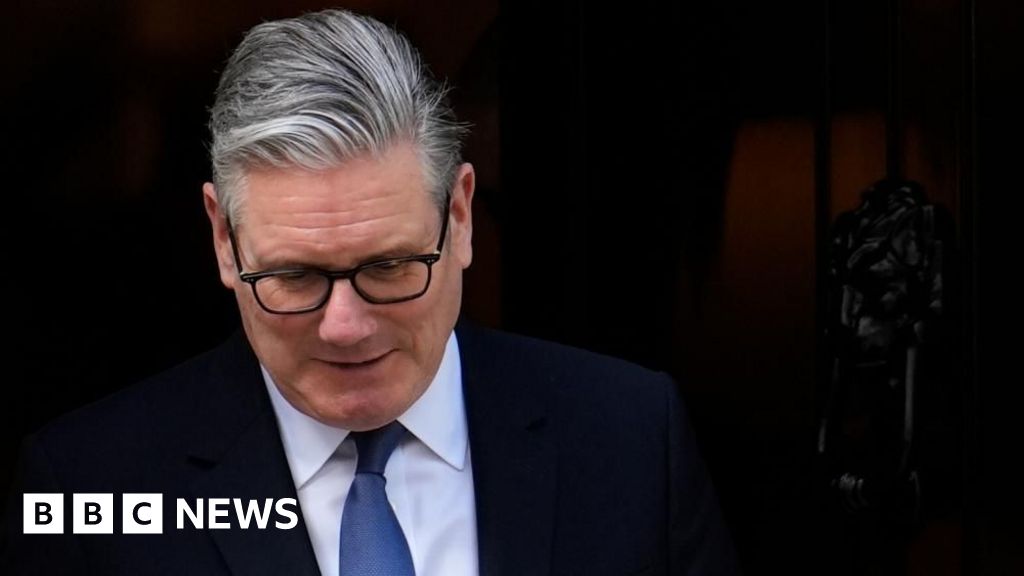
The prime minister is facing the first explicit threat of a leadership challenge from one of his MPs, but how much of a threat does it pose to Sir Keir Starmer?

The former minister Catherine West's interview with Radio 4's PM programme immediately raised eyebrows around Westminster.

Plenty of Labour MPs from across the party have told us they didn't see it coming.

"What the hell is going on?" said one figure on the Left. "Crikey," said another.

Equally succinctly, a former frontbencher declared West's intervention to be "bonkers".

But another told us they were aware of her plans from messages that had been shared between some Labour MPs.

They characterised her intervention as an expression of exasperation and frustration.

"It is a howl of pain," said one minister, reflecting that so many people in the Labour Party this weekend are hurting.

"Many have lost their social circle in their patch. Dear friends, who have worked incredibly hard as councillors, who have been thrown out and it's not their fault," one MP said.

Downing Street are trying to ignore West's challenge and various leadership camps are denying that they had anything to do with it.

But "it might just break the impasse," said another MP, by giving others a vehicle to express their view that the leadership needs to change.

For a challenge to get off the ground, 20% of Labour MPs, 81 people, have to back it.

West says she currently has 10 supporters and so is a long way short of that.

Some MPs have told us she has no chance of getting the MPs she would need.

An MP on the right of the party suggested that she might be inadvertently helpful to the PM.

If she can't get enough supporters Sir Keir could then declare that there was no appetite for a contest and move on.

But others – including an ally of the prime minister – think she might cross the threshold.

Within the party there is feverish private discussion about Sir Keir's future, with some anticipating a move from one of the challengers in the coming days.

As one veteran Labour figure put it: "Basically nobody beats Andy Burnham. So if you want anyone other than Andy you need this to happen sooner rather than later."

Others are desperate for their colleagues to calm down.

It would be "ego over country," said one MP from the 2024 intake. "It's self-centred. If you want it to be better then get stuck in. We're in government, this isn't a game," they added.

Another, a veteran, said: "I take a day off and all hell kicks off. It's all a bit of a fiasco. People are disorientated, cheesed off and fed up. There is a general view that in time Keir will have to go, but we don't want blood on the walls. Let's give it time, and give it time for Andy Burnham to come back."

Burnham, the Mayor of Greater Manchester, is not an MP, barring him from any leadership contest. The party blocked him from standing in the Gorton and Denton by-election earlier this year, fearing he would launch a leadership bid if he won. The Greens then defeated Labour in that seat.

The thinking amongst Burnham's supporters is this. Around 20 of them have so far publicly called for Sir Keir to announce a timetable for his departure (a further 10 MPs just want him to go). If he does so, then the party's ruling national executive would no longer block Burnham from returning to Westminster because there would be no leadership challenge to a soon-departing Sir Keir. The hope is enough MPs could "live with" Burnham that a messy contest could be avoided entirely and he moves in to No 10 as Sir Keir moves out.

But if West provokes a contest now, that rules Burnham out. So some of his supporters have been trying – so far unsuccessfully – to persuade her to abandon her plan and adopt theirs instead.

But Sir Keir is ruling out both an abrupt and a more orderly departure, telling the Observer he is prepared to lead his party in to the next election, and serve a second term as prime minister.

The whispers at Westminster are that it may take cabinet-level resignations to force a rethink. But there doesn't seem to be huge enthusiasm to be the first to go.

On Monday, Sir Keir will attempt to reboot his ailing premiership with a speech which will set out "with clarity" his values and convictions.

And on Wednesday, it is the State Opening of Parliament, where the government will set out its planned new legislation for the year or so.

The question is whether the Labour Party will give Sir Keir the time to implement it.

📰 மூல செய்தி (Source): https://www.bbc.com/news/articles/c8d81m665q5o?at_medium=RSS&at_campaign=rss

முக்கியச் செய்திகள்

Adolescence, Amandaland and Traitors stars ready for Bafta TV Awards

Published

on

The stars of hit shows like Adolescence, Amandaland, The Celebrity Traitors and Last One Laughing will gather later to find out who has won a Bafta Television Award, on one of the biggest nights in the British TV calendar.

After hoovering up almost every available accolade over the past year – from National TV Awards to Golden Globes and Emmys – Adolescence leads the field at the Baftas.

The hard-hitting Netflix series is up for seven prizes on Sunday night, while sitcom Amandaland has four nominations in the comedy categories.

Erin Doherty and Aimee Lou Wood have two individual acting nominations, while Alan Carr, Bob Mortimer and Romesh Ranganathan are all also named twice on the shortlists.

Adolescence is frontrunner to win best limited drama, and five of its cast have acting nominations – Stephen Graham, Owen Cooper, Erin Doherty, Ashley Walters and Christine Tremarco.

The scene where Jamie, played by Cooper, snaps at Doherty's psychologist, is nominated for the memorable moment accolade – the only award to be voted for by the public.

The show has already won two Baftas at the organisation's Craft Awards, which recognise behind-the-scenes achievements and were handed out two weeks ago.

Doherty's other nomination is for best actress for her role in Disney+'s A Thousand Blows, which is also up for best drama.

Like Doherty, Aimee Lou Wood is up for both best actress and best supporting actress – for BBC Three comedy-drama Film Club and HBO/Sky dark comedy The White Lotus respectively.

Other nominees in the leading acting categories include Colin Firth (Lockerbie: A Search for Truth), Jodie Whittaker (Toxic Town), Matt Smith (The Death of Bunny Munro), Sheridan Smith (I Fought The Law) and Taron Egerton (Smoke).

Amandaland is up for best scripted comedy, and three of its cast are competing for best comedy actress – Lucy Punch, Philippa Dunne and Jennifer Saunders, the latter of whom played Amanda's aunt in the Christmas special.

The Celebrity Traitors, the most-watched show of 2025, is up for best reality show, while its host Claudia Winkleman is shortlisted for best entertainment performance.

Alan Carr's victory is one of the memorable moment nominees, and he's also in contention for best entertainment performance for another show, Amanda & Alan's Spanish Job.

Bob Mortimer is also in the entertainment performance race for his victorious stint in the first series of Last One Laughing, which is in the running for best entertainment programme.

And Romesh Ranganathan has two citations in the best entertainment performance category – for Romesh: Can't Knock the Hustle, and alongside Rob Beckett for Rob & Romesh Vs…

Dame Mary Berry will be bestowed with Bafta's highest honorary award, the Bafta Fellowship, while Martin Lewis will receive the Special Award.

The ceremony will be on BBC One and BBC iPlayer from 19:00 BST on Sunday.

The event will be broadcast a couple of hours after it actually takes place, and BBC News will publish details of the winners as they are announced in real time on its live page – before they are shown on TV.

Taskmaster star Greg Davies will host for the first time – taking over from last year's MC Alan Cumming, who hosted the Bafta Film Awards this year.

Davies is a hugely popular and accomplished comedian, comedy actor and host, who is likely to bring his affectionately scathing style with celebrities – as seen on Taskmaster and Never Mind the Buzzcocks.

Presenters of individual awards will include Celia Imrie, Richard Osman, Jessica Gunning, Chris McCausland, Dani Dyer, Danny Dyer, Lennie James, Lenny Rush, Marisa Abela, Mel Giedroyc, Sue Perkins, Tinie Tempah, Nick Frost, Nick Mohammed, Paapa Essiedu and Rick Astley.

There will also be musical performances by Celebrity Traitors finalist Cat Burns and Norwegian artist Aurora, who will sing her song Through the Eyes of a Child from Adolescence during the In Memoriam section.

The ceremony is taking place at London's Southbank Centre.

📰 மூல செய்தி (Source): https://www.bbc.com/news/articles/c0q2wqpzqwyo?at_medium=RSS&at_campaign=rss

Continue Reading

முக்கியச் செய்திகள்

How the winner-takes-all voting system has turned on Labour and the Tories

Published

on

Under the first-past-the-post electoral system, the candidate or candidates with the most votes in each seat are elected. It is used in the UK at general elections and in local elections such as the ones just held in England.

An alternative is a system of proportional representation under which some attempt is made to distribute seats to reflect the popularity of parties. Both the Scottish Parliament and the Senedd in Wales use systems of proportional representation.

First-past-the-post has long been regarded as a friend of the Conservative and Labour parties.

It makes it difficult for small parties whose vote is evenly spread geographically to win seats. This helps to keep potential challengers to the Conservatives and Labour out of the House of Commons. Indeed, because that is the case, voters may be reluctant to vote for them in the first place.

Historically, the system has also given whoever is the victor in the electoral battle between Conservative and Labour a boost in seats. The two parties thus both get the chance of securing a period of untrammeled majority government rather than having to negotiate the rocky shores of minority or coalition government.

However, Thursday's election results raise questions about whether first-past-the-post will continue to benefit the Conservatives and Labour in future. Rather, they have shown that the system is colour blind in how it operates

The results confirmed that Britain has now entered an unprecedented era of multi-party politics. According to the BBC's projected national share, if the whole country had had the chance to vote in a local election on Thursday Reform would have come first with 26% of the vote and the Greens (narrowly) second on 18%. The Conservatives and Labour would have been left with just 17% each. Their joint tally of 34% represents a record low. Even the Liberal Democrats – who regularly perform relatively well in local elections – were not far behind on 16%.

This not long after fewer than three in five people voted Conservative or Labour in the 2024 general election. That was the lowest proportion since and including 1922, when Labour first became the Conservatives' principal competitors.

This rise in third party voting suggests that first-past-the-post is no longer proving effective at discouraging people from backing parties other than Conservative or Labour. Once upon a time, Conservative and Labour politicians would cry, 'A Liberal vote is a wasted vote'. That kind of argument has seemingly lost its force.

Moreover, those who voted for Reform and the Greens have now seen that a vote for their parties can in fact result in them winning seats. With just a handful of results yet to be declared, the joint tally of council seats won by Reform and the Greens stands at 2,063, almost 200 more than the total of 1,864 won jointly by the Conservatives and Labour. Meanwhile, Britain's traditional third party, the Liberal Democrats, have won 842 local council seats too.

This is a very different picture from the 2024 general election, when the Conservatives and Labour won 533 seats, while Reform and the Greens jointly were left with just nine, despite scoring over 20% of the vote between them.

Indeed, rather than helping to insulate the Conservatives and Labour from the challenge posed by the new challengers, the system served on Thursday to exaggerate the loss of support they were suffering in the ballot box.

For both Labour and the Conservatives, their share of the vote fell most heavily in wards they were trying to defend. In a sample of more than 1,000 wards where the BBC has collected the detailed voting statistics, support for Labour fell on average compared with 2022 (the year when most of the seats being contested on Thursday were last fought over) by 25 points where the party was trying to defend the seat. The drop was just 12 points in the seats they were not defending. In the case of the Conservatives the equivalent figures are 14 points and 10 points respectively.

Such a pattern inevitably meant that the loss of seats that the two parties suffered – more than 1,400 in the case of Labour and more than 500 in the case of the Conservatives – was higher than it would otherwise have been.

In this new era of multi-party politics, the first-past-the-post system also delivered Reform a majority in a number of councils despite winning less than half the vote in them. In the BBC's sample of detailed voting results, there are eight councils where Reform won a majority of the seats being contested this year despite winning less than half the vote. Examples include Dudley, Plymouth and Rochdale. Indeed, Reform won more than half the seats on less than half the vote on more occasions than either the Conservatives or Labour.

Moreover, the boost that Reform sometimes enjoyed was in some instances considerable. In those councils where the party won more than half the seats, Reform won just 36% of the vote on average. Yet this proved sufficient for them to secure as much as 67% of the seats.

A similar discrepancy is evident in the equivalent figures for the Conservatives and Labour. Most notably, Labour won just 29% of the vote in both Ealing and Merton in London, yet this was still enough to put the party at the head of a very crowded field in both. As a result, the party won 66% and 56% of the council seats respectively.

Under first-past-the-post, what matters is not the absolute share of the vote that a party enjoys but rather how well it has performed compared with other parties. Under fragmented politics that means a relatively low – but still winning – share of the vote can enjoy a highly disproportional reward. As a result, it can open up the prospect of governments – including even majority governments – being elected on relatively low shares of the vote.

Indeed, first-past-the-post even means that a party that is losing support at the ballot box can still make significant gains in terms of seats if its principal opponents are losing votes even more heavily. This is what happened in the one council where the Conservatives gained control, Westminster. Support for the party fell by five points in the borough. However, support for Labour, who were defending their control of the council, fell by even more – 17 points. The Greens won 17% of the vote but no seats and the upshot was the Conservatives were able to gain control.

In the case of the Liberal Democrats, this phenomenon was evident more broadly. The party's support was down on average by four points compared with four years ago. This was even true of the wards the party won. Yet this did not stop it making a net gain of nearly 100 seats, thanks to the fact that both Conservative and Labour support was falling even more heavily.

As a party that was simply just one of a crowded pack rather than, like Reform in the lead, the system inevitably was kind to the Greens in fewer instances. That said, in Manchester, the party was able to win 56% of the seats at stake off the back of just 37% of the vote. Equally, its success in denying Labour control of both Cambridge and Exeter was aided by favourable treatment from the electoral system.

Yet despite first-past-the-post's tendency to be kind to winners, when the political field becomes as crowded as it is now, it is far from guaranteed that it will produce an overall majority for any one party. One in three of the 63 councils where all the seats were up for grabs on Thursday are now in no overall control. Before Thursday only half a dozen of them were in that position.

Even first-past-the-post cannot be relied upon to avoid the prospect of minority or coalition government if electoral support is shared across a plethora of parties.

If it continues, Britain's fragmented politics creates the prospect of significant changes in the way elections are fought, parliament is run, and governments rule. The results of Thursday's local elections suggest that it may see the country

📰 மூல செய்தி (Source): https://www.bbc.com/news/articles/cdxpqyndqwlo?at_medium=RSS&at_campaign=rss

Continue Reading

முக்கியச் செய்திகள்

Antisemitism 'a problem for all of us to fix', religious leaders say in letter

Published

on

Antisemitism is "a problem for all of us to fix", religious leaders from across the country have said in an open letter published in support of the UK's Jewish community.

The letter, also signed by leading figures from business, sport and media, called for support for British Jews and described recent violence as a "nightmare from another time".

There have been a string of attacks at synagogues and other Jewish sites in recent months, including the stabbing of two Jewish men in Golders Green, north London, a fortnight ago.

Signatories include faith leaders from Christian, Muslim, Hindu, Sikh and Zoroastrian communities, with the letter stating "this country belongs to you as much as any of us".

The open letter, organised by the Together Coalition, said: "The spectre of Jewish people being stabbed at random in the street, killed defending their synagogues and Jewish infrastructure being firebombed feel like a nightmare from another time."

It added: "This is not a problem for Jewish people to have to respond to. This is a problem for all of us to fix.

"This country belongs to you as much as any of us. You are as British as all of us who call this country home. And we will do everything we can to protect you and your community from the extremists who threaten you."

Responding to the letter, Chief Rabbi Sir Ephraim Mirvis called it a "powerful riposte to the hateful extremists who have targeted the Jewish community".

"My hope is that where these institutions have led, others will follow, in workplaces, boardrooms, classrooms and on social media, so that we can finally begin to tackle this scourge together," he added.

Two Jewish people were killed in October last year and three left in a serious condition after a car ramming and stabbing attack outside a synagogue in Manchester. One of the men was killed by a bullet fired by police.

Earlier this year in March, four Jewish charity-owned Hatzola ambulances were set on fire in the car park of a synagogue in Golders Green.

In recent weeks the Finchley Reform Synagogue in north London was attacked and days later a bottle containing an accelerant was thrown through the window of Kenton United Synagogue.

Shloime Rand, 34, and Moshe Shine, 76, were attacked in Golders Green two weeks ago, after which a man was charged with attempted murder. The same man is also charged with attempted murder for an attack on a Somali man in South London prior to the Golders Green incident.

Brendan Cox, co-founder of the Together Coalition, said: "Extremists are trying to divide us, to target minorities on the basis of their race or religion and to turn community against community. We won't let them".

Julie Siddiqi, co-chair of the UK Muslim Network and one of the signatories, said the "shared experience" of "hatred and violence because of our faith" should make British Jews and British Muslims "allies in tackling extremism".

📰 மூல செய்தி (Source): https://www.bbc.com/news/articles/cy92v3j999yo?at_medium=RSS&at_campaign=rss

Continue Reading

Trending

Copyright © 2024 by 7Tamil Media, All rights reserved.