Connect with us

உலகம்

The cost of 76 years of US wars, from Korea to Iran

Published

on

Al Jazeera breaks down the human and financial cost of decades of US-led wars and its latest war on Iran.

“We called it ‘moon dust’,” Jeffery Camp, a 61-year-old retired military veteran who lives in Sarasota, Florida, says when describing the terrain in Maidan Shar, Afghanistan, where he served with the United States Army from 2008 to 2009.

The fine particles of dust there would find their way into “your vehicles, your equipment, your lungs”, he says ruefully while describing the searingly dry summers and freezing windy winters in the eastern provincial capital.

Camp is one of the 832,000 US service members deployed to Afghanistan from 2001 to 2021 during what became the longest war in US history.

He joined the Army in 1983, well before the September 11, 2001, attacks on the US, which led to the war in Afghanistan. “Service was a calling, not a reaction to a national crisis,” he tells Al Jazeera.

During 20 years of war, 2,461 US soldiers were killed and at least 20,000 wounded.

“I left both Iraq and Afghanistan with a profound respect for the human cost of war, not just for American service members but for the populations of those countries. War is not clean, and the people who bear the longest burden are rarely the ones who made the decisions,” Camp says.

Tuesday marks 60 days of the US-Israel war on Iran.

Since February 28, US-Israeli attacks on Iran have killed at least 3,375 people, according to Iran’s Ministry of Health.

The US military has confirmed 13 combat-related deaths among its service members across the region, with more than 200 injuries.

Since the 1950s, US-led wars have killed millions of civilians and tens of thousands of military personnel.

According to an analysis by the Cost of War Project at Brown University’s Watson Institute of International and Public Affairs, US-led wars since 2001 have directly caused the deaths of about 940,000 people across Afghanistan, Pakistan, Iraq, Syria, Yemen and other post-9/11 conflict zones.

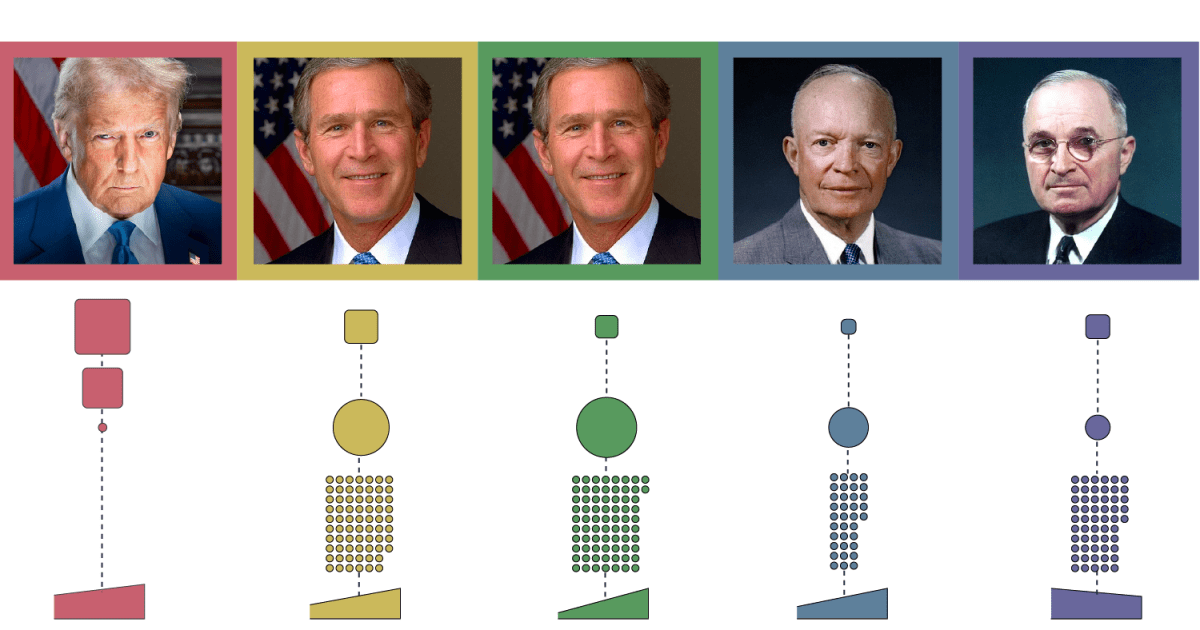
The graphic below breaks down the estimated number of civilians killed for every US soldier in the Korean, Vietnam, Afghanistan and Iraq wars.

According to the Pentagon, the Trump administration spent $11.3bn during the first six days of the war, with an estimated $1bn subsequently spent on the war every day until the April 8 ceasefire.

According to Mark Cancian, a senior adviser with the Defense and Security Department at the Center for Strategic and International Studies, the $1bn per day figure is “a little high”.

Speaking to Al Jazeera, he says the war “was very expensive in the first few days” because the US used costly long-range munitions, including Tomahawk missiles. They cost $2.5m each, and the US military used hundreds of them.

Cancian calculates that in addition to the $11.3bn spent on munitions, an additional $1.4bn should be added for combat losses and infrastructure damage and a further $26.5m for support costs, bringing the total for the first six days to $12.7bn.

Cancian estimates that after the first week of its air strikes, the US spent “about half a billion dollars a day”, and now, during the ceasefire, that figure is likely “under $100m per day” because the US is not using any munitions.

On a per-day cost basis, the Iran war may be one of the most expensive in recent history.

According to figures from the Costs of War Project, the 20-year Afghanistan war cost an estimated $2.3 trillion, averaging more than $300m per day, while the eight-year Iraq War, which began in 2003, cost an estimated $2 trillion, averaging about $684m per day.

Naveed Shah is the political director of Common Defense, a grassroots veteran-led organisation based in Washington, DC, that aims to engage, organise and mobilise veterans.

Shah, who served in Iraq from 2006 to 2010, believes the US must defend its national interests and has a vital role to play in deterring threats, but too often overreaches with open-ended wars of choice that create more problems than they solve.

“The current conflict with Iran is repeating the mistakes that led us to spending 20 years in Iraq and Afghanistan: shaky evidence at best, moving goalposts and dangerous rhetoric that risks drawing us into another prolonged war,” Shah tells Al Jazeera.

“At the same time, while we’re deploying troops overseas, the government is trying to claw back the care we promised for our veterans,” Shah says.

“The true cost of war extends far beyond the battlefield. It echoes for decades in veterans’ bodies and minds and for their families. For the families of the troops who won’t come home, it will be an empty seat at the dinner table and a hole in their heart for eternity,” he says.

According to the Cost of War Project, the US is expected to spend at least $2.2 trillion on obligations for veterans’ healthcare over the next 30 years.

According to a Reuters/Ipsos poll from April 12, 60 percent of Americans disapprove of US military strikes on Iran. This is up from a 43 percent disapproval rating at the start of the war.

Historically, US wars have mostly enjoyed a “rally around the flag” effect, which causes low disapproval at the outset.

The chart below compares the disapproval rating at the start and end of the five main wars the US has led since the 1950s.

Marwa Jadoon, 40, from Oklahoma, whose name has been changed to keep her identity concealed, says her out-of-pocket expenses have increased by more than 35 percent over the past couple of months.

“As someone with multiple considerably expensive health conditions, I’m paying more than I’ve ever paid before just to cover only my essential medications and recurring testing. It’s limited my ability to afford additional treatments since healthcare costs are astronomical in the US. I’ve cut costs in groceries and anything outside of essentials,” Jadoon says.

Jadoon feels she’s been shortchanged with the policy shifts that came at the same time she was made redundant, further complicating her life.

“I find it appalling that my tax dollars are funding a war when we have repeatedly been told that we cannot afford universal healthcare. At the end of last year, I lost my job and had to apply for unemployment and Soonercare,” she says, referring to state-covered healthcare.

She explains that unemployment benefits would not even cover her rent.

“How can my tax dollars afford to pay for wars and foreign governments while I can’t even receive Medicaid because they deemed $400 is too much a month? My phone bill alone is $116 a month. My student loan payments are almost $200 a month. I would love to see anyone in the current administration survive on $400 a week with no medical coverage,” Jadoon says.

Another woman in Oklahoma, who also wished to remain anonymous due to her job with the state government, says, “The war in Iran and its funding has made me feel cornered. I feel it at the gas pump, I feel it at the doctor, dentist. I feel it at the bank. I feel it when I’m at the grocery store, thinking how exactly everyone is acting so calm. And it moves me, literally. Emotions carry little power. I’m ready to do something about it. I’ve been stolen from and lied to, and I’ve had enough.

According to the Climate Solutions Lab at the Watson Institute for Public and International Affairs at Brown University, the total consumer burden from the increase in petrol and diesel prices across the US as a result of the war on Iran is estimated at $27.8bn, roughly $200 per household.

The national average price of petrol has increased nearly 40 percent from $2.90 per gallon ($0.76 per litre) before the war to $4.10 per gallon ($1.08 per litre) now.

📰 மூல செய்தி (Source): https://www.aljazeera.com/news/2026/4/28/the-cost-of-76-years-of-us-wars-from-korea-to-iran?traffic_source=rss

உலகம்

Mountaineer climbs Everest for Palestinian children

Published

on

Mostafa Salameh, a Palestinian-Jordanian mountaineer, is on a mission to carry handwritten letters from children in Gaza to the top of Mount Everest. His journey aims to raise global awareness of the hardships they’ve faced.

📰 மூல செய்தி (Source): https://www.aljazeera.com/video/newsfeed/2026/4/28/mountaineer-climbs-everest-for-palestinian-children?traffic_source=rss

Continue Reading

உலகம்

King Charles calls for NATO unity, Ukraine support in US Congress speech

Published

on

UK sovereign hails national friendship, but delivers pointed messages in speech during four-day US visit.

Britain’s King Charles III has used a speech in front of the United States Congress to pledge NATO unity and call for support for Ukraine amid Russia’s ongoing invasion.

The address on Tuesday came during the royal’s four-day visit to the US, with the US-Israel war with Iran, US President Donald Trump’s criticism of NATO, and trade tensions between the longtime allies looming large.

But Charles avoided any reference to specific frictions during his speech at the US Capitol, instead striking a light tone in his joke-heavy opening.

He praised what he called the shared history and values of the two countries, quipping at one point that Washington, DC was “a tale of two Georges”, the first US President George Washington and his ancestor, the UK’s King George.

He assured lawmakers, to laughs, he was not in the US “as part of some cunning rearguard action” in a delayed continuation of the Revolutionary War.

“I am here on this great occasion in the life of our nations to express the highest regard and friendship of the British people to the people of the United States,” the sovereign said to repeated standing ovations.

But amid broad themes of unity, more pointed messages lurked.

Charles did not directly address the US-Israel war with Iran or Trump’s outspoken criticism of NATO allies who have rejected joining Washington’s war efforts.

Instead, he praised support for NATO and the alliance’s invocation of its Article 5 collective defence treaty in the wake of the September 11, 2001 attacks.

“We answered the call together, as our people have done so for more than a century, shoulder to shoulder through two world wars, the Cold War, Afghanistan and moments that have defined our shared security,” he said.

He then turned to funding for Ukraine, an increasingly pointed issue in the Republican-controlled US Congress.

“Today, Mr Speaker, that same unyielding resolve is needed for the defence of Ukraine and her most courageous people,” he said, referring to House Speaker Mike Johnson.

In one instance, Charles hailed the “$430 billion in annual trade that continues to grow, the $1.7 trillion in mutual investment that fuels that innovation”.

Last week, Trump threatened to impose a “big tariff” on the UK if it did not drop a digital services tax on US tech companies.

At another point, Charles pointed to global environmental concerns.

“We ignore, at our peril, the fact that these natural systems, in other words, nature’s own economy, provide the foundation for our prosperity and our national security,” he said.

Trump has called climate change a “con job” and withdrew from the landmark Paris Agreement climate accords during his first and second terms. His administration has since pursued deregulation of fossil fuels and pivoted away from green energy, an approach embraced by many members of the president’s Republican party.

Other messages appeared to gently reference political trends in the US, where critics have accused Trump of using the Department of Justice for political retribution and of overturning long-standing norms of presidential authority.

Charles described the “common ideals” of the US and UK: “The rule of law, the certainty of stable and accessible rules, an independent judiciary, resolving disputes and delivering impartial justice”.

He also drew a throughline between the Magna Carta, the 13th-century document that established that the British king was subject to law, and constitutional and legal precedent in the US, calling it “the foundation of the principle that executive power is subject to checks and balances”.

The address came shortly before Trump was set to host Charles and his wife, Queen Camilla, for an official state dinner.

The pair were then set to visit New York and Virginia, before an official farewell ceremony at the White House on Thursday.

📰 மூல செய்தி (Source): https://www.aljazeera.com/news/2026/4/28/king-charles-calls-for-nato-unity-ukraine-support-in-us-congress-speech?traffic_source=rss

Continue Reading

உலகம்

PSG beat Bayern 5-4 in record-breaking Champions League semifinal first leg

Published

on

Title holders Paris Saint-Germain squander a three-goal lead but hold on to beat Bayern Munich 5-4 in Paris.

Khvicha Kvaratskhelia and Ousmane Dembele scored twice each as Paris Saint-Germain beat Bayern Munich 5-4 in an epic first leg of their Champions League semifinal, an extraordinary encounter that became the highest-scoring match ever at this stage of the competition.

The first half alone on Tuesday night was wild, with Harry Kane giving Bayern the lead from a penalty only for Kvaratskhelia to equalise before Joao Neves headed the hosts in front at an enthralled Parc des Princes.

Michael Olise made it 2-2, but a Dembele penalty in first-half stoppage time had the reigning champions back ahead at the interval.

Kvaratskhelia, surely the standout player in this season’s Champions League, and Dembele both then scored again to have PSG seemingly out of sight, only for Dayot Upamecano to pull one back before Luis Diaz made it 5-4.

An unforgettable game – perhaps better even than last season’s semifinal between Inter Milan and Barcelona – leaves the tie between the continent’s two best teams of the moment wonderfully poised for next Wednesday’s return at the Allianz Arena, with a place in the final in Budapest on May 30 on the line.

Luis Enrique’s Parisians will be returning to Munich – scene of their 5-0 win over Inter in last year’s final – with the advantage, but Bayern will be confident they can overturn the narrow deficit at home.

The French champions are seeking to become just the second side in the modern Champions League era to retain the trophy, while the German champions are hoping to reach the final for the first time since 2020, when they defeated PSG to lift the trophy for the sixth time.

Vincent Kompany’s team arrived in Paris having scored 167 goals this season, led by the remarkable Kane, who had netted 53 times in 45 appearances.

This tie had a lot to live up to, after Bayern’s spectacular win over Real Madrid in the quarterfinals, but it was an instant classic as both teams showcased their devastating firepower.

Bayern went ahead in the 17th minute as Willian Pacho chopped down Diaz, and Kane made no mistake with the resulting penalty to make it 54 for the campaign.

The visitors won 2-1 here in November in the league phase thanks to a Diaz double, and they were the better team early on this time.

But their front-foot approach made them vulnerable to the counterattack, and Dembele should have equalised before the leveller came just after the midway point in the first half.

Kvaratskhelia’s genius on the wing has regularly been the difference for PSG recently, and he broke clear of Josip Stanisic down the left before cutting inside and firing into the far corner.

A classic Kvaratskhelia goal was followed by Neves heading in Dembele’s corner on 33 minutes.

The action was only just getting started, however, as French international Olise drove towards the PSG box before smashing in for 2-2 with his 20th of the season.

PSG then won a penalty at the end of the first half, when a Dembele cross struck the arm of Alphonso Davies, the Canadian making his first start in the Champions League this season after injury.

It was given by the Swiss referee after a VAR check, and Dembele beat Manuel Neuer to make it 3-2 at the interval – a lead which PSG added to after the restart, leaving Bayern stunned.

Achraf Hakimi’s assist was swept in by Kvaratskhelia for 4-2 on 56 minutes, the Georgian getting his seventh goal in seven games in the knockout phase.

Bayern had not been able to reset before Dembele surprised Neuer with a low shot in off the near post to make it 5-2 with his second of the night.

But Bayern were not done, as Upamecano headed in Joshua Kimmich’s free-kick for 5-3, taking Kompany’s side to 170 for their season tally.

Diaz, who was sent off in the November meeting, was then played in over the top and dribbled past Marquinhos before slotting in for the night’s final goal.

Kompany, watching from the stands due to suspension, would have been delighted with his team’s response – even if they were relieved to see Senny Mayulu’s late strike for PSG come back off Neuer’s crossbar.

Kane told reporters after the game that he was proud of his teammates for mounting a fightback to claw themselves back into the tie.

“It shows the character of our team. It has happened to us this season where we have come back from being down, and it is good to know we can do it at the highest level as well,” he said.

“I think we come away knowing we can hurt them.”

Atletico Madrid host Arsenal in the other semifinal first leg on Wednesday night.

📰 மூல செய்தி (Source): https://www.aljazeera.com/sports/2026/4/28/psg-beat-bayern-5-4-in-record-breaking-champions-league-semifinal-first-leg?traffic_source=rss

Continue Reading

Trending

Copyright © 2024 by 7Tamil Media, All rights reserved.