Connect with us

உலகம்

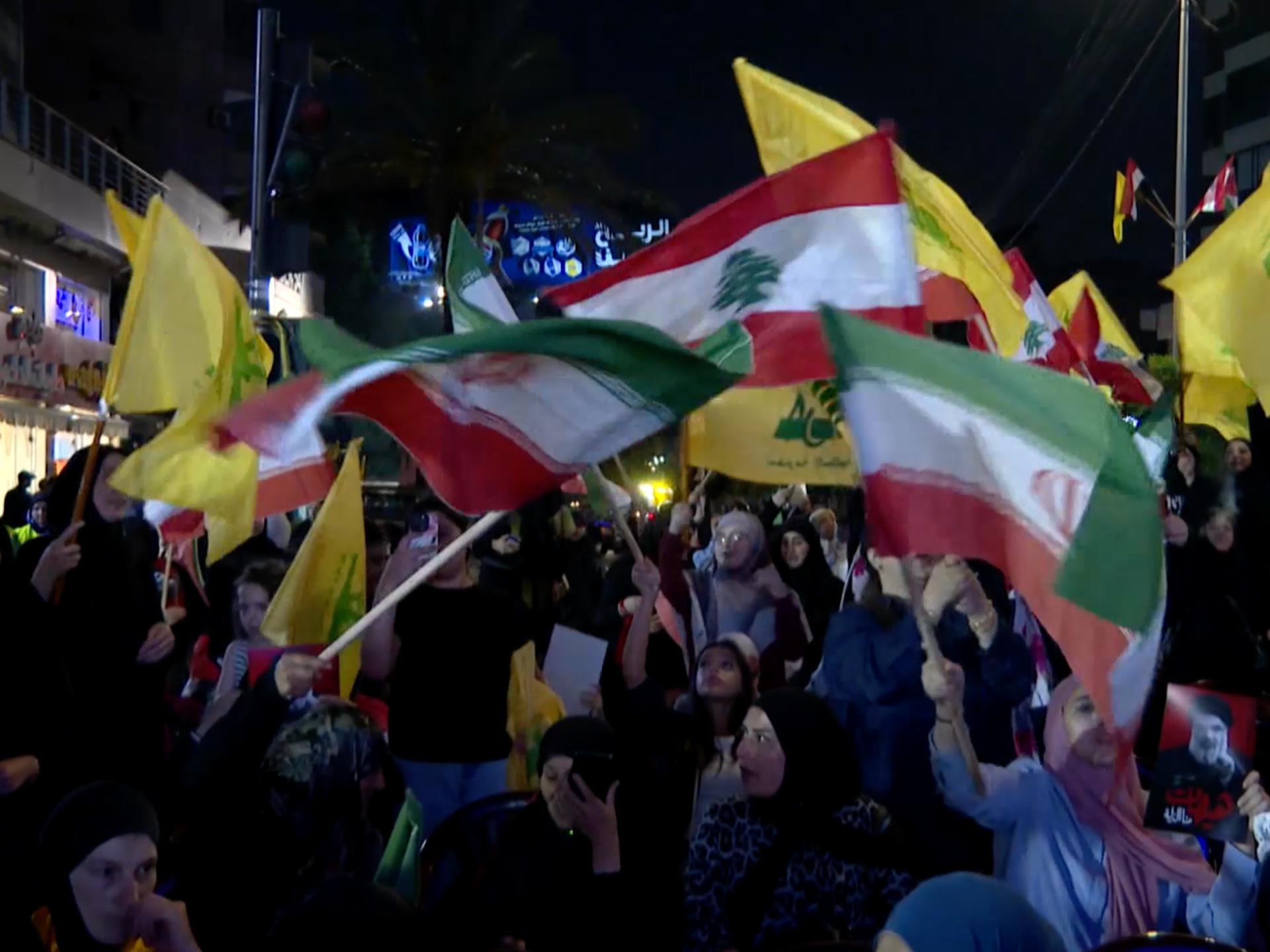
Lebanon cannot be bombed into sovereignty

Published

on

A sovereign Lebanon and a demilitarised Hezbollah cannot happen without a credible political transition.

Director of Policy at Badil | The Alternative Policy Institute.

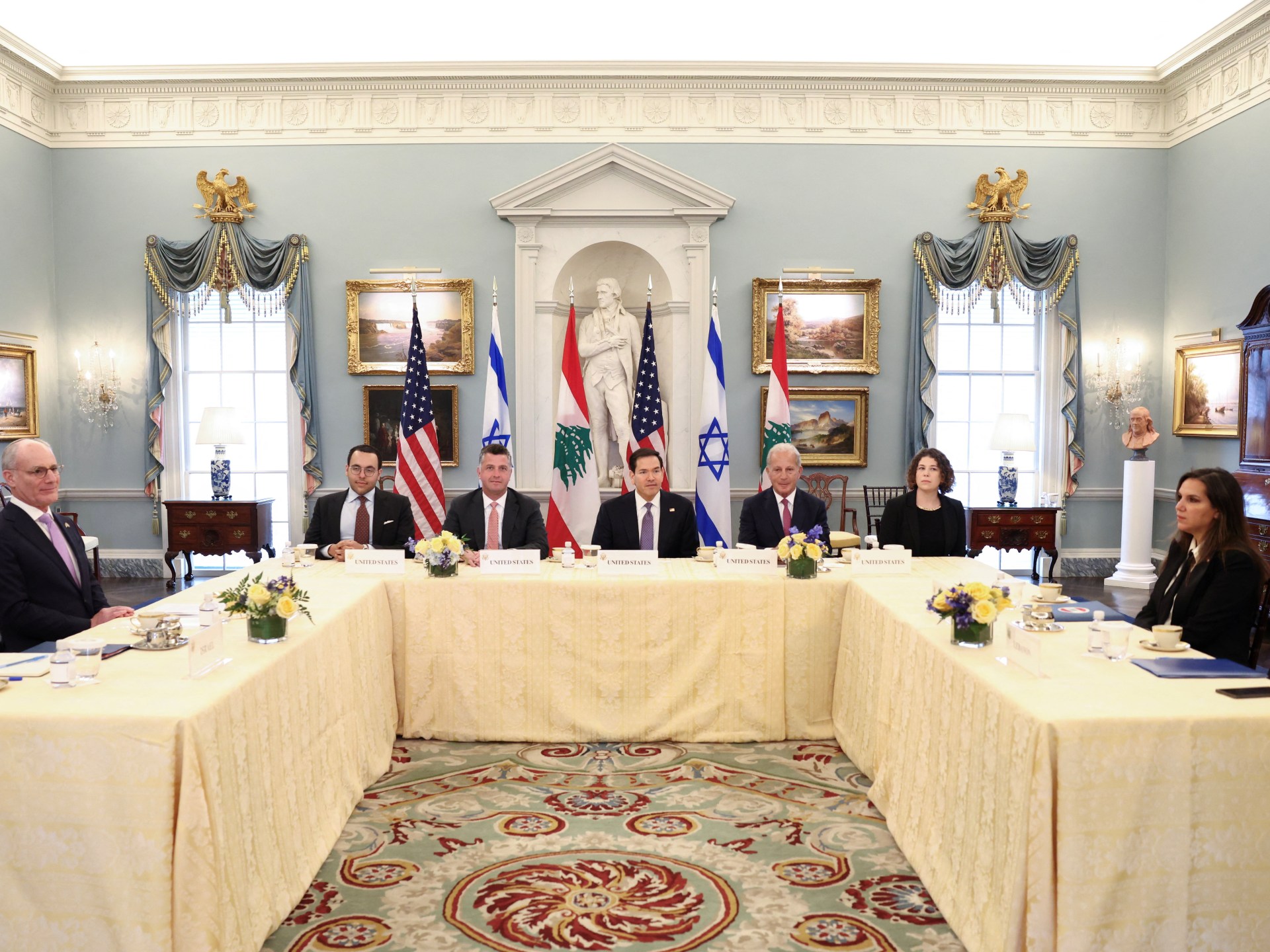
Lebanese leaders have gone to Washington for the first direct negotiations with Israel in over 30 years, attempting to restore sovereignty under near-impossible terms.

According to the ceasefire deal agreed on April 16, Lebanon must “effectively demonstrate its ability to assert its sovereignty” as a condition for extending the fragile pause in hostilities. Israel, for its part, preserves the right to take “all necessary measures in self-defence, at any time” and to keep its forces deployed on Lebanese soil.

This is the framework through which Lebanese sovereignty is to be performed. Beirut is expected to move against Hezbollah’s armament while Israel retains effectively open-ended military freedom inside Lebanese territory, with no credible pathway to deterrence on the table.

From Washington’s perspective, the logic is easy enough to understand. Hezbollah is weaker, Tehran is under pressure, Damascus is amenable and the government in Beirut has never been more willing to accede to United States demands. From the White House, it can look like a convergence: a moment where giving Israel military latitude to occupy land, displace southern communities, and float annexation will produce a Lebanese state that the US can shape.

But a government easier to influence is not one that can actually govern. There is a way to disarm Hezbollah and consolidate Lebanese sovereignty, but it is not the current path imposed by the US and Israel.

No serious argument for Lebanese statehood can evade what Hezbollah has done; more than any other Lebanese actor, it has undermined the state’s monopoly on force. It has built and maintained a military structure outside formal institutions, reserved for itself the right to shape decisions of war and peace, vetoed government decisions and done away with many of its domestic opponents by force or the threat of it. The result has been a hybrid order where sovereignty existed in law but not in full practice.

Yet the belief that external force can correct this condition has been tested before and failed. In 1982, Israel invaded Lebanon to expel the Palestine Liberation Organization (PLO). It succeeded in driving the PLO leadership out of Beirut but did not produce a stable Lebanese government or a settlement aligned with Israeli preferences.

The Lebanese Civil War entered a new and arguably more brutal phase, epitomised by an Israeli occupation that lasted until 2000. That occupation became one of the central conditions in which Hezbollah emerged, consolidated and claimed the legitimacy it trades on today.

Brute force repeatedly altered the immediate balance while helping create the social and political terrain in which new armed legitimacy could emerge.

Lebanon has also been here before in another sense. Throughout its modern history, as one patron has weakened, another has moved in to fill the vacuum, claiming to champion Lebanese sovereignty on its own terms.

Today fits that pattern. Hezbollah and Iran are losing the sway they have held over Beirut for two decades, and Washington and Israel are moving to establish a new dominion. The language of sovereignty is once again doing work that sovereignty, in substance, is not.

The government of Prime Minister Nawaf Salam and President Joseph Aoun, brought about with US-Saudi backing after the 2024 war with Israel ended, is the first national unity government to include Hezbollah and its allies while also clearly articulating a position on consolidating military power under the state.

Under this policy, the Lebanese Armed Forces (LAF) began dismantling Hezbollah infrastructure south of the Litani River before the conflict reignited last month. Since then, the government has outlawed Hezbollah’s military wing, expelled the Iranian ambassador and ordered the authorities to identify, arrest and deport members of the Iranian Islamic Revolutionary Guard Corps (IRGC).

Some of these moves were performative, some genuine, but all were limited by the current reality in which the Lebanese state has very little leverage, domestically and internationally.  That hasn’t stopped Salam and Aoun from trying.

The convergence at present with US and Israeli interests is temporary and will break the moment the question shifts from Hezbollah’s weapons to what Israeli troops are still doing on Lebanese land.

The reality is that Lebanon’s current deterrence arrangement cannot be broken militarily before it is replaced politically. Hezbollah’s arsenal is not just a military fact; it is also the hard expression of a political claim: that the Lebanese state, as it exists, cannot reliably defend parts of its population against Israel and therefore an alternative structure of deterrence is necessary. One can reject that claim and still recognise its force.

If Hezbollah is to be durably disarmed, Lebanon requires a credible replacement for the functions it has come to perform: military deterrence, political representation, social protection and the assurance that someone can absorb the costs of confronting Israel. Absent that replacement, military pressure, occupation and violations of international law will not settle the question. They will reopen it in harsher form.

A sequenced political process is the only plausible route to the outcome Washington says it wants. It should begin with reciprocity. Lebanon cannot be expected to move decisively on its most explosive internal issue while Israel retains open-ended military freedom inside its territory.

If communities in the south and the eastern Bekaa Valley are to see the threat environment changing, that has to mean a monitored halt to attacks, a timetable for Israeli withdrawal from Lebanese territory and a mechanism for adjudicating violations that does not reduce Lebanese sovereignty to an Israeli claim of necessity. The current agreement contains none of these. It contains the opposite.

A durable settlement would require a phased extension of state authority. The LAF can absorb responsibilities gradually, deploy, monitor and expand its role over time.

Even if Washington wants the LAF to fight Hezbollah, it is quite rightly neither willing nor able to do so, not least while Israel is pummelling the country and Washington is forcing it into unrealistic timelines as part of pressure-driven diplomacy. To ask the army to do that is not to strengthen the state; it is to expose its weakness and herald civil strife.

State sovereignty would require a national defence doctrine. If Hezbollah is to relinquish its claim to deterrence, the replacement has to be a doctrine backed by credible resources and diplomacy that can produce state-led deterrence against Israeli aggression.

Hezbollah’s endurance has never rested only on weapons. It grew inside zones of state failure. Strip its military infrastructure back while the state still cannot provide security, reconstruction and services, and the result would not be sovereign consolidation. It would be abandonment. And abandonment is the soil in which armed alternatives grow.

None of this can succeed without political guarantees. One need not celebrate Lebanon’s confessional system to understand that transitions fail when major communities conclude that the language of statehood is being used to rearrange power against them. If Hezbollah’s military role is to end, the Shia in Lebanon have to see a future for themselves inside a stronger state, not outside of it.

All of this would be a slow process. For Washington, it may be less satisfying than the language of decisive moments and offer no catharsis, no spectacle of history being settled through pressure and alignment. But Lebanon has rarely yielded to that kind of impatience. More often, it has exposed its costs.

Washington says it wants a stronger Lebanese state and a weaker Hezbollah

📰 மூல செய்தி (Source): https://www.aljazeera.com/opinions/2026/4/27/lebanon-cannot-be-bombed-into-sovereignty?traffic_source=rss

உலகம்

Dynamic pricing adding to ‘dystopian’ 2026 World Cup, ex-Liverpool CEO says

Published

on

Peter Moore accuses FIFA of undermining the spirit of the World Cup through extortionate ticket prices and greed.

If the 23rd edition of the FIFA World Cup has become prohibitively expensive – with tickets fetching prices at more than $2m for the final – blame dynamic pricing, along with greed, says longtime gaming and sports executive Peter Moore.

“Dynamic pricing doesn’t belong in the World Cup and football,” Moore told Al Jazeera in a recent interview from his home in Santa Barbara, California.

“It works with music, but for the World Cup, there are hundreds of thousands of people booking trips in advance. They’re asking themselves, ‘Do we want to visit and pay $2,000 for a third-tier game, Saudi Arabia versus whomever?’ And FIFA taking a 30 percent cut of dynamic pricing is outrageous”.

The 71-year-old former chief executive of Liverpool FC from 2017-20 is calling out FIFA President, Gianni Infantino, in interviews and on social media.

“Gianni Infantino misread the situation and thought he could get away with it,” Moore said.

“Now, tickets are in the hands of bots and speculators, who don’t intend to go to games. They are harvesting tickets and hoping they can sell them in the next six to eight weeks, and I don’t see that happening.”

He added: “I just hope enough people are there to add to the atmosphere of the game”.

Certainly, there’s a gloomy feeling hanging over this World Cup – at some US venues, anyway; from high prices for tickets and transportation, to the luck of the draw on getting a visa (hopefully you haven’t visited Cuba lately).

When you arrive, there’s the spectre of Immigration and Customs Enforcement (ICE) agents targeting fans. Finally, you get through the turnstiles and you could be greeted by lots of empty seats.

How FIFA is rolling things out also raises questions about who the World Cup is for.

The demographic could be more corporate, less diverse socio-economically, with fewer authentic fans attending than in previous tournaments.

Under travel bans imposed by Trump in an executive order, fans from four participating countries – Ivory Coast, Haiti, Iran and Senegal – cannot enter the country unless they already have valid visas.

“It’s the world’s game, but who is this World Cup for if the world can’t get in?” Moore said.

“FIFA is taking advantage of the unique commercial opportunities in the US, dynamic pricing and the secondary market being legal here, to make money – Infantino has said [he expects FIFA revenues from the World Cup to exceed] $11bn. Why not make it more reasonable and accessible and make, maybe, $8bn?

“FIFA is a nonprofit, built to serve players and fans of the world. That’s its remit, not to be like a commercial organisation and maximise the opportunity to make as much money as possible.”

FIFA expects to gross $3bn on ticketing and hospitality sales alone.

Infantino has defended high ‌‌ticket prices, saying ⁠⁠that ⁠⁠the tournament held every four years is FIFA’s only source of income and that it reinvests the revenue to develop football in all 211 member nations.

MLS commissioner Don Garber recently called FIFA’s dynamic pricing policy “a good idea”, adding that Infantino compared the World Cup to “dozens and dozens” of NFL Super Bowls, which feature some dynamic ticketing. And, Garber added, US fans are accustomed to paying high prices for “premium” events.

But the Super Bowl’s appeal is based on the contest being held once a year, not dozens of times. One way to devalue the Super Bowl would be to schedule several of them a year.

As for supporters from the other 47 countries taking part? They thought they were going to a World Cup, not a Super Bowl. And they are probably not used to dynamic pricing or legal profiting from ticket resales.

In the US, though, above-value ticket resale is legal, and FIFA being involved in reselling “changes everything,” Moore noted. “It means: tickets are no longer just for fans. They’re tradable assets.” Which brings in speculators, who conduct business “like traders, not supporters”.

Maybe it was inevitable that the spirit of the World Cup would be hijacked by savage capitalism. But it doesn’t seem everyone is ready for that, just yet. The World Cup is not only a sporting competition, but a universal gathering. Or so we thought. Perhaps it is just another “premium event”, like so many Taylor Swift concerts – but with worse dance moves.

Welcome then to the first soulless World Cup?

“It’s dystopian, and it’s an existential threat to the game,” Moore said, referring to both the ticketing situation and broader problems of the World Cup.

“Ultimately, is this going to be the first of every World Cup where FIFA maximises profit, rather than allow as many as possible to come and support their country?”

Moore said he is reluctant to attend the World Cup, though he could zip down the Pacific Coast Highway to SoFi Stadium in Inglewood.

“For me, I look every day, on StubHub, SeatGeek, TicketMaster,” Moore said. “I’m used to it with live music. We can stand outside Allegiant [Stadium, in Las Vegas] and watch our phones for when ticket prices go down, when touts need to unload tickets for the Rolling Stones, Paul McCartney, Shakira. But the international fan can’t do that for the World Cup, fly to America and book hotels, and hope prices will go down”.

If you are planning on being there, Moore advises checking the resale market close to game times.

“I’d just watch, and as the weeks go on, if tickets aren’t moving, the secondary market will come down,” Moore said.

“But to a reasonable price? I don’t know. It’s the regular fans that create the excitement at the World Cup, from Brazil, Colombia, Africa. How are they going to afford to travel and come to games when it’s $1,000, $2,000, $3,000 [per ticket]. Who’s got that kind of money?”

For the fans who do get through the turnstiles, maybe the power of football will overcome everything and they’ll experience what we think of as the eternal World Cup vibe. But a part of them might also feel like they just got fleeced by FIFA.

📰 மூல செய்தி (Source): https://www.aljazeera.com/sports/2026/4/27/fifa-world-cup-2026-dynamic-pricing-match-tickets-peter-moore?traffic_source=rss

Continue Reading

உலகம்

World Cup 2026 prize money, fees to be increased for all teams: FIFA

Published

on

Football’s global governing body promises to increase the funding for the tournament to help cover participation costs.

FIFA says it is ‌‌in discussions with national football associations to increase prize money for all ⁠⁠48 teams participating ⁠⁠in the World Cup.

In response to requests by ‌‌European teams to increase prize money and to assist with costs ⁠⁠associated with ⁠⁠their participation this summer in the World Cup, the world governing body is set to fulfil ⁠ ⁠those wishes, it said on Sunday.

The proposal must be approved at Tuesday’s FIFA Council meeting, being held before the 76th FIFA Congress in Vancouver, Canada.

FIFA announced in December a record World Cup prize fund of $727m, with the winning team taking home $50m and each team receiving ⁠⁠at least $10.5m. Since that December announcement, FIFA ⁠⁠and national associations have engaged in talks and aim to resolve the issue.

UEFA, European football’s governing body, contacted FIFA after ‌‌hearing from several of its member associations regarding the costs of participating in the World Cup, including travel, operations and taxes, particularly in the United States. Canada and Mexico are the other host countries.

FIFA said the prize money on offer is set to increase, with the world governing body projected to surpass $11bn in revenue in the current ‌‌four-year cycle of 2023 to 2026.

“FIFA can confirm it is in discussions with associations around the world to increase available revenues,” a FIFA spokesperson told the Reuters news agency.

“This includes a proposed increase of financial contributions to all qualified teams for the FIFA World Cup 2026 and of development funding available to all 211 member associations.

“The FIFA World Cup 2026 will be groundbreaking in terms of its ⁠⁠financial contribution to the global football community, and FIFA ⁠⁠is proud to be in its strongest ever financial position to benefit the global game through its FIFA Forward programme.”

The biggest slice of FIFA’s initial funding package for the North American showpiece – $655m – ⁠⁠was to be performance-based payments to the 48 participating nations.

Additionally, each qualified nation would be entitled to $1.5m to cover preparation costs.

FIFA’s 2025 annual report said ‌‌93 percent of its total budgeted revenue had already been contracted by the end of 2025, thanks to the success of the inaugural 32-team Club World Cup held ‌‌in ‌‌the US last year.

The World Cup will run from June 11 to July 19.

📰 மூல செய்தி (Source): https://www.aljazeera.com/sports/2026/4/27/world-cup-2026-prize-money-fees-to-be-increased-for-all-teams-fifa?traffic_source=rss

Continue Reading

உலகம்

Somalia hunger crisis worsens as drought displaces more than 500,000 people

Published

on

In Somalia, displaced communities face starvation as humanitarian funds decrease, leaving them without assistance or hope.

Across Somalia, communities are suffering through a deepening hunger crisis, driven from their homes by drought and left waiting for critical humanitarian assistance that has not arrived.

September’s failed Deyr rains mark the latest blow in a relentless climate crisis, destroying livelihoods, killing livestock, and forcing another year of harvest failure.

More than 500,000 people have been displaced so far this year – more than 90 percent of them by drought – in addition to the 3.3 million Somalis already uprooted.

Displaced families now face the highest risk of starvation, according to the UN OCHA’s Somalia Humanitarian Needs and Response Plan 2026.

Fatima, 40, has fled five times – three times because of conflict, twice because of drought. Each time she has left behind land, livestock, and the small possessions her family has managed to save.

“This is the fifth time I have fled,” she says. “I am still facing the drought and I have nothing to feed my family.”

Families have walked for days, eating wild plants along the road and have arrived in displacement camps in Baidoa and Dollow with nothing.

Many reach the sites malnourished and exhausted, carrying children too weak to walk. What they find there is not relief, but abandonment.

Aid funding in Somalia has declined sharply. This year, only 14 percent of the funds requested for humanitarian response have been received, according to OCHA’s Financial Tracking Service.

Somalia was intentionally left out of the $2bn global humanitarian aid pledge announced by the United States for this year due to allegations of aid diversion, corruption and the destruction of a US-funded World Food Programme (WFP) warehouse in the country, according to officials.

“Humanitarian services are one of the only things we can rely on, but it is completely gone,” says a man displaced from Bakool who walked more than 100km to reach Baidoa. The April–June rainy season, known as Gu, has begun, but it offers limited relief.

For families who have lost their herds and farms after years of successive droughts, rain alone cannot rebuild what has been destroyed. People need immediate assistance.

This photo essay is provided by the Norwegian Refugee Council.

📰 மூல செய்தி (Source): https://www.aljazeera.com/gallery/2026/4/27/somalia-hunger-crisis-worsens-as-drought-displaces-over-500000-people?traffic_source=rss

Continue Reading

Trending

Copyright © 2024 by 7Tamil Media, All rights reserved.